
Overview
Strategies for Identifying Technical Debt
A diagnostic framework for engineering leaders to audit legacy codebases and prioritize remediation to unlock product velocity.

Identifying and Auditing Technical Debt
Technical debt is an inevitable byproduct of rapid software development. For engineering leaders, the challenge isn't just its existence, but the ability to identify it before it stalls product delivery. Implementing effective strategies for identifying technical debt in engineering teams is the first step toward reclaiming your roadmap.
33%
Engineering time lost to debt
42%
Lower velocity in legacy systems
2.5x
Increase in bug frequency
The Diagnostic Framework for Technical Debt
A successful audit requires a multi-layered approach. You cannot rely on code quality alone; you must look at how the debt manifests in your team's daily operations and long-term delivery capabilities.
- Static code analysis and complexity metrics
- Developer sentiment and friction surveys
- Deployment frequency and failure rates
- Documentation gaps and knowledge silos
Effective Strategies for Identifying Technical Debt
To build a comprehensive picture, leaders should combine automated tooling with qualitative feedback. This ensures that 'invisible' debt—like architectural bottlenecks—doesn't go unnoticed during a routine audit.
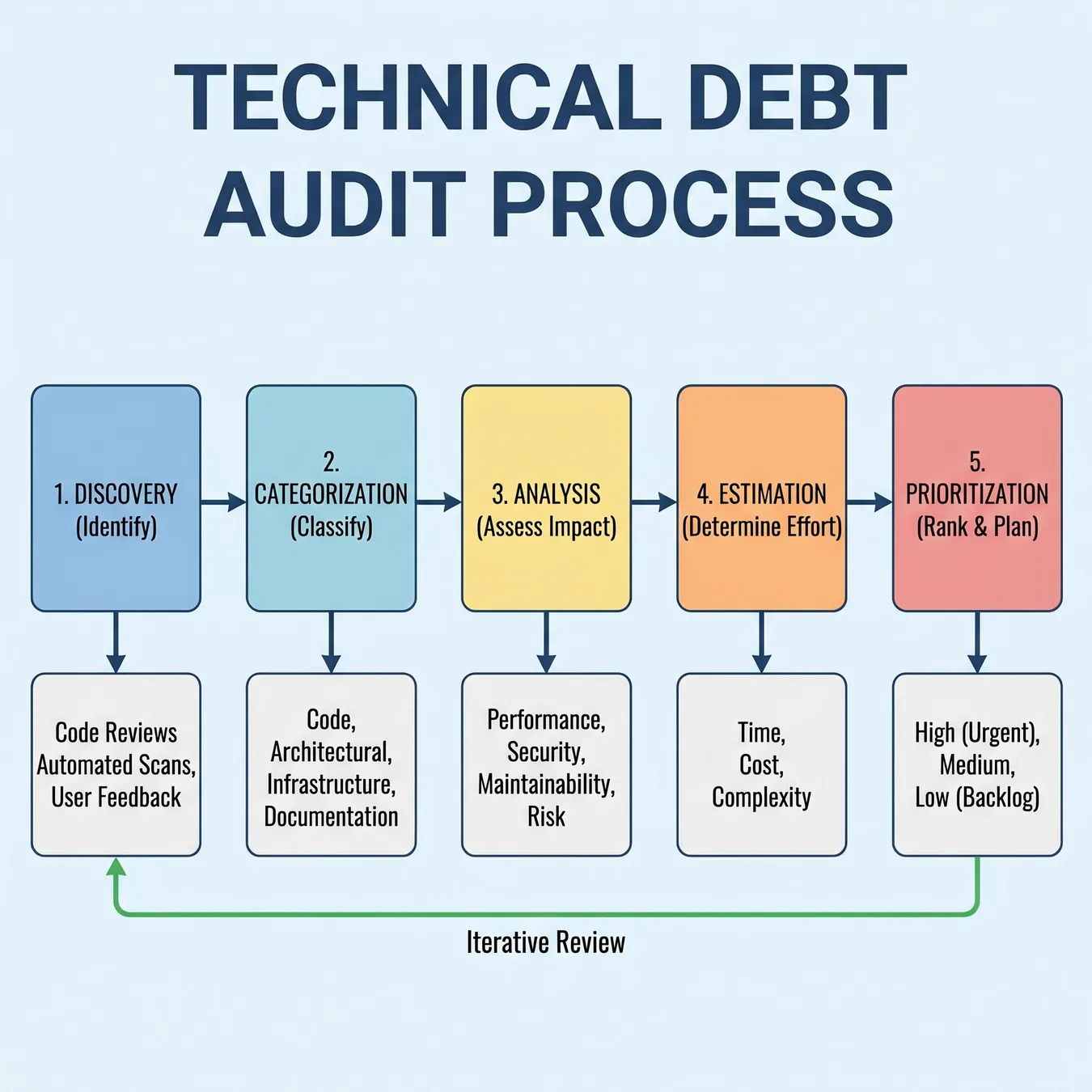
The technical debt audit lifecycle.
1. Static Analysis and Automated Tooling
Modern linters and security scanners provide the baseline. Look for high cyclomatic complexity and low test coverage as primary indicators of areas that are difficult to maintain or refactor.
2. Tracking 'Hotspots' in Version Control
Files that are changed frequently and have high churn are often the epicenter of technical debt. These 'hotspots' represent code that is either too central to the system or too brittle to stabilize.
Tip.
// Audit Tip
Quantifying the Cost of Inaction
Once identified, the next step is quantifying technical debt to understand how much it is actually costing your organization in terms of delayed features and operational overhead.
| Debt Type | Identification Method | Impact on Velocity |
|---|---|---|
| Code Debt | Static Analysis | High (Bugs/Maintenance) |
| Architectural Debt | System Mapping | Critical (Scalability) |
| Infrastructure Debt | Audit/Logs | Medium (Reliability) |
Reducing Technical Debt in Large Enterprises
Learning how to successfully reduce technical debt in large enterprises requires a cultural shift. In massive codebases, debt isn't just a technical issue; it's a coordination problem across multiple teams and legacy modules.
- 01
Establish a 'Debt Registry' visible to all stakeholders.
- 02
Allocate a fixed percentage of every sprint to remediation.
- 03
Implement 'Boy Scout Rules' for all new pull requests.
- 04
Conduct quarterly deep-dive audits of core services.
Auditing the Infrastructure Layer
It is a common mistake to ignore the platform. You must also account for infrastructure technical debt, such as outdated CI/CD pipelines or manual scaling processes that drain engineering hours.
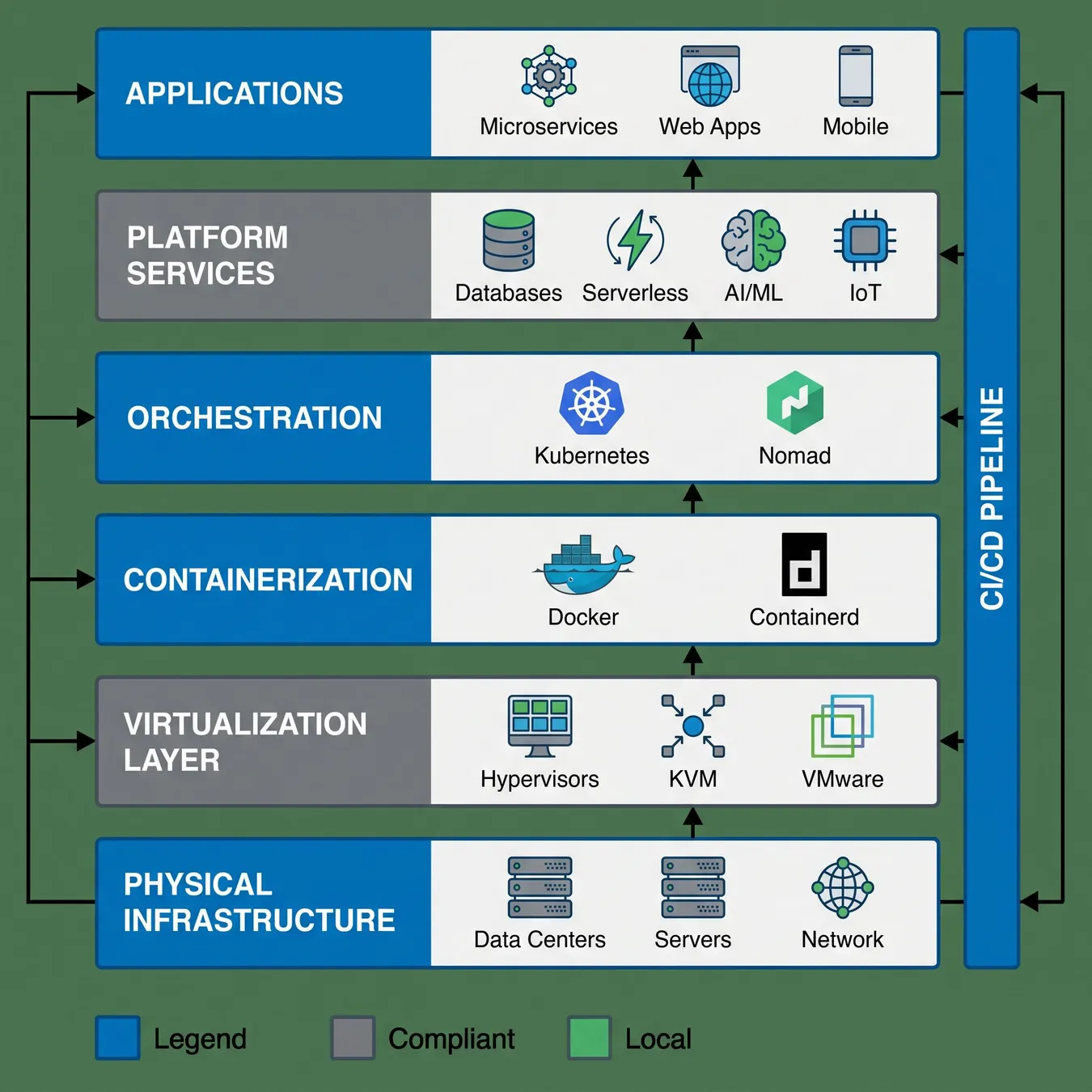
Modern infrastructure reduces operational debt.
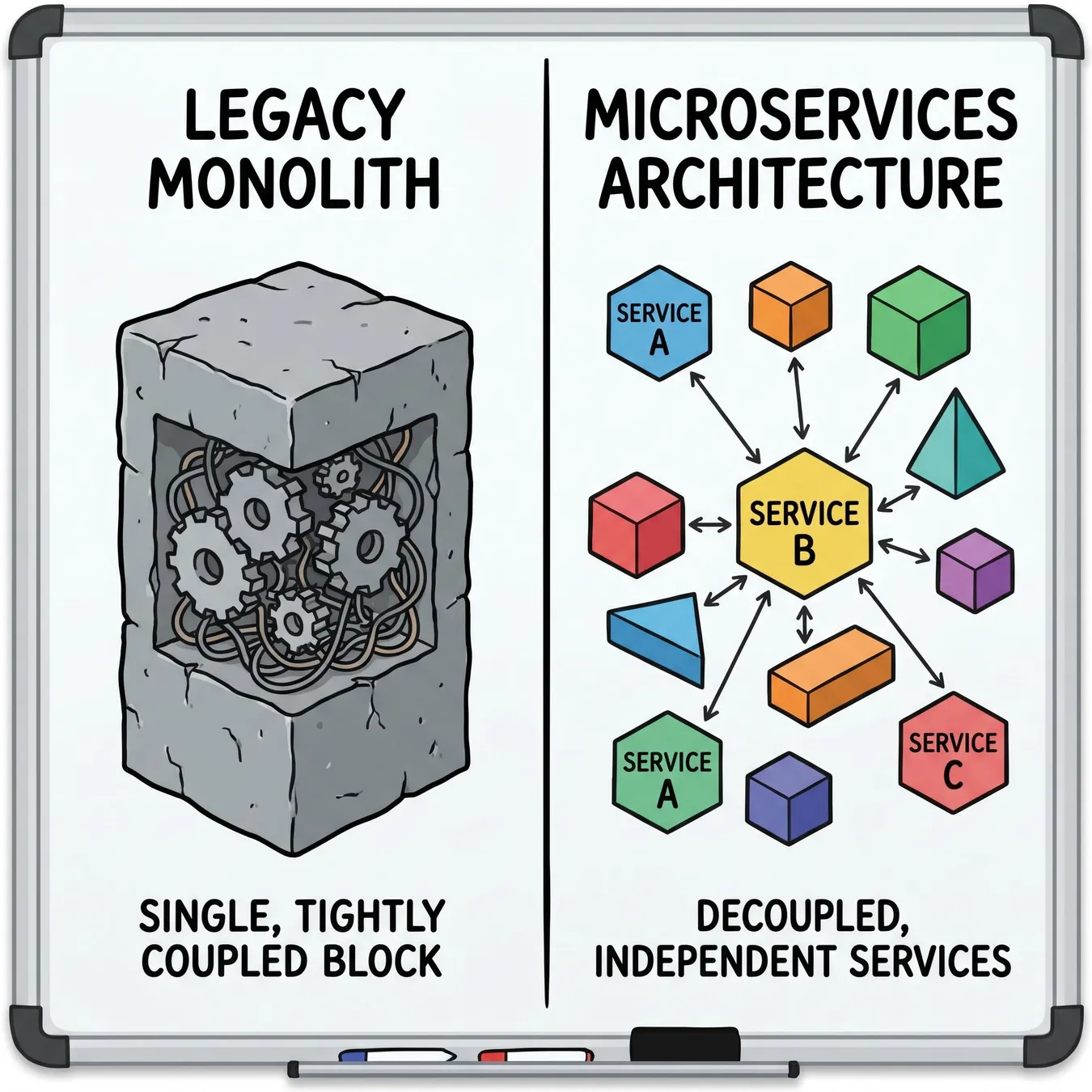
Architectural transitions to manage debt.
The Business Impact of Unresolved Debt
Ignoring the results of your audit can lead to a compounding impact of technical debt. This manifests as increased time-to-market, security vulnerabilities, and high developer turnover.
Trade-off
3 pros · 3 cons
Pros
Faster feature delivery
Higher team morale
Predictable release cycles
Cons
Compounding interest on bugs
Fragile deployment process
Difficulty hiring senior talent
Prioritization: What to Fix First?
Not all debt is created equal. Use a 2x2 matrix to categorize debt by 'Effort to Fix' versus 'Impact on Velocity'. High-impact, low-effort items should be your immediate priority.
Audit the most frequently changed code first.
Involve the whole team in identifying friction points.
Set clear, measurable goals for remediation.
Try to fix everything in a single massive refactor.
Blame individuals for legacy code decisions.
Ignore debt until it causes a production outage.
Establishing Long-Term Governance
Identification is only the beginning. To prevent debt from accumulating again, your leadership team must commit to managing technical debt as a core part of the engineering lifecycle.
Defining 'Done' and Quality Gates
Strict definitions of 'Done' that include documentation and testing help prevent new debt from entering the system. Automated quality gates in your CI/CD pipeline can enforce these standards.
01 / 04
phase 01 / 04
Discovery
phase 02 / 04
Categorization
phase 03 / 04
Prioritization
phase 04 / 04
Execution
Common Pitfalls in Debt Audits
Many audits fail because they focus purely on the technical aspects without considering the business context. A piece of 'ugly' code that never changes and doesn't cause bugs is often not worth fixing.
Are we auditing code that is actually in use?
Have we interviewed the developers working on this daily?
Is there a clear business case for this refactor?
Bridging to Professional Engineering Support
If your internal team is overwhelmed by the scale of legacy debt, it may be time for an external perspective. Studio 402 specializes in auditing and modernizing complex systems for growth-stage companies.
Technical debt is the silent killer of innovation. Identifying it early is the only way to ensure your team stays focused on building value rather than fighting fires.
Engineering Lead · Studio 402
How Studio 402 Can Help
We provide deep-dive technical audits and hands-on refactoring to help you reclaim your velocity. Whether you are dealing with a 'vibe-coded' prototype or a decade-old monolith, we build the foundations for scale.

Our approach to technical modernization.
Frequently Asked Questions
Summary of Audit Strategies
Effective identification requires a blend of automated metrics and developer experience. By auditing regularly, you ensure that your engineering team remains an engine for growth rather than a bottleneck.
Next Steps for Engineering Leaders
Start by selecting one core service and performing a pilot audit. Use the findings to build a case for a broader remediation strategy across the organization.
Trusted by over 50 growth-stage startups to harden and scale their core software.
Updated for July 2026
Ready to Audit Your Codebase?
Stop guessing where your bottlenecks are. Let Studio 402 perform a professional audit and build your roadmap to scale.
Keep reading
More in Engineering Leadership & Scaling
Index
Related categories
Final Thoughts on Engineering Excellence
Maintaining a healthy codebase is a continuous journey. By prioritizing visibility and accountability, you empower your team to ship faster and with higher confidence.
- Engineering Leadership
- Technical Debt
- Scaling
- Audit Framework