
Aligning Agile Processes with Business Leadership Goals
Engineering leaders often face a disconnect between the iterative nature of agile development and the executive demand for long-term predictability. Bridging this gap requires more than just better reporting; it requires a fundamental shift in how custom software development agile processes alignment is structured within the organization.
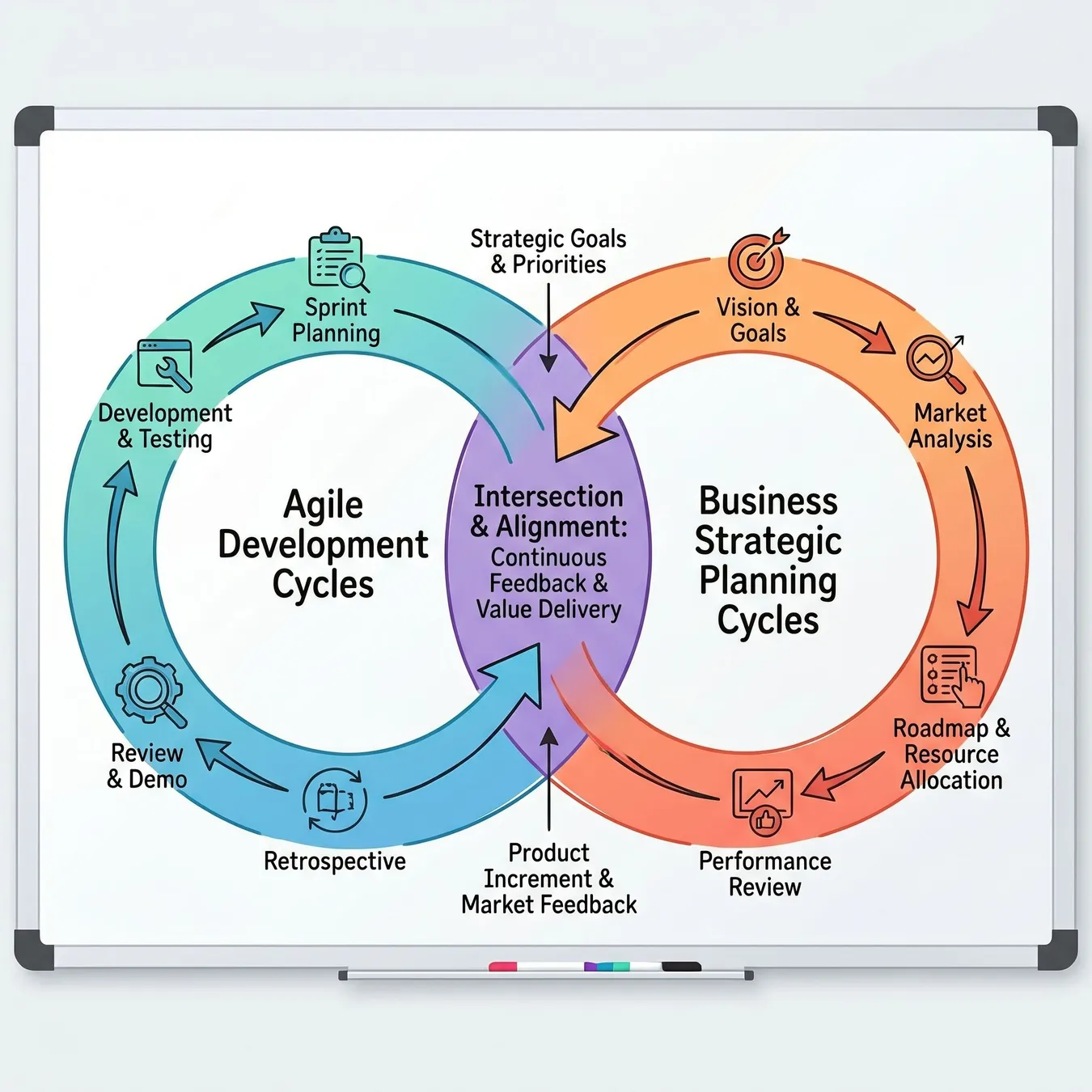
The intersection of agile execution and business strategy.
The Core Conflict: Iteration vs. Predictability
Executives typically think in quarters and fiscal years, while agile teams operate in two-week sprints. This temporal mismatch is the primary source of friction in scaling organizations. To resolve it, leaders must translate velocity into business value.
- Executive Need: Fixed timelines and budgets for market planning.
- Agile Reality: Scope flexibility to ensure product-market fit.
- The Solution: Outcome-based roadmapping over feature-based lists.
Establishing Shared Language for Success
Alignment starts with vocabulary. When engineering speaks about story points and business speaks about ROI, transparency suffers. Successful alignment requires a shared set of definitions for progress and health.
Tip.
// Leadership Tip
Defining Progress Through Business Value
Instead of reporting on the number of tickets closed, focus on how those tickets contribute to product management planning goals. This shifts the conversation from 'what did we do' to 'what did we achieve.'
Strategic Reporting Frameworks
Reporting should be tiered. What a Scrum Master needs is different from what a VP of Engineering needs, which is different from what a CEO needs. Alignment requires filtering data into actionable insights.
| Audience | Metric Focus | Reporting Cadence |
|---|---|---|
| Engineering Team | Sprint Velocity, Cycle Time | Daily/Bi-weekly |
| Product Leadership | Feature Completion, Roadmap Progress | Monthly |
| Executive Board | Strategic Outcomes, Resource Allocation | Quarterly |
Integrating Milestones into Agile Workflows
One of the most effective ways to provide predictability is by setting agile project milestones that align with business deadlines. These are not 'deadlines' in the waterfall sense, but rather high-level checkpoints for strategic pivots.
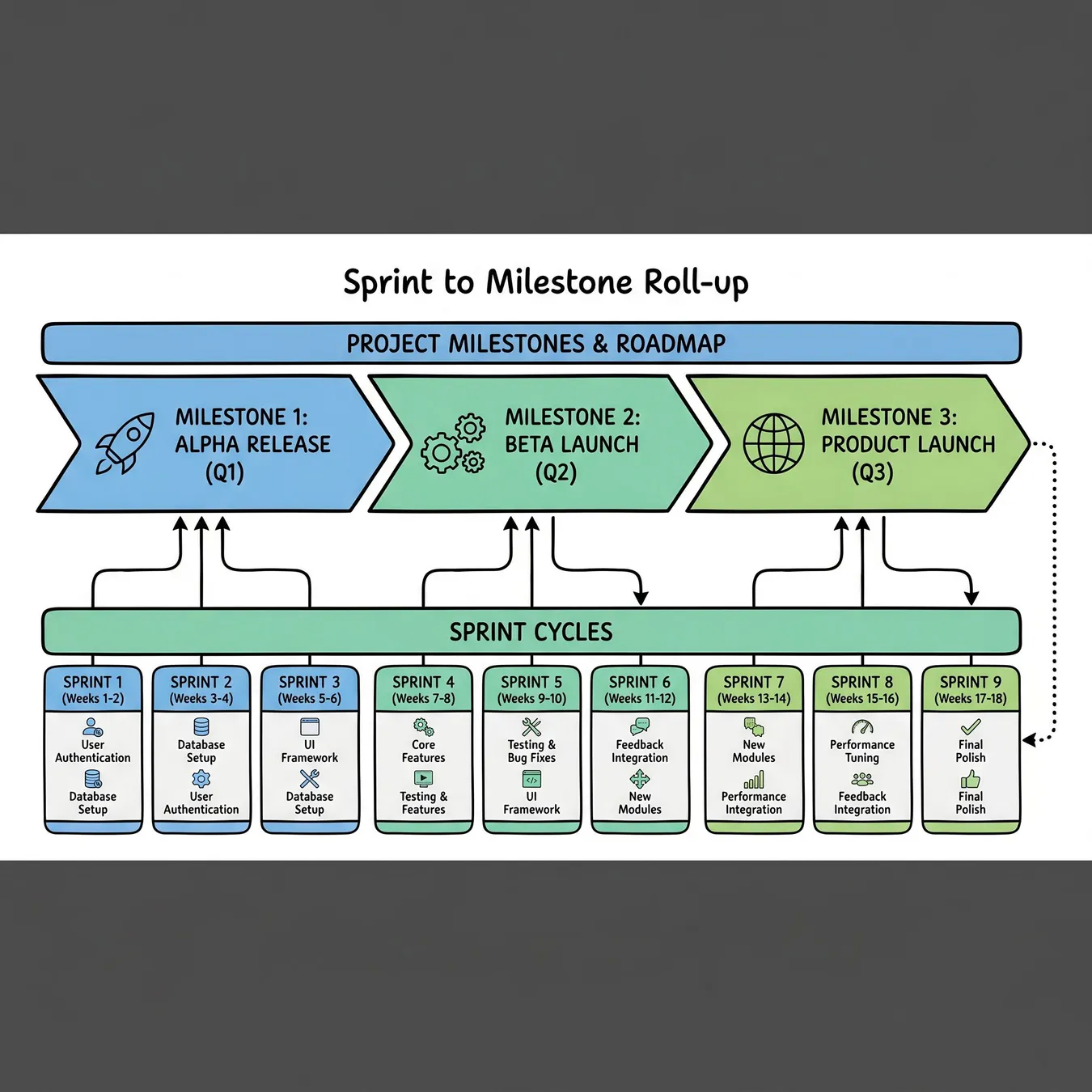
Visualizing the roll-up from sprints to milestones.
Managing the Tension of Technical Debt
Executives often view technical debt as a purely engineering concern. However, unmanaged debt is a business risk that slows down future delivery. Leaders must communicate the relationship between agile and technical debt clearly.
30-40%
Velocity Loss due to Debt
2.5x
Predictability Increase with Alignment
Operationalizing Alignment: A Step-by-Step Guide
01 / 04
phase 01 / 04
Audit Business Goals
phase 02 / 04
Backlog Mapping
phase 03 / 04
Cross-Functional Sync
phase 04 / 04
Reporting Automation
Common Pitfalls in Process Alignment
Focus on outcomes rather than outputs.
Involve business stakeholders in sprint reviews.
Use data to justify technical investments.
Hide technical challenges from leadership.
Commit to fixed-scope, fixed-date contracts internally.
Over-complicate reporting with raw Jira data.
Optimizing Workflows for Transparency
Alignment is easier when the underlying workflows are efficient. Utilizing process optimization techniques can help remove bottlenecks that cause reporting delays and unpredictable shipping cycles.
The Role of Automation in Alignment
Manual reporting is prone to bias and error. Automating the flow of data from development tools to executive dashboards ensures that leadership is always looking at the ground truth of the project.
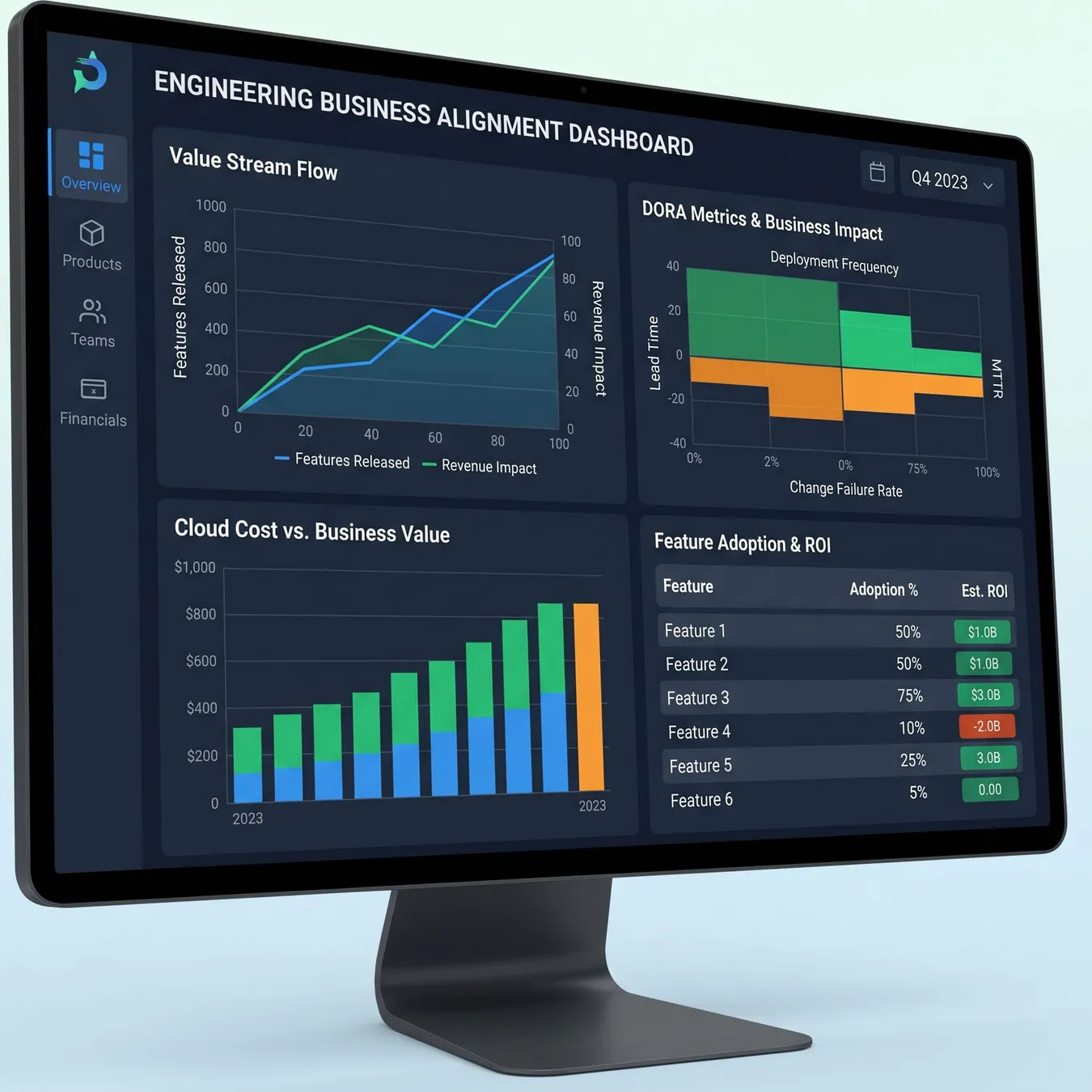
Automated dashboards bridge the data gap.
Frequently Asked Questions
The Cultural Aspect of Alignment
Process and tools are only half the battle. Alignment requires a culture of trust. When engineering is honest about risks, and business is flexible about scope, true predictability is achieved.
Predictability isn't about knowing exactly what will happen; it's about ensuring there are no surprises for the board when things change.
Alex Rivera · Fractional CTO
Checklist for Executive Alignment
Define top 3 business goals for the quarter.
Map every active epic to a business goal.
Establish a 'Red/Amber/Green' status for each goal.
Schedule a monthly alignment review.
Automate the collection of velocity and cycle time data.
Scaling Alignment as the Team Grows
What works for a team of 5 won't work for a team of 50. As you scale, alignment must be decentralized. Squad leads must become the primary communicators of business value for their specific domains.
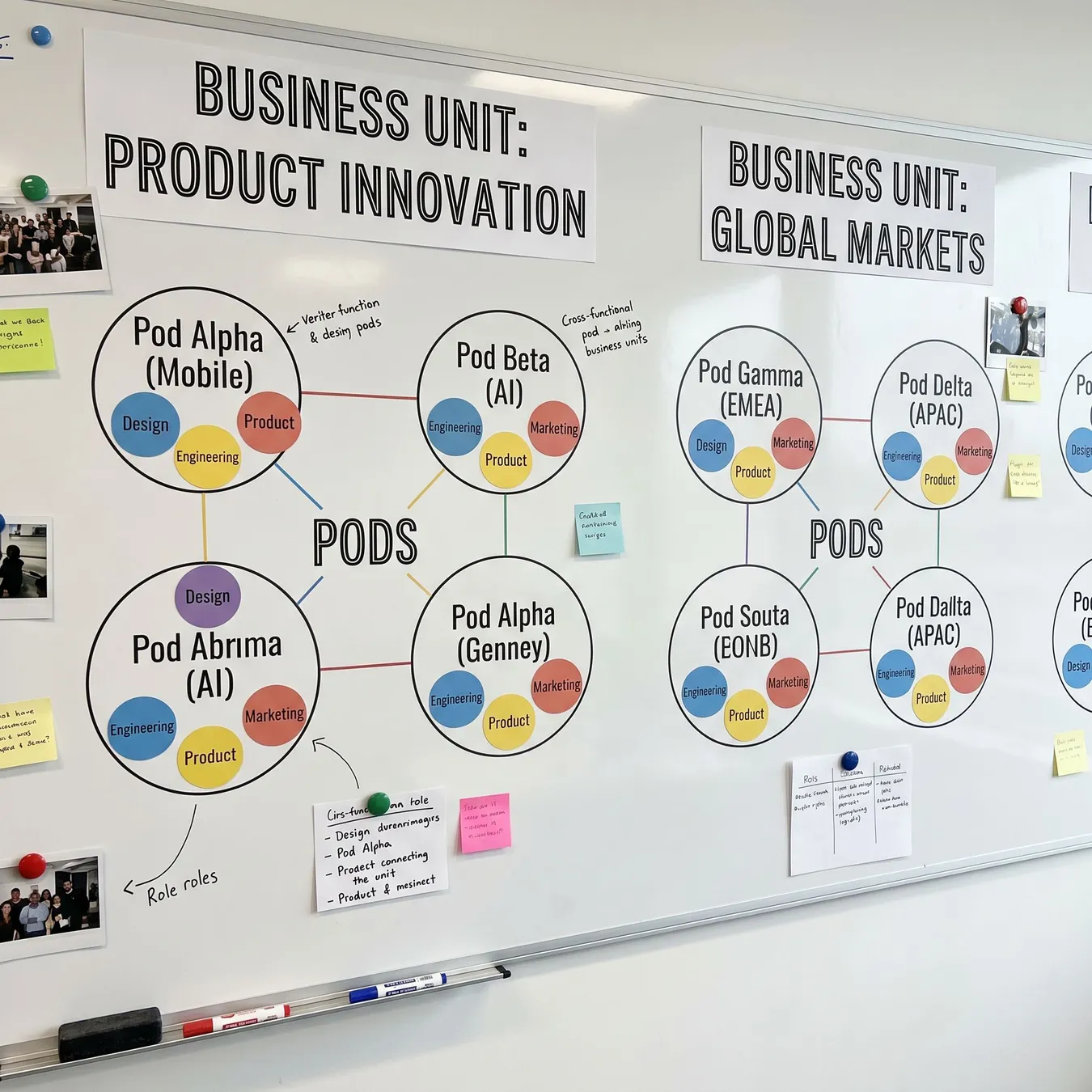
Scaling alignment through pod-based structures.
Building a Foundation for Predictable Scale
At Studio 402, we understand that software is a business investment. We don't just write code; we build systems that align with your strategic roadmap. Whether you are scaling an existing team or building an MVP from scratch, process alignment is at the core of our delivery model.
Our technical advisory services help engineering leaders bridge the gap between the sprint backlog and the boardroom. We provide the architectural depth and operational discipline needed to turn agile development into a predictable engine for growth.
Helping growth-stage companies achieve 95% roadmap predictability.
Based on 2026 client delivery audits.
Next Steps for Engineering Leaders
If your engineering team feels like a 'black box' to your executive leadership, it's time to restructure your processes. Start by auditing your current reporting and identifying where the business value is getting lost in translation.
Build a Predictable Engineering Engine
Ready to align your engineering execution with business goals? Let's discuss how Studio 402 can help you build a predictable, high-velocity organization.
Deepen Your Leadership Strategy
Keep reading
More in Engineering Leadership & Scaling
Index
Related categories
Final Thoughts on Agile Maturity
Agile maturity is not measured by how strictly you follow Scrum ceremonies, but by how effectively those ceremonies serve the business. True alignment is a continuous process of refinement and communication.
- Leadership
- Agile
- Strategy
- Predictability
By focusing on shared goals and transparent reporting, engineering leaders can move from being a cost center to a strategic partner in the company's success.

Engineering and business in perfect sync.
The journey to alignment is iterative, much like the software we build. Start small, prove the value of aligned reporting, and scale the process as trust grows across the organization.
For more insights on scaling and leadership, explore our full library of technical consulting resources.