
Overview
Modernizing the SDLC with Agentic AI Coding Tools
A strategic guide for engineering leaders on integrating autonomous AI agents across the full software development lifecycle to maximize team leverage and shipping velocity.

The Agentic Shift in Software Development
The software development lifecycle is undergoing a fundamental transformation. By integrating ai in software development, engineering teams are moving beyond simple autocomplete to agentic systems that can plan, execute, and verify complex tasks across the full SDLC.
40%
Reduction in manual boilerplate
2.5x
Increase in PR velocity
60%
Faster bug remediation
Defining Agentic AI Coding Tools in the Full SDLC
Unlike traditional copilots, agentic ai coding tools full software development lifecycle integration means these tools operate with a degree of autonomy. They don't just suggest code; they manage environments, run tests, and iterate on feedback.
- Autonomous planning and task decomposition
- Context-aware environment management
- Self-healing code and automated refactoring
- Continuous integration and verification loops
The Strategic Impact of AI on Engineering Velocity
Modernizing your stack requires understanding the tools for ai development that support these agentic workflows. This includes vector databases for codebase context and orchestration layers for agent communication.
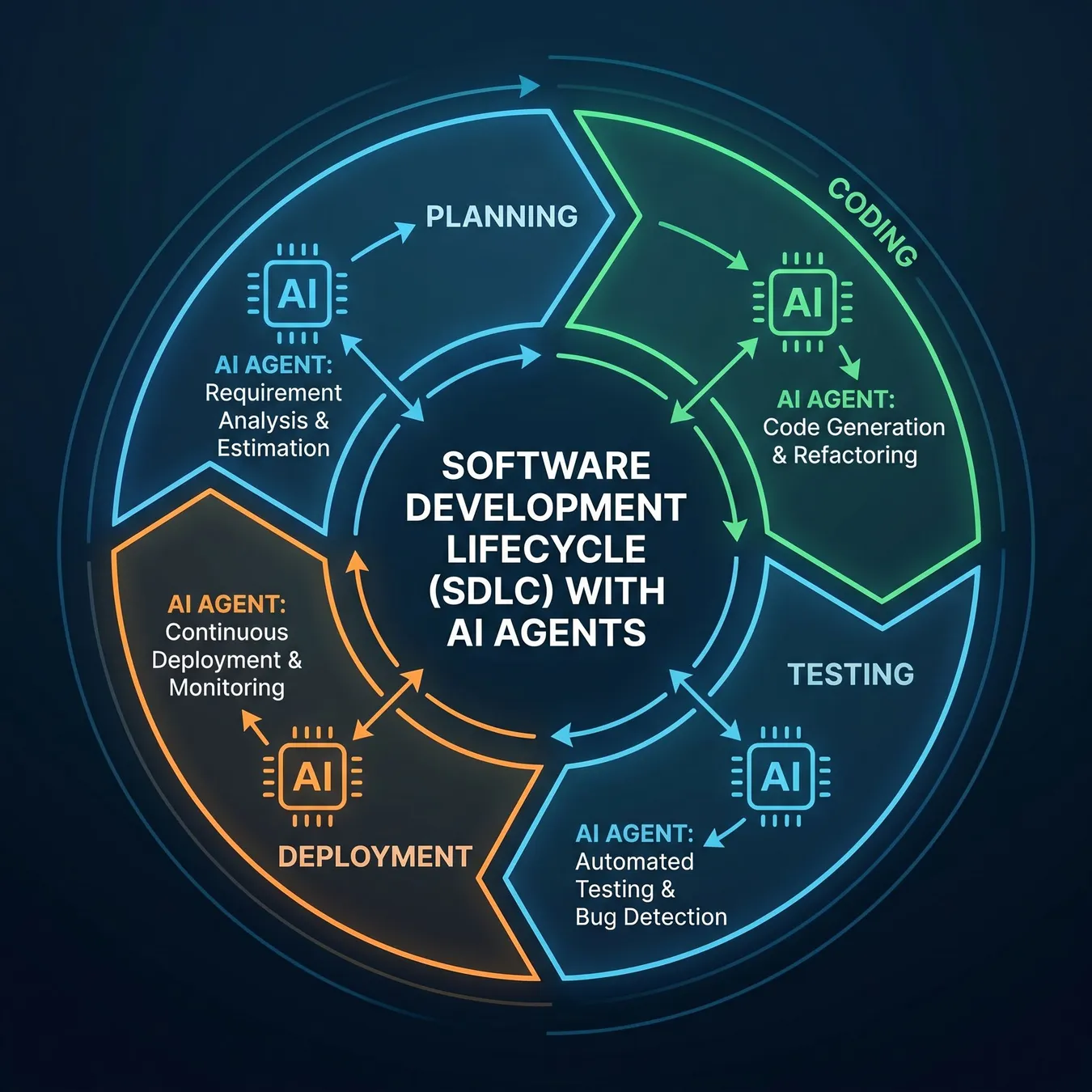
Mapping AI agents to the traditional SDLC phases.
Modernizing the Planning and Discovery Phase
Agents can now ingest product requirements and generate technical specifications, identifying potential architectural bottlenecks before a single line of code is written.
Tip.
// Agentic Discovery
Autonomous Implementation and Coding
During implementation, agentic tools can handle the 'heavy lifting' of scaffolding and boilerplate, allowing senior engineers to focus on high-level logic and security-critical paths.
Let agents handle repetitive boilerplate
Provide clear context via documentation
Review agent-generated logic for security
Blindly commit agent-generated code
Ignore the underlying system architecture
Use agents without proper sandbox environments
Revolutionizing Quality Assurance with AI
The testing phase is where agentic tools shine by implementing software testing ai protocols that automatically generate unit tests and perform regression checks on every commit.
| Feature | Traditional QA | Agentic QA |
|---|---|---|
| Test Coverage | Manual/Scripted | Autonomous/Generative |
| Feedback Loop | Hours/Days | Minutes |
| Maintenance | High Effort | Self-Healing |
AI-Assisted Code Reviews and Security
To maintain high standards, teams must implement ai-assisted code review best practices. This ensures that while agents accelerate delivery, they do not compromise on system integrity.
Deployment and Operational Resilience
Beyond the IDE, agentic tools monitor deployment health and can autonomously trigger rollbacks or patches if performance metrics deviate from the baseline.
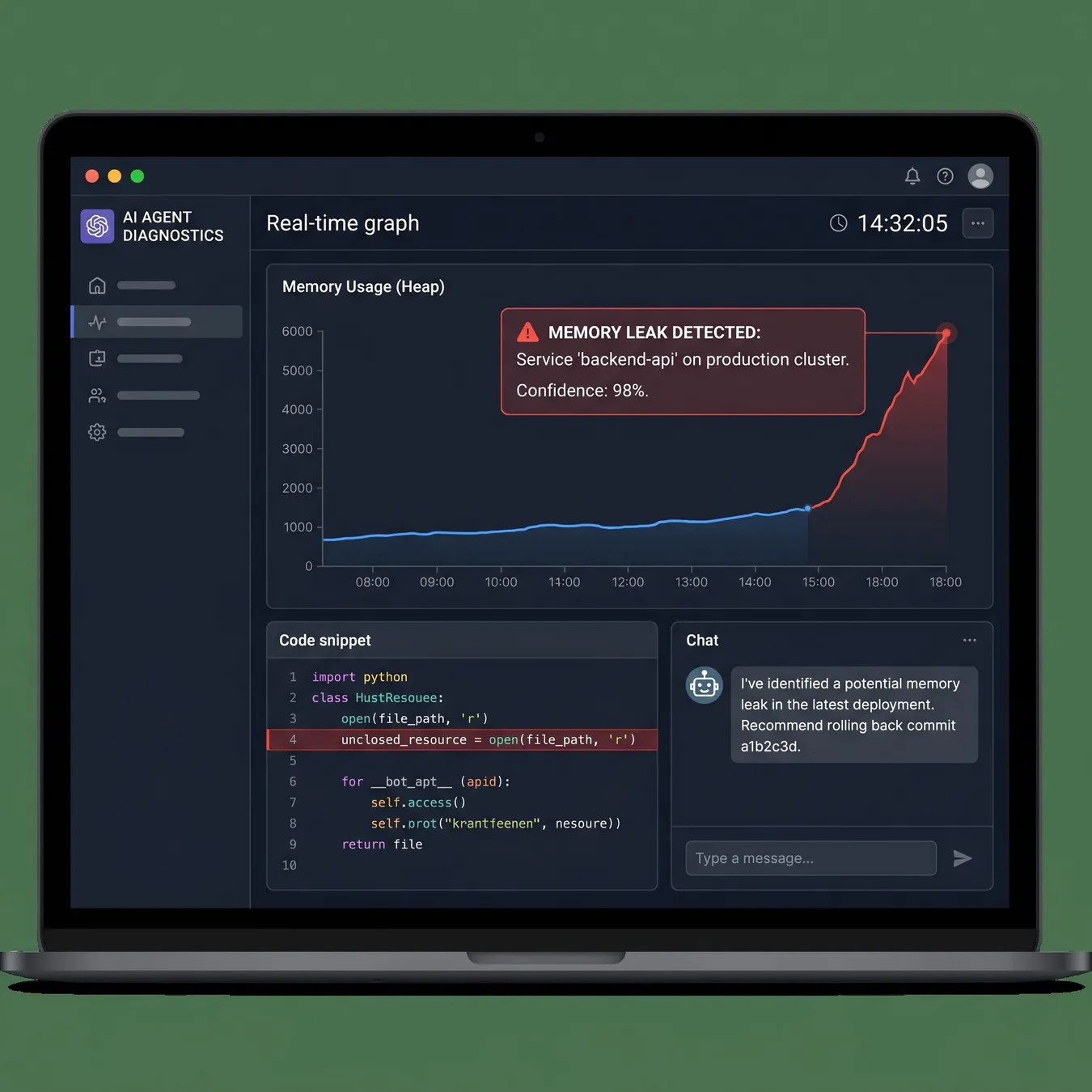
Autonomous monitoring and incident response.
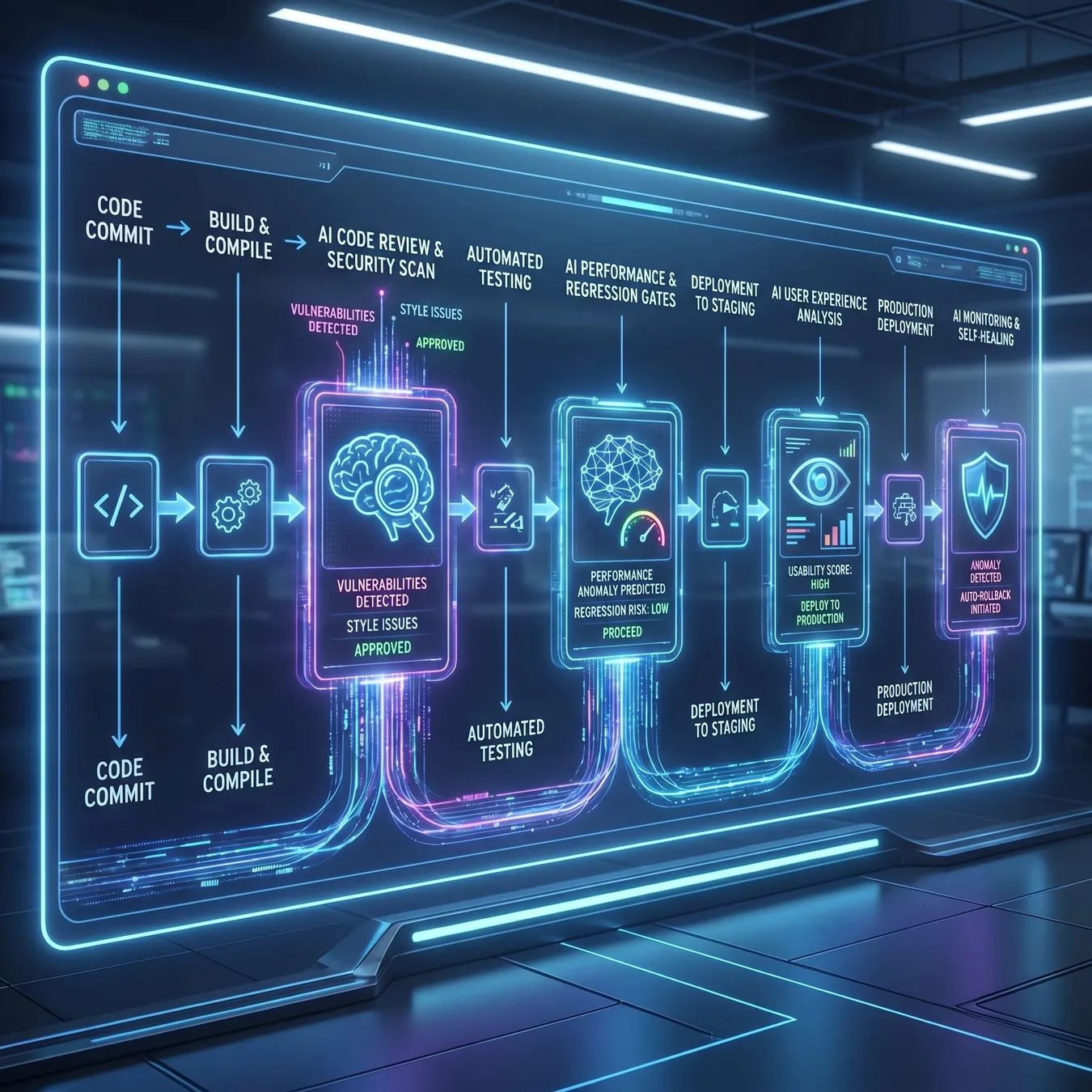
Hardening the release process with AI.
Key Challenges in Adopting Agentic Tools
While the benefits are clear, engineering leaders must navigate challenges related to context windows, hallucination risks, and the 'black box' nature of some agentic decisions.
- 01
Ensuring high-quality context injection
- 02
Managing agent-to-agent communication overhead
- 03
Maintaining human-in-the-loop oversight
- 04
Balancing speed with security compliance
The Role of Engineering Leadership
Modernizing the SDLC isn't just a technical shift; it's a cultural one. Leaders must redefine roles, focusing on 'engineering leverage' rather than just headcount.
The goal of agentic AI is not to replace the engineer, but to amplify their impact by removing the friction of the mundane.
Senior Engineering Partner · Studio 402
Measuring Success in an AI-Native SDLC
Success should be measured by outcomes: lead time for changes, deployment frequency, and mean time to recovery (MTTR). Agentic tools should move the needle on all three.
Baseline current DORA metrics
Identify highest-friction SDLC phases
Pilot agentic tools in non-critical paths
Establish AI-native security protocols
Future Trends: The Multi-Agent Ecosystem
We are moving toward a future where specialized agents—architects, coders, testers, and SREs—collaborate in a unified ecosystem to deliver software at unprecedented speeds.
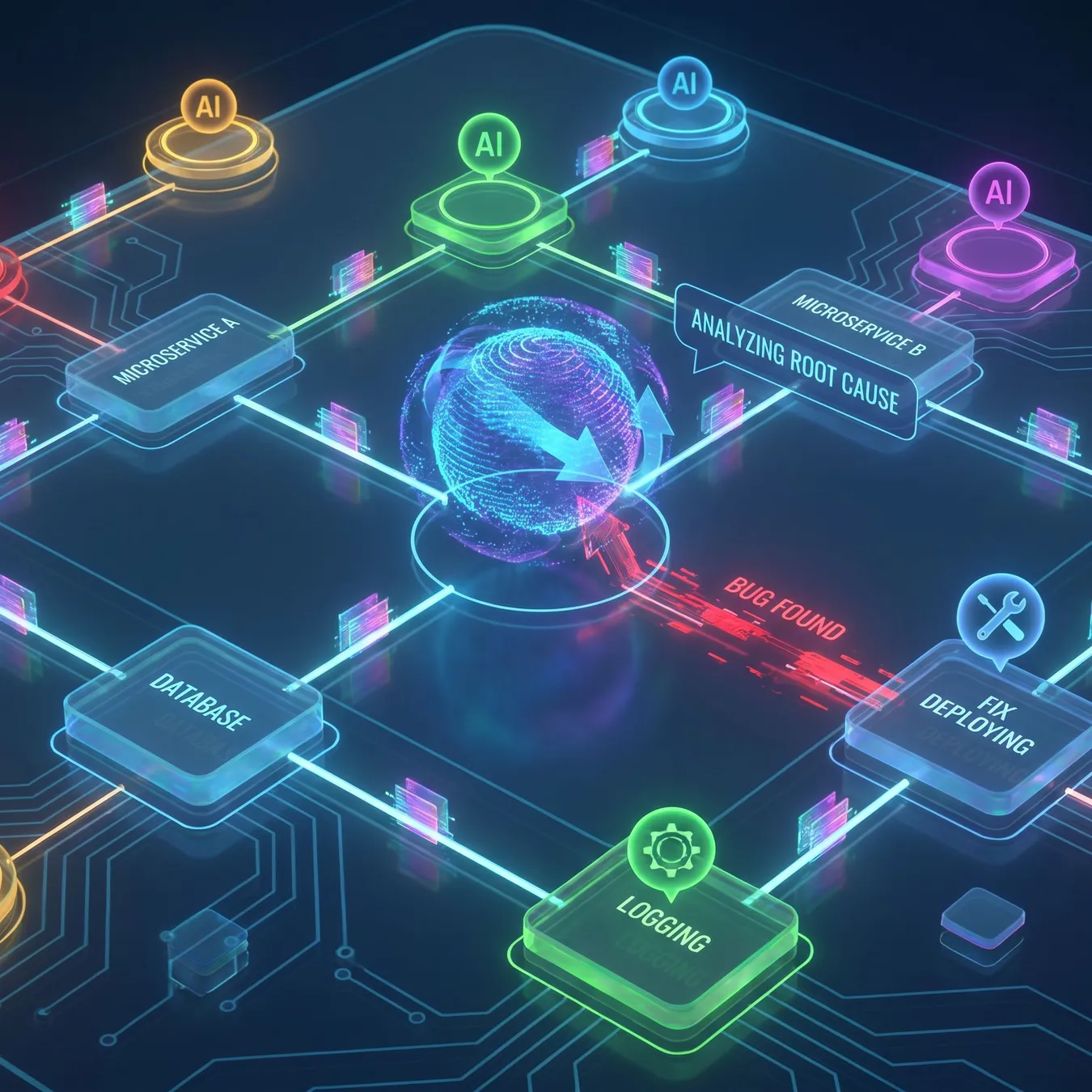
The evolution of multi-agent collaboration.
Integrating AI with Studio 402
At Studio 402, we don't just talk about AI; we build it into the foundations of every product we engineer. Whether you are building an MVP or scaling a global platform, we help you integrate agentic systems that scale.
Frequently Asked Questions
The Path Forward for Engineering Teams
The transition to an agentic SDLC is a journey of incremental gains. By focusing on leverage and velocity, teams can build more durable, scalable software with less manual overhead.
01 / 04
phase 01 / 04
Audit
phase 02 / 04
Pilot
phase 03 / 04
Scale
phase 04 / 04
Optimize
Bridging Strategy and Execution
If you are looking to modernize your engineering organization but aren't sure where to start, Studio 402 provides the technical consulting and hands-on building needed to turn AI potential into production reality.
Trusted by venture-backed startups to scale engineering velocity.
Studio 402: Production-ready software, built for scale.
Modernize Your SDLC Today
Ready to integrate agentic AI into your development workflow? Let's build a high-velocity engineering engine together.
Further Reading on AI Engineering
Keep reading
More in Engineering Leadership & Scaling
Index
Related categories
Continuous Learning in AI-Native Environments
As the landscape of agentic tools evolves, staying informed on the latest infrastructure shifts is vital for maintaining a competitive edge in software delivery.
- Engineering Leadership
- AI-Native SDLC
- Scaling Velocity
- CTO Advisory
The integration of agentic AI coding tools full software development lifecycle is not just a trend; it is the new standard for high-performance engineering teams in 2026.
Final Strategic Takeaways
- Focus on agentic autonomy, not just suggestions.
- Prioritize security and human-in-the-loop reviews.
- Measure success through DORA metrics and team leverage.
- Partner with experts to avoid common AI integration pitfalls.
By following this guide, engineering leaders can navigate the complexity of modernizing their SDLC and build a foundation for long-term technical excellence.