
Structuring Mobile App Development Teams for Scale
Scaling a mobile product requires more than just hiring additional developers. A high-performing mobile app development team structure must balance platform-specific expertise with cross-functional velocity to ensure consistent delivery.
40%
Efficiency gain with pod-based structures
2x
Faster release cycles in modular teams
0
Silos tolerated in modern mobile orgs
Foundational Models for Mobile Team Organization
When scaling software engineering teams, the first decision is often between functional silos and cross-functional pods. For mobile, this choice dictates how quickly you can ship features across iOS and Android.
Trade-off
3 pros · 3 cons
Pros
High feature velocity
Shared business context
Reduced handoff friction
Cons
Risk of platform drift
Duplicated effort
Harder to maintain standards
The Role of Platform-Specific Expertise
Even in cross-functional squads, deep platform knowledge is non-negotiable. Effective mobile app engineering requires specialists who understand the nuances of Swift, Kotlin, and the underlying OS behaviors.
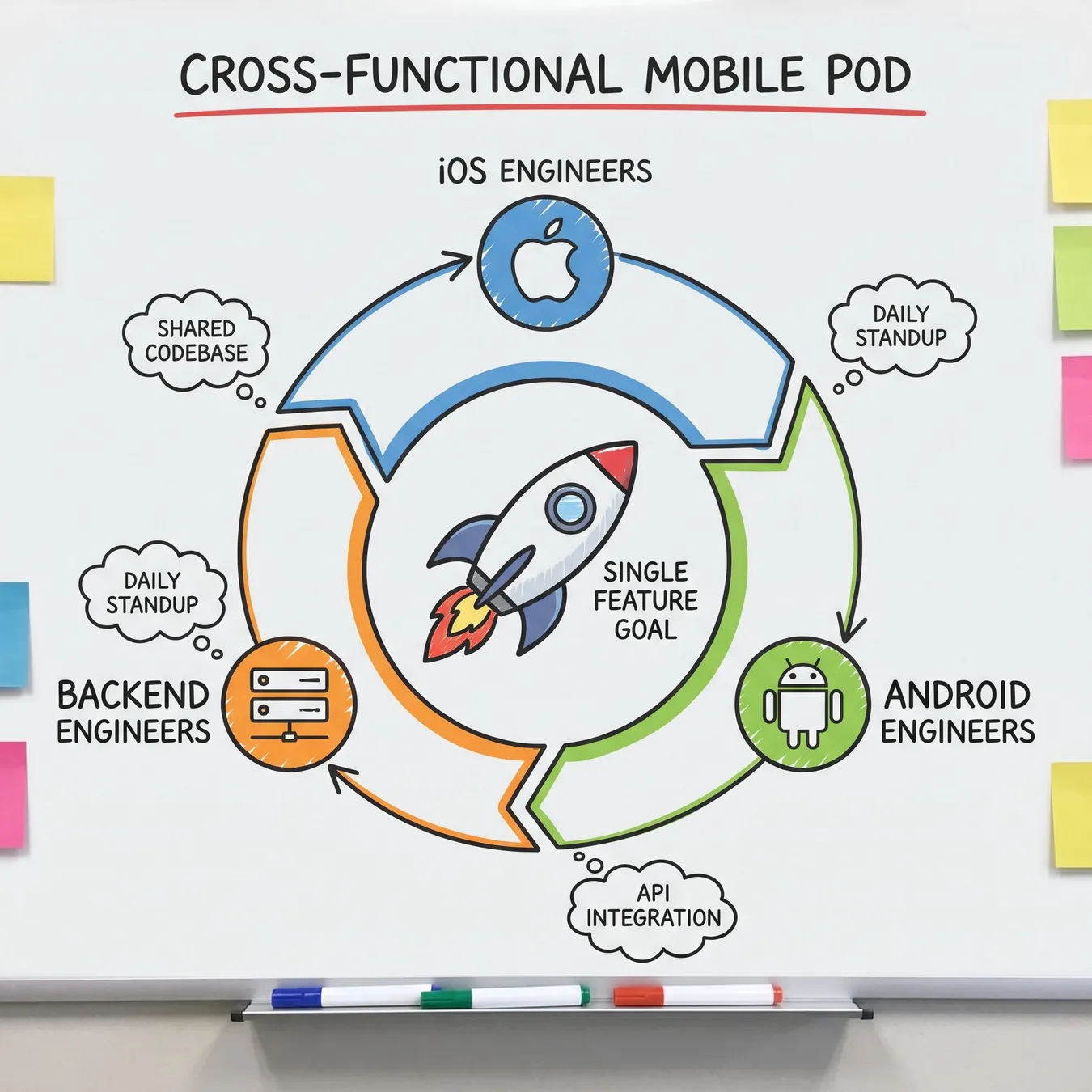
The Cross-Functional Mobile Pod Model
Structuring for Cross-Platform vs. Native
Your choice of technology stack—Native, React Native, or Flutter—heavily influences your team structure. Native teams often require separate iOS and Android leads, while cross-platform teams focus on unified logic.
- Native: Requires dual-platform specialists and synchronized roadmaps.
- Cross-Platform: Focuses on shared codebases with smaller platform-specific 'bridge' roles.
- Hybrid: Best for content-heavy apps with limited hardware interaction.
Scaling Beyond the First Five Engineers
As the team grows, coordination overhead increases. This is the point where you must transition from a 'flat' structure to a tiered organization with clear technical leadership roles.
01 / 03
phase 01 / 03
Phase 1: The Generalist Squad
phase 02 / 03
Phase 2: Platform Specialization
phase 03 / 03
Phase 3: Domain-Driven Pods
Integrating Mobile with Platform Engineering
Mobile teams shouldn't manage their own CI/CD pipelines in a vacuum. A robust platform engineering team structure provides the infrastructure mobile devs need to ship safely.
Info.
// The Mobile DevOps Gap
Technical Leadership in Mobile Organizations
Who owns the architectural vision? In a scaled mobile team, you need a Mobile Architect or Staff Engineer who looks across all pods to prevent fragmentation.
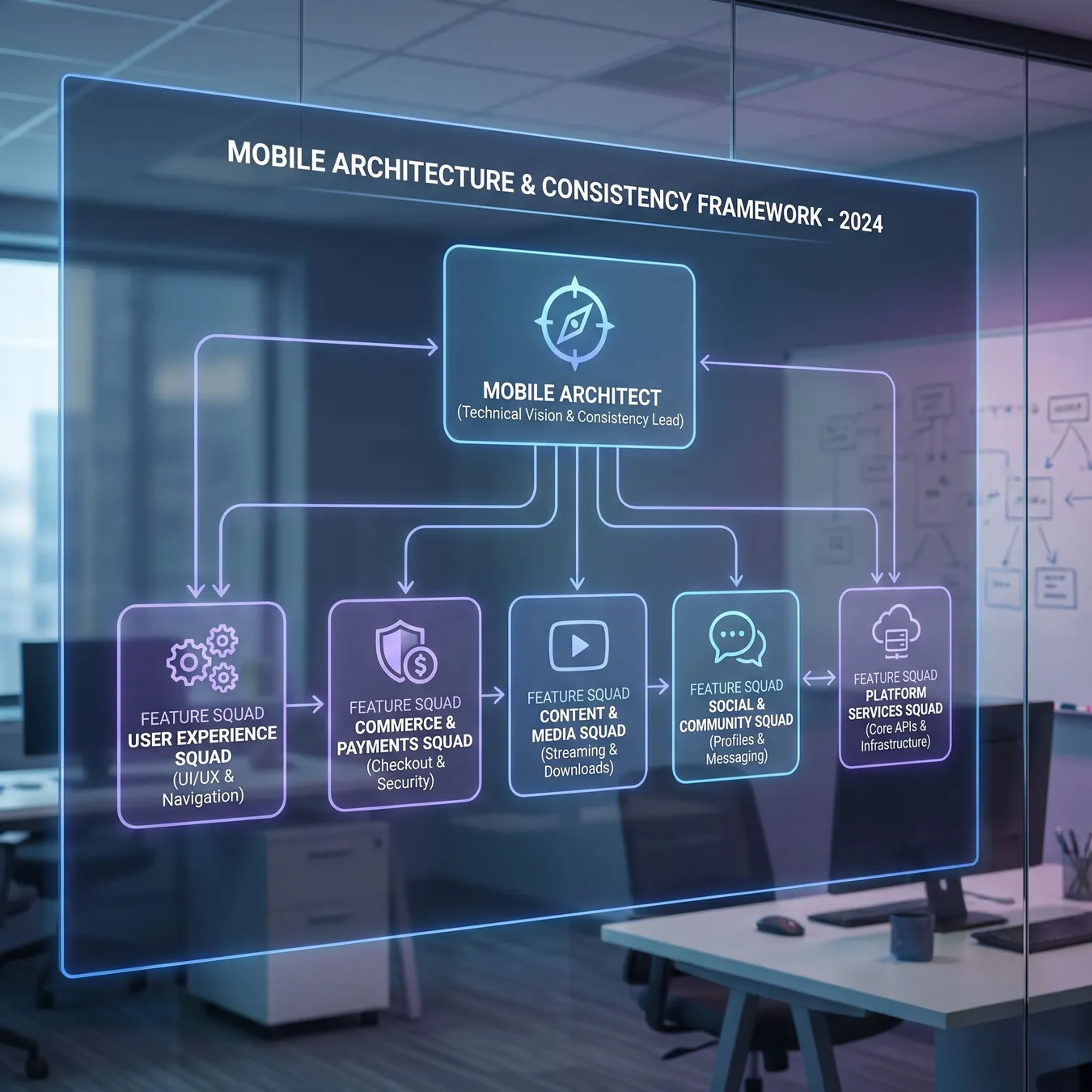
Centralized Architecture vs. Distributed Execution
Maintaining Quality at Scale
Quality is the first casualty of rapid scaling. Implementing strict code review standards and automated testing is essential when building mobile apps at scale.
Mandatory peer reviews for all platform-specific code
Automated UI testing on real device farms
Standardized design system components
Weekly cross-platform syncs for feature parity
Common Pitfalls in Mobile Team Structuring
Hire platform specialists for core architecture
Align mobile pods with business outcomes
Invest in shared internal tooling
Treat mobile as a 'frontend' afterthought
Force identical workflows on iOS and Android
Ignore the overhead of app store releases
The Impact of Team Structure on Release Cycles
Your organizational chart is your release pipeline. If your team is structured by function, expect long integration phases. If structured by pod, expect faster, incremental updates.
| Structure | Release Frequency | Communication Overhead |
|---|---|---|
| Functional Silos | Monthly | High |
| Feature Pods | Bi-Weekly | Medium |
| Platform Guilds | Weekly | Low |
Communication Channels for Scaled Teams
How do you keep 50 developers aligned? Guilds and Chapters (borrowed from the Spotify model) are effective ways to maintain platform excellence across different squads.

The iOS Guild in Action

Chapter-Based Mentorship
Hiring for Mobile Scale
When scaling, look for 'T-shaped' engineers: those with deep expertise in one platform (iOS or Android) but a broad understanding of API design and product strategy.
The best mobile teams aren't just groups of coders; they are product-minded engineers who understand that the app is the primary touchpoint for the user.
Alex Rivera · VP of Engineering
Managing Technical Debt in Mobile Pods
In a fast-moving pod, technical debt can accumulate quickly. Successful leaders allocate 20% of every sprint to 'platform health' to ensure the codebase remains maintainable.
The Role of QA in Mobile Team Structure
Should QA be embedded or centralized? For scale, embedded QA engineers in each pod ensure that testing happens during development, not as a final hurdle.
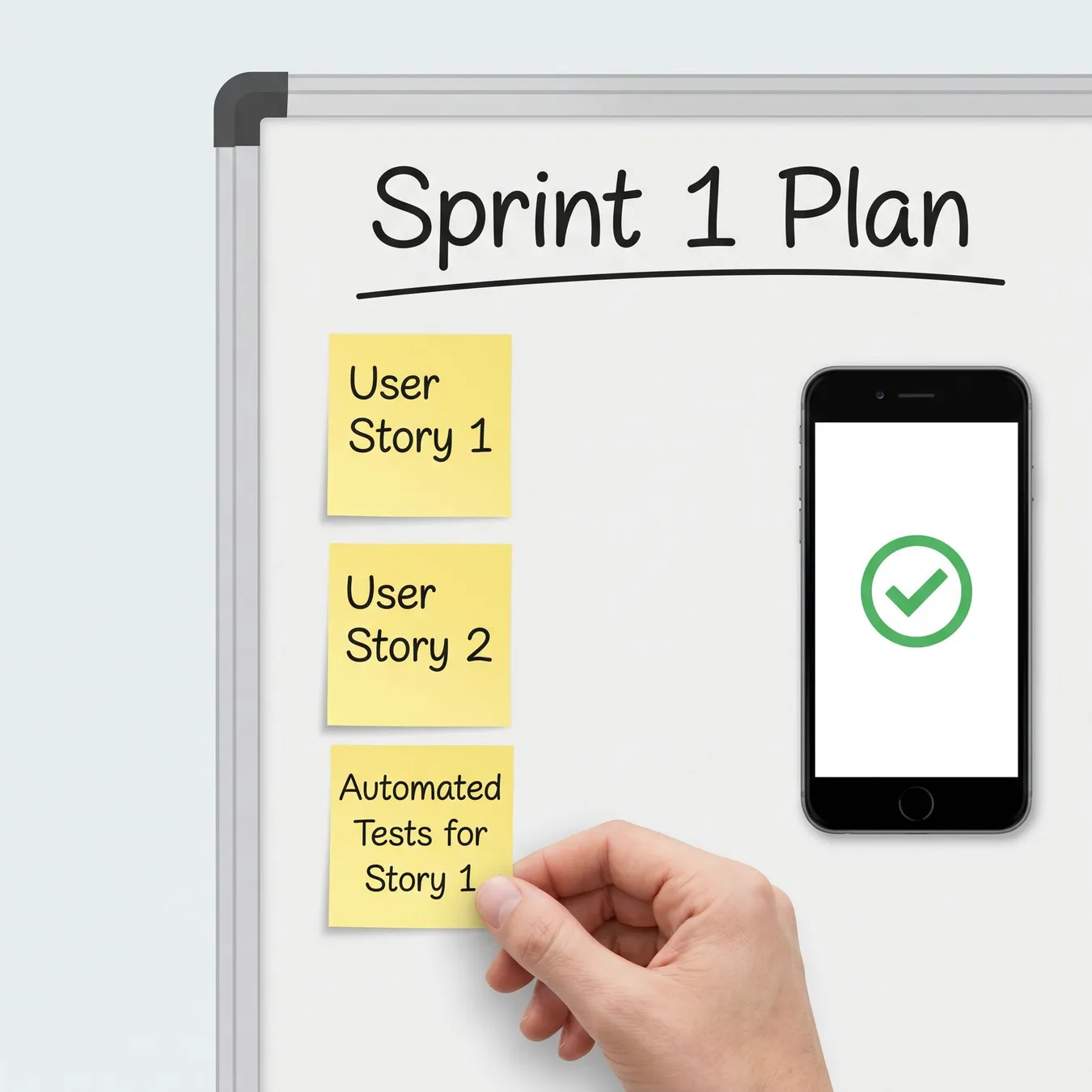
Integrating QA into Mobile Pods
Structuring for Global Mobile Audiences
If your app serves a global market, your team structure may need to include localization specialists or 'Regional Pods' that focus on specific market requirements.
Frequently Asked Questions
Bridging Strategy to Execution
Structuring a team is only half the battle; you also need the right execution partner to help you navigate the transition from a scrappy startup to a scaled enterprise.
At Studio 402, we help engineering leaders design and deploy high-scale mobile teams. Whether you are rebuilding a prototype or scaling to millions of users, we provide the architectural depth and operational scaffolding you need.
Trusted by growth-stage startups to scale mobile engineering.
From MVP rescue to production-grade systems.
Ready to Scale Your Mobile Engineering?
Let's discuss how to structure your team for maximum velocity and technical excellence.
Further Reading on Engineering Leadership
Keep reading
More in Engineering Leadership & Scaling
Index
Related categories
- Engineering Leadership
- Mobile Strategy
- Scaling
- Team Structure
Designing the right organization is an iterative process. As your product evolves, your team must evolve with it to maintain a competitive edge in the mobile market.
Final Thoughts on Organizational Design
Remember that structure should always follow strategy. Define your product goals first, then build the team that is best equipped to achieve them.