
Scaling Up vs. Scaling Out in Software Engineering
When your application experiences a surge in traffic or data, your infrastructure must adapt. Choosing between scaling up and scaling out in software engineering is a fundamental decision for any technical leader.
- Infrastructure
- Engineering Leadership
- System Design
- Growth
Defining Vertical Scaling: The Scale Up Approach
Scaling up, or vertical scaling, involves adding more power to an existing machine. This typically means increasing CPU, RAM, or storage capacity on a single server to handle higher loads.
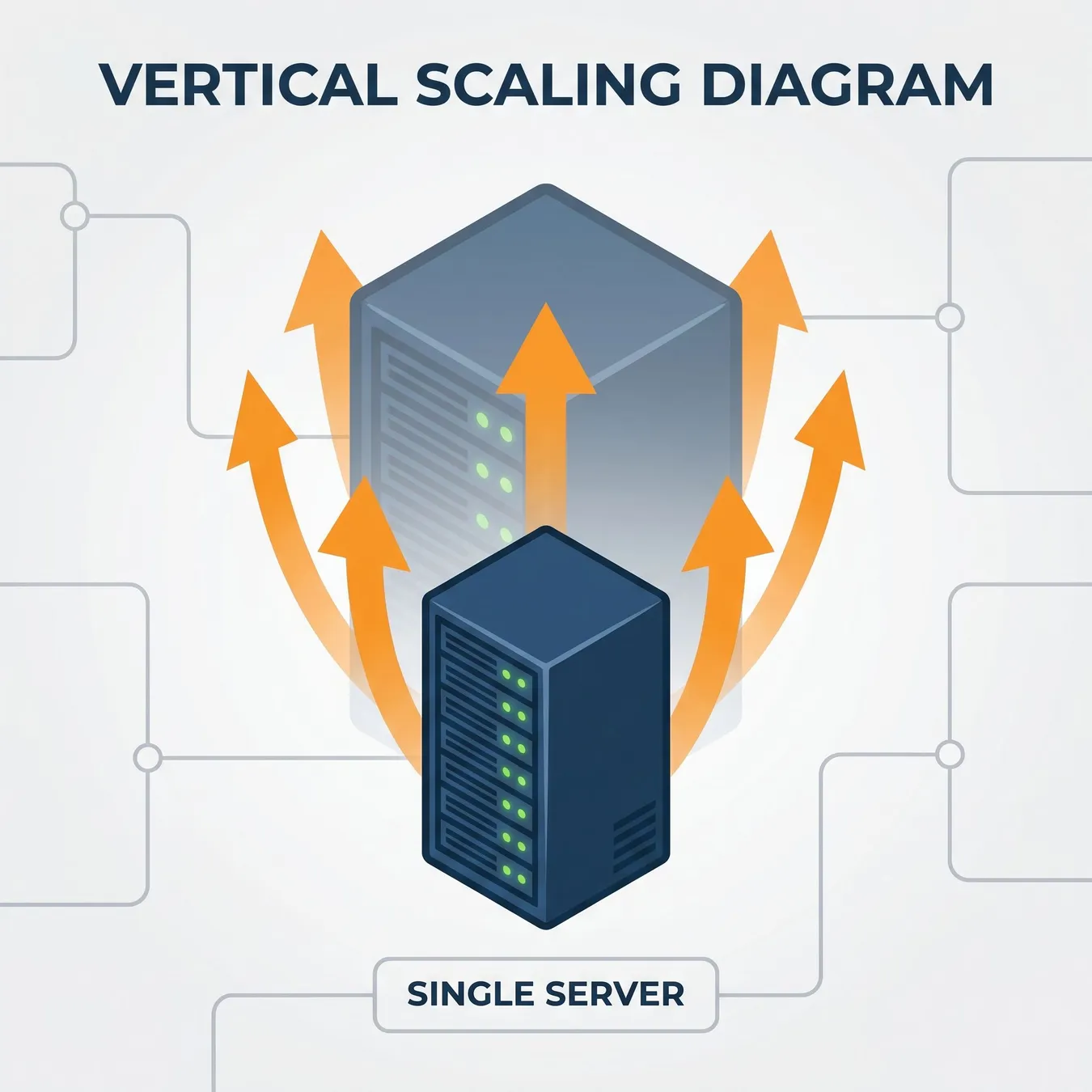
Vertical scaling focuses on increasing the capacity of a single resource.
- Lower architectural complexity
- No need for load balancing initially
- Simplified data consistency
- Easier to manage for small teams
Defining Horizontal Scaling: The Scale Out Approach
Scaling out, or horizontal scaling, means adding more machines to your pool of resources. Instead of one giant server, you distribute the load across multiple smaller instances.
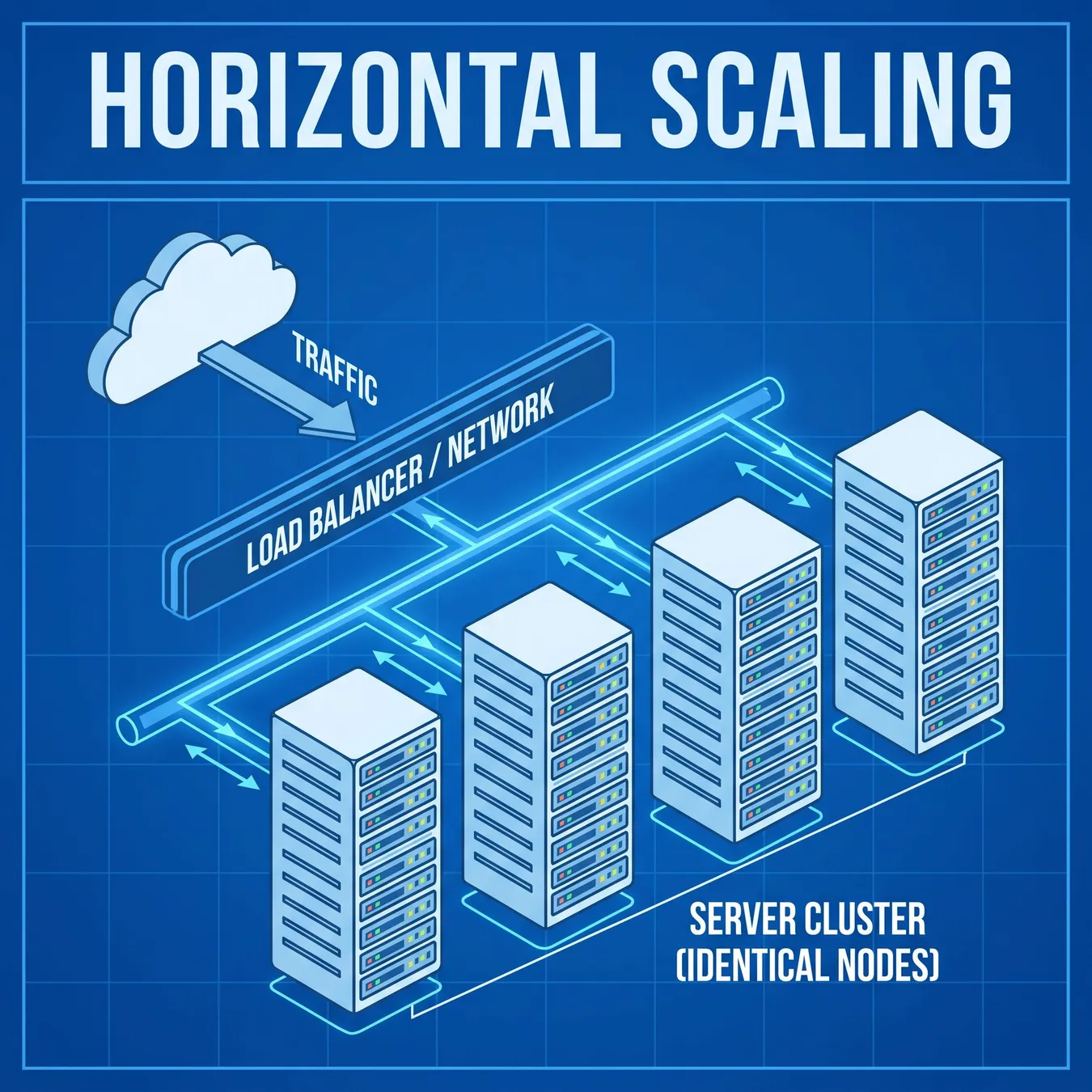
Horizontal scaling distributes traffic across a cluster of servers.
Tip.
// Pro Tip
Direct Comparison: Vertical vs. Horizontal
| Feature | Scaling Up (Vertical) | Scaling Out (Horizontal) |
|---|---|---|
| Complexity | Low | High |
| Cost Efficiency | Diminishing returns | Linear scaling |
| Fault Tolerance | Single point of failure | High availability |
| Maintenance | Requires downtime | No downtime |
When to Choose Vertical Scaling
Vertical scaling is often the best choice for early-stage startups or applications with predictable, low-to-medium traffic. It allows you to move fast without over-engineering.
Advantages of Scaling Up
Trade-off
3 pros · 3 cons
Pros
Simple implementation
Lower administrative overhead
No code changes required
Cons
Hardware limits
Single point of failure
Expensive at high end
When to Choose Horizontal Scaling
As your user base grows, you will eventually hit the 'ceiling' of vertical scaling. Horizontal scaling provides the elasticity needed for global reach and high availability.
The Role of Load Balancers
In a scale-out model, a load balancer is essential. It acts as a traffic cop, routing requests to the healthiest and least-busy servers in your cluster.
Cost Implications for Engineering Leaders
Linear
Cost Efficiency
99.99%
Uptime Goal
Optimized
Resource Utilization
While vertical scaling is cheaper initially, the cost of high-end hardware grows exponentially. Scaling out allows you to use commodity hardware or smaller cloud instances more efficiently.
Architectural Considerations for Scaling Out
To scale out effectively, your application should ideally be stateless. If you're unsure if your current setup is ready, a software scalability audit can identify critical bottlenecks.
Stateless vs. Stateful
Store session data in Redis
Use a distributed database
Implement health checks
Store files on local disk
Rely on sticky sessions
Hardcode server IPs
Impact on Engineering Team Structures
Technical scaling is often mirrored by organizational scaling. As you move to distributed systems, you may need to rethink your engineering team structures to support autonomous service ownership.
The Hybrid Approach: Best of Both Worlds
Most mature organizations use a combination. They scale up their database instances to handle complex queries while scaling out their web and application tiers for high throughput.
Cloud Infrastructure and Scaling
Modern cloud providers make both strategies easier. Implementing a scalable cloud architecture allows you to automate these decisions based on real-time metrics.
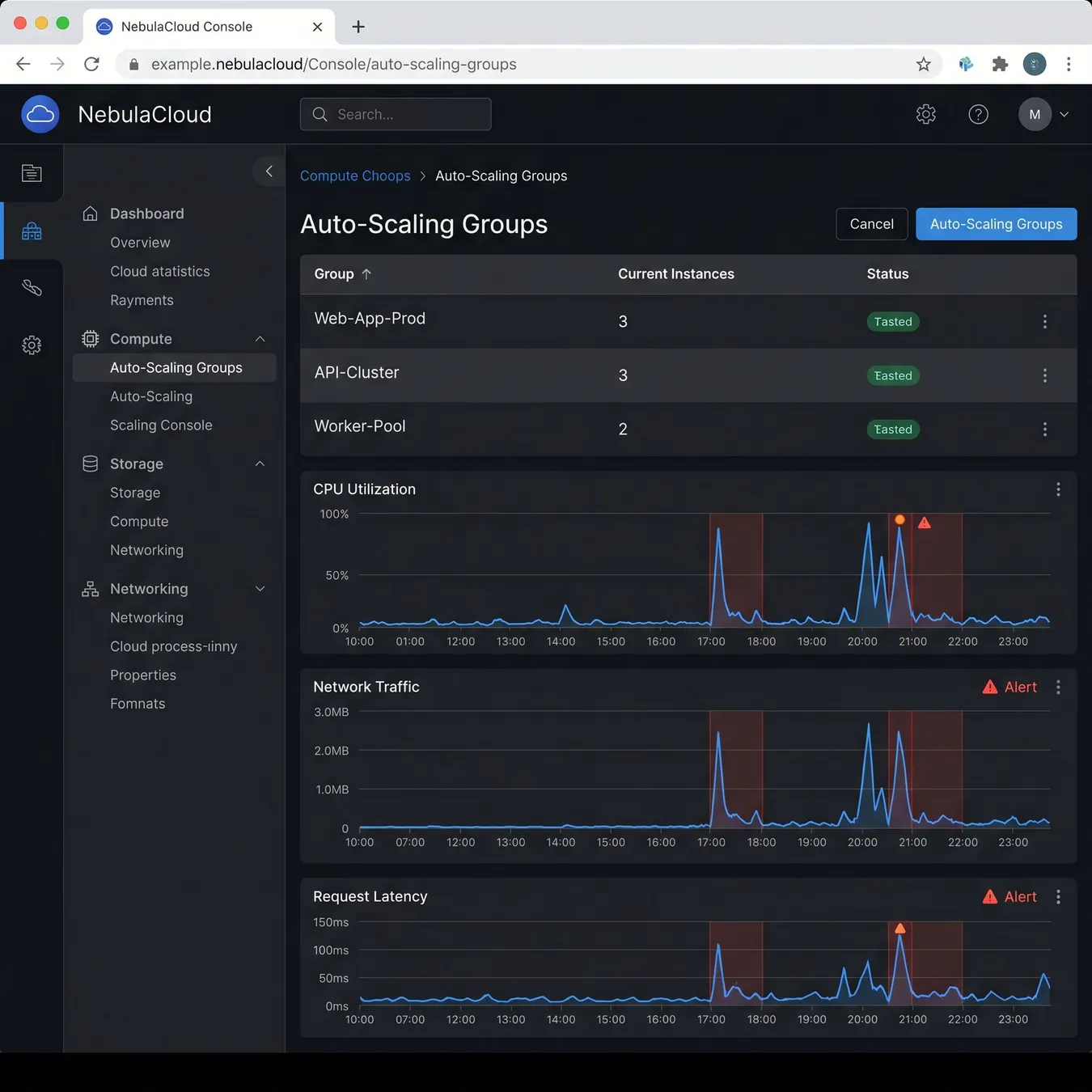
Cloud platforms provide the tools to automate scaling operations.
Common Scaling Pitfalls to Avoid
- 01
Scaling before optimizing code
- 02
Ignoring database lock contention
- 03
Neglecting network latency in distributed systems
- 04
Over-provisioning and wasting budget
Strategic Decision Framework
01 / 04
phase 01 / 04
Audit
phase 02 / 04
Evaluate
phase 03 / 04
Architect
phase 04 / 04
Deploy
Scaling for Future-Proof Systems
Scaling is not a one-time event but a continuous process. Working with a software engineering consulting company can help you navigate these transitions without downtime.
Frequently Asked Questions
Bridging Strategy to Execution
At Studio 402, we don't just advise on scaling; we build the infrastructure that makes it possible. Whether you are moving from a single server to a Kubernetes cluster or optimizing a legacy monolith, we provide the senior engineering depth required.
Studio 402 helped us transition to a horizontal scaling model just in time for our largest customer launch. Their architectural insights saved us months of rework.
Engineering Director · Series B Fintech
How We Help You Scale
- Infrastructure audits and performance tuning
- Cloud migration and auto-scaling configuration
- Database sharding and replication strategies
- Microservices architecture design
Trusted by growth-stage startups to manage production-ready scale.
Over 50+ systems architected for high availability.
Next Steps for Your Infrastructure
Don't wait for a system failure to address your scaling needs. A proactive approach ensures your product remains responsive as your business expands.
Scale Your Engineering with Confidence
Ready to build a foundation that grows with your business? Let's discuss your scaling roadmap.
Deepen Your Knowledge
Keep reading
More in Engineering Leadership & Scaling
Index