
Restructuring Engineering Teams for AI-Native Productivity
The introduction of AI copilots and agentic development tools is fundamentally altering software engineering team structure changes ai copilot developer productivity. CTOs must shift from managing headcount to managing leverage, where AI acts as a multiplier for every role in the organization.
- Engineering Leadership
- AI Strategy
- Team Scaling
- Productivity
The Shift from Functional Silos to AI-Enabled Pods
Traditional engineering team structures often rely on deep specialization. However, as AI reduces the cost of context switching, teams are evolving into autonomous pods where a single engineer can handle full-stack tasks with high proficiency.
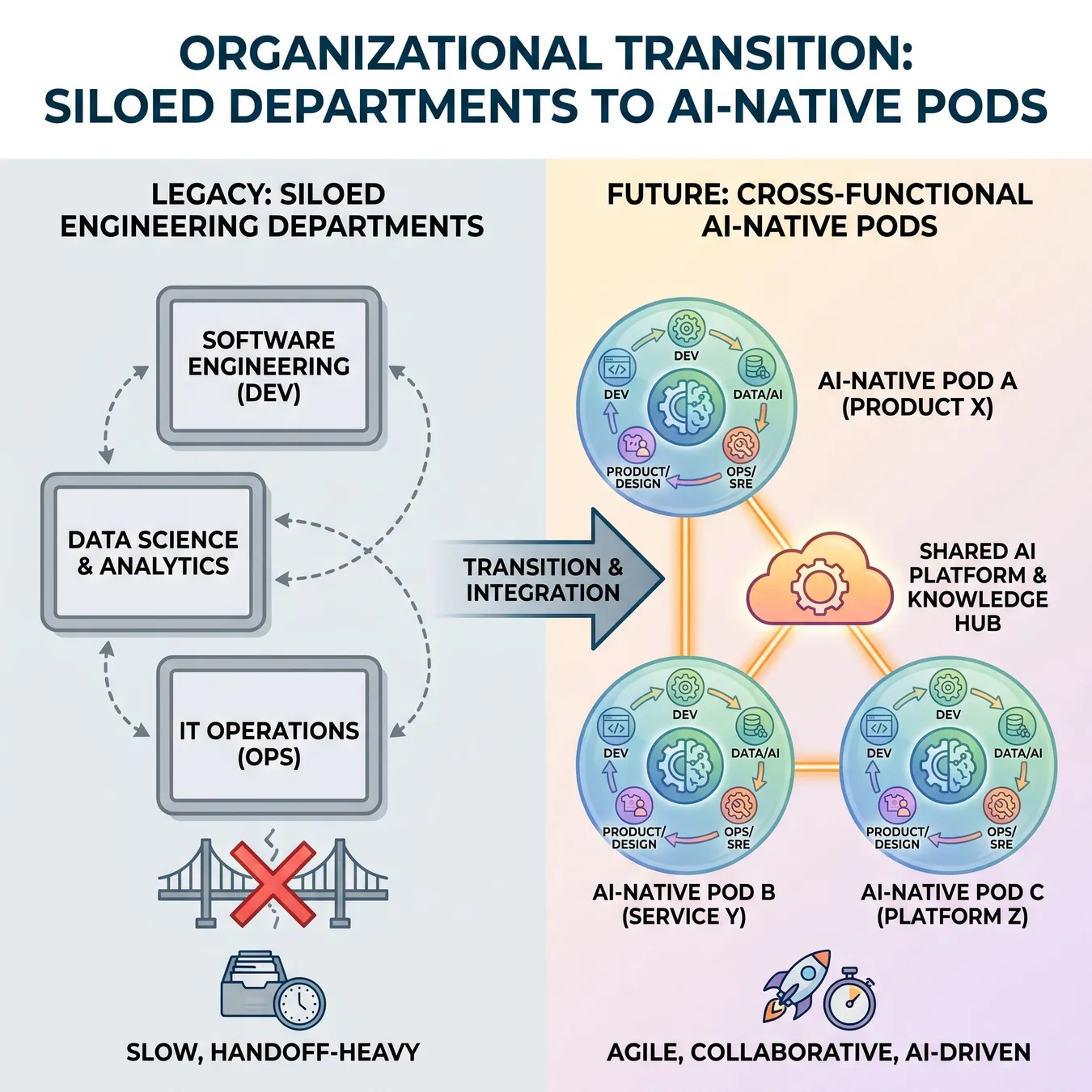
Visualizing the shift toward high-leverage, AI-enabled engineering pods.
In this new model, the 'Senior Engineer' role expands to become a 'Systems Architect and Reviewer.' AI handles the boilerplate and initial implementation, while the human focus shifts to security, architecture, and complex business logic.
Redefining Developer Productivity Engineering
Measuring output by lines of code or ticket volume is obsolete. Modern developer productivity engineering focuses on the speed of the feedback loop and the quality of the AI-human collaboration.
40%
Reduction in boilerplate coding time
2.5x
Increase in deployment frequency
15%
Improvement in code review speed
The Role of the AI-Native Platform Team
To support these pods, a robust platform engineering team structure is required. This team builds the internal tools and agentic pipelines that allow feature developers to ship without worrying about infrastructure complexity.
Info.
// Platform Leverage
Evolving the SDLC for Agentic Tools
The software development lifecycle is no longer a linear human process. Teams must learn to automate software development lifecycle stages using agentic AI that can write tests, perform audits, and suggest refactors.
01 / 04
phase 01 / 04
Requirement Ingestion
phase 02 / 04
Copilot-Led Implementation
phase 03 / 04
Automated Validation
phase 04 / 04
Human-in-the-Loop Review
Comparing Traditional vs. AI-Native Structures
Trade-off
4 pros · 4 cons
Pros
High individual leverage
Reduced communication overhead
Faster time-to-market for MVPs
Lower barrier to full-stack work
Cons
Risk of AI-generated technical debt
Higher requirement for senior oversight
Need for specialized platform tools
Potential for 'vibe-code' instability
Operationalizing AI-Native Productivity
Restructuring isn't just about changing titles; it's about changing habits. Leaders must incentivize code quality and review rigor over raw output volume.
Incentivize code review thoroughness
Invest in high-quality internal documentation
Standardize AI prompts and agentic workflows
Focus on system-level architecture
Measure success by lines of code
Allow AI to commit directly to production
Ignore the rising cost of technical debt
Neglect junior engineer mentorship

The future of engineering collaboration is hybrid: human intuition plus AI scale.
The Impact on Hiring and Role Definition
As AI takes over the 'how' of coding, the 'what' and 'why' become the primary differentiators for talent. Hiring managers should look for engineers with strong product sense and architectural depth.
- The Rise of the 'Product Engineer'
- The Evolution of QA into 'Agentic Orchestration'
- The Shift from Junior Dev to 'AI-Assisted Apprentice'
- The Critical Need for Security-First Engineering
Managing the Junior Engineer Gap
One of the biggest risks in AI-native restructuring is the erosion of the junior talent pipeline. Without the 'grunt work' of boilerplate coding, juniors need new ways to learn the fundamentals.
Warning.
// The Mentorship Crisis
Infrastructure Requirements for AI Productivity
You cannot achieve AI-native productivity on a legacy infrastructure stack. Modern teams require high-velocity CI/CD, ephemeral environments, and robust observability.
| Infrastructure Component | Traditional Need | AI-Native Requirement |
|---|---|---|
| CI/CD | Daily deploys | Instant, agent-triggered releases |
| Testing | Manual/Unit tests | LLM-generated regression suites |
| Environments | Static Staging | Dynamic, per-feature ephemeral pods |
Strategic Advisory for the AI Transition
Transitioning to an AI-native structure is a multi-quarter journey. It requires a clear roadmap that balances immediate productivity gains with long-term system health.
Audit current developer workflows for AI bottlenecks
Define clear AI usage and security policies
Restructure one pilot team into an AI-native pod
Implement automated code quality gates
Establish new productivity metrics beyond velocity
Bridging Strategy to Execution with Studio 402
At Studio 402, we don't just advise on AI-native structures; we build them. We help CTOs and founders navigate the complex transition from traditional development to high-leverage AI engineering.
Whether you are rescuing a 'vibe-coded' prototype or scaling a global engineering organization, our technical consulting and advisory services provide the senior leadership needed to ship production-ready software at AI speed.
The goal isn't to replace engineers with AI; it's to replace slow processes with high-leverage systems that allow engineers to focus on what actually matters.
Studio 402 Engineering Leadership · Technical Advisory
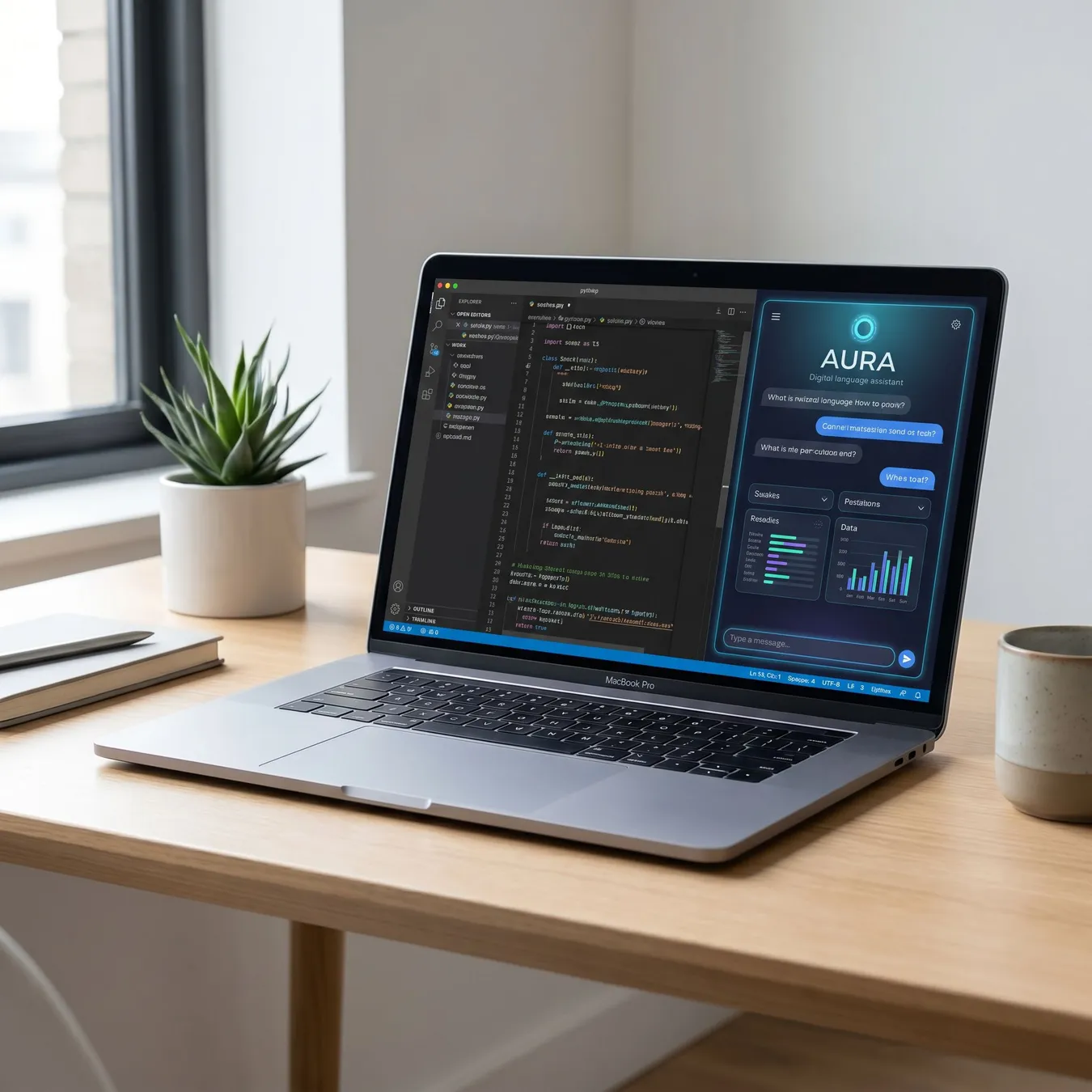
Studio 402 helps you build the foundations for AI-native engineering excellence.
Frequently Asked Questions
Next Steps for Engineering Leaders
The window for early-mover advantage in AI-native productivity is closing. Leaders who restructure now will outpace competitors who remain tethered to manual development cycles.
Ready to Evolve Your Engineering Org?
Let's discuss how to restructure your team for maximum AI leverage and production-grade reliability.
Trusted by growth-stage startups to scale engineering systems.
Studio 402: Production-ready software, built for real-world scale.
Additional Resources for CTOs
Explore our deep dives into platform engineering, technical debt, and the future of the software development lifecycle.
- The Economics of AI-Generated Code
- Security Best Practices for Copilot Adoption
- Building Resilient Infrastructure for Agentic Workflows
- The Future of Technical Leadership in 2026
Keep reading
More in Engineering Leadership & Scaling
Index
Related categories
Engineering leadership is no longer just about people management; it is about systems orchestration. By embracing AI-native structures, you empower your team to build the future faster.

Collaboration remains the core of engineering, even in an AI-first world.
If you are ready to move beyond the hype and implement durable, scalable engineering processes, Studio 402 is your partner in execution.
Final Thoughts on AI Leverage
The most successful engineering teams of the next decade will be those that treat AI as a core team member, not just a tool. This requires a fundamental shift in culture, structure, and mindset.