
Principles of Scalable Software Engineering
Scalability in software engineering is the measure of a system's ability to handle increasing amounts of work by adding resources. It is not just about surviving a traffic spike; it is about maintaining predictable performance and cost-efficiency as demand grows.
- System Design
- Architecture
- Performance
- Cloud Native
When designing scalable systems, engineers must look beyond the immediate feature set. You are building a foundation that must support future load without requiring a complete rewrite every time your user base doubles.
Core Dimensions of Software Scalability
True software scalability covers three primary dimensions: load, administrative, and functional. Understanding these helps developers prioritize architectural investments based on actual business needs.
- Load Scalability: Handling more requests or data without latency degradation.
- Administrative Scalability: Managing increasing numbers of nodes or tenants easily.
- Functional Scalability: Adding new features without increasing system complexity exponentially.
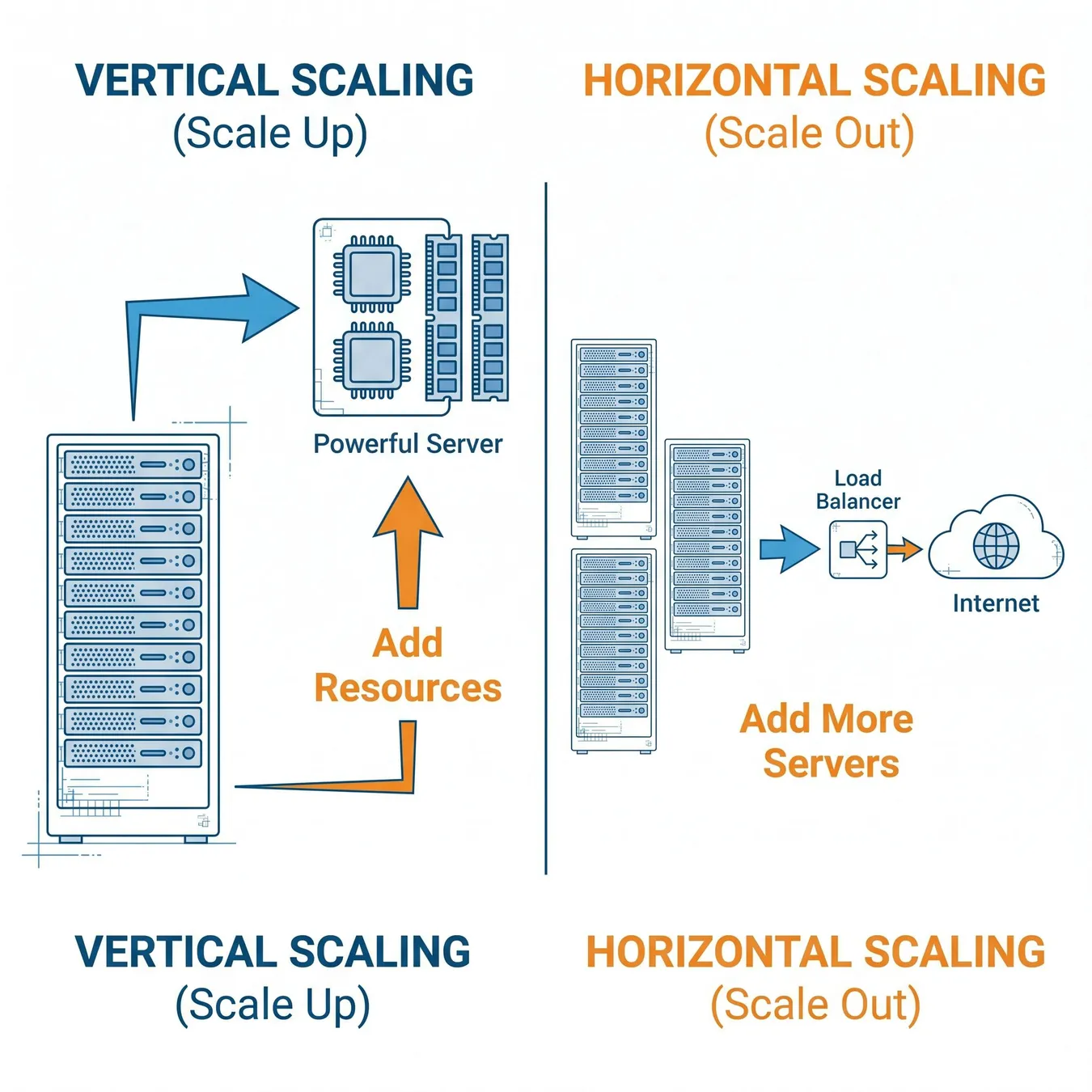
The fundamental choice: Scaling Up vs. Scaling Out.
Vertical vs. Horizontal Scaling
The first decision in architecture scalability is how to add capacity. While vertical scaling (adding RAM/CPU) is simpler, it has a hard ceiling and creates a single point of failure.
Trade-off
3 pros · 3 cons
Pros
No code changes required
Lower operational complexity
Consistent data locality
Cons
Hard hardware limits
Requires downtime to upgrade
Single point of failure
Horizontal scaling, or scaling out, involves adding more machines to a pool. This is the gold standard for designing scalable systems because it allows for near-infinite growth and high availability.
The Principle of Statelessness
To achieve horizontal scale, application servers should be stateless. This means any request can be handled by any server instance because no client data is stored locally on the disk or in memory.
Tip.
// Scaling Tip
Database Scalability and Partitioning
The database is often the primary bottleneck in scalable software design. When a single instance can no longer handle the write load, you must look toward partitioning and sharding.
- 01
Vertical Partitioning: Splitting tables into different databases by functional area.
- 02
Horizontal Partitioning (Sharding): Splitting rows of a single table across multiple databases.
- 03
Read Replicas: Offloading read-heavy traffic to secondary instances.
Asynchronous Processing and Queues
Not every task needs to happen in the request-response cycle. Scalable systems use message queues to handle heavy lifting—like image processing or email delivery—in the background.
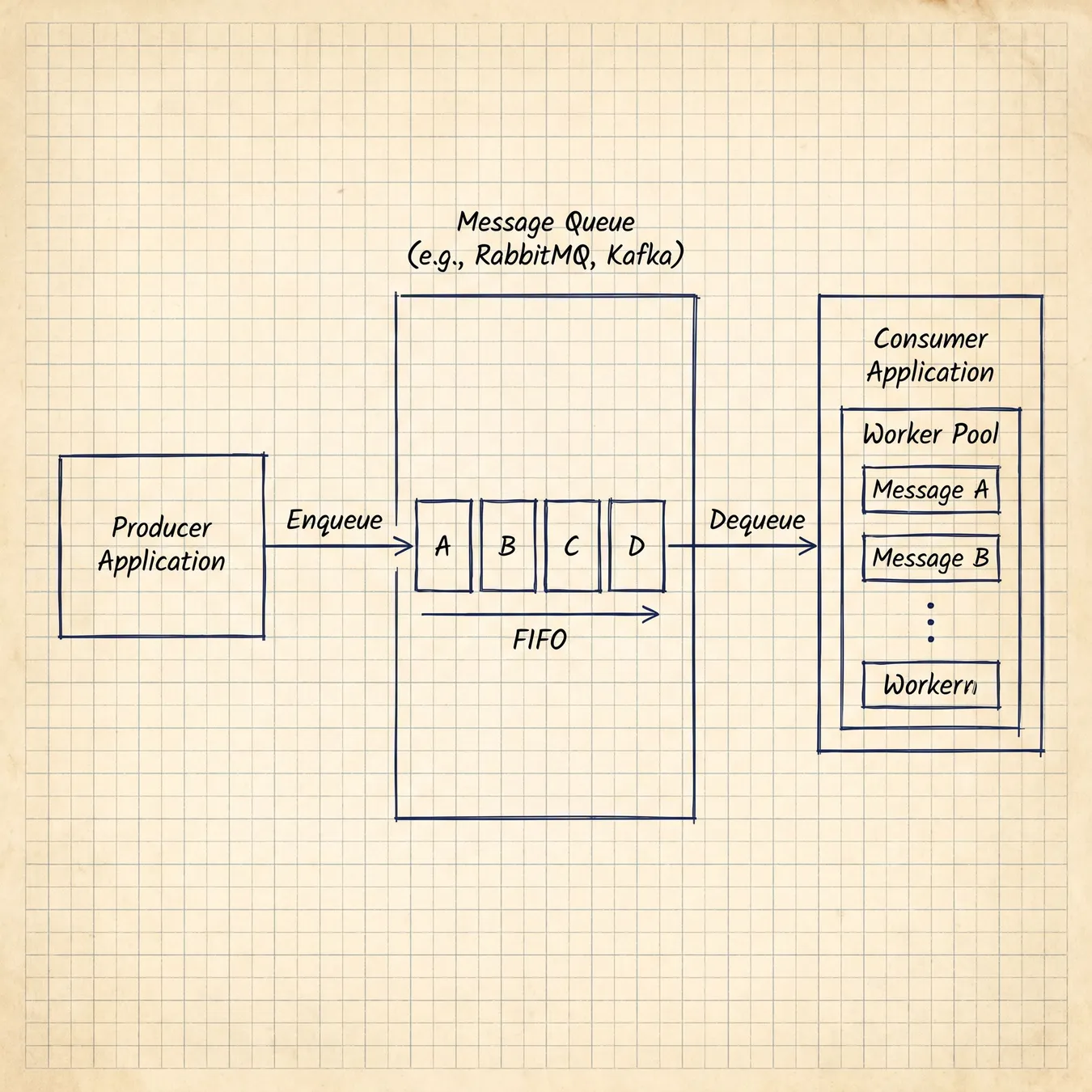
Decoupling services using message brokers for better throughput.
Caching Strategies for High Performance
The fastest request is the one that never hits your database. Caching at multiple layers—CDN, load balancer, and application—is essential for scalability and system design for developers.
| Cache Layer | Target | Benefit |
|---|---|---|
| CDN | Static Assets | Reduced Latency |
| Redis/Memcached | Database Queries | Reduced DB Load |
| Browser | Frontend Code | Faster Page Loads |
Microservices vs. Modular Monoliths
Choosing the right complex software architecture depends on your team size and product maturity. While microservices offer independent scaling, they introduce significant network overhead.
When to Choose Microservices
- Large, independent engineering teams
- Services with vastly different resource requirements
- Need for independent deployment cycles
- High fault tolerance requirements
Handling Concurrency and Contention
As systems scale, race conditions and database locks become more frequent. Designing for high concurrency requires optimistic locking or distributed lock managers to ensure data integrity.
Use connection pooling
Implement circuit breakers
Optimize slow queries first
Use long-running transactions
Share databases between microservices
Ignore tail latency
The Role of Infrastructure
Software doesn't scale in a vacuum. It requires a scalable cloud architecture that supports auto-scaling groups, managed databases, and robust monitoring.
99.99%
Uptime Goal
<200ms
Max Latency
70% CPU
Auto-scale Trigger
Observability: The Key to Scaling
You cannot scale what you cannot measure. Distributed tracing and centralized logging are non-negotiable for identifying bottlenecks in complex, multi-service environments.

Real-time monitoring of system health.
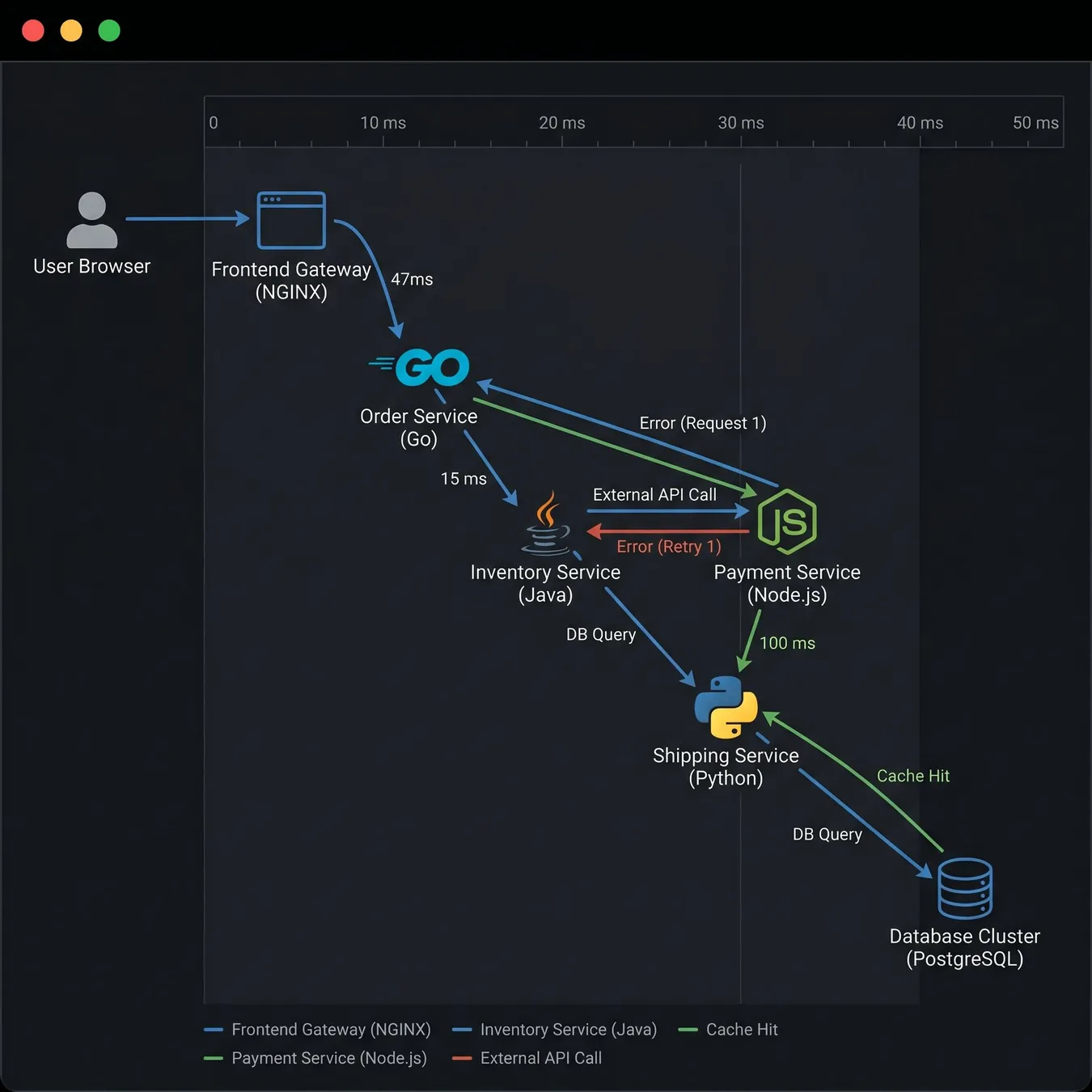
Tracing requests across microservices.
Scaling the Human Element
As the codebase grows, so does the team. Successfully scaling software engineering teams involves creating clear service boundaries and automated governance to prevent bottlenecks.
Common Scalability Anti-Patterns
Many teams fall into the trap of 'premature optimization' or building a 'distributed monolith.' Recognizing these early can save months of refactoring.
The Importance of Load Testing
Don't wait for a marketing campaign to find your breaking point. Regular stress testing and chaos engineering help ensure your scalability principles hold up under real pressure.
Identify peak traffic estimates
Run end-to-end stress tests
Monitor database lock contention
Verify auto-scaling triggers
Bridging Architecture to Execution
At Studio 402, we don't just talk about theory. We act as your software engineering architect to turn these principles into production-ready systems that grow with your business.
Whether you are building a new SaaS platform or rescuing a prototype that has hit its scaling limit, our team focuses on durable architecture that survives real-world load.
Scalability isn't a feature you add later; it's a discipline you bake into the first line of code.
Engineering Lead · Studio 402
How We Help You Scale
01 / 03
phase 01 / 03
Scalability Audit
phase 02 / 03
Architecture Design
phase 03 / 03
Execution
Trusted by growth-stage startups to handle millions of requests.
Production-grade engineering for real-world scale.
Scale Your Product with Confidence
Ready to build a system that doesn't break under pressure? Let's discuss your architecture.
Keep reading