
Modernizing Legacy Software with Microservices
Maintaining brittle legacy systems often feels like a race against time. As technical debt accumulates, the risks of legacy systems become harder to ignore, leading to slower release cycles and increased downtime.
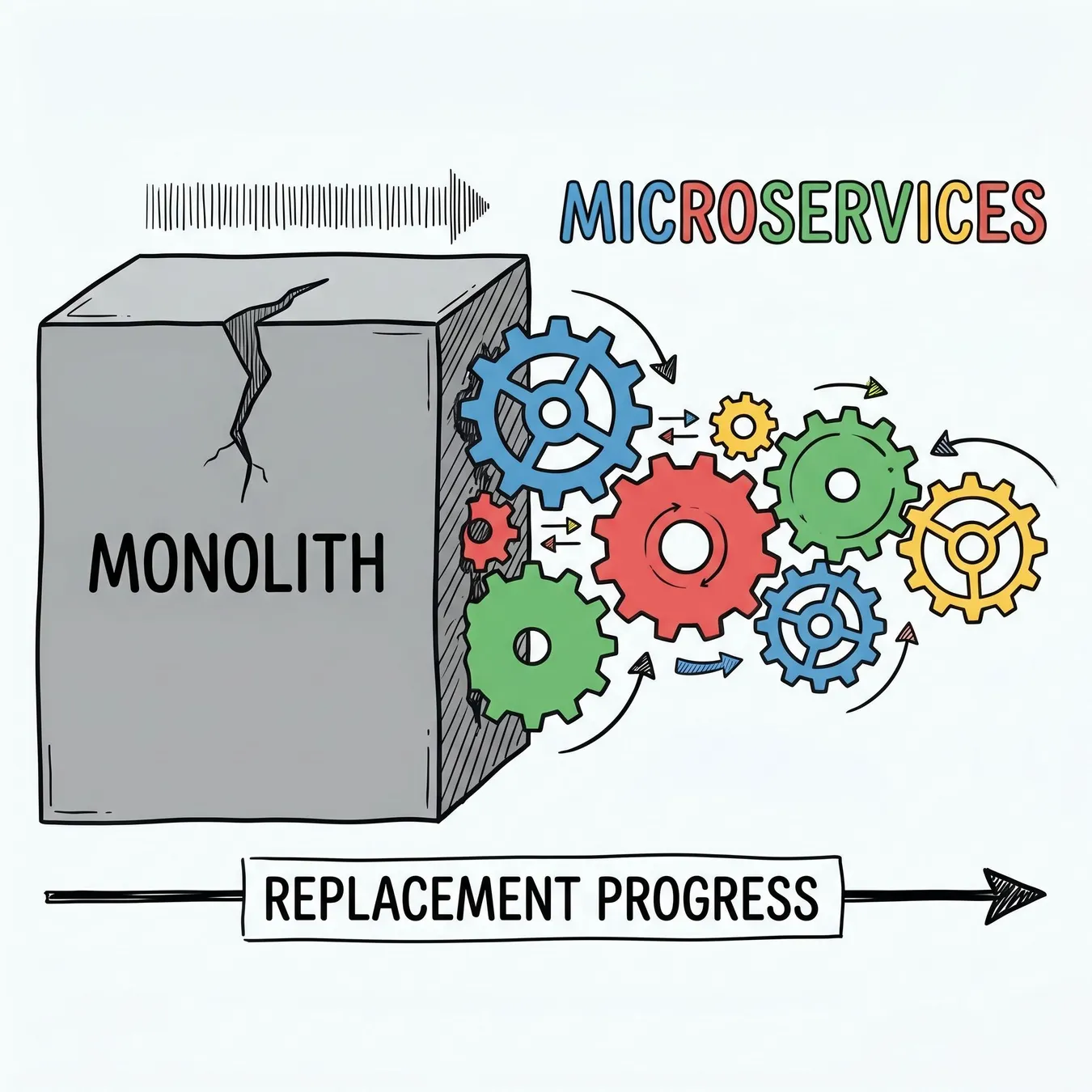
Modernization is a transition from rigid monoliths to flexible, service-oriented architectures.
The Strategy of Using Microservices for Modernization
Using microservices for legacy software modernization allows teams to isolate high-value business logic and migrate it into independent services. This approach avoids the high-risk 'big bang' rewrite.
70%
Reduction in deployment risk
3x
Faster feature velocity
0
Total system downtime
Why Choose Microservices Over a Total Rewrite?
When refactoring legacy applications, the goal is to improve the system's internal structure without changing its external behavior. Microservices provide the perfect boundary for this evolution.
Trade-off
4 pros · 4 cons
Pros
Incremental delivery of value
Independent scaling of services
Reduced blast radius for failures
Technology stack flexibility
Cons
Increased operational complexity
Network latency between services
Distributed data consistency challenges
Initial infrastructure overhead
Core Patterns for Decoupling the Monolith
To succeed, you must apply specific monolith to microservices patterns that allow the old and new systems to coexist during the transition phase.
- Strangler Fig Pattern: Wrapping the old system with new services.
- Branch by Abstraction: Decoupling code within the monolith before extraction.
- Parallel Run: Running both systems and comparing outputs.
- API Gateway: Providing a unified entry point for clients.
Step-by-Step Modernization Process
01 / 05
phase 01 / 05
Audit & Mapping
phase 02 / 05
Infrastructure Setup
phase 03 / 05
Service Extraction
phase 04 / 05
Data Migration
phase 05 / 05
Traffic Routing
Identifying Candidates for Extraction
Not every part of a legacy system needs to be a microservice. Focus on components that require frequent updates or have unique scaling requirements.
Tip.
// Start with the Edge
Managing Data Integrity During Transition
The hardest part of the journey is to convert monolith to microservices while keeping data consistent. This often requires dual-writing or event-driven synchronization.
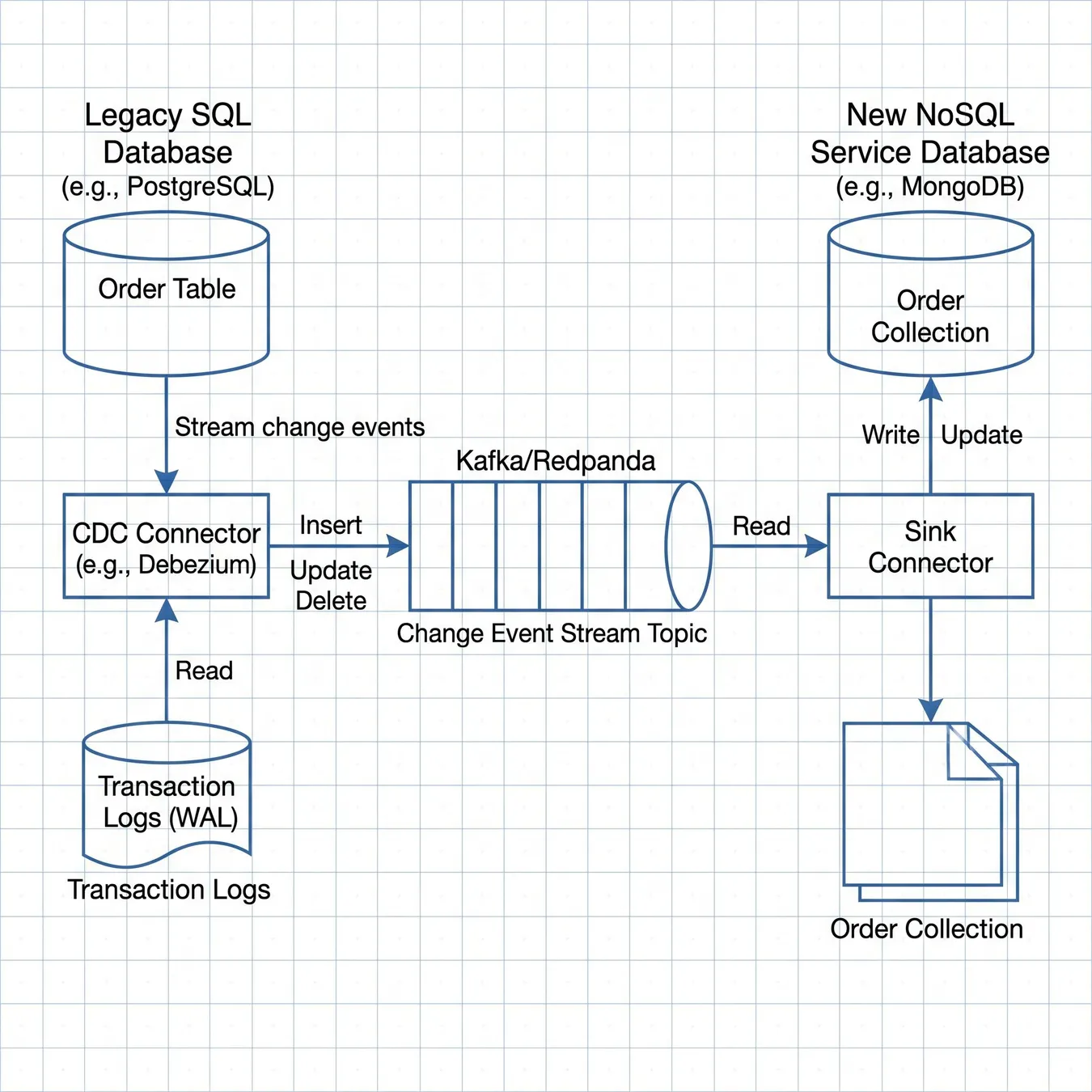
Data synchronization is critical for maintaining integrity during the migration phase.
Common Modernization Pitfalls
Define clear service boundaries first
Invest in automated testing and observability
Prioritize services with high business value
Automate your infrastructure from day one
Extract services without a clear reason
Ignore the 'distributed monolith' trap
Try to migrate the entire system at once
Neglect developer experience and tooling
The Role of DevOps in Microservices
Modernization isn't just about code; it's about the platform. Microservices require robust CI/CD, container orchestration, and centralized logging to be manageable.
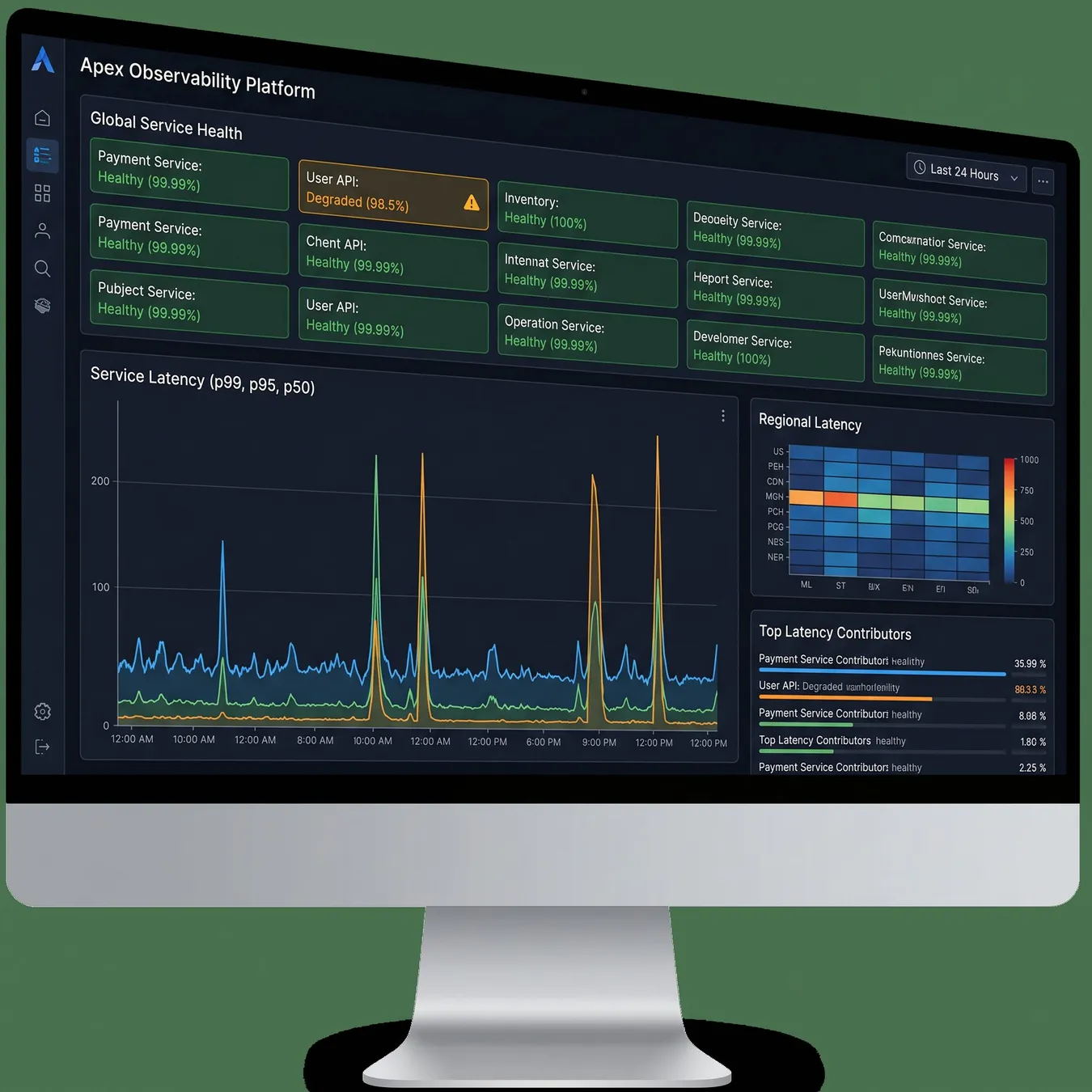
Real-time monitoring is essential for distributed systems.
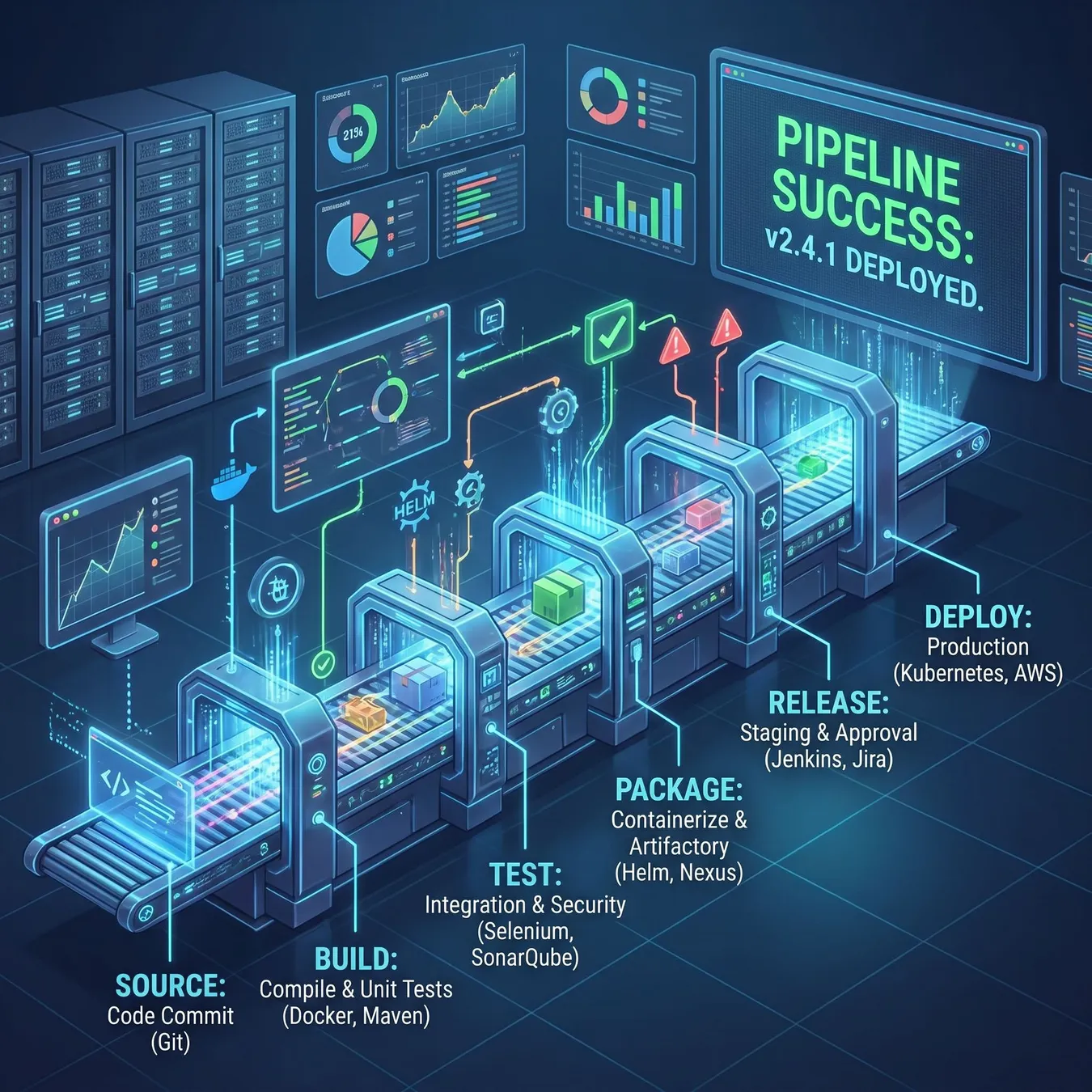
Automation ensures reliable and repeatable releases.
Testing Strategies for Modernized Systems
Legacy systems often lack tests. As you extract services, you must implement contract testing to ensure that changes in one service don't break the entire ecosystem.
Organizational Impact of Microservices
Conway's Law suggests that systems reflect the communication structures of the organizations that build them. Moving to microservices often requires a shift toward cross-functional teams.
Microservices are not a free lunch. They are a trade-off: you exchange code complexity for operational complexity to gain agility.
Senior Software Architect · Studio 402
When to Stop Modernizing
Not every legacy module needs to be modernized. If a component is stable, rarely changes, and doesn't block growth, it may be more cost-effective to leave it as-is.
Measuring Success in Modernization
| Metric | Legacy State | Modernized State |
|---|---|---|
| Deployment Frequency | Monthly/Quarterly | Daily/Weekly |
| Mean Time to Recovery | Hours/Days | Minutes |
| Change Failure Rate | High (>20%) | Low (<5%) |
Modernization Readiness Checklist
Documented understanding of current system dependencies
Established cloud-native infrastructure
Automated regression test suite for core features
Buy-in from stakeholders for an incremental approach
Centralized logging and monitoring in place
How Studio 402 Rescues Legacy Systems
At Studio 402, we specialize in rescuing brittle prototypes and aging monoliths. We don't just give you a roadmap; we embed with your team to execute the migration safely.
Over 50 legacy systems successfully modernized
From seed-stage rescues to enterprise refactors.
Our Approach to Production-Ready Modernization
We combine product engineering with deep infrastructure expertise to ensure your new microservices architecture is secure, scalable, and maintainable for the long haul.
Studio 402 took our failing monolith and turned it into a scalable platform without us losing a single day of customer uptime. Their architectural depth is unmatched.
Frequently Asked Questions
Ready to Stabilize Your Software?
Don't let technical debt block your growth. Whether you need a full re-architecture or a targeted rescue of a brittle system, we can help you build a foundation that scales.
Start Your Modernization Journey
Speak with a senior architect about rescuing your legacy codebase and building for scale.
Explore More Resources
Keep reading
More in Software Architecture & Patterns
Modernizing legacy software is a continuous process of improvement. By focusing on modularity and clear service boundaries, you ensure your software remains an asset rather than a liability.

Studio 402: Engineering excellence for ambitious operators.
- Architecture
- Microservices
- Legacy Rescue
- Scalability
- DevOps
Our team is ready to audit your current stack and provide a clear, actionable path to a modernized production environment.