
Technical Patterns for Decoupling Monolithic Codebases
Decoupling a legacy system is rarely about a single 'big bang' rewrite. Instead, successful engineering teams use specific monolith to microservices patterns to incrementally extract logic while maintaining system stability and business continuity.
- Architecture
- Microservices
- Refactoring
- Cloud Native
When refactoring monolith to microservices, the goal is to reduce cognitive load and deployment friction. By applying proven monolithic to microservices design patterns, you can isolate domains without falling into the trap of tight coupling.
The Strangler Fig Pattern: Incremental Extraction
The Strangler Fig is the gold standard for monolith to microservices migration patterns. It involves building a new system around the edges of the old one, letting it grow over time until the old system is eventually 'strangled' and retired.
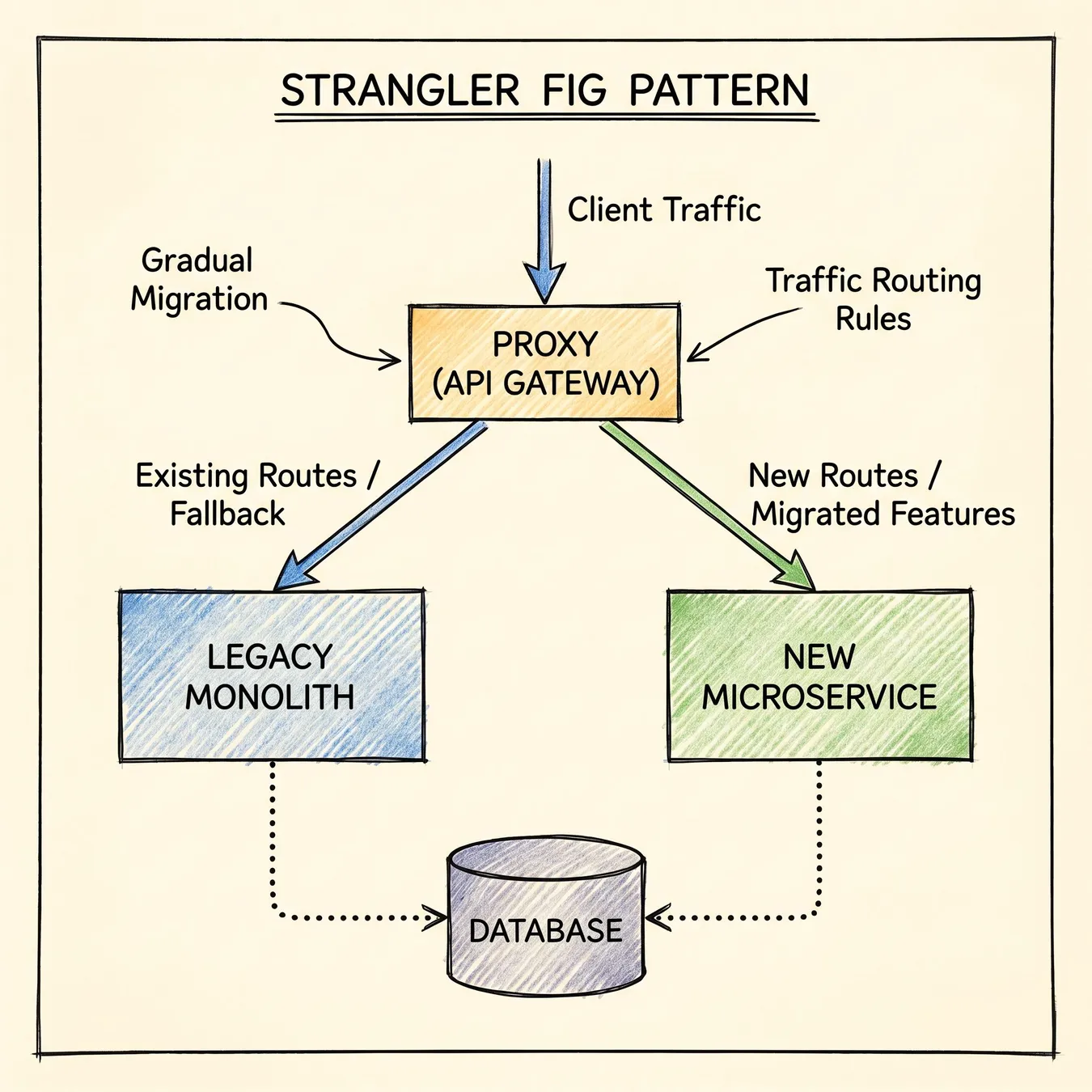
The Strangler Fig pattern uses a facade to intercept and redirect calls to new services.
- Identify a bounded context within the monolith.
- Implement the new service in a separate codebase.
- Use an API Gateway or Facade to route specific traffic to the new service.
- Decommission the old code path once the new service is validated.
Branch by Abstraction for Internal Decoupling
Before you can split monolith to microservices, you often need to decouple the code internally. Branch by Abstraction allows you to introduce a new implementation of a component while the old one is still in use.
- 01
Create an abstraction (interface) for the functionality to be replaced.
- 02
Refactor the existing code to use this new abstraction.
- 03
Develop the new implementation (the microservice client) behind the interface.
- 04
Switch the implementation at runtime or compile time.
Parallel Run and Verification Patterns
When breaking monolith into microservices, risk management is paramount. Parallel running involves sending the same request to both the monolith and the new service, then comparing the results.
Tip.
// Risk Mitigation Tip
Comparing Extraction Strategies
| Pattern | Best For | Complexity | Risk Level |
|---|---|---|---|
| Strangler Fig | Web/API services | Medium | Low |
| Branch by Abstraction | Internal libraries | High | Medium |
| Parallel Run | Critical logic | High | Very Low |
Anti-Patterns to Avoid During Extraction
Without careful planning, you might end up with a distributed monolith vs microservices architecture, where services are technically separate but functionally inseparable.
Define clear bounded contexts before extraction.
Automate your testing and deployment pipelines.
Invest in observability early in the process.
Share databases between the monolith and new services.
Extract services based on technical layers instead of business domains.
Ignore the increased latency of network calls.
Infrastructure Considerations for Decoupling
Modernizing your stack often requires a monolithic to microservices aws strategy to handle the operational overhead of multiple services.
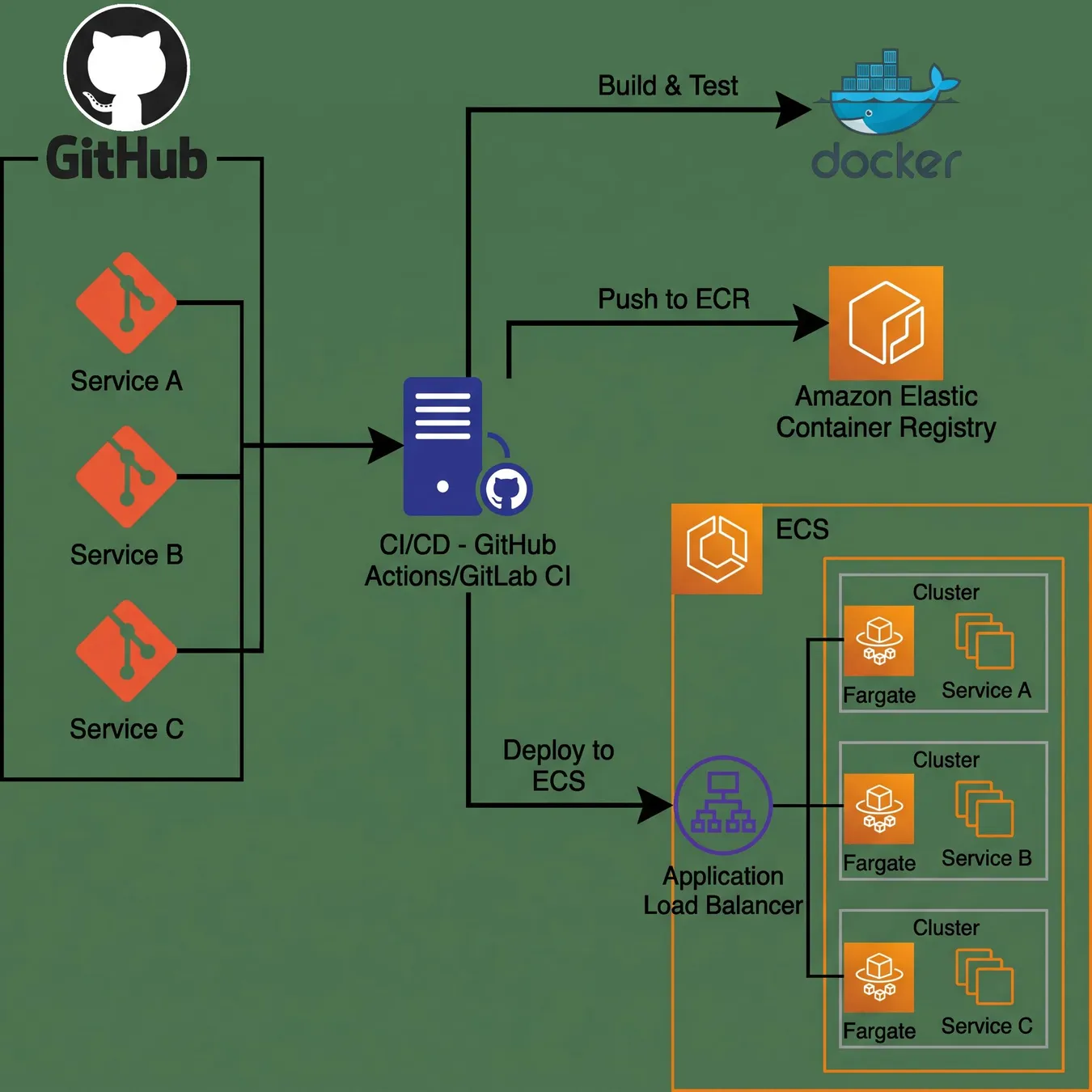
Automated deployment is critical for microservices.
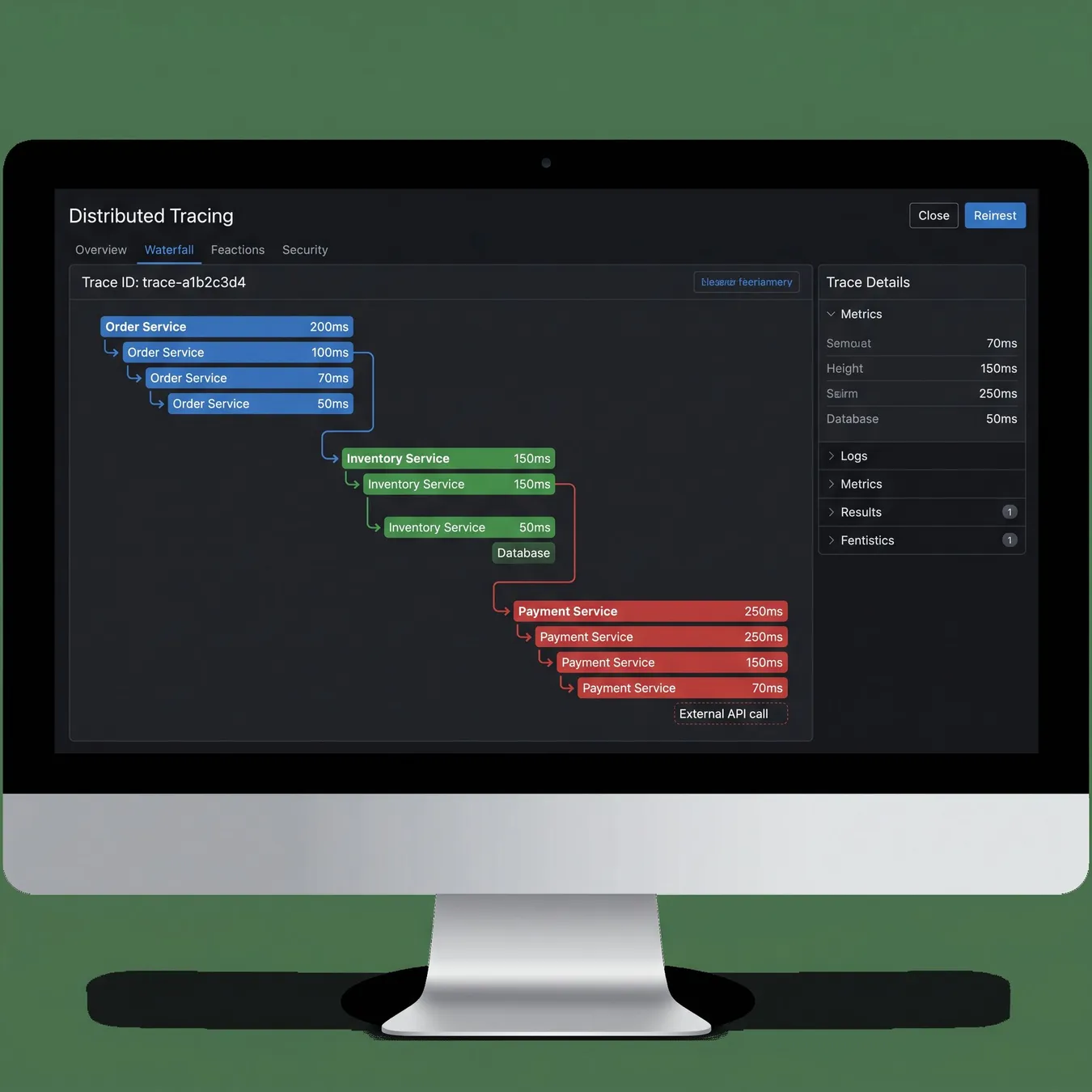
Observability helps debug cross-service requests.
Performance Trade-offs in Decoupled Systems
Before committing to a full split, analyze the microservices vs monolith performance metrics to ensure the architectural overhead doesn't degrade user experience.
15-30ms
Avg Latency Increase
10x
Deployment Frequency
-40%
Recovery Time (MTTR)
Real-World Application of Extraction Patterns
Seeing these patterns in action can clarify the path forward. Reviewing a monolith to microservices case study provides insight into how teams handle data consistency and service discovery during the transition.
Step-by-Step Extraction Workflow
01 / 04
phase 01 / 04
Discovery
phase 02 / 04
Internal Decoupling
phase 03 / 04
Extraction
phase 04 / 04
Traffic Shift
Data Management During Decoupling
The hardest part of any extraction is the data. You must decide between a shared database (temporary) or a full database-per-service model from the start.
Trade-off
3 pros · 3 cons
Pros
True service independence
Optimized database engines per service
Isolated failure domains
Cons
High initial migration effort
Complex cross-service joins
Eventual consistency challenges
Common Questions on Codebase Decoupling
Bridging Architecture to Execution
Understanding these patterns is the first step, but executing them requires a senior engineering partner who understands the risks of technical debt and the necessity of production-grade systems.
At Studio 402, we specialize in legacy modernization and complex re-architecting. Whether you are rescuing a prototype or breaking down a decade-old monolith, we build the foundations that allow your product to scale.
Successful decoupling isn't just about moving code; it's about ensuring the business can keep shipping while the foundation is being rebuilt.
Engineering Lead · Studio 402
Ready to Modernize Your Legacy System?
Don't let architectural bottlenecks slow down your growth. Our team can audit your codebase and implement a phased migration strategy that minimizes downtime and maximizes reliability.
Build a Scalable Foundation
Let’s discuss your monolith to microservices roadmap and build a system that scales with your business.
Further Reading on Software Architecture
Technical Extraction Checklist
Identify bounded contexts and domain boundaries.
Map all cross-domain database queries.
Establish a service-to-service authentication protocol.
Implement centralized logging and tracing.
Define SLAs for the new microservices.
The Role of Automation in Decoupling
Manual deployments are the enemy of microservices. As you split your monolith, your CI/CD pipelines must become more robust to handle the complexity of distributed releases.
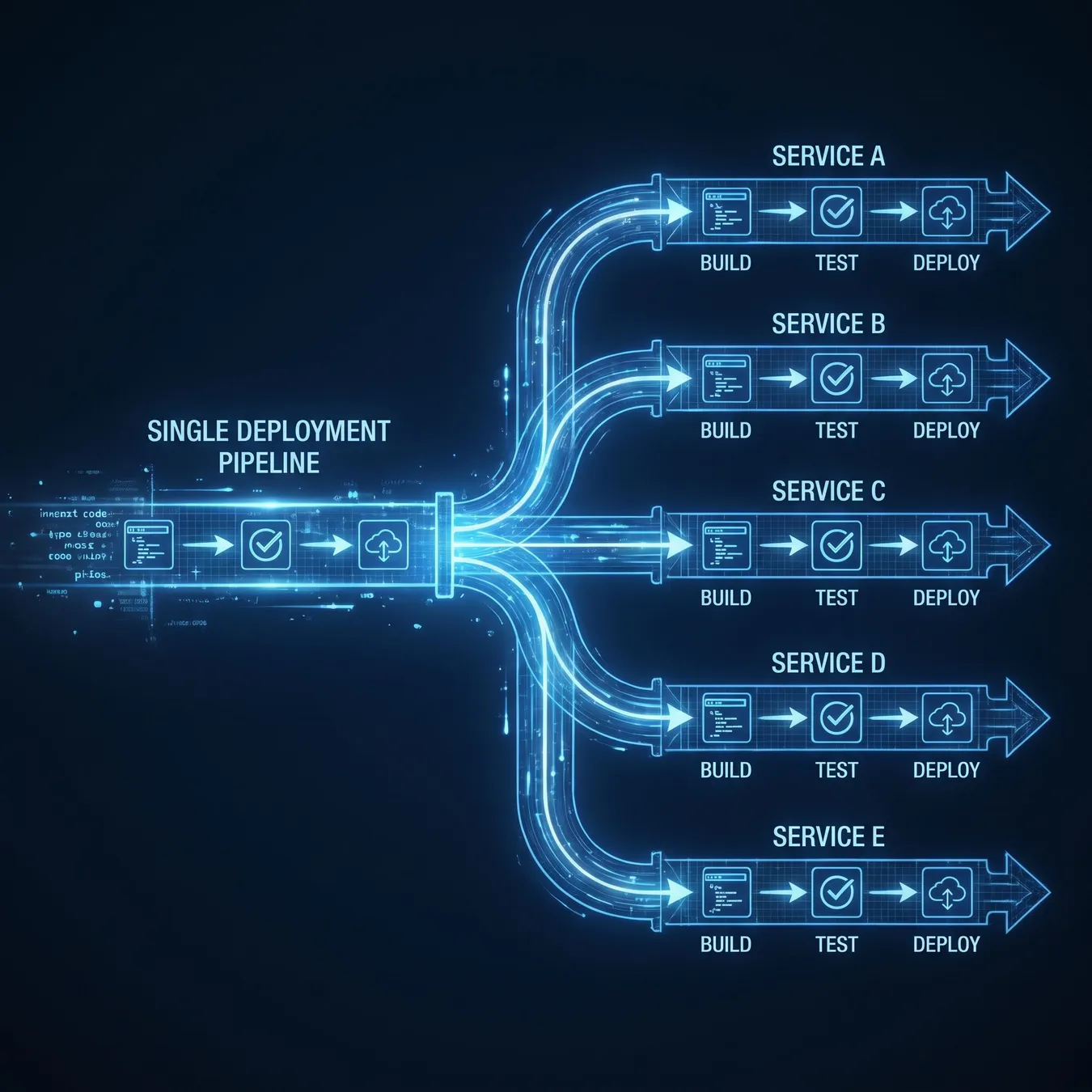
Scaling deployment velocity through automation.
Final Thoughts on Decoupling Patterns
Decoupling is a journey, not a destination. By choosing the right patterns early, you avoid the common pitfalls of distributed systems and set your team up for long-term velocity.
Studio 402 has helped over 50 companies modernize their core infrastructure.
Trusted by venture-backed startups and growth-stage operators.
Explore More Architecture Insights
Keep reading
More in Software Architecture & Patterns
Technical excellence in architecture is the difference between a product that survives its first 1,000 users and one that scales to 1,000,000.
Next Steps for Engineering Leaders
- Conduct a dependency audit of your current monolith.
- Select a low-risk 'pilot' service for extraction.
- Review our case studies for similar migration paths.
If you are ready to begin your migration, contact Studio 402 today for a comprehensive architecture review.