
Monolith to Microservices Migration: A Strategic Roadmap
A monolith to microservices migration is more than a technical refactor; it is a fundamental shift in how your engineering team delivers value. This roadmap provides a structured approach to decomposing legacy systems while maintaining high service availability.
- Architecture
- Scalability
- Migration Strategy
- DevOps
Why Start a Transition from Monolithic to Microservices?
The primary driver for migrating to microservices is usually the need for independent scaling and deployment. When a single codebase becomes a bottleneck for multiple teams, the transition from monolithic to microservices becomes a necessity for growth.
60%
Faster release cycles
99.99%
Target availability
4x
Deployment frequency
Phase 1: Readiness and Strategic Assessment
Before you migrate from monolith to microservices, you must evaluate if your team is ready for the operational overhead. This includes assessing your current CI/CD maturity and cloud infrastructure planning and design to ensure your target environment is ready.
Identify bounded contexts within the monolith
Audit existing database dependencies
Define service communication protocols (REST, gRPC)
Establish centralized logging and monitoring
Phase 2: Defining the Monolith to Microservices Approach
A successful monolith to microservices approach avoids the 'big bang' rewrite. Instead, it focuses on incremental extraction. This strategy minimizes risk by allowing you to validate each service in production before moving to the next.
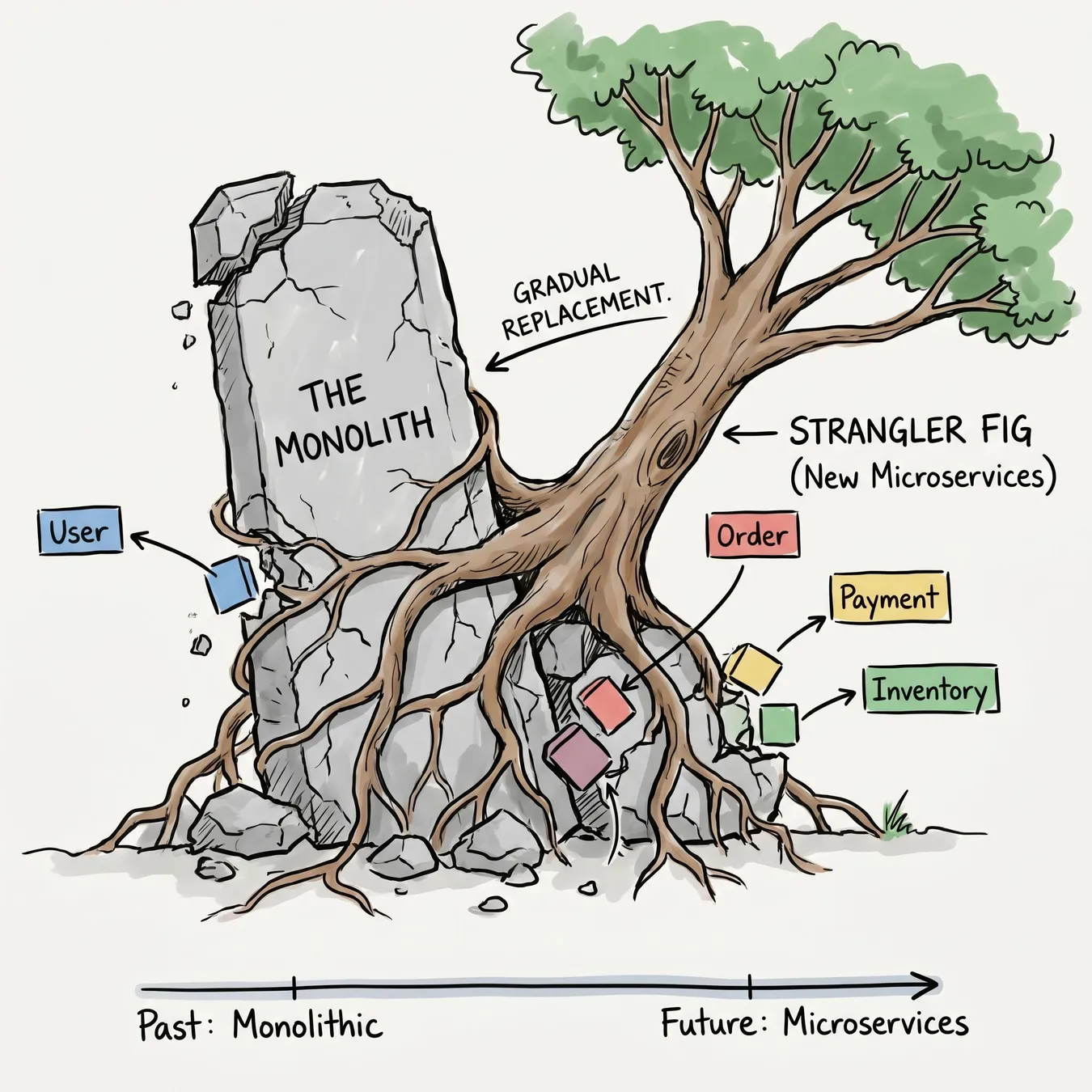
The Strangler Fig pattern allows for incremental replacement of legacy functionality.
Phase 3: Decoupling the Data Layer
Data is the hardest part of any migration. You must decide how to convert monolith to microservices without creating a distributed monolith vs microservices where services are still tightly coupled at the database level.
| Pattern | Complexity | Best For |
|---|---|---|
| Shared Database | Low | Initial transition phases |
| Database per Service | High | True service independence |
| API Composition | Medium | Read-heavy workloads |
Phase 4: Implementing the Strangler Fig Pattern
The Strangler Fig pattern is one of the most effective monolith to microservices best practices. It involves placing a proxy in front of the monolith and routing specific traffic to new microservices as they are built.
- 01
Identify a low-risk edge functionality to extract.
- 02
Build the new microservice with its own CI/CD pipeline.
- 03
Redirect traffic via an API Gateway or Load Balancer.
- 04
Decommission the old code in the monolith once stable.
Phase 5: Managing Service Communication
As you extract services, inter-service communication becomes critical. You must choose between synchronous requests (REST/gRPC) and asynchronous messaging (RabbitMQ/Kafka) based on your consistency requirements.
Warning.
// Architectural Warning
Monolith to Microservices Best Practices
To ensure a smooth transition, follow these industry-standard best practices. These focus on maintaining engineering velocity and system reliability throughout the migration process.
Automate testing for every extracted service
Use a service mesh for observability
Prioritize data consistency patterns
Invest in developer self-service tooling
Migrate everything at once
Ignore the cultural shift required
Share databases between services long-term
Neglect distributed tracing
Common Challenges in Microservices Migration
Many teams struggle with the increased operational complexity. Managing dozens of deployment pipelines and ensuring security across distributed endpoints requires a robust legacy system migration strategy.
Infrastructure Requirements for Microservices
Microservices demand a different infrastructure stack than monoliths. Containerization (Docker) and orchestration (Kubernetes) are standard for managing the lifecycle of distributed components.
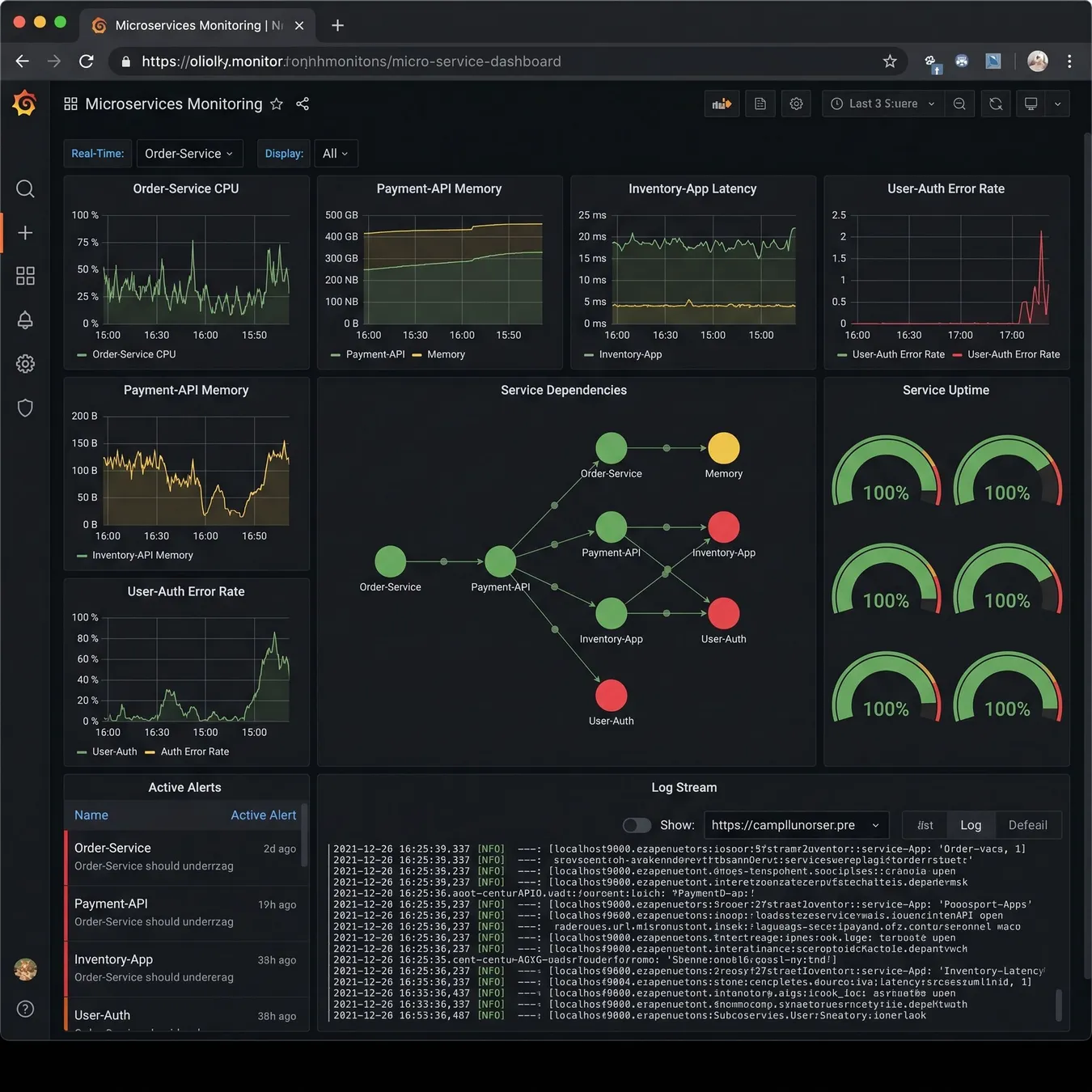
Observability is non-negotiable in distributed systems.
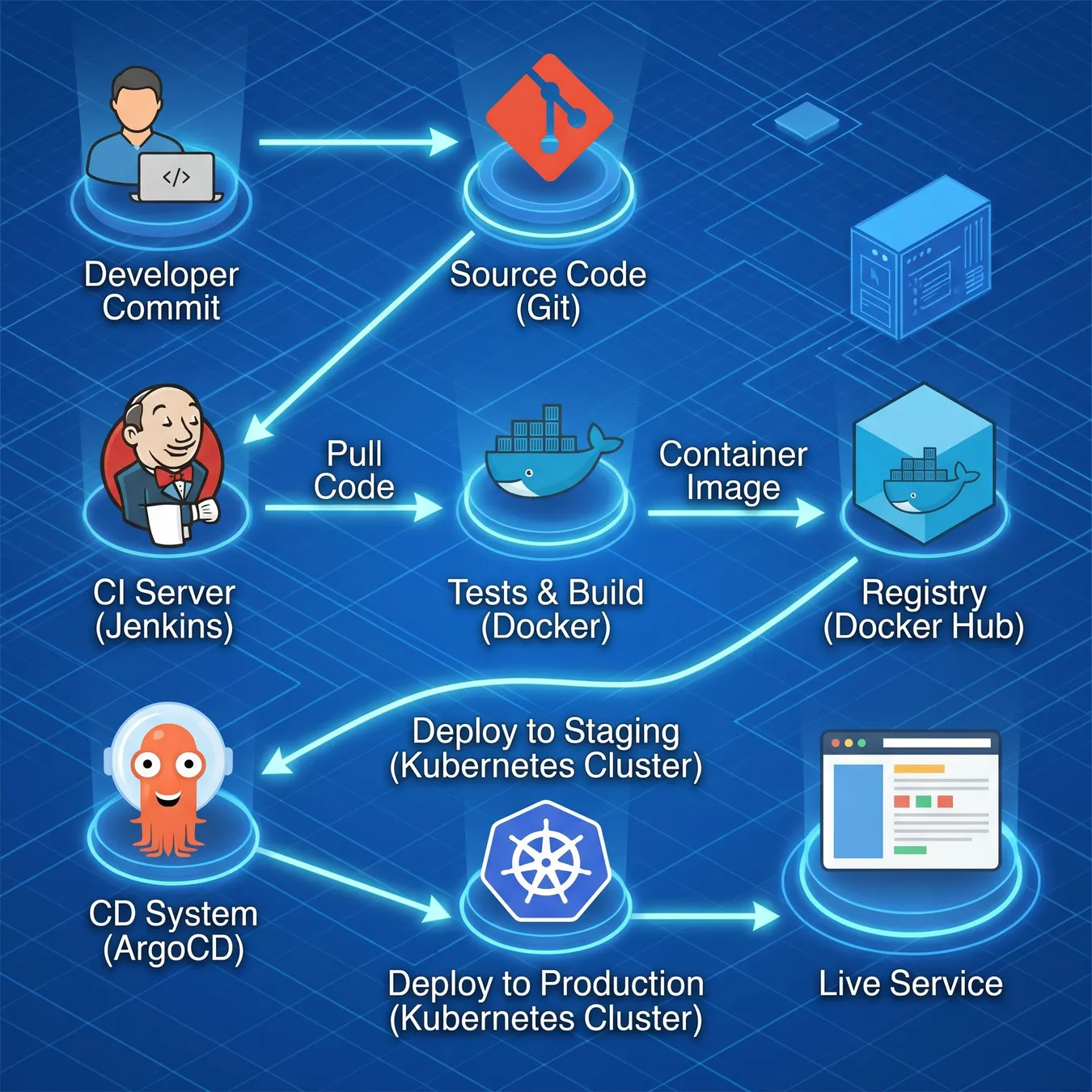
Automation is the backbone of microservices velocity.
The Role of API Gateways
An API Gateway acts as the single entry point for all clients. It handles cross-cutting concerns like authentication, rate limiting, and request routing, which simplifies the individual microservices.
- Centralized Authentication and Authorization
- Load Balancing and Traffic Management
- Protocol Translation (e.g., HTTP to gRPC)
- Response Caching and Aggregation
Testing Strategies for Distributed Systems
In a monolithic environment, integration tests are straightforward. In microservices, you need contract testing to ensure that changes in one service don't break its consumers.
If you can't deploy a service without deploying others, you haven't built a microservice; you've built a distributed monolith.
Engineering Lead · Systems Architect
Transitioning the Engineering Culture
Moving to microservices requires a 'You Build It, You Run It' mentality. Teams must take ownership of the full lifecycle of their services, from design to production monitoring.
When to Pause or Pivot Your Migration
Not every part of the monolith needs to be extracted. If a module is stable, rarely changes, and has no performance issues, it may be more cost-effective to leave it within the 'legacy' core.
Trade-off
4 pros · 4 cons
Pros
Independent scaling of hot paths
Faster deployment cycles for new features
Technology flexibility per service
Improved fault isolation
Cons
Increased operational complexity
Harder to maintain data consistency
Higher initial infrastructure costs
Network latency between services
Measuring the Success of Your Migration
Success should be measured by business outcomes, not just technical milestones. Track metrics like Lead Time for Changes and Mean Time to Recovery (MTTR) to validate the architectural shift.
Technical Patterns for Decoupling
Deepening your understanding of specific patterns is essential. You can learn more about how to convert monolith to microservices by exploring specialized decoupling techniques.
Finalizing the Roadmap: Post-Migration Care
Once the migration is complete, the focus shifts to platform engineering. This involves creating reusable templates and internal developer portals to keep the microservices ecosystem manageable as it grows.
How Studio 402 Executes Complex Migrations
At Studio 402, we specialize in helping companies navigate the risks of re-architecting. Whether you are dealing with a brittle legacy monolith or a 'vibe-coded' prototype that won't scale, we build the durable infrastructure your business needs.
We don't just provide a roadmap; we embed with your team to audit, refactor, and deploy production-ready systems that survive real-world load. Our approach balances immediate shipping needs with long-term architectural integrity.
Trusted by growth-stage teams to scale core infrastructure.
From MVP rescue to enterprise-grade microservices.
Ready to Modernize Your Architecture?
Stop letting technical debt block your growth. Let's build a scalable, microservices-based foundation for your product.
Deep Dives into Software Architecture
Keep reading
More in Software Architecture & Patterns
Additional Resources
For a broader perspective on system design, visit our hub on software engineering architecture.
01 / 03
phase 01 / 03
Audit
phase 02 / 03
Decompose
phase 03 / 03
Scale

Watch: How we automate microservices delivery.
Studio 402 took our failing legacy system and turned it into a high-performance microservices architecture in months.
Summary of Migration Best Practices
Successful migration requires a balance of technical precision and organizational change. By following this roadmap, you can reduce risk and unlock the true potential of your engineering team.