
Monolith to Microservices Case Study: Re-Architecting Scale
This monolith to microservices case study examines how a growing SaaS platform overcame technical debt and deployment bottlenecks by transitioning to a distributed architecture. By decomposing a brittle codebase into independent services, the engineering team unlocked significant gains in developer velocity and system reliability.
40%
Reduction in Latency
10x
Deployment Frequency
99.99%
Uptime Achievement
The Challenge: Identifying the Monolithic Breaking Point
In this monolithic to microservices example, the primary driver was a 'Big Ball of Mud' architecture that made every minor update a high-risk event. As the user base grew, the single database became a massive contention point, leading to frequent deadlocks and performance degradation.
- Deployment cycles taking 4+ hours due to massive build sizes
- Single point of failure: one bug crashed the entire platform
- Inability to scale specific high-traffic modules independently
- Onboarding new engineers took months due to code complexity
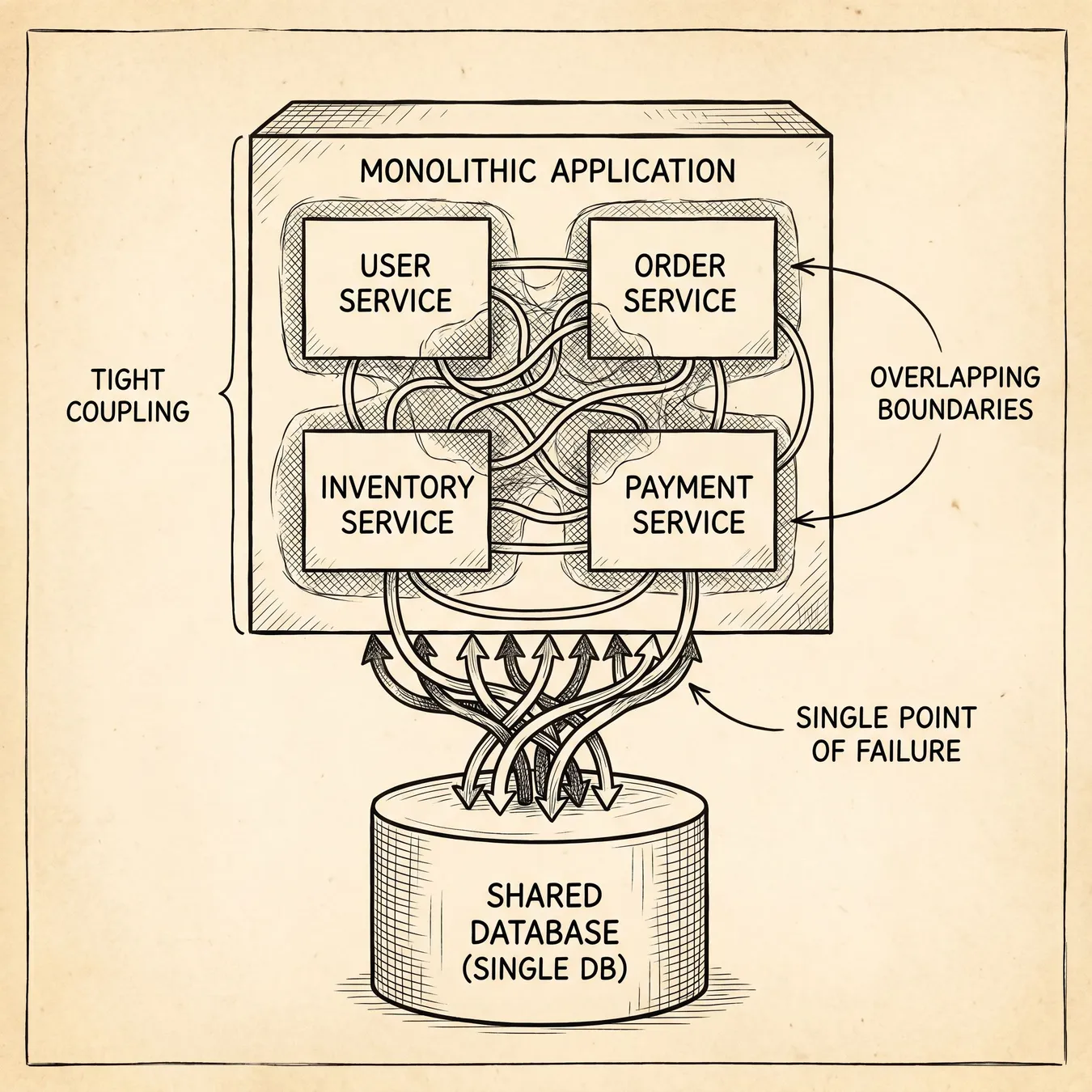
The original monolithic state: tight coupling and shared database bottlenecks.
Strategic Planning: Choosing the Right Migration Path
The team avoided a 'big bang' rewrite, which often leads to failure. Instead, they utilized proven monolith to microservices patterns to extract functionality incrementally while keeping the legacy system operational.
01 / 03
phase 01 / 03
Module Decoupling
phase 02 / 03
Strangler Fig Implementation
phase 03 / 03
Data Decomposition
Infrastructure Shift: Moving to the Cloud
A critical component of this monolithic to microservices case study was the move to managed infrastructure. Leveraging monolithic to microservices aws allowed the team to focus on code rather than server maintenance.
Info.
// Cloud-Native Advantage
Execution: Extracting the First Service
The team chose the 'Authentication and Identity' module as the first candidate for extraction. This monolith to microservices example demonstrates that starting with a well-defined, low-dependency service reduces initial migration risk.
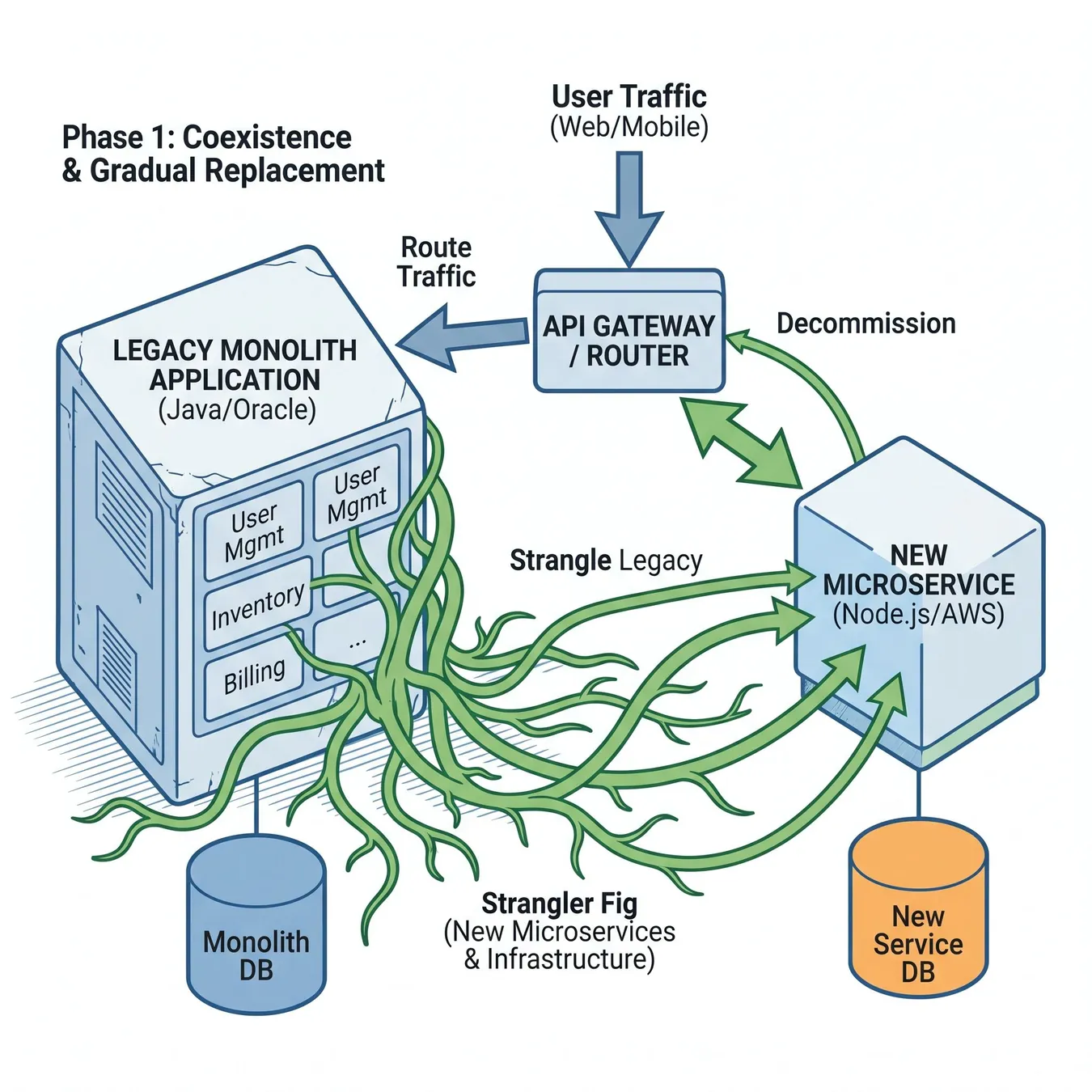
Phase 1: The Strangler Fig pattern in action.
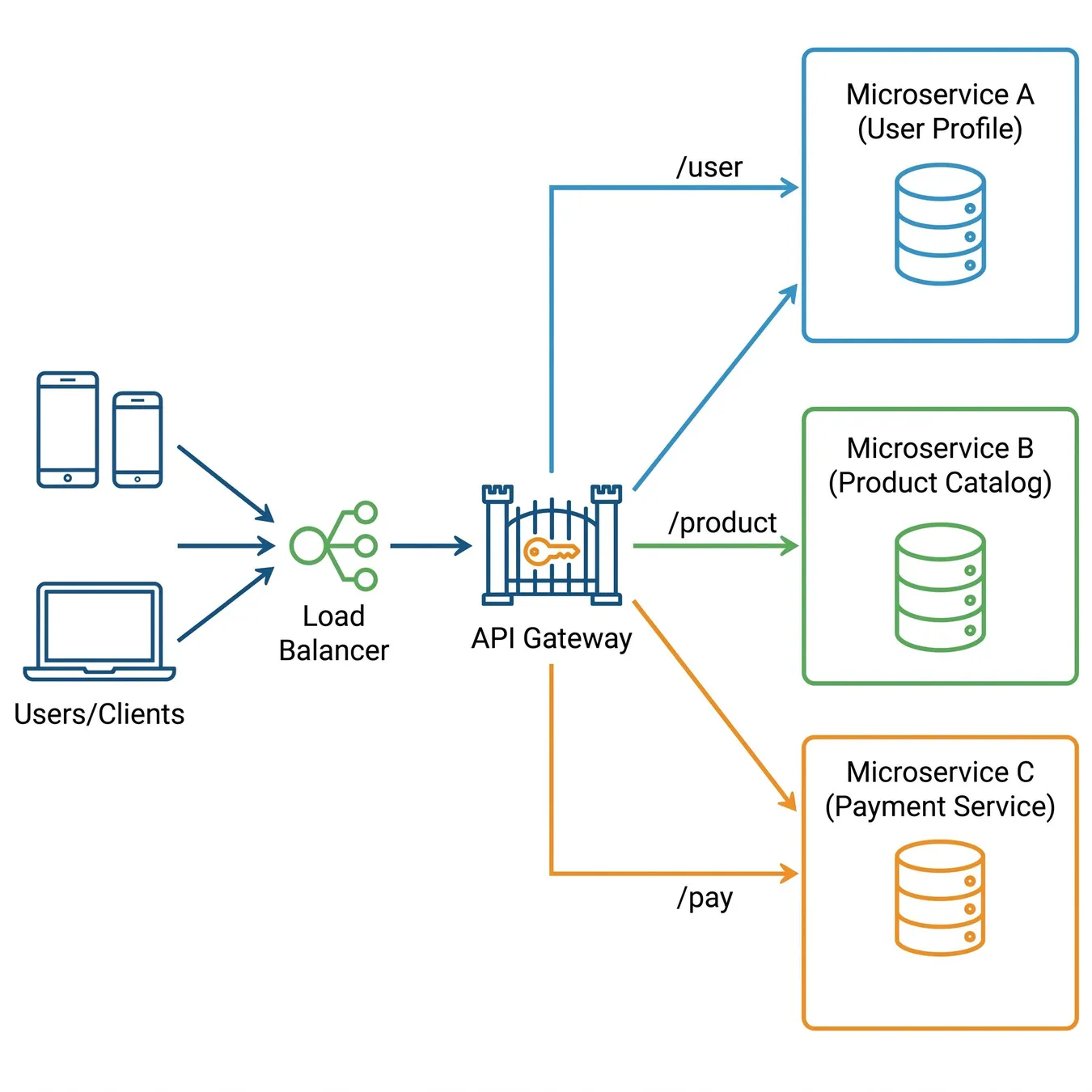
Phase 2: API Gateway managing traffic distribution.
Performance Benchmarks and Results
The architectural shift led to measurable improvements. When comparing microservices vs monolith performance, the team saw a massive drop in tail latency for high-traffic endpoints.
| Metric | Monolith (Before) | Microservices (After) |
|---|---|---|
| Build Time | 45 Minutes | 4 Minutes |
| P99 Latency | 850ms | 120ms |
| Release Cycle | Bi-weekly | On-demand |
Avoiding the Distributed Monolith Trap
One of the greatest risks in any migration is creating a system where services are still tightly coupled over the network. Understanding distributed monolith vs microservices was vital to ensuring the team didn't just move their problems to the network layer.
Use asynchronous messaging for inter-service communication
Implement circuit breakers to prevent cascading failures
Give every service its own private database
Share database tables between two different services
Rely on synchronous REST calls for every operation
Ignore centralized logging and distributed tracing
Lessons Learned from the Migration
The transition was not without its hurdles. This monolithic to microservices example highlights that the biggest challenges are often organizational, not just technical.
The technology shift was the easy part. The real work was changing how our teams collaborated and owned their respective service domains.
Sarah Chen · VP of Engineering
Operational Overhead: The Hidden Cost
While microservices solve scaling issues, they introduce complexity in monitoring and deployment. Teams must invest in robust CI/CD pipelines and observability tools from day one.
Centralized logging (ELK or similar stack)
Distributed tracing (Jaeger or Honeycomb)
Automated canary deployments
Service mesh for traffic management
When to Re-Architect Your Own System
Not every product needs microservices. If your team is small and your monolith is still performant, the overhead of a distributed system may outweigh the benefits.
Trade-off
3 pros · 3 cons
Pros
Independent scaling of components
Technology flexibility per service
Faster deployment for small teams
Cons
Increased operational complexity
Difficulties with data consistency
Higher initial infrastructure costs
Technical Debt and the Path Forward
Successful re-architecting requires a commitment to long-term quality. This case study proves that addressing technical debt early prevents the 'scaling wall' that kills many growth-stage startups.

The end result: A healthy, observable, and scalable system.
Bridging Architecture to Execution
At Studio 402, we specialize in these high-stakes transitions. Whether you are battling a brittle legacy monolith or trying to ensure your new platform is built for real-world scale, we provide the senior engineering depth required to execute.
We don't just deliver prototypes; we build production-ready systems that survive traffic spikes and complex business requirements. Our team handles the heavy lifting of cloud infrastructure, API design, and service decoupling.
How Studio 402 Can Help
If your current architecture is slowing down your product roadmap, it might be time for a professional audit. We help founders and engineering leaders identify the right patterns to unlock growth without the risks of a blind rewrite.
- Architecture reviews and migration roadmaps
- End-to-end microservices implementation
- Cloud infrastructure and DevOps automation
- Legacy code rescue and stabilization
Frequently Asked Questions
Start Your Migration Journey
Don't let architectural bottlenecks hold back your business. Let's discuss how to modernize your stack for the next stage of growth.
Ready to Re-Architect for Scale?
Contact Studio 402 today to discuss your migration strategy and build a durable foundation for your software.
Further Reading on Software Architecture
Related Case Studies
Explore more examples of how we've helped companies solve complex engineering challenges through better system design.
- Case Study
- Architecture
- Scalability
- Cloud Native
Trusted by venture-backed startups and growth-stage operators.
Studio 402 Engineering Excellence
Keep reading
More in Software Architecture & Patterns
Final Thoughts on Architectural Evolution
The journey from monolith to microservices is a marathon, not a sprint. By focusing on clear service boundaries and operational excellence, you can build a system that evolves with your users.
If you need a partner who understands the nuances of production-grade software, reach out to us at studio@402.studio.