
When to Consolidate: Moving from Microservices to Monolith
The industry-wide shift toward microservices was driven by the need for independent scaling and team autonomy. However, many organizations now find that the operational tax of managing dozens of distributed services outweighs the benefits. Transitioning from microservices to monolith is a strategic move to regain engineering velocity and simplify system complexity.
- Architecture Strategy
- Engineering Velocity
- Cost Reduction
- System Design
To make an informed decision, leaders must evaluate when to use microservices vs monolith based on their current team size and infrastructure capabilities. If your team spends more time managing network latency and deployment pipelines than shipping features, consolidation may be the right path forward.
Signs Your Microservices Architecture is Failing
Microservices are not a silver bullet. When implemented prematurely or without sufficient operational maturity, they often devolve into a specific failure mode known as a distributed monolith. This occurs when services are technically separate but logically coupled, requiring synchronized deployments and complex debugging.
Warning.
// The Coordination Trap
Identifying these symptoms early is critical. We often see teams struggling with microservices vs distributed monolith issues where the network becomes the primary source of failure and latency, negating any benefits of service isolation.
- High operational overhead for small engineering teams
- Frequent cross-service bugs that are difficult to trace
- Significant latency introduced by network hops between services
- Complexity in maintaining data consistency across distributed databases
- Developer productivity stalling due to local environment setup hurdles
The Performance Case for Consolidation
One of the most immediate benefits of moving from microservices to monolith is the improvement in system performance. By eliminating the serialization and deserialization overhead of JSON over HTTP, applications can achieve significantly lower internal latency.
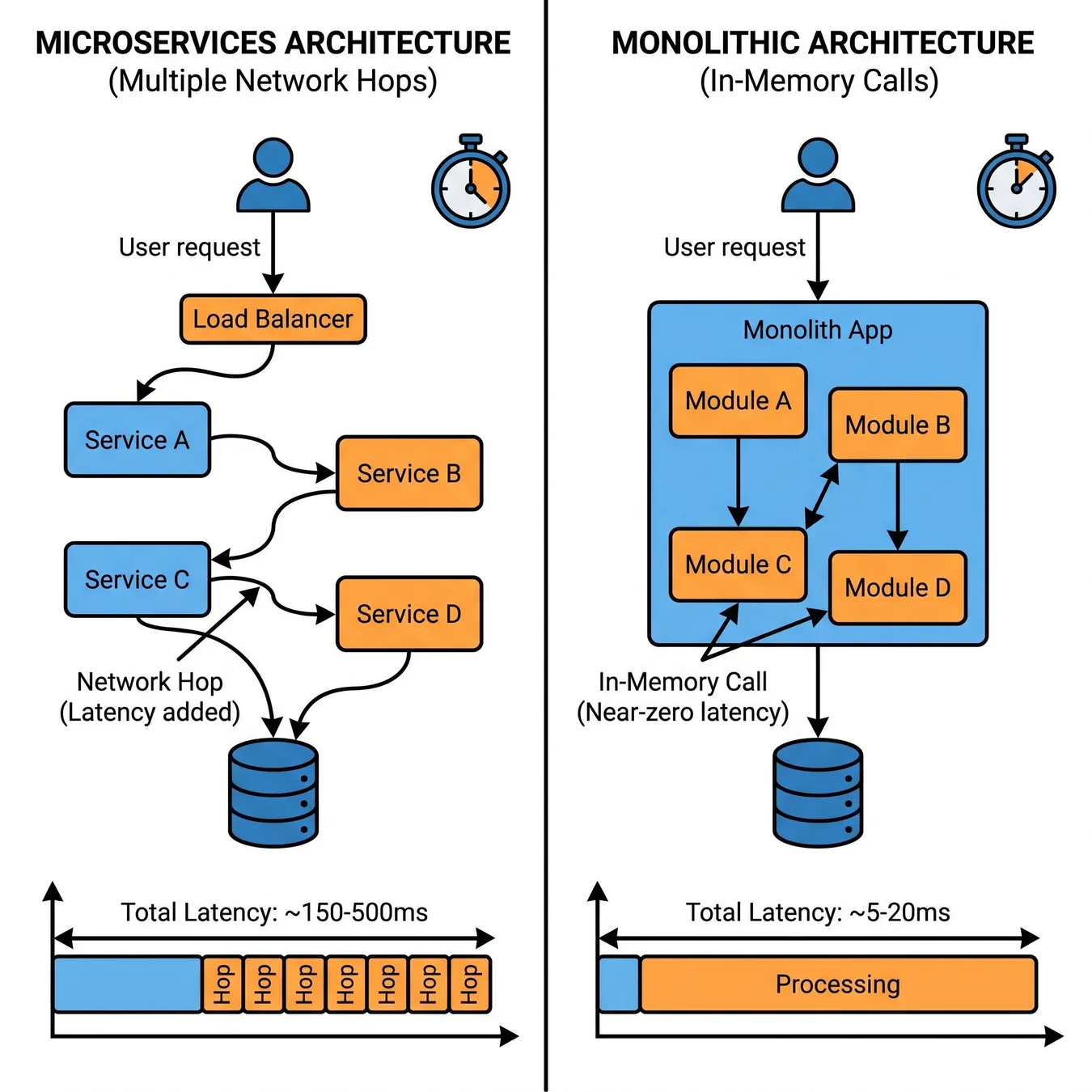
Network latency vs. in-memory execution: The performance advantage of monolithic consolidation.
When analyzing microservices vs monolith performance, the data often shows that for 90% of applications, the overhead of distributed computing is a net negative for user experience. Consolidation allows for simpler caching strategies and more efficient resource utilization.
40-60%
Internal Latency Reduction
30%
Infrastructure Cost Savings
2x Faster
Deployment Time Improvement
Strategic Steps for Consolidation
Moving from microservices to monolith is not a simple 'copy-paste' operation. It requires a disciplined approach to merge codebases while maintaining service availability and data integrity.
01 / 05
phase 01 / 05
Audit and Mapping
phase 02 / 05
Code Integration
phase 03 / 05
Data Unification
phase 04 / 05
Interface Refactoring
phase 05 / 05
Infrastructure Sunset
Comparing Architectural Trade-offs
Before committing to a full consolidation, it is helpful to weigh the pros and cons of the transition. While a monolith simplifies operations, it does require stricter internal modularity to prevent the codebase from becoming a 'big ball of mud'.
Trade-off
4 pros · 3 cons
Pros
Simplified deployment and monitoring
Easier end-to-end testing and debugging
Lower operational and infrastructure costs
Atomic transactions across business domains
Cons
Risk of tight coupling if modularity is ignored
Single point of failure for the entire application
Longer initial build times for very large codebases
The Role of Leadership in Re-Architecture
A successful move from microservices to monolith requires more than just technical skill; it requires a software engineering architect who understands the business implications of architectural debt. This leader must balance the need for speed with the long-term health of the system.

Strategic oversight is essential for complex architectural shifts.
Common Pitfalls to Avoid During Consolidation
Maintain clear module boundaries within the monolith
Automate the migration of data carefully
Keep a robust test suite during the transition
Consolidate logging and monitoring early
Don't merge everything into one giant file
Don't ignore the need for internal documentation
Don't rush the database consolidation phase
Don't forget to update your CI/CD pipelines
When Consolidation is the Wrong Choice
Despite the benefits, moving from microservices to monolith isn't always the answer. If your organization has hundreds of developers working on truly independent features with distinct scaling needs, the friction of a single deployment pipeline might outweigh the operational simplicity.
Info.
// Know Your Scale
Technical Checklist for Migration
Define internal API contracts between modules
Set up a unified authentication and authorization layer
Plan for zero-downtime database migration
Audit third-party integrations for redundant calls
Establish a single source of truth for configuration
Verify performance benchmarks post-consolidation
Frequently Asked Questions
Bridging Architecture to Execution
At Studio 402, we specialize in helping companies navigate these complex architectural shifts. Whether you are struggling with a distributed monolith or need to rebuild a fragile system for scale, our team provides the senior engineering expertise required to ship production-ready software.
We don't just consult on patterns; we embed with your team to execute the migration, refactor legacy code, and build the infrastructure foundations that support long-term growth. If your current architecture is blocking your roadmap, it's time to simplify.
Trusted by growth-stage startups to scale and stabilize core infrastructure.
Studio 402: Engineering for real-world scale.
Case Studies and Further Reading
Summary of Consolidation Benefits
| Metric | Microservices | Monolith |
|---|---|---|
| Deployment | Complex / Orchestrated | Simple / Atomic |
| Observability | Distributed Tracing Needed | Standard Logging |
| Data Integrity | Eventual Consistency | ACID Transactions |
| Team Overhead | High (DevOps focus) | Low (Product focus) |
Final Thoughts on Architectural Simplicity
The goal of any architecture is to support the business. If microservices have become a hurdle rather than an accelerator, moving back to a monolith is not a step backward—it is a strategic realignment toward efficiency and reliability.
The best architecture is the one that lets your team ship the most value with the least amount of friction. Sometimes, that means tearing down the walls between services.
Studio 402 Engineering Lead · Systems Architect
Stabilize and Scale Your Product
Ready to simplify your architecture and regain engineering velocity? Let's discuss your migration strategy.
Explore Related Engineering Topics
Keep reading
More in Software Architecture & Patterns
Technical Documentation and Standards
Maintaining high standards during a transition ensures that the resulting monolith remains maintainable. We recommend following strict linting, automated testing, and comprehensive documentation patterns throughout the process.
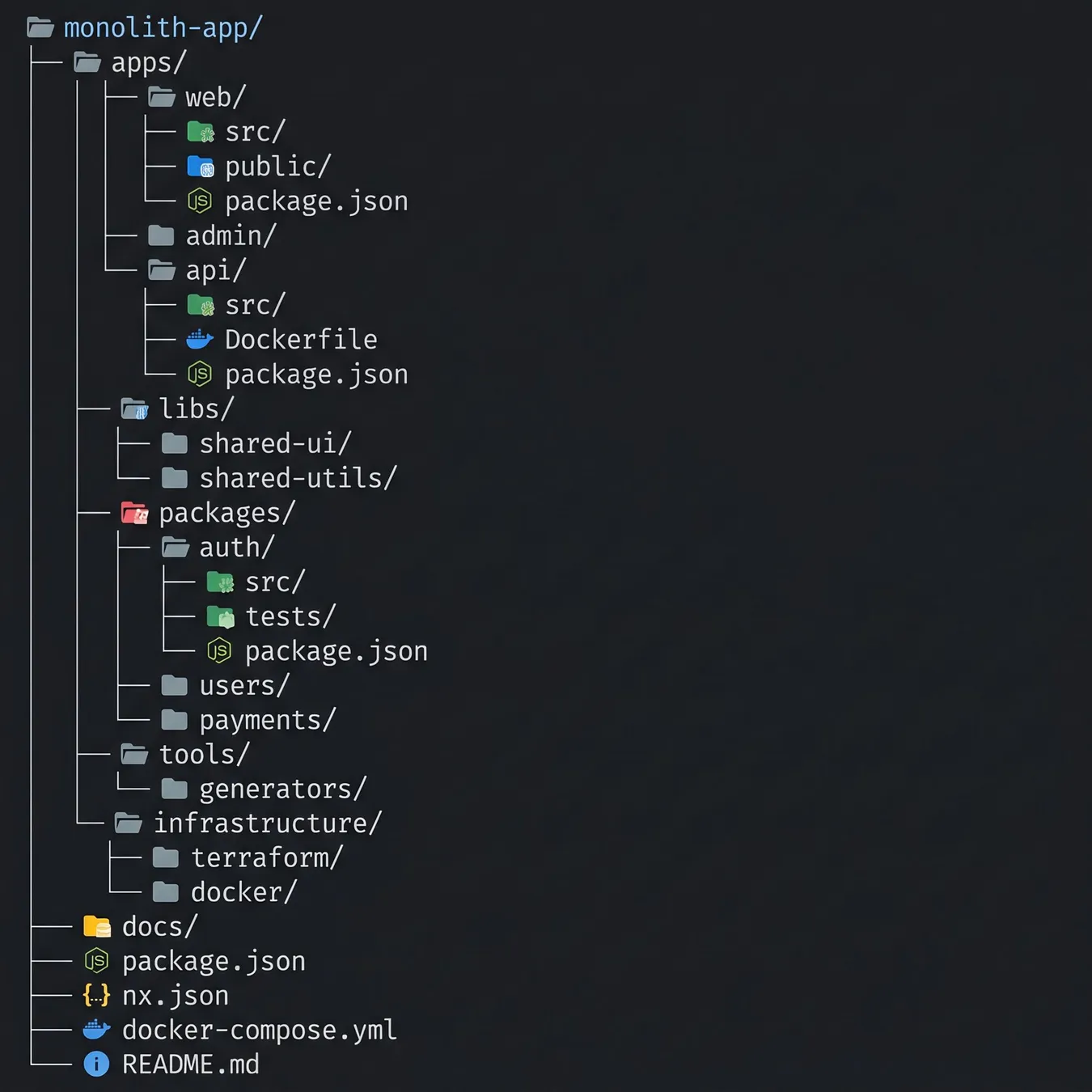
Modular monolith directory structure.
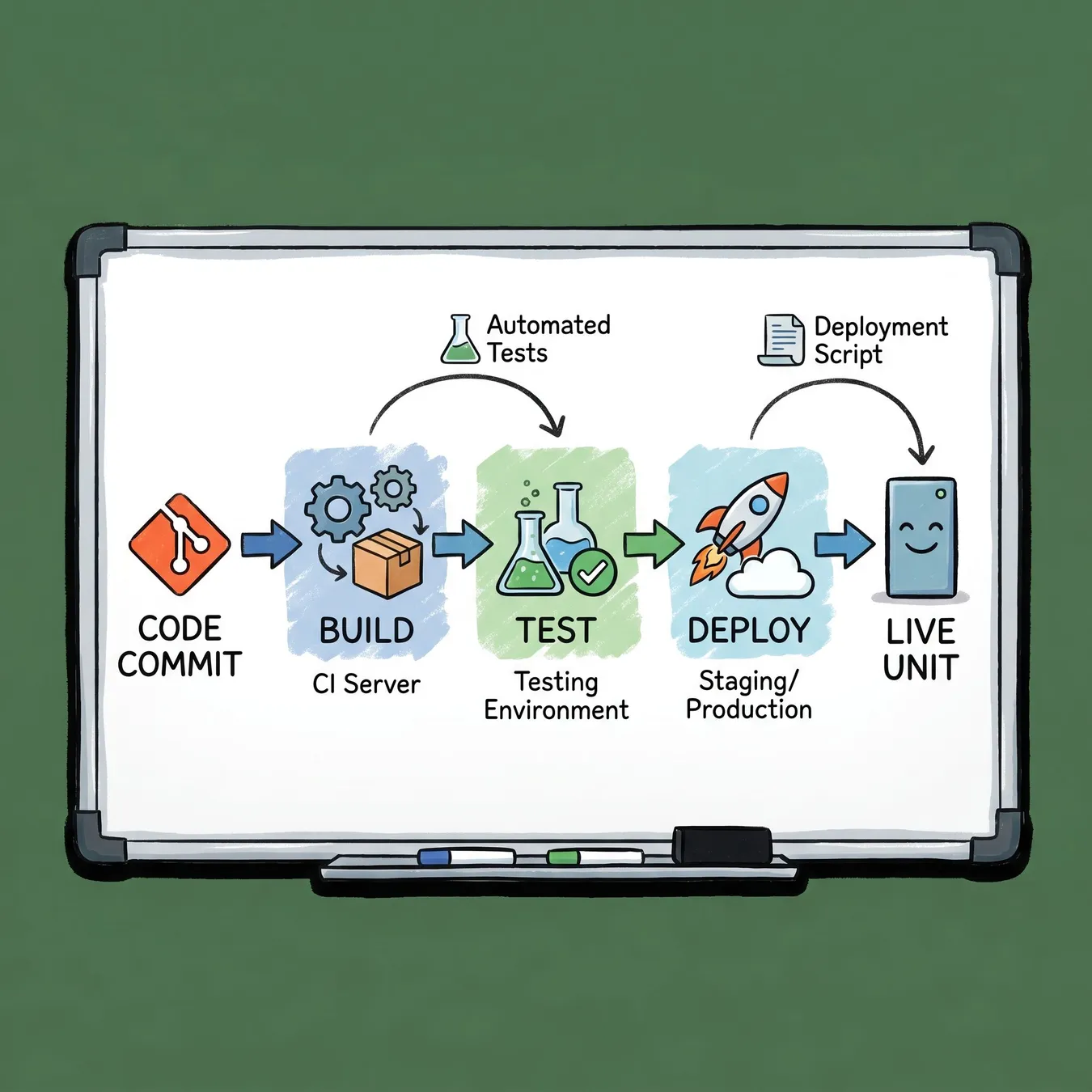
Simplified deployment workflow.
Infrastructure Considerations
When you consolidate, your infrastructure needs change. You may move from many small containers to fewer, larger instances. This often simplifies load balancing and security group management significantly.
- 01
Right-size your compute instances for the new unified load.
- 02
Consolidate your monitoring and alerting into a single dashboard.
- 03
Simplify your networking rules and VPC structure.
- 04
Update your backup and disaster recovery plans for the monolith.
The Future of Your Codebase
Architectural decisions are never permanent. By moving to a modular monolith today, you are not closing the door on microservices forever; you are simply choosing the most effective tool for your current stage of growth.
Consolidating our services with Studio 402 allowed us to cut our cloud bill by 40% and finally ship our mobile app on time. The complexity we removed was life-changing for our dev team.
Conclusion
Strategic consolidation is a powerful tool for engineering leaders. By identifying the right time to move from microservices to monolith, you can reduce operational drag and focus your team's energy on building features that matter.