
Decoding the Venture Capital Business Model
To successfully raise capital, founders must look beyond the check and understand the venture capital business model that dictates investor behavior. VC firms are not just pools of money; they are structured financial entities with specific mandates to return capital to their own investors.
Understanding how venture capital investors operate internally allows you to align your product roadmap with their financial incentives, ensuring your pitch resonates with their need for outsized returns.
10x
Minimum target return for early-stage investments
10 Years
Typical lifecycle of a VC fund
2/20
Standard management fee and carried interest structure
The Economics of a Venture Capital Fund
A VC firm manages funds on behalf of Limited Partners (LPs), such as pension funds or endowments. The firm’s goal is to identify high-growth startups that can 'return the fund,' meaning a single exit covers the entire value of the investment pool.
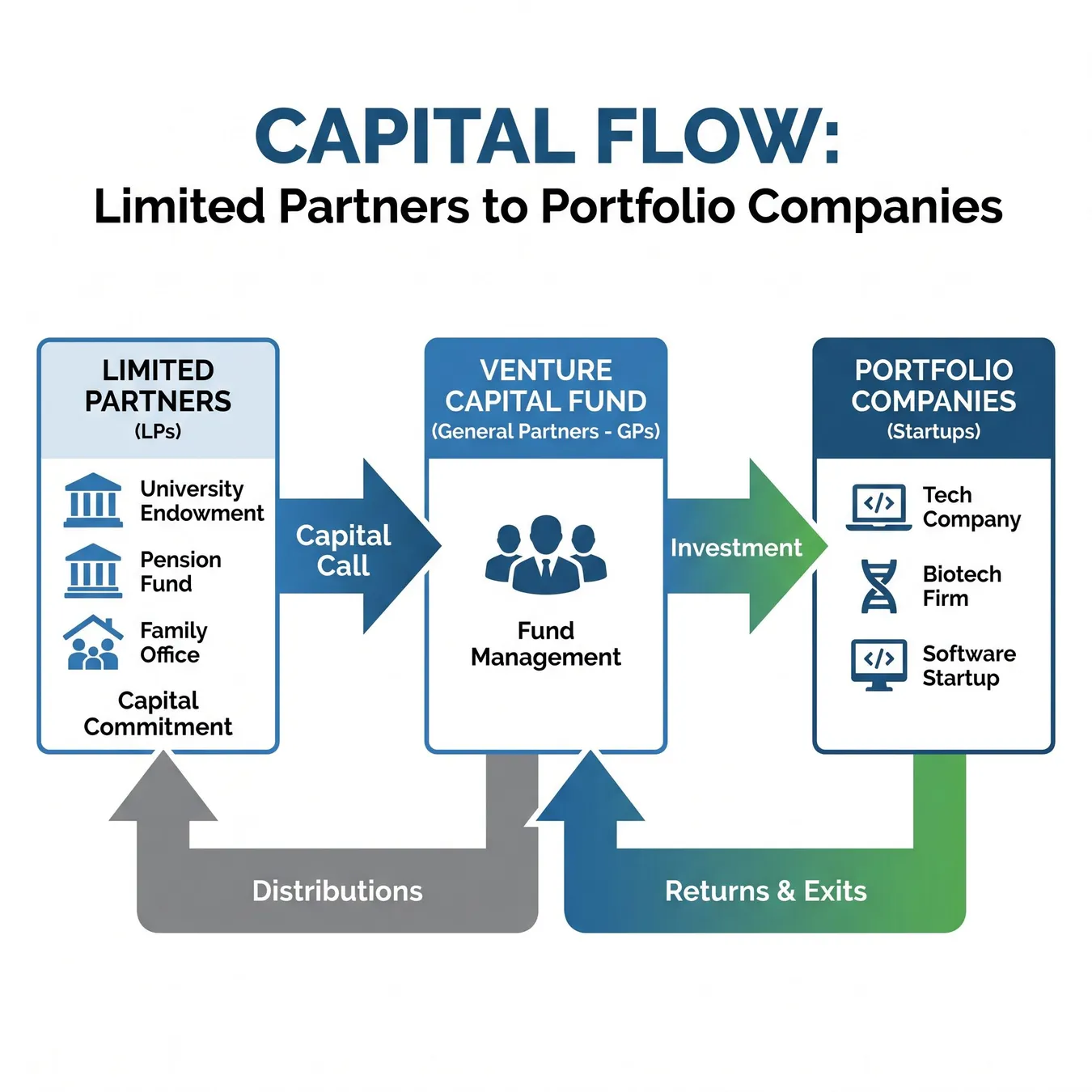
The flow of capital in a standard venture capital structure.
Fund Mandates and Investment Horizons
Every fund has a specific mandate—a set of rules governing where and how they invest. This often includes specific industries, geographic regions, or venture capital stages that the firm is authorized to participate in.
- Deployment Period: The first 2-4 years where new investments are made.
- Follow-on Reserves: Capital set aside to support existing winners.
- Harvest Period: The final years focused on exits and liquidity events.
- Fund Vintage: The year the fund was established, affecting its urgency.
How VC Incentives Shape Your Startup's Path
Because VCs need 'power law' returns, they are often incentivized to push for aggressive growth over steady profitability. This is a critical factor for an entrepreneur funding their vision to consider before signing a term sheet.
Info.
// The Power Law Reality
Internal Roles: Who Makes the Decisions?
Navigating a firm requires knowing who you are talking to. While Associates source deals, the venture partners and General Partners are typically the ones with check-writing authority and board seats.
| Role | Primary Focus | Decision Power |
|---|---|---|
| Analyst/Associate | Sourcing & Due Diligence | Low (Gatekeeper) |
| Principal | Deal Execution & Monitoring | Medium (Influencer) |
| General Partner | Fund Strategy & Final Approval | High (Decision Maker) |
The Due Diligence Process
Once a firm is interested, they begin due diligence. This isn't just about finances; it's a deep dive into your team, market, and technical defensibility to ensure the investment fits their risk profile.
Verified Market Size (TAM/SAM/SOM)
Technical Architecture Review
Customer Reference Calls
IP and Legal Ownership Audit
Alternative Models: Venture Studios
Not all capital follows the traditional GP/LP passive investment path. Some founders find better alignment with a venture studio fund, which provides operational support alongside capital.
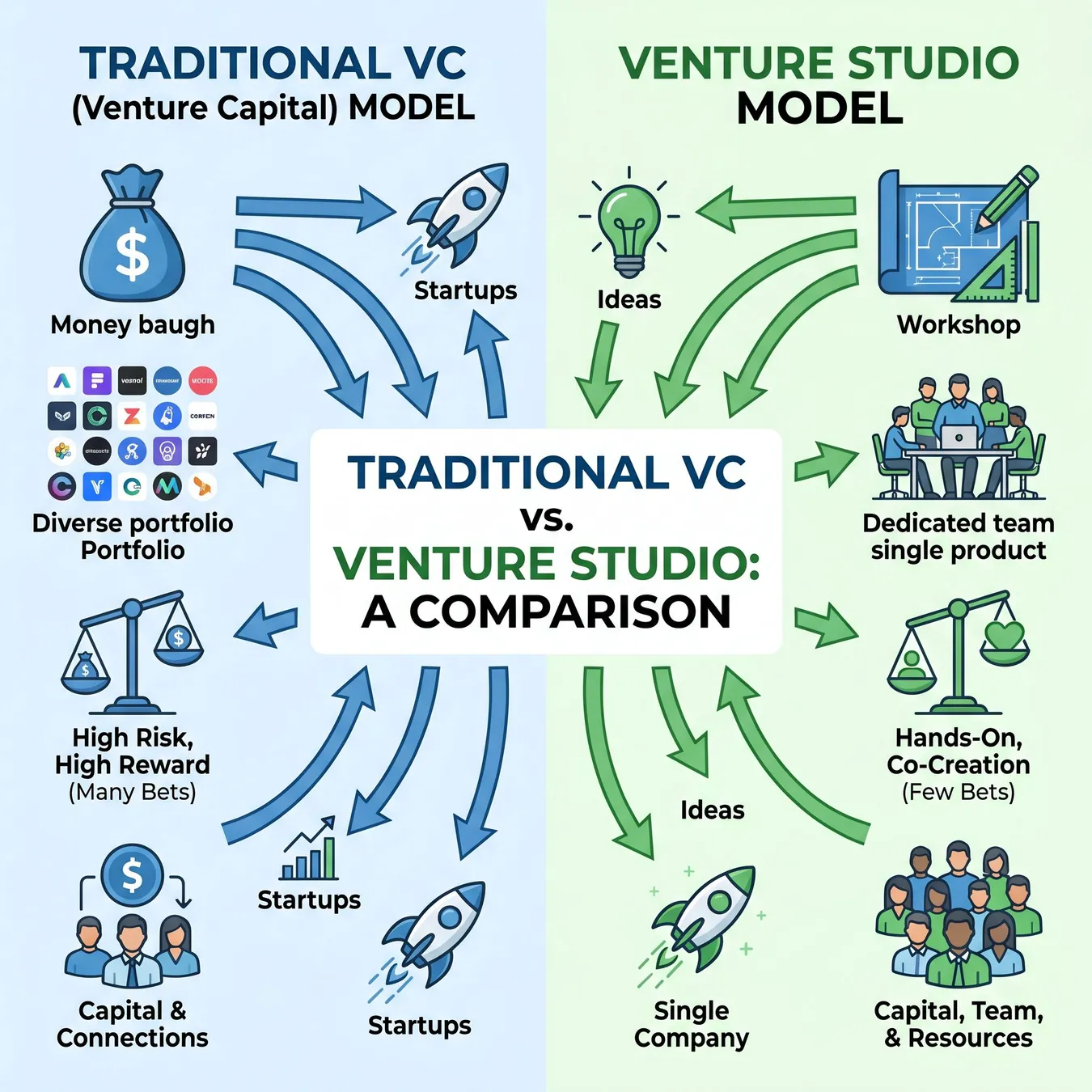
Comparing passive capital to operational venture models.
Portfolio Construction Strategy
VCs build portfolios to mitigate the high failure rate of startups. They expect 60-70% of their investments to fail or return only the initial capital, while 5-10% drive the entire fund's success.
The Impact on Your Follow-on Funding
If your current investors don't participate in your next round, it sends a 'negative signal' to the market. Understanding their reserve strategy is vital for long-term planning.
Aligning Product Strategy with VC Expectations
To attract top-tier investors, you need a founders venture mindset that prioritizes building scalable, defensible technology over short-term hacks.
Show a clear path to $100M+ ARR
Highlight technical moats and IP
Understand the specific fund's vintage
Be transparent about technical debt
Pitch a lifestyle business to a VC
Ignore the fund's specific sector focus
Overstate your current traction
Underestimate the time for due diligence
Exit Requirements and Liquidity
Ultimately, the VC business model requires an exit—either through an IPO or an acquisition. Your roadmap should reflect a product that is an attractive acquisition target for larger incumbents.
Common Pitfalls in Founder-VC Alignment
Misalignment often occurs when a founder wants to build slowly and sustainably while the VC's fund lifecycle requires a rapid exit within a 7-10 year window.
Trade-off
4 pros · 4 cons
Pros
Access to massive growth capital
Network of potential hires and partners
Validation for future funding rounds
Strategic guidance from experienced GPs
Cons
Significant equity dilution
Pressure for hyper-growth
Loss of some board control
Alignment with fund exit timelines
Technical Readiness for VC Investment
Investors look for 'venture-scale' engineering. This means your infrastructure must be capable of handling rapid user growth without a total rewrite, which is a common point of failure during due diligence.
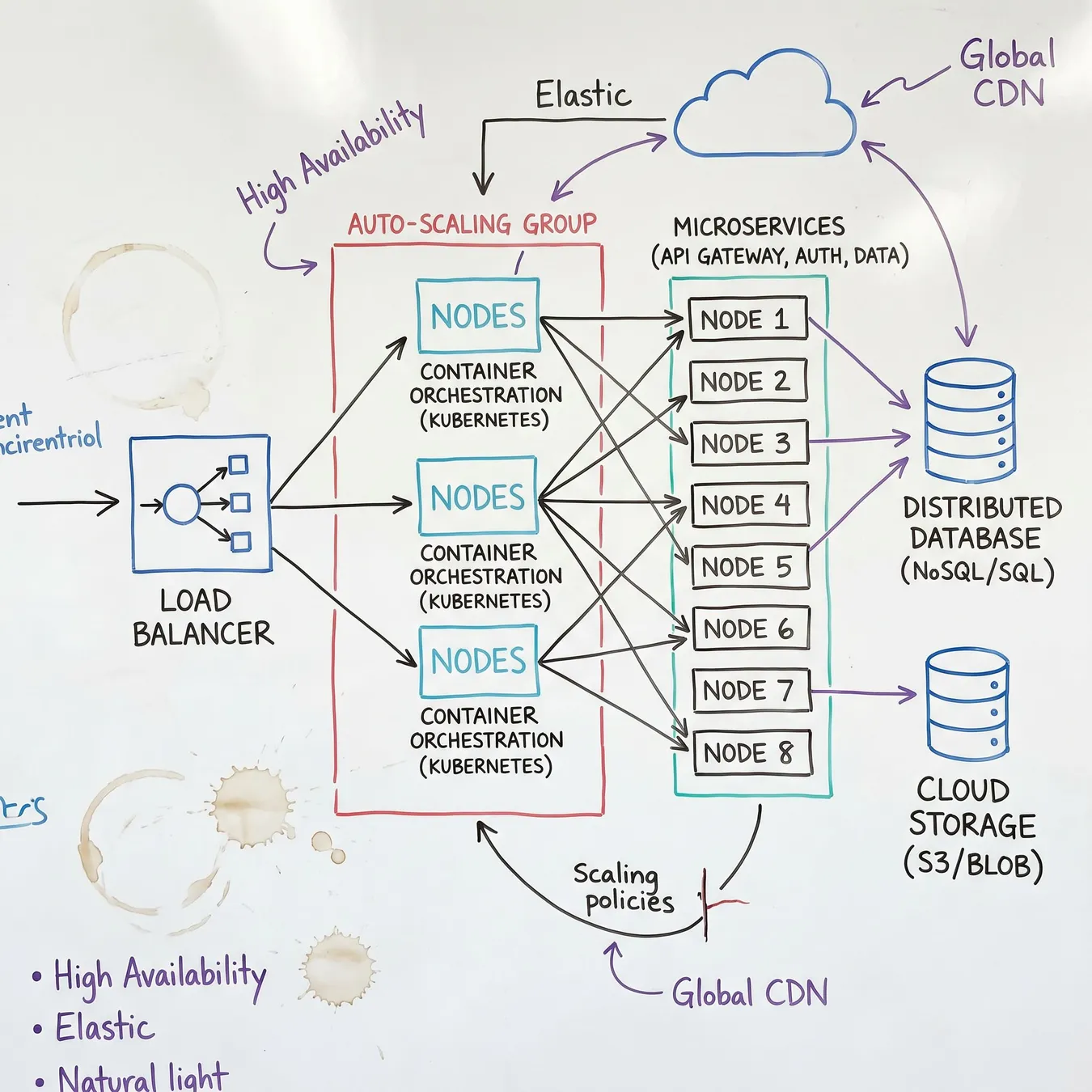
Scalable architecture is a prerequisite for venture-scale investment.
The Role of Management Fees
Management fees (typically 2%) cover the firm's operational costs—salaries, office space, and travel. This is why VCs are incentivized to raise larger and larger funds over time.
Carried Interest: The Real Driver
Carried interest is the share of profits (usually 20%) that the GPs keep after returning the LPs' capital. This is where the real wealth is created for VCs, driving their hunger for 'home run' exits.
How to Vet Your Potential Investors
Just as they diligence you, you must diligence them. Ask about their remaining deployment period and their typical follow-on strategy to ensure they can support you through multiple rounds.
- 01
Check their portfolio for competing products.
- 02
Speak with founders of their failed investments.
- 03
Verify the remaining 'dry powder' in their current fund.
- 04
Understand the specific partner's track record.
Bridging the Gap Between Capital and Code
At Studio 402, we understand that venture capital investors are looking for more than just a good idea—they need a production-ready engine that can scale. We help founders build the technical foundations that satisfy the most rigorous VC due diligence.
Whether you are preparing for a seed round or scaling toward Series A, our engineering team ensures your software isn't just a prototype, but a durable asset that aligns with your investors' financial mandates.

Studio 402 bridges the gap between investment and execution.
Frequently Asked Questions
Ready to Build a Venture-Scale Product?
Don't let technical debt or a fragile MVP derail your fundraising. Studio 402 partners with ambitious founders to design, build, and scale software that meets the high standards of institutional investors.
Build for the Next Stage of Growth
Let’s discuss your product roadmap and how to build a technical foundation that wins investor trust.
Keep reading
More in Venture Capital & Seed Investment
Trusted by venture-backed founders across the US and Europe.
Updated for the 2026 investment landscape.