
Seed Stage Funding: A Guide to the Seed Investment Round
Seed stage funding represents the first official equity funding stage for a startup. It is the capital that allows a seed stage startup to transition from a conceptual prototype to a market-ready product with early traction.
$1M - $4M
Average Seed Round Size
12-18 Months
Typical Runway Provided
10% - 25%
Typical Equity Dilution
Defining the Seed Stage Startup Landscape
In the broader context of startup funding rounds, the seed stage is where institutional capital first enters the cap table. Unlike pre-seed, which often relies on friends and family, seed investment rounds are led by professional investors.
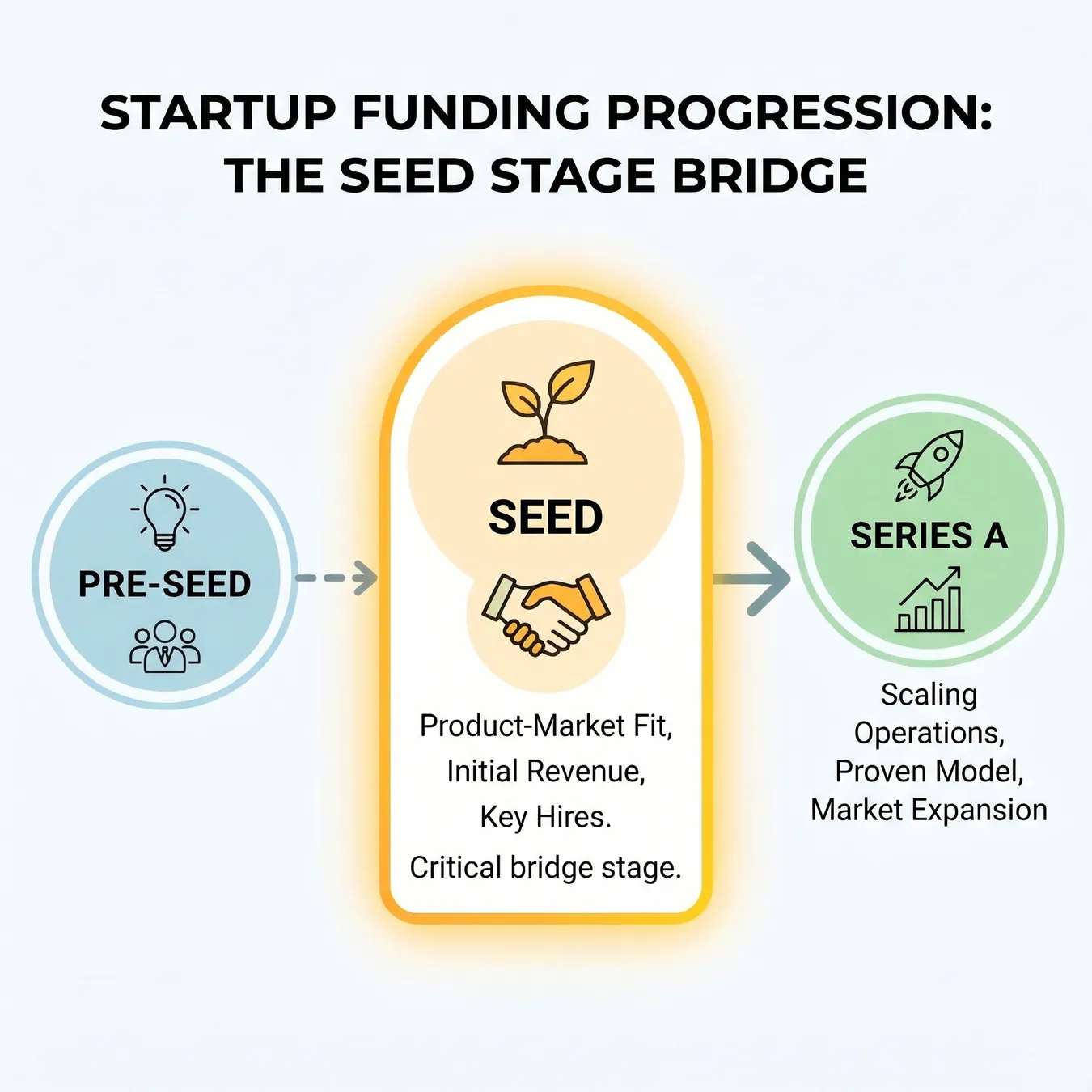
The seed stage acts as the critical bridge between initial validation and institutional scaling.
Core Objectives of a Typical Seed Round
A typical seed round is designed to fund specific milestones that prove the business is viable. This usually includes finalizing the product, hiring key team members, and initiating market entry.
- Achieving initial product-market fit
- Building a core engineering and product team
- Establishing a repeatable customer acquisition channel
- Validating unit economics and pricing models
Seed Startup Funding Instruments
Founders must choose the right vehicle for their seed startup funding. While priced equity rounds are common, many early-stage deals utilize flexible instruments to defer valuation discussions.
| Instrument | Complexity | Speed to Close | Valuation |
|---|---|---|---|
| SAFE | Low | Fast | Deferred |
| Convertible Note | Medium | Moderate | Deferred |
| Priced Equity | High | Slow | Fixed |
Milestones for Seed Stage Investment Readiness
Investors look for specific technical and market signals before committing capital. Understanding the mvp stage of startup development is crucial for timing your raise correctly.
Functional MVP with active user data
Clear technical roadmap for the next 18 months
Evidence of early customer demand or waitlist
Founder-market fit and core technical leadership
The Seed Investment Process: Step-by-Step
01 / 04
phase 01 / 04
Preparation
phase 02 / 04
Investor Outreach
phase 03 / 04
Due Diligence
phase 04 / 04
Term Sheet & Closing
Common Pitfalls in Seed Stage Funding
Focus on solving a high-value problem
Build a lean, scalable technical foundation
Be transparent about technical debt
Over-optimize for valuation over partner fit
Ignore the importance of technical due diligence
Raise too little capital to reach the next milestone
Investor Expectations at the Seed Stage
Seed stage investors are betting on the team and the market opportunity. They expect a high degree of execution speed and a clear understanding of the technical hurdles ahead.
At the seed stage, we aren't just buying a product; we are investing in the team's ability to navigate the pivot from prototype to production.
Alex Rivera · General Partner at VentureScale
Technical Strategy for Raising Seed Funding
Successfully raising seed funding requires more than just a good idea; it requires a fundable foundation. Investors will scrutinize your architecture to ensure it can handle growth.
Tip.
// Pro Tip
Post-Seed: Preparing for the Series A Bridge
The work doesn't end once the check clears. Effective post seed funding management involves scaling the engineering team and hardening the product for enterprise-grade use.
Frequently Asked Questions
Bridging the Gap Between Capital and Code
Securing seed stage funding is a massive milestone, but the capital is only as effective as the systems it builds. Many startups fail not because they lack funding, but because their technical execution cannot keep pace with their growth ambitions.
At Studio 402, we help seed-stage founders turn their investment into durable, production-ready software. Whether you need to rescue an AI-generated prototype or build a scalable SaaS platform from scratch, we provide the engineering depth that investors look for.

Production-grade dashboards built for scale.
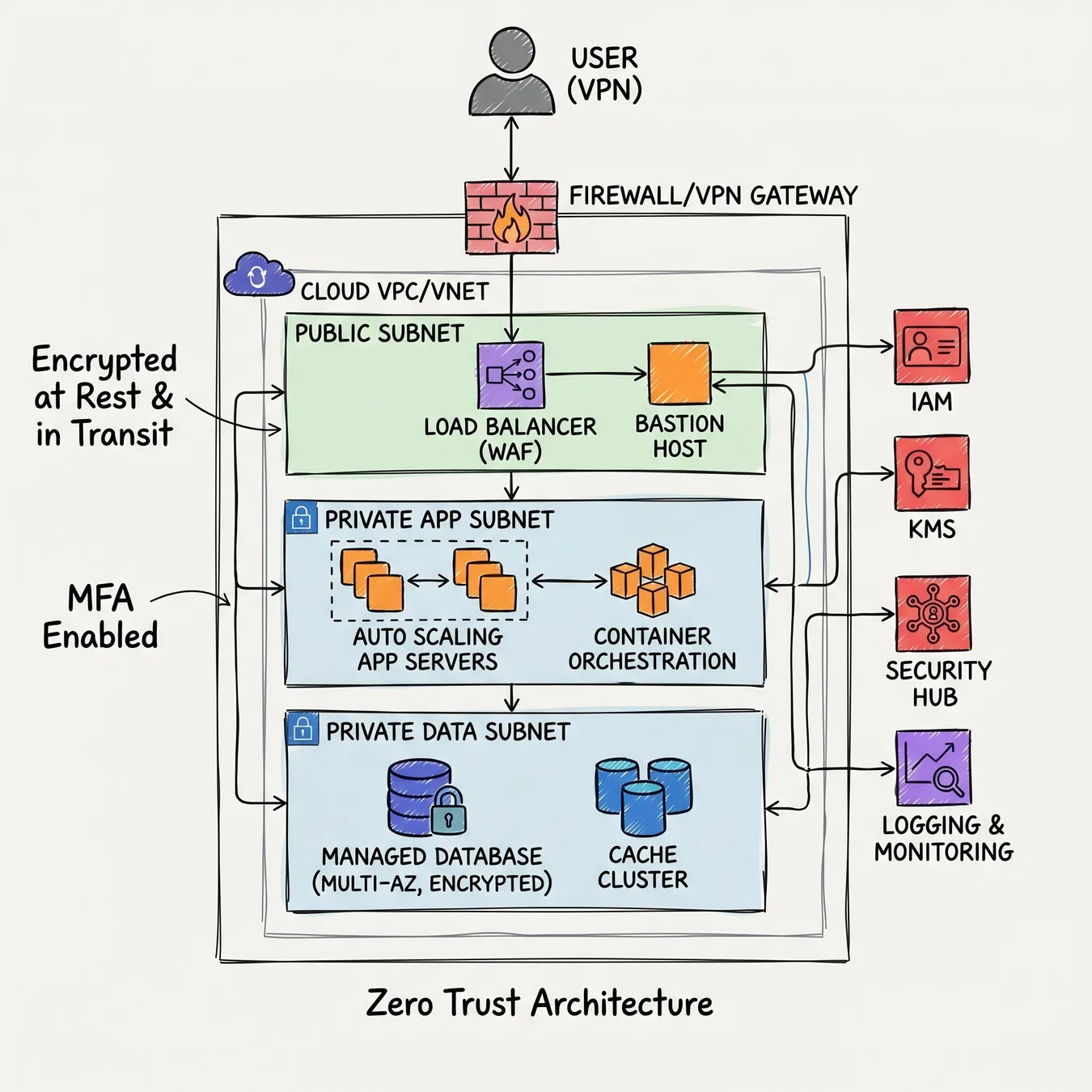
Scalable cloud architecture for growing startups.
How Studio 402 Supports Seed Stage Startups
- MVP Hardening: Transitioning from demo-ware to production-ready code.
- AI Integration: Embedding LLMs and automation into core workflows.
- Infrastructure Design: Building AWS/Cloud foundations that survive traffic spikes.
- Technical Due Diligence: Preparing your codebase for investor scrutiny.
Comparison: Studio 402 vs. Traditional Agencies
Trade-off
3 pros · 3 cons
Pros
Production-first engineering mindset
Deep experience in AI and cloud infra
Direct partnership with senior operators
Cons
Higher cost than solo freelancers
Selective engagement process
Focus on long-term quality over 'cheap' fixes
Ready to Build Your Fundable Foundation?
Don't let technical debt or a fragile prototype stall your seed stage momentum. Let's build the software that powers your next round.
Build Your Production-Ready MVP
Stop fighting bugs and start scaling. Partner with Studio 402 to build software that survives real-world use.
Explore More Early Stage Resources
Related Categories
Keep reading
More in Venture Capital & Seed Investment
Understanding the seed stage is just the beginning. As you grow, the requirements for your technical stack and team will evolve. Stay informed on the latest in venture strategy and product engineering.
- Seed Funding
- Startup Strategy
- VC Landscape
- Product Engineering
For founders looking for a technical partner who understands the high stakes of venture-backed growth, Studio 402 offers the expertise needed to bridge the gap between a seed check and a Series A success.
Trusted by venture-backed founders to build production-grade systems.
Updated for the 2026 investment landscape.
We focus on the engineering so you can focus on the growth. From cloud infrastructure to AI-native features, we build the foundations that scale with your business.
Summary of Seed Stage Milestones
- Seed funding is the first institutional equity round.
- Typical rounds range from $1M to $4M in 2026.
- Technical readiness is a top priority for seed investors.
- SAFEs and Convertible Notes are the most common instruments.
- Post-seed strategy is vital for reaching Series A.
The journey from seed to scale is complex, but with the right capital and the right technical partner, it is the most rewarding phase of the startup lifecycle.
Thank you for reading our guide to seed stage funding. We hope this provides the clarity you need to navigate your next investment round with confidence.
If you have questions about your technical roadmap or need an audit of your current MVP, reach out to our team at studio@402.studio.
Final Thoughts for Founders
Remember that seed stage funding is a means to an end—the end being a sustainable, scalable business. Build for the long term, and the capital will follow.