
The Mechanics of a Formal Series Seed Investment
A series seed investment marks the transition from informal capital to a structured, priced equity round. Unlike the flexible nature of pre seed financing, a formal seed round involves issuing new shares of stock at a specific valuation.
20-25%
Typical Equity Dilution
12-18 Mo
Average Runway Target
Priced
Equity Structure
Priced Equity vs. Convertible Instruments
Founders often begin their journey by evaluating different types of seed funding to determine which instrument offers the best balance of control and speed. While SAFEs are common early on, institutional investors often prefer priced rounds.
Trade-off
4 pros · 4 cons
Pros
Fixed valuation and ownership
Clear governance rights
Preferred stock protections
Institutional credibility
Cons
Higher legal costs
Complex closing process
Board seat requirements
Board consent for decisions
Key Legal Documents in a Series Seed Round
The mechanics of the round are governed by a standard set of documents, often based on NVCA or SeriesSeed.com templates. These define everything from liquidation preferences to voting rights.
- Stock Purchase Agreement (SPA)
- Amended and Restated Charter
- Investors' Rights Agreement
- Voting Agreement
- Right of First Refusal & Co-Sale Agreement
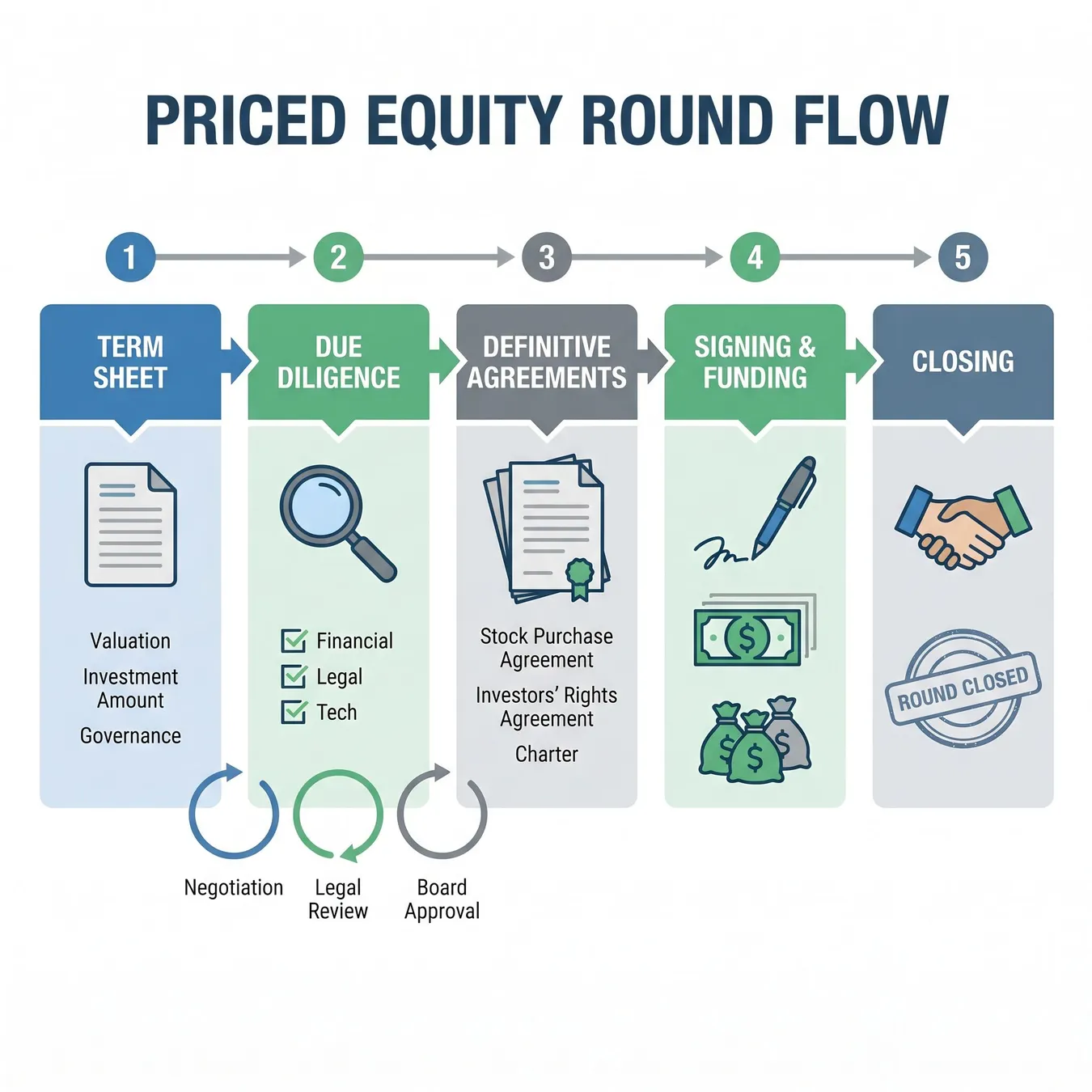
The structural flow of a formal priced equity investment.
The Role of Valuation and the Cap Table
In a priced round, the pre-money valuation is negotiated upfront. This determines the price per share and the resulting ownership percentages for all stakeholders on the cap table.
Tip.
// Pro-Tip: Option Pool Shuffle
Technical Readiness for Institutional Capital
Investors look beyond the pitch deck during the mvp stage of startup to ensure the underlying technology is scalable. Technical due diligence becomes a critical hurdle in formal rounds.
Documented system architecture
Security and data privacy protocols
Clean IP assignment for all code
Scalable cloud infrastructure
The Closing Process: Term Sheet to Wire
01 / 04
phase 01 / 04
Term Sheet Execution
phase 02 / 04
Due Diligence
phase 03 / 04
Definitive Documents
phase 04 / 04
Closing and Funding
Board Composition and Governance
A formal seed round often introduces a Board of Directors. Typically, this consists of two founders and one lead investor, creating a formal layer of oversight for the company.

Governance structures evolve as institutional investors join the board.
Liquidation Preferences and Participation
Liquidation preference dictates who gets paid first in an exit. Standard seed rounds usually feature a 1x non-participating preference, protecting the investor's downside.
| Term | Standard Seed | Founder Impact |
|---|---|---|
| Preference | 1x Non-Participating | Protects capital; fair exit split |
| Dividends | Non-Cumulative | No accruing debt to investors |
| Anti-Dilution | Broad-Based Weighted | Standard protection for investors |
Protective Provisions and Veto Rights
Investors will require veto rights over certain 'major' actions, such as selling the company, changing the charter, or issuing a new class of stock.
Standardize your legal docs
Keep a clean data room
Understand your 'walk-away' terms
Agree to participating preferred
Grant board seats to minor investors
Ignore technical debt before diligence
Post-Closing: Managing the Capital
Once the round is closed, the focus shifts to execution. This capital is intended to fuel the growth necessary to reach the milestones required for a Series A.

Post-funding focus shifts to key performance indicators.
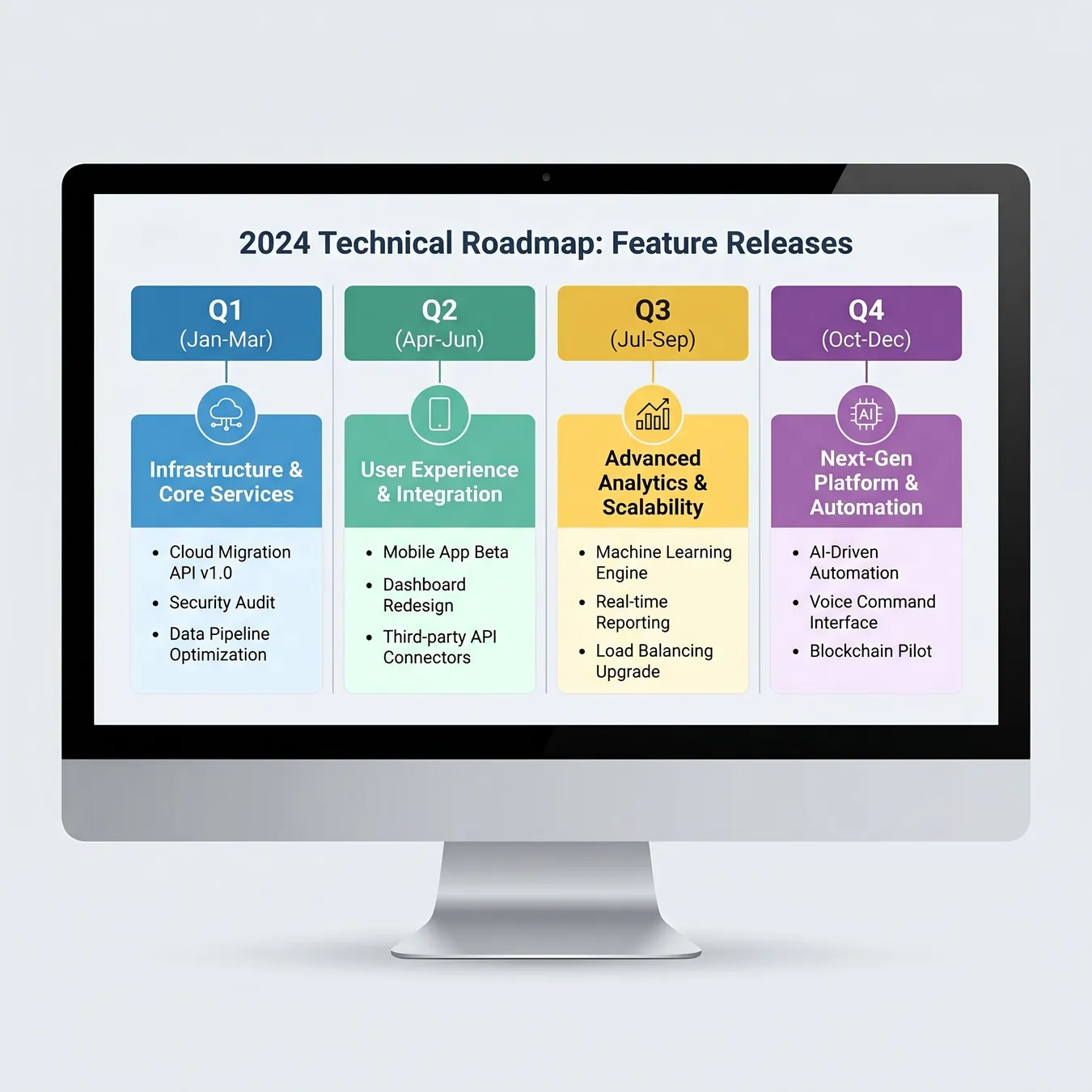
Engineering velocity is the primary driver of seed-stage value.
Common Pitfalls in Priced Seed Rounds
The most common mistakes involve over-complicating the legal structure or failing to account for the impact of previous convertible notes on the final ownership.
Comparing Seed Funding to Series A
While a series seed investment is a priced round, it is generally lighter than a Series A. The seed funding series a transition involves significantly more rigorous financial auditing and market validation.
The Impact of Previous SAFEs
When the priced round occurs, all outstanding SAFEs and convertible notes convert into equity. This can lead to significant dilution if not modeled correctly in advance.
Info.
// Modeling Dilution
Bridging Technical Gaps for Investors
At Studio 402, we help founders navigate the technical requirements of a formal seed round. If your current codebase is a 'vibe-coded' prototype, institutional investors will expect a plan for hardening and scale.
We provide the engineering depth required to pass technical due diligence and build the durable systems that justify institutional valuations.
Strategic Alignment for Growth
Understanding startup funding rounds is only the first step. The real challenge is deploying that capital into product engineering that scales with your ambition.
Choosing the Right Instrument
Founders should carefully weigh the types of seed funding available to them. While priced rounds offer clarity, they require a level of operational maturity that not all startups possess early on.
Preparing for the Next Milestone
A successful seed round is a beginning, not an end. It provides the resources to build the infrastructure, team, and product-market fit required for the next stage of growth.

Scaling your engineering team is the primary use of seed capital.
How Studio 402 Supports Seed-Stage Founders
Whether you are preparing for technical due diligence or need to rebuild a prototype into a production-ready SaaS platform, Studio 402 is your senior engineering partner.
We bridge the gap between a fundable idea and a scalable business by shipping software that survives real-world use and institutional scrutiny.
Build for the Next Stage
Ready to harden your product for institutional investment? Let's discuss your technical roadmap.
Explore More Resources
Keep reading
More in Venture Capital & Seed Investment
Trusted by venture-backed founders to scale production-grade software.
Updated July 2026