
What Seed Investors Look for in Early-Stage Teams
Securing capital at the earliest stages is less about your current revenue and more about the potential of the people behind the product. For seed investors, the team is the primary asset, serving as the foundation for everything that follows.
90%
Investment weight on team quality
18-24mo
Typical runway target
3-5
Key technical milestones
The Core Pillars of Seed Investor Evaluation
When early stage seed investors review a pitch, they are looking for a specific blend of technical competence, domain expertise, and operational resilience. They need to know that the founders can navigate the inevitable pivots of the early market.
- Founder-Market Fit: Why are you the right person to solve this?
- Technical Velocity: How fast can the team ship and iterate?
- Complementary Skills: Does the team cover product, engineering, and sales?
- Coachability: Can the founders take feedback and adapt?
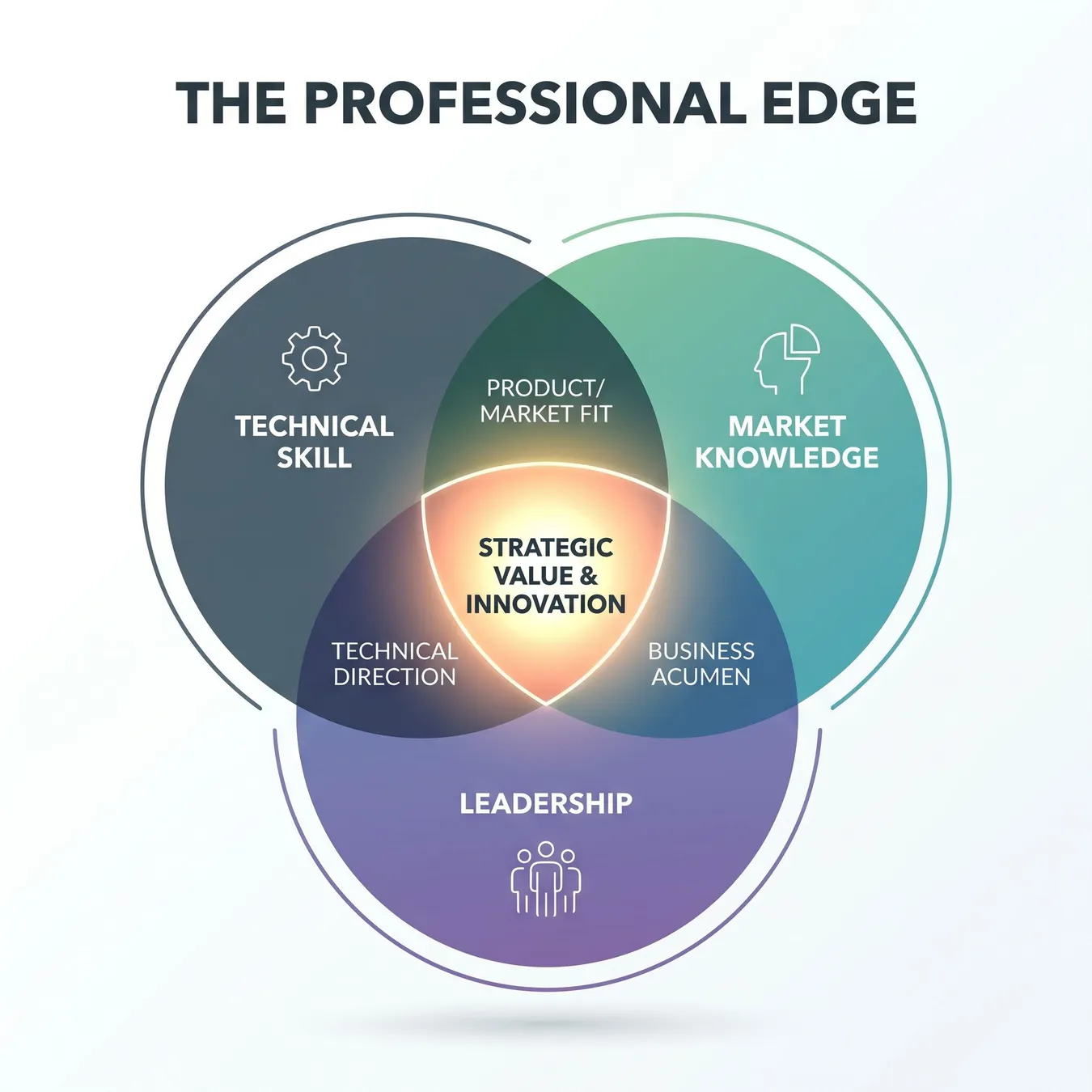
The trifecta of a fundable early-stage founding team.
Technical Benchmarks for Seed Funding
Investors want to see that you have moved beyond the idea phase. Reaching the mvp stage of startup is a critical signal that your team can execute on a technical vision.
Architecture and Scalability
While you don't need a perfect system, seed capital investors look for evidence that your architecture won't crumble under the first 1,000 users. They value clean code and sensible stack choices.
Info.
// Technical Debt vs. Speed
Operational Readiness and Team Structure
Beyond the code, seed funding investors evaluate how the team operates. This includes your hiring roadmap, your internal communication, and your ability to manage a budget.
| Role | Investor Expectation | Red Flag |
|---|---|---|
| CEO | Vision and GTM strategy | Lack of focus on sales |
| CTO | Technical execution and roadmap | Outsourced core IP |
| Product | User-centric design thinking | Building features in a vacuum |
Navigating the Investor Landscape
It is important to distinguish between different capital sources. For instance, early stage angel investors often prioritize personal rapport and vision more than institutional VCs do.
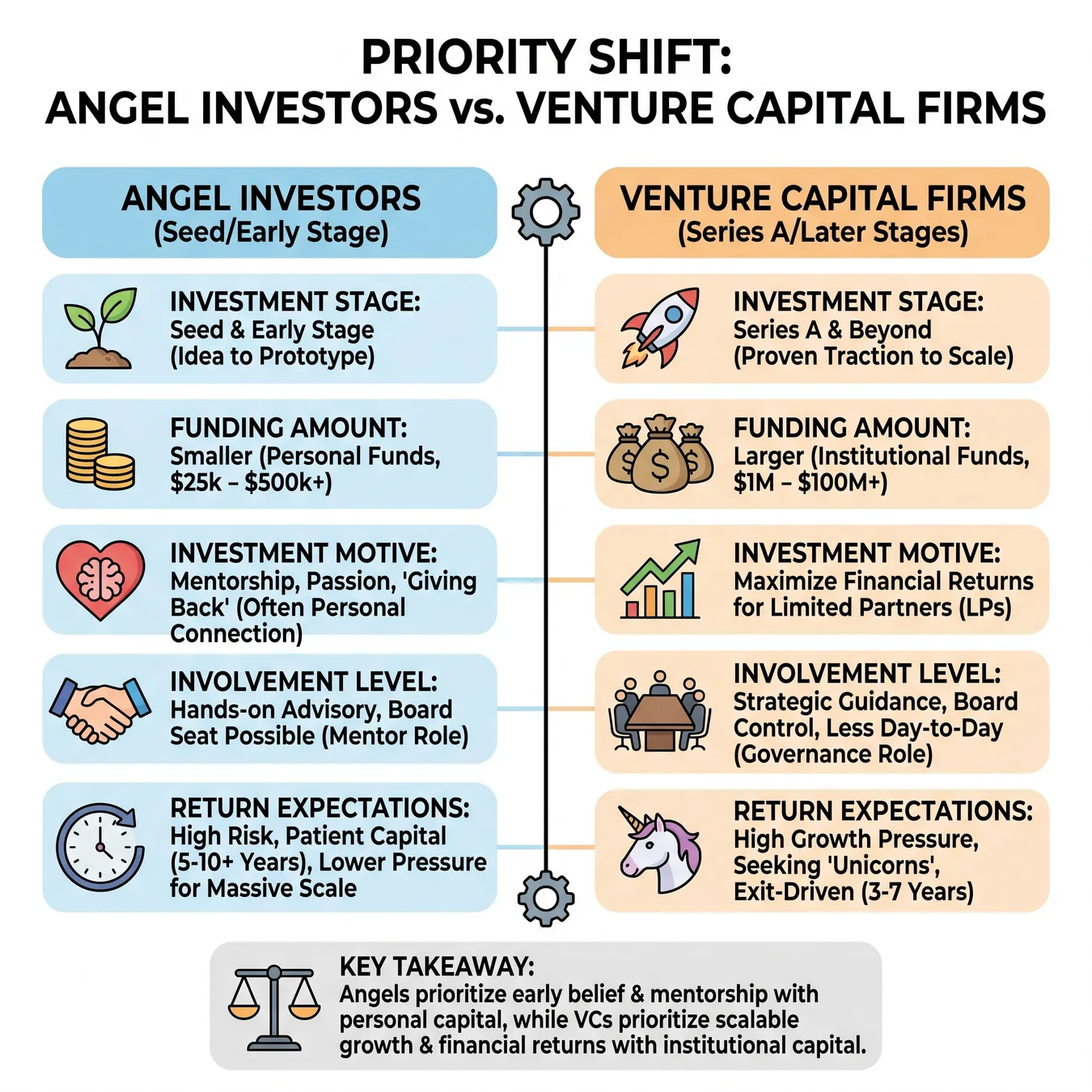
Understanding the different motivations of seed-stage backers.
The Due Diligence Process
Once you have captured interest, you will undergo a formal review. Preparing for seed funding for tech startups involves organizing your data room and technical documentation.
Clean cap table and legal formation
Documented product roadmap for 12 months
Technical architecture overview
Customer discovery and validation data
Common Pitfalls in Team Evaluation
Highlight deep domain expertise
Show a history of working together
Demonstrate rapid shipping cycles
Hide technical gaps in the team
Over-promise on AI capabilities
Ignore unit economics
The Financial Instruments of the Seed Round
The way you structure your deal matters as much as the team itself. You should familiarize yourself with the various types of seed funding available to ensure long-term equity health.
SAFEs vs. Priced Rounds
Most seed round investors prefer SAFEs for speed, but as the round size grows, institutional investors may push for a priced equity round to establish formal valuation.
Building the 'Fundable' Team
If your team lacks a core technical lead or a product-minded founder, it may be worth delaying your raise to fill those gaps. Seed money investors are betting on the team's ability to solve problems.
- 01
Identify core skill gaps in the founding team.
- 02
Recruit or partner to cover technical and operational bases.
- 03
Build a track record of small, consistent wins.
- 04
Refine the narrative of why this team is uniquely qualified.
Investor FAQ: What They Really Ask
Bridging the Gap to Production
Many founders struggle because their team is great at ideation but lacks the infrastructure to scale. This is where a strategic technical partner can transform a 'vibe-coded' prototype into a fundable asset.
At Studio 402, we help early-stage teams harden their technology and build the operational systems that investors demand. We don't just build apps; we build the engineering foundations that support a successful seed round.
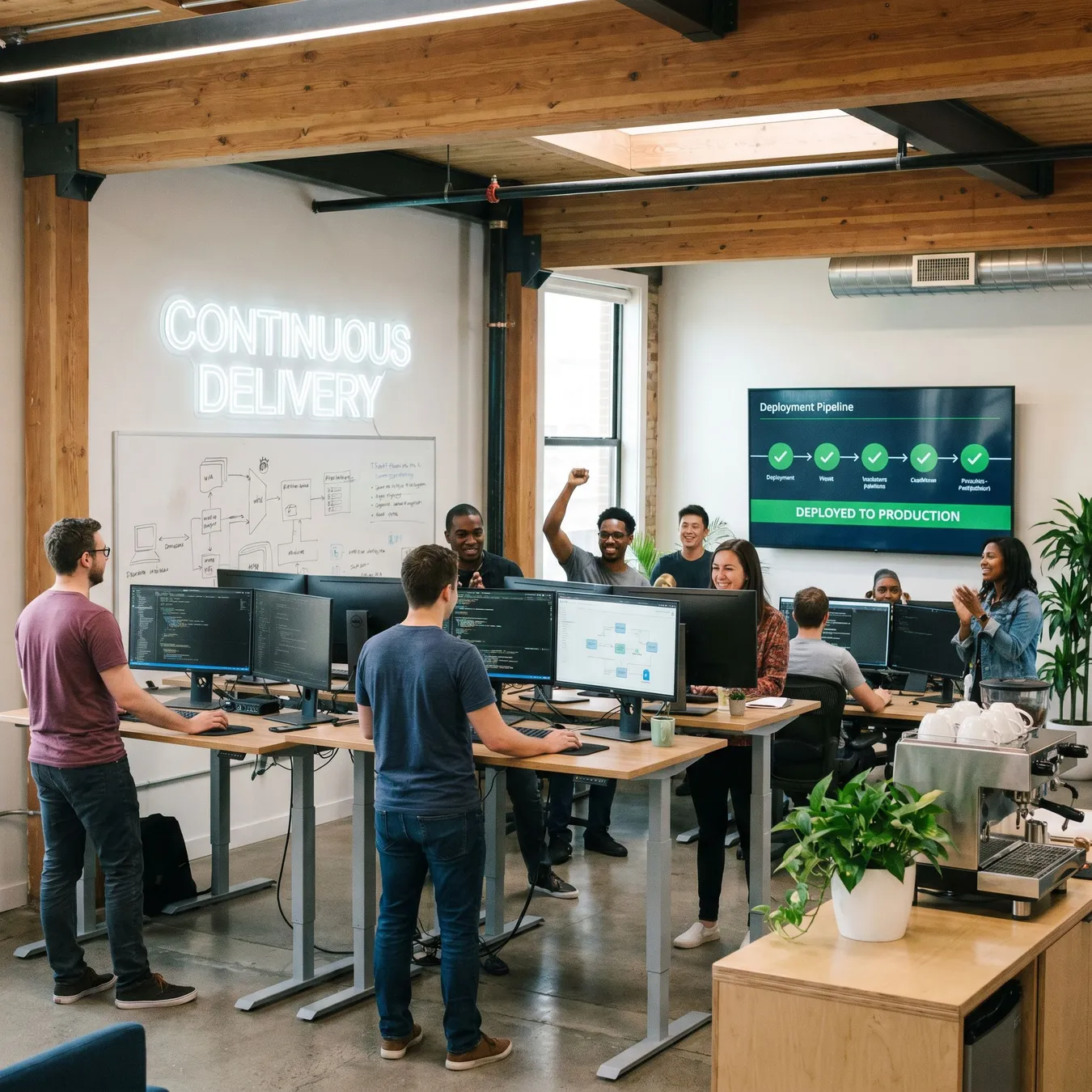
Moving from prototype to production-ready software.
How Studio 402 Supports Founders
Whether you are preparing for your first raise or need to rebuild a fragile MVP after securing capital, our studio provides the senior engineering leadership and execution power required to win investor trust.
- Technical Due Diligence Readiness: We audit your code and infra before investors do.
- MVP Hardening: We turn fragile prototypes into scalable, secure platforms.
- Fractional CTO Support: We provide the technical authority your team might be missing.
- AI Integration: We embed practical AI features that demonstrate real market value.
The Path to a Successful Seed Round
01 / 04
phase 01 / 04
Audit
phase 02 / 04
Build
phase 03 / 04
Pitch
phase 04 / 04
Scale
Ready to Build a Fundable Foundation?
Don't let technical debt or team gaps stall your fundraising. Let's discuss how we can help you meet and exceed investor expectations.
Build Your Technical Foundation
Work with Studio 402 to harden your product and prepare your team for seed-stage investment.
Further Reading for Founders
Explore More in Venture Capital
Keep reading
More in Venture Capital & Seed Investment
Understanding the seed landscape is the first step toward long-term success. By focusing on team quality and technical excellence, you position your startup for a successful partnership with the right investors.
- Seed Funding
- Startup Strategy
- Technical Advisory
- VC Readiness
Our team at Studio 402 is dedicated to helping founders navigate these complexities. We bring production-grade engineering to the early-stage ecosystem.
The journey from seed to scale is challenging, but with the right team and technical strategy, it is entirely achievable. Focus on the fundamentals, ship fast, and stay close to your users.
Final thoughts: Investors are looking for reasons to say yes. Give them those reasons by demonstrating a team that is resilient, skilled, and ready for the next level.
Thank you for reading our guide on seed investor expectations. We look forward to seeing what you build next.