
Types of Seed Funding: SAFEs, Convertible Debt, and Equity
Choosing between different types of seed funding is one of the most consequential decisions a founder makes. The instrument you select dictates how much control you retain, how quickly you can access capital, and how your cap table will look in the future.
80%+
Early-stage deals using SAFEs
18-24 mo
Typical seed runway target
10-20%
Standard seed round dilution
Understanding the SAFE (Simple Agreement for Future Equity)
The SAFE has become the industry standard for pre seed financing due to its simplicity and lack of interest rates or maturity dates. It is a flexible contract that promises equity to investors at a later date, usually triggered by a priced round.
Trade-off
4 pros · 3 cons
Pros
No maturity dates or interest
Low legal costs to execute
Fast closing process
Standardized YC documents
Cons
Dilution is deferred, not avoided
Can lead to 'cap table debt'
Less investor protection
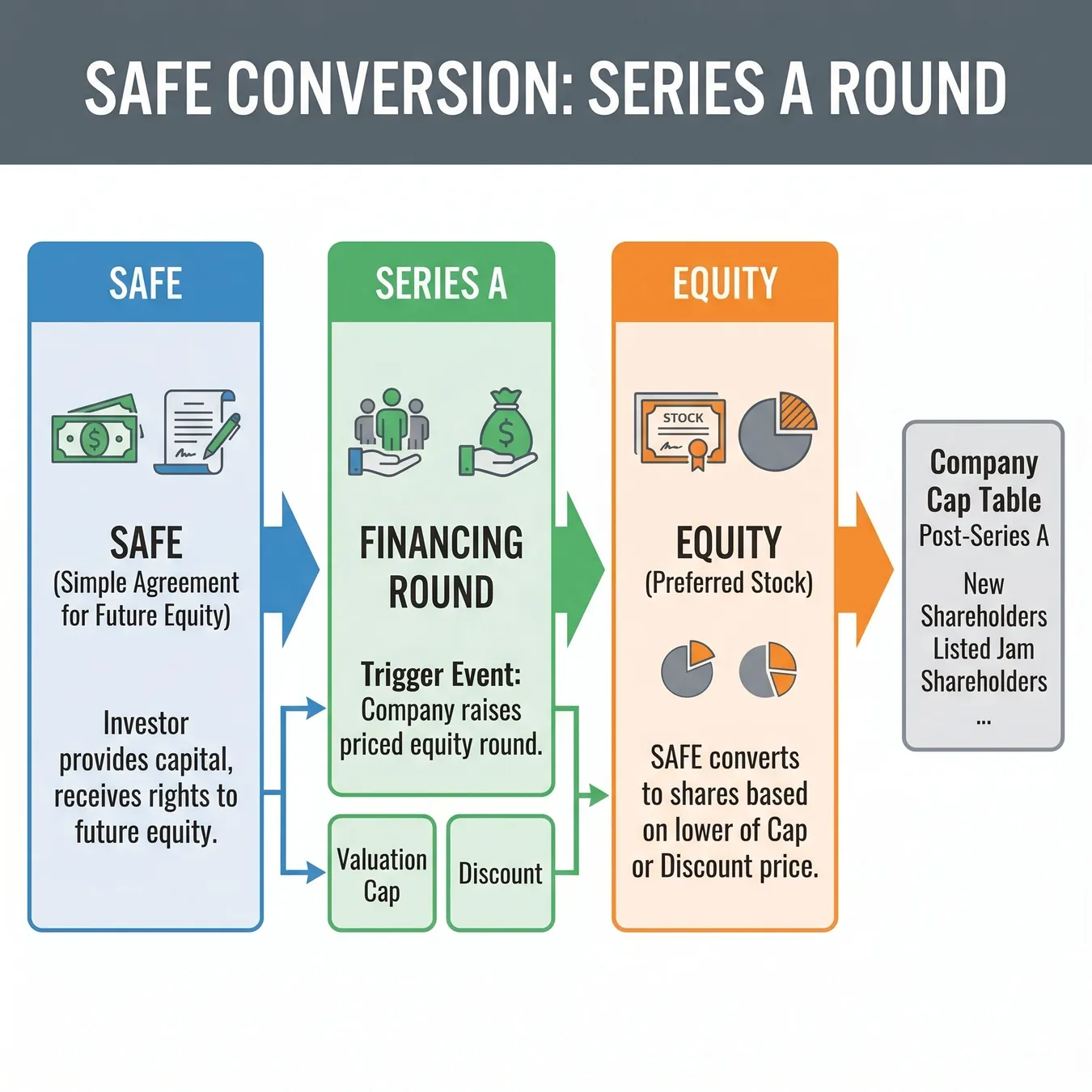
How SAFEs convert during subsequent funding events.
Convertible Debt: The Traditional Bridge
Convertible debt, or convertible notes, function as a loan that converts into equity. Unlike SAFEs, these instruments carry interest rates and maturity dates, which can create pressure if a follow-on round isn't raised quickly.
Warning.
// The Maturity Risk
Priced Equity Rounds: The Formal Seed
A formal series seed investment involves setting a specific valuation for the company and issuing new shares to investors. This is more complex and expensive than a SAFE but provides the most clarity for all parties.
| Feature | SAFE | Convertible Note | Equity |
|---|---|---|---|
| Legal Cost | Low | Medium | High |
| Speed | Days | Weeks | Months |
| Valuation | Cap only | Cap only | Fixed Price |
Key Terms: Valuation Caps and Discounts
Regardless of the instrument, two terms dominate seed discussions: valuation caps and conversion discounts. These protect early investors by ensuring they receive a better price per share than later investors.
- Valuation Cap: The maximum valuation at which the investment converts.
- Discount Rate: A percentage reduction (usually 20%) on the next round's price.
- Pro-Rata Rights: The right to maintain ownership percentage in future rounds.
- Most Favored Nation (MFN): A clause allowing investors to adopt better terms if offered to others.
What Investors Look for in Seed Rounds
Before choosing an instrument, understand that seed investors prioritize team execution and technical defensibility. They want to see a roadmap that leads directly to a Series A milestone.

Investors bet on teams that can execute on complex technical roadmaps.
The Impact of Dilution on Technical Strategy
Every dollar raised is a trade-off against ownership. Founders must balance the need for capital to build robust infrastructure with the desire to keep enough equity to incentivize future hires.
Managing the Option Pool
In priced rounds, investors often require an option pool increase. This typically dilutes the founders rather than the new investors, making it a critical negotiation point.
Comparing Speed vs. Control
SAFEs offer speed, allowing you to get back to building. Equity rounds offer control and certainty, which is often necessary when dealing with larger institutional checks.
Use standard SAFE documents whenever possible
Model your dilution before signing
Keep a clean cap table from day one
Stack too many SAFEs with different caps
Ignore the impact of interest on convertible notes
Over-complicate early legal terms
Preparing for Technical Due Diligence
Once the term sheet is signed, the focus shifts to due diligence. Investors will look at your codebase, security protocols, and cloud architecture to ensure the product is built on a durable foundation.
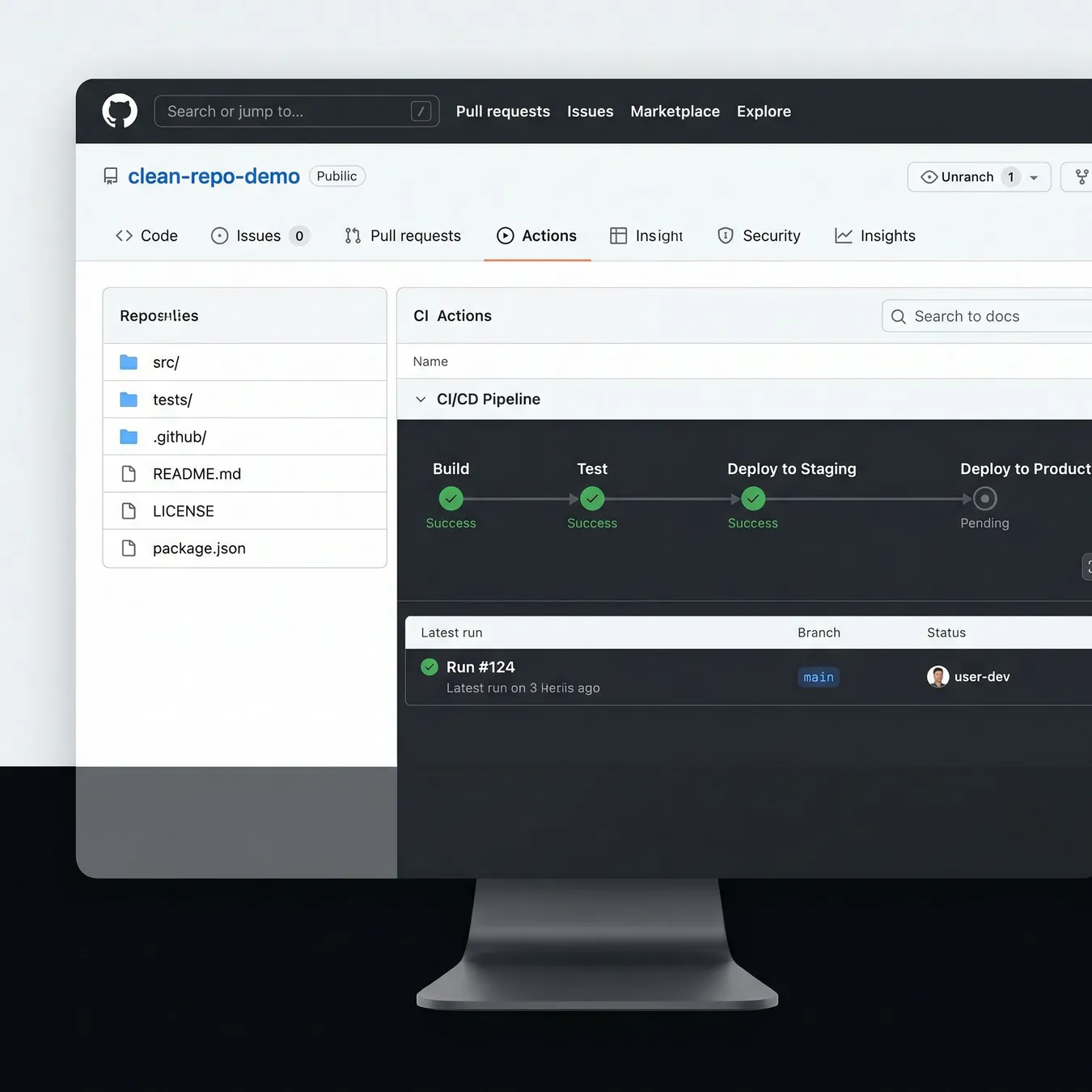
Technical readiness is a key signal for seed-stage investors.

Scalable architecture reduces investment risk.
The Path to Post-Seed Growth
The instrument you choose today sets the stage for post seed funding. A clean seed round makes the transition to Series A much smoother, avoiding legal 'clean-up' costs that can derail a deal.
Frequently Asked Questions
Bridging the Gap Between Capital and Code
At Studio 402, we understand that seed funding is just the fuel. The real work is building the engine. We help founders turn their investment into production-ready software that scales.
Whether you are navigating the technical requirements of a priced round or need to harden an MVP after a SAFE-funded sprint, our team provides the senior engineering depth required to ship with confidence.
Audit current codebase for scalability gaps
Prepare technical documentation for investor review
Stabilize infrastructure for incoming customer load
Implement security best practices for data handling
How Studio 402 Supports Funded Teams
01 / 03
phase 01 / 03
Technical Audit
phase 02 / 03
Execution Roadmap
phase 03 / 03
Production Build
Studio 402 didn't just build our app; they built the engineering foundation that allowed us to pass due diligence with flying colors.
Sarah Chen · CTO of Fintech Scaleup
Next Steps for Your Seed Strategy
Securing the right type of seed funding is a major milestone, but it's only the beginning. Ensuring your technical execution matches your financial ambition is where the real value is created.
Ready to build your fundable foundation?
Let's discuss your technical roadmap and how to turn your seed capital into a scalable product.
Explore More Resources
Keep reading
More in Venture Capital & Seed Investment
Summary of Seed Funding Instruments
To recap, the choice between SAFEs, convertible debt, and equity depends on your stage, your investors, and your long-term goals. Most modern startups lead with SAFEs for speed and transition to equity for institutional rounds.
- SAFEs: Best for speed and low legal overhead.
- Convertible Debt: Best for bridge rounds with specific interest requirements.
- Equity: Best for large rounds and formalizing corporate governance.
Final Considerations for Founders
Don't let the paperwork distract you from the product. The best way to ensure a successful seed round—regardless of the instrument—is to build something that people actually want and that is architected to last.
Trusted by 50+ venture-backed founders to scale their technical infrastructure.
Updated for the 2026 investment landscape.
Technical Benchmarks for Seed Success
Investors aren't just buying your idea; they are buying your ability to build. Ensure your technical benchmarks—from API response times to deployment frequency—are ready for the spotlight.

Shipping high-quality code is the best way to maintain investor confidence.
Conclusion
Navigating the types of seed funding is a rite of passage for every founder. By understanding the mechanics of SAFEs, convertible debt, and equity, you can make an informed decision that protects your vision and your equity.