
Seed Funding for Tech Startups: Technical Due Diligence
Securing seed funding for tech startups in 2026 requires more than a compelling pitch deck; it demands a robust technical foundation that can withstand institutional scrutiny. Investors are increasingly looking for engineering standards that prove your product is ready for real-world scale.
85%
Investors requiring technical audits
4-6 Weeks
Average due diligence window
2026
Current standard benchmark year
Understanding the Technical Benchmarks for Seed Capital
At the pre seed and seed stage, the focus shifts from 'can this be built' to 'is this built to last'. Technical due diligence is the process where investors verify your codebase, architecture, and security protocols.
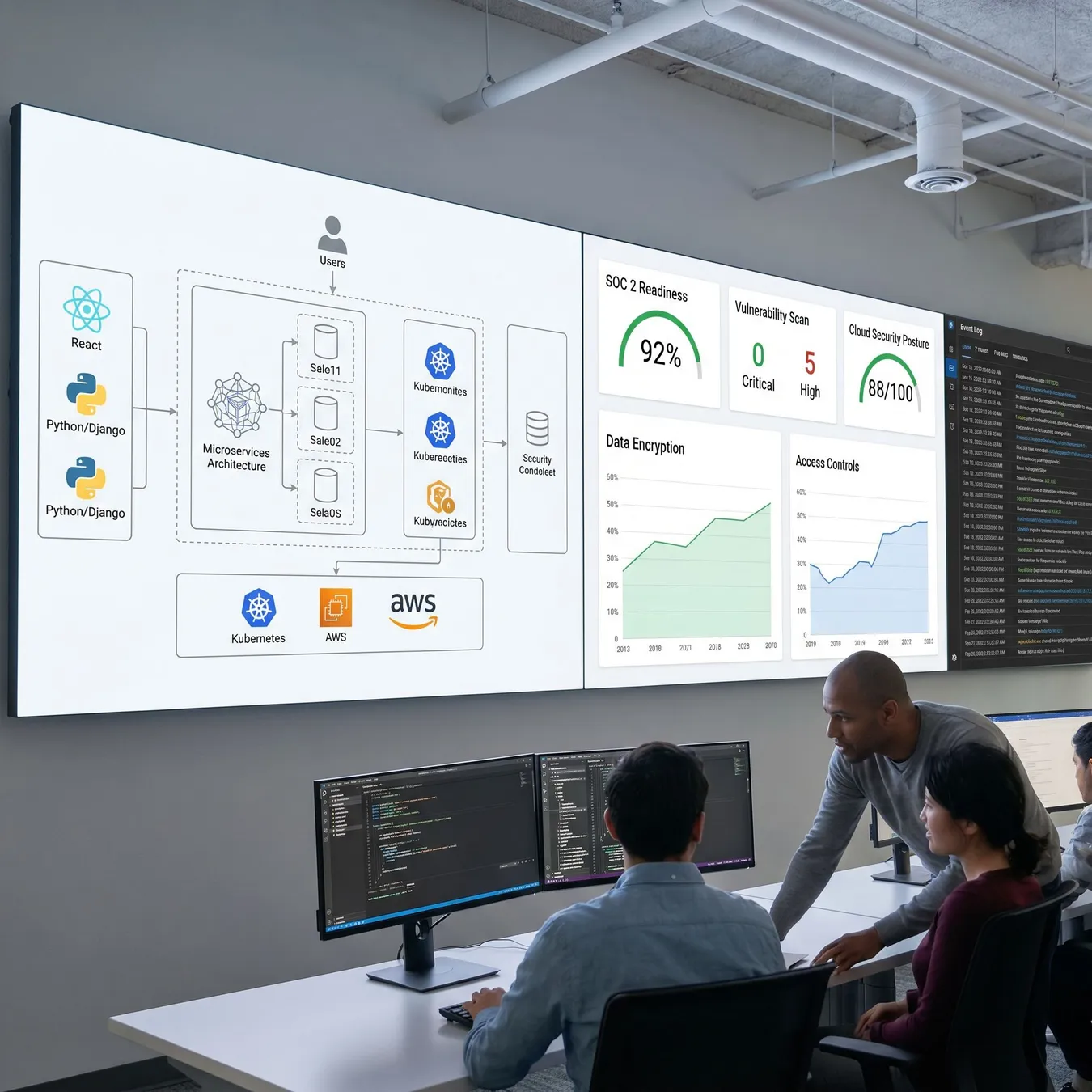
Modern technical due diligence focuses on architecture, security, and scalability.
The Core Pillars of a Technical Audit
Investors evaluate your startup across four primary technical pillars. Failure in any one of these areas can stall a round or significantly lower your valuation.
- Code Quality and Maintainability: Is the code documented and modular?
- Scalability: Can the infrastructure handle a 10x increase in users?
- Security: Are there clear protocols for data protection and auth?
- Intellectual Property: Do you own the code and third-party licenses?
Preparing Your Codebase for Investor Scrutiny
Before you begin raising seed capital, you must ensure your repository is clean. This includes removing hardcoded secrets, ensuring consistent linting, and having a clear deployment pipeline.
Maintain a clean Git history with descriptive commits
Document all third-party API dependencies
Implement automated testing for core features
Leave sensitive credentials in public repositories
Rely on undocumented 'vibe-coded' workarounds
Ignore technical debt in your primary user flow
Infrastructure and Security Standards
Modern seed investors expect cloud-native infrastructure. Whether you use AWS, GCP, or Azure, your setup should demonstrate observability and automated recovery.
Info.
// Security First
How Seed Investors Evaluate Your Engineering Team
It is not just about the code; it is about the people. Most seed investors look for a balance of speed and discipline within the founding engineering team.

Team dynamics and engineering culture are key audit metrics.

Distributed teams must show strong async communication habits.
The Impact of Funding Instruments on Technical Strategy
The financial structure of your round can dictate your development velocity. Different types of seed funding may come with varying levels of oversight regarding your technical roadmap.
| Instrument | Due Diligence Depth | Technical Flexibility |
|---|---|---|
| SAFE | Moderate | High |
| Convertible Note | Moderate | Medium |
| Priced Equity | Deep | Structured |
Common Technical Red Flags in Seed Rounds
Identifying red flags early allows you to remediate them before the formal audit begins. Investors are particularly wary of 'black box' systems that the founders cannot explain.
- 01
Single-point-of-failure in the engineering team
- 02
Lack of data backups or disaster recovery plans
- 03
Over-reliance on fragile no-code workarounds for core logic
- 04
Unclear ownership of intellectual property
- 05
Excessive technical debt that prevents new feature releases
The Role of AI in 2026 Technical Due Diligence
With the rise of AI-generated code, investors are now auditing for 'vibe-code'—software that looks functional but lacks structural integrity. You must prove your AI integrations are durable.
Warning.
// Vibe-Code Risk
Technical Readiness Checklist
Use this checklist to gauge your readiness for a formal technical audit. Completing these steps early can shave weeks off your closing timeline.
Centralized documentation for architecture and API
Automated CI/CD pipeline in place
Security vulnerability scan completed
Dependency audit for outdated libraries
Clear data privacy policy and implementation
The Timeline of a Technical Audit
01 / 04
phase 01 / 04
Initial Review
phase 02 / 04
Deep Dive
phase 03 / 04
Remediation
phase 04 / 04
Final Approval
Bridging the Gap Between Prototype and Production
Many startups fail due diligence because their prototype cannot survive the transition to a production environment. This is where professional product engineering becomes a competitive advantage.
Technical due diligence isn't an obstacle; it's a validation that your company is ready to handle institutional capital and global users.
Senior Engineering Partner · Studio 402
How Studio 402 Prepares You for Seed Success
If you are preparing for a round and worry your current codebase won't pass muster, Studio 402 can help. We specialize in hardening MVPs and rescuing fragile prototypes to ensure they meet investor standards.
From full-spectrum product engineering to cloud infrastructure audits, we provide the senior technical leverage you need to close your round with confidence.
Frequently Asked Questions
Next Steps for Your Technical Strategy
Don't wait for the due diligence request to start cleaning up your systems. Proactive engineering today leads to faster funding tomorrow.
Ready to Harden Your Tech for Investment?
Studio 402 helps startups audit, refactor, and scale their products to meet rigorous seed-stage benchmarks.
Explore Related Resources
Keep reading
More in Venture Capital & Seed Investment
Trusted by venture-backed teams to ship production-ready software.
Updated for the 2026 investment landscape.
Building a tech startup is a marathon of execution. By focusing on engineering excellence early, you ensure that your seed funding is just the beginning of your growth story.
- Seed Funding
- Tech Strategy
- Due Diligence
- Engineering
- Startup Scale
Our team at Studio 402 acts as a senior technical partner, helping you navigate the complexities of the seed landscape with high-craft software and reliable systems.

Ship with confidence and secure your seed capital.
For more detailed insights into specific audit requirements, please refer to our comprehensive technical due diligence questions guide.
Conclusion: Technical due diligence is your opportunity to prove that your startup is built on a foundation of quality. Prepare early, document everything, and build for the long term.