
Angel Investors vs. VCs: Navigating Early-Stage Dynamics
Choosing between early stage angel investors and institutional venture capital is one of the most consequential decisions a founder makes. This choice dictates not just your bank balance, but your governance, technical roadmap, and long-term exit strategy.
- Fundraising Strategy
- Early Stage
- Equity & Control
- Technical Scaling
Defining the Early Stage Funding Landscape
The journey of entrepreneur funding often starts with a choice between individual backers and structured firms. Understanding these archetypes helps you align your capital needs with your operational reality.
| Feature | Angel Investors | Venture Capital (VC) |
|---|---|---|
| Capital Source | Personal Wealth | Limited Partners (LPs) |
| Investment Size | $25k - $500k | $500k - $5M+ |
| Decision Speed | Fast (Individual) | Slower (Committee) |
| Board Seat | Rarely | Commonly |
The Role of Early Stage Angel Investors
Early stage angel investors are typically high-net-worth individuals who invest their own money. They often provide the first outside capital into a startup, bridging the gap between personal savings and institutional rounds.
- High risk tolerance for unproven concepts
- Focus on the founder's vision and character
- Flexible terms compared to institutional VCs
- Often act as mentors or industry advisors

Angel investors often provide mentorship alongside capital.
Why Founders Seek Tech Angel Investors
For software startups, tech angel investors bring more than just cash. They often have experience scaling engineering teams or selling SaaS products, making them invaluable for technical strategy.
Tip.
// Technical Leverage
Institutional Venture Capital Dynamics
Unlike angels, venture capital investors manage third-party money. This creates a fiduciary duty that leads to more rigorous due diligence and higher growth expectations.
15-25%
Typical VC Ownership Target
4-12 Weeks
Due Diligence Duration
High
Follow-on Capital
Comparing Governance and Control
The relationship between angel investors and entrepreneurs is usually informal. In contrast, VCs often require board seats and protective provisions that can limit a founder's autonomy.
Trade-off
3 pros · 3 cons
Pros
Founder-friendly terms
Minimal reporting overhead
Fast decision-making process
Cons
Limited follow-on capital
Less institutional prestige
Fragmented cap table if many angels join
The Impact on Your Technical Roadmap
VCs often push for rapid scaling, which can lead to technical debt if not managed. Angels might be more patient with R&D, but they lack the deep pockets to fund massive infrastructure overhauls.
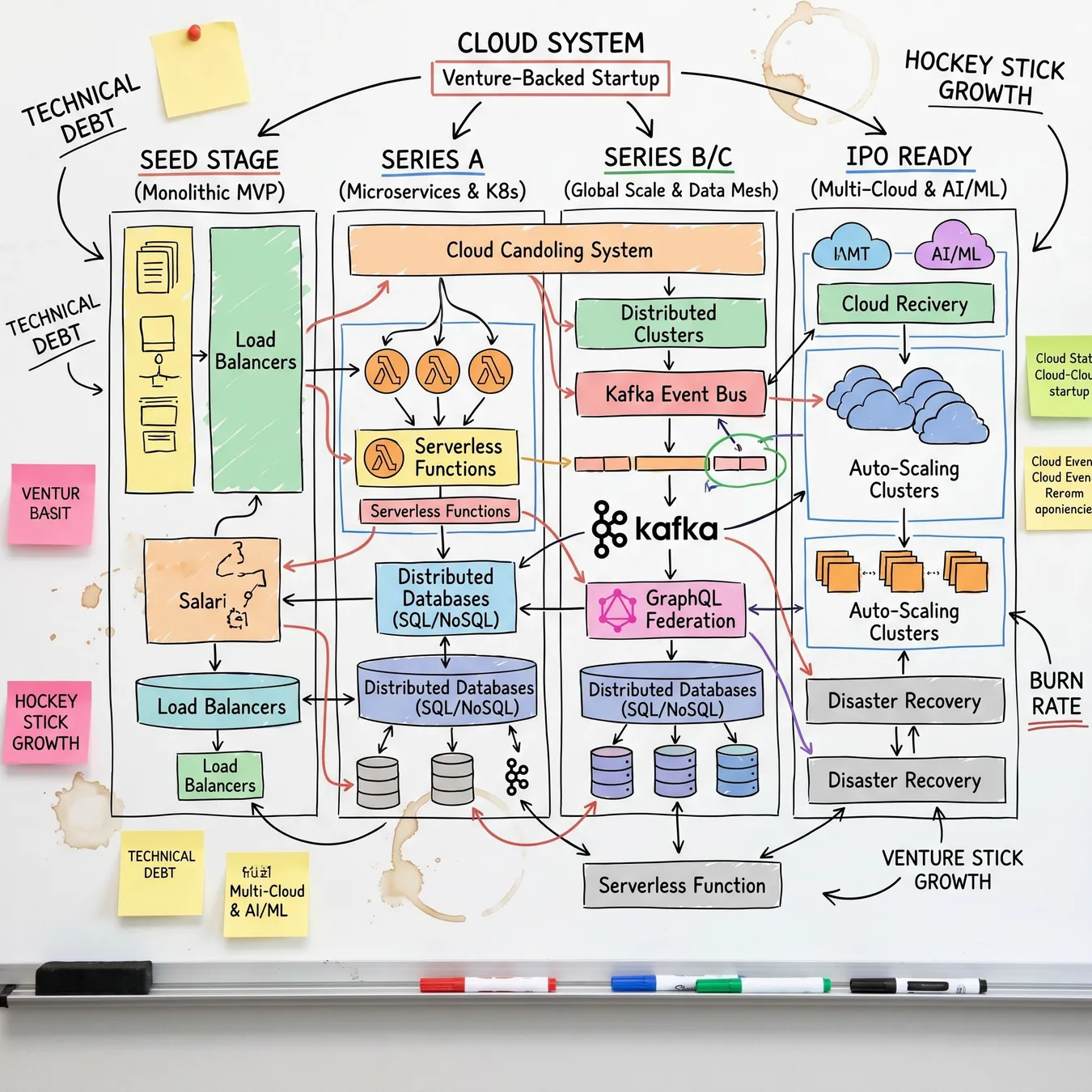
VC funding often accelerates the need for robust infrastructure.
When to Transition to Institutional VCs
Understanding the venture capital stages is key to timing your raise. Most founders start with angels and move to VCs once they have achieved initial product-market fit.
- 01
Validate the core product with angel capital
- 02
Achieve consistent revenue or user growth
- 03
Prepare for rigorous technical due diligence
- 04
Identify VC firms with relevant industry expertise
Investor Expectations and Benchmarks
Founders must understand what seed investors look for in terms of team composition and product maturity before opening a round.
Common Angel Investor Questions
- Why are you the right person to solve this?
- How will you use the first $250k?
- What is the biggest technical risk today?
Common VC Due Diligence Focus Areas
- Unit economics and LTV/CAC ratios
- Scalability of the engineering team
- Intellectual property and moat strength
Strategic Cap Table Management
A messy cap table with dozens of small angel investors can be a red flag for VCs in later rounds. Strategically grouping angels into a single entity or using SAFEs can mitigate this risk.
Use standard SAFE or KISS documents
Vet investors for strategic value
Keep a clean, updated cap table
Give away board seats to small angels
Over-complicate equity structures early
Ignore the reputation of your backers
Technical Readiness for Funding
Whether you are pitching angels or VCs, your code needs to be production-ready. Investors are increasingly wary of 'vibe-coded' prototypes that lack security or scalability.
Documented API and system architecture
Automated testing and CI/CD pipelines
Clear data privacy and security protocols
Scalable cloud infrastructure plan
Frequently Asked Questions
Bridging Capital and Execution
Securing investment is only half the battle. The real challenge is deploying that capital into a product that survives real-world use. At Studio 402, we help founders turn investment-ready concepts into production-grade software.
Whether you've just closed an angel round and need to build your MVP, or you're preparing for VC due diligence and need to refactor a fragile codebase, our engineering team provides the technical foundation you need to scale.

We build systems designed for scale and observability.

From MVP to full-scale mobile and web platforms.
How Studio 402 Supports Funded Founders
We act as a senior technical partner, helping you navigate the trade-offs between speed and quality that investors watch closely. We don't just ship features; we build durable infrastructure.
- MVP development for seed-stage startups
- Post-vibe-code rescue and codebase hardening
- Cloud infrastructure and DevOps automation
- AI integration and custom LLM workflows
Studio 402 took our angel-funded prototype and rebuilt it into a platform that passed VC due diligence with flying colors. They are the partner you want when the stakes are high.
Alex R. · SaaS Founder
Build Your Production-Ready Future
Ready to build a product that investors will back? Let's discuss your technical roadmap and scaling needs.
Explore More in Early Stage Funding
Keep reading
More in Venture Capital & Seed Investment
Navigating the dynamics between angels and VCs requires a clear understanding of your business goals. By aligning your funding strategy with a robust technical roadmap, you position your startup for sustainable growth in 2026 and beyond.
Trusted by venture-backed startups to ship production-grade code.
Updated July 2026
01 / 03
phase 01 / 03
Angel Phase
phase 02 / 03
Technical Maturation
phase 03 / 03
VC Acceleration
The choice isn't always binary. Many successful founders maintain a mix of strategic angels and institutional VCs to balance mentorship with massive capital reserves.
Final Strategic Takeaways
- Prioritize angels for speed and industry-specific mentorship.
- Look to VCs for scale, follow-on funding, and institutional credibility.
- Never compromise on technical quality, regardless of the funding source.
- Keep your cap table clean to avoid friction in later rounds.
For more insights on the seed investment landscape, explore our comprehensive guides for founders.