
Resolving Engineering Workflow Bottlenecks
Engineering leaders often face a common challenge: delivery speed slows down even as the team grows. To identify bottlenecks, you must first look beyond individual performance and analyze the system-wide flow of value from ideation to production.
42%
Time lost to context switching
3.5x
Lead time increase in high-debt code
22%
Average PR idle time
Common Sources of Engineering Bottlenecks
Most workflow bottlenecks fall into three categories: process friction, technical drag, and communication gaps. Understanding these is the first step toward work flow optimization.
- Wait states in the CI/CD pipeline
- Excessive work-in-progress (WIP) limits
- Manual QA and deployment gates
- Vague requirements leading to rework
- High code review latency
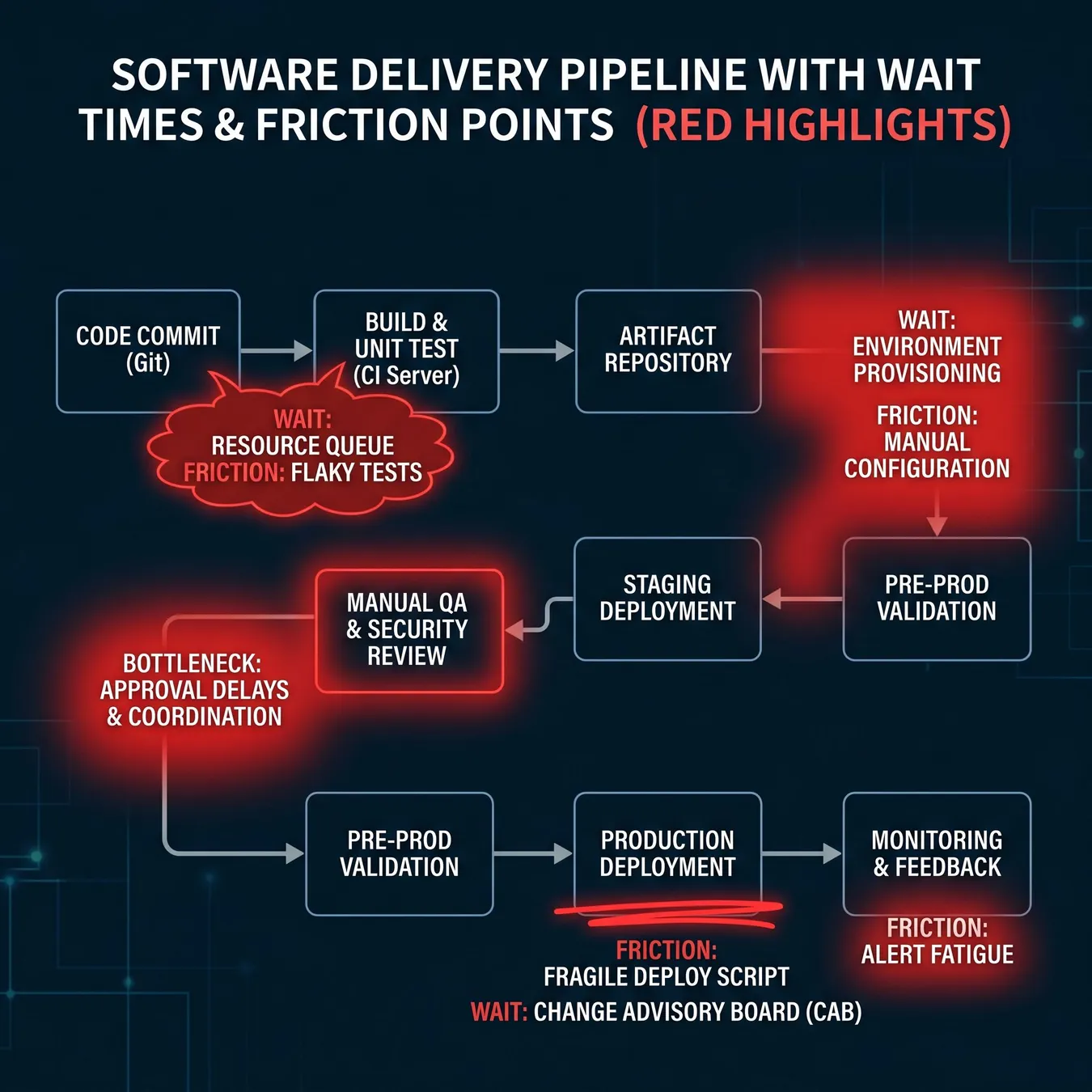
Visualizing the hidden wait states in a standard delivery pipeline.
A Framework to Identify Bottlenecks
To effectively identify bottlenecks, you need a data-driven approach. Start by measuring lead time in software development to see where tickets spend the most time.
- 01
Map your Value Stream from 'Ready for Dev' to 'Production'.
- 02
Track Cycle Time for each stage of the process.
- 03
Identify stages where work items queue up (Wait Time).
- 04
Survey the team on qualitative friction points.
- 05
Correlate data with specific engineering bottlenecks.
Tip.
// Pro Tip
Measuring the Impact of Technical Debt
Often, the root cause of slow delivery isn't the process at all. By quantifying technical debt, you can see how much velocity is being sacrificed to maintain legacy code.
Trade-off
3 pros · 3 cons
Pros
Predictable shipping
Clean code standards
Automated testing
Cons
High context switching
Frequent hotfixes
Low developer morale
Optimizing the Code Review Lifecycle
Pull requests are the most frequent site of engineering bottlenecks. Implementing code review load best practices ensures that reviews move quickly without sacrificing quality.
Keep PRs small and focused
Set clear response time expectations
Automate linting and formatting
Batch large features into one PR
Use PRs for architectural debates
Ignore stale reviews
Eliminating Handoff Friction
The transition from product requirements to engineering tasks is a critical phase. A broken software engineering workflow often stems from misaligned expectations at this stage.
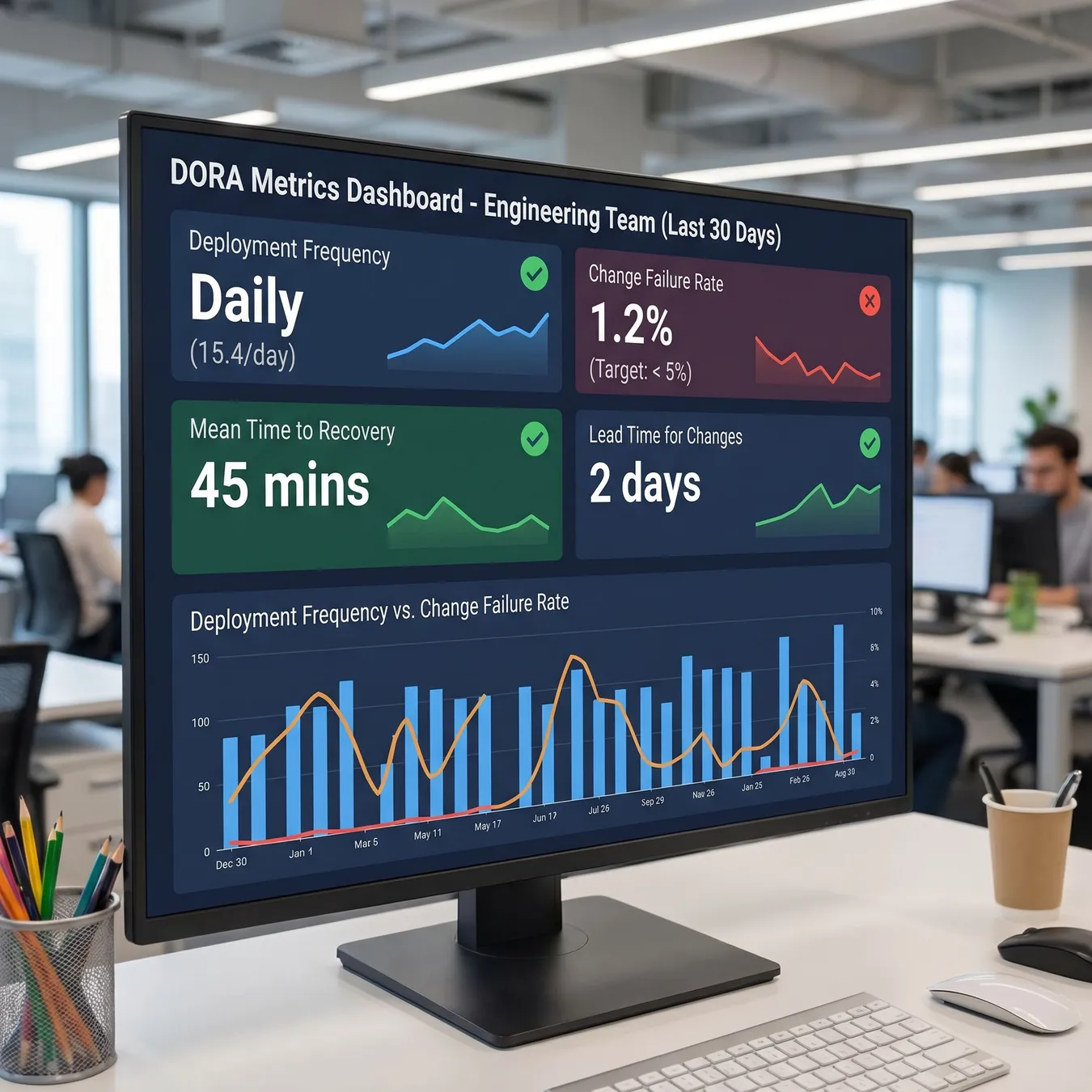
Monitoring DORA metrics to spot trends.

Collaborative workflow mapping.
Diagnostic Checklist for Engineering Leaders
Are PRs reviewed within 24 hours?
Is the CI/CD pipeline under 10 minutes?
Are requirements finalized before dev starts?
Do developers have 4+ hours of deep work time?
Implementing Workflow Optimization
Once you have identified the friction points, the next step is implementation. This requires a shift from 'fixing bugs' to 'fixing the system that creates bugs'.
01 / 04
phase 01 / 04
Audit
phase 02 / 04
Analyze
phase 03 / 04
Automate
phase 04 / 04
Iterate
The Role of Automation in Velocity
Automation is the most effective way to resolve workflow bottlenecks permanently. By offloading repetitive tasks to scripts or AI agents, teams can focus on high-leverage product engineering.
| Manual Task | Automated Solution | Time Saved |
|---|---|---|
| Regression Testing | Playwright/Cypress | 8-12 hours/week |
| Environment Setup | Terraform/Docker | 4 hours/dev |
| Dependency Updates | Renovate/Dependabot | 2 hours/week |
Addressing Cultural Bottlenecks
Not all bottlenecks are technical. Cultural issues like a fear of failure or siloed knowledge can be just as damaging to engineering bottlenecks as a slow build server.
Velocity is not about how fast you type; it is about how few obstacles are in your way.
Senior Engineering Lead · Studio 402 Partner
Scaling Workflows for Growth
As teams grow from 5 to 50, the complexity of coordination grows exponentially. What worked for a seed-stage startup will become a bottleneck for a Series B company.
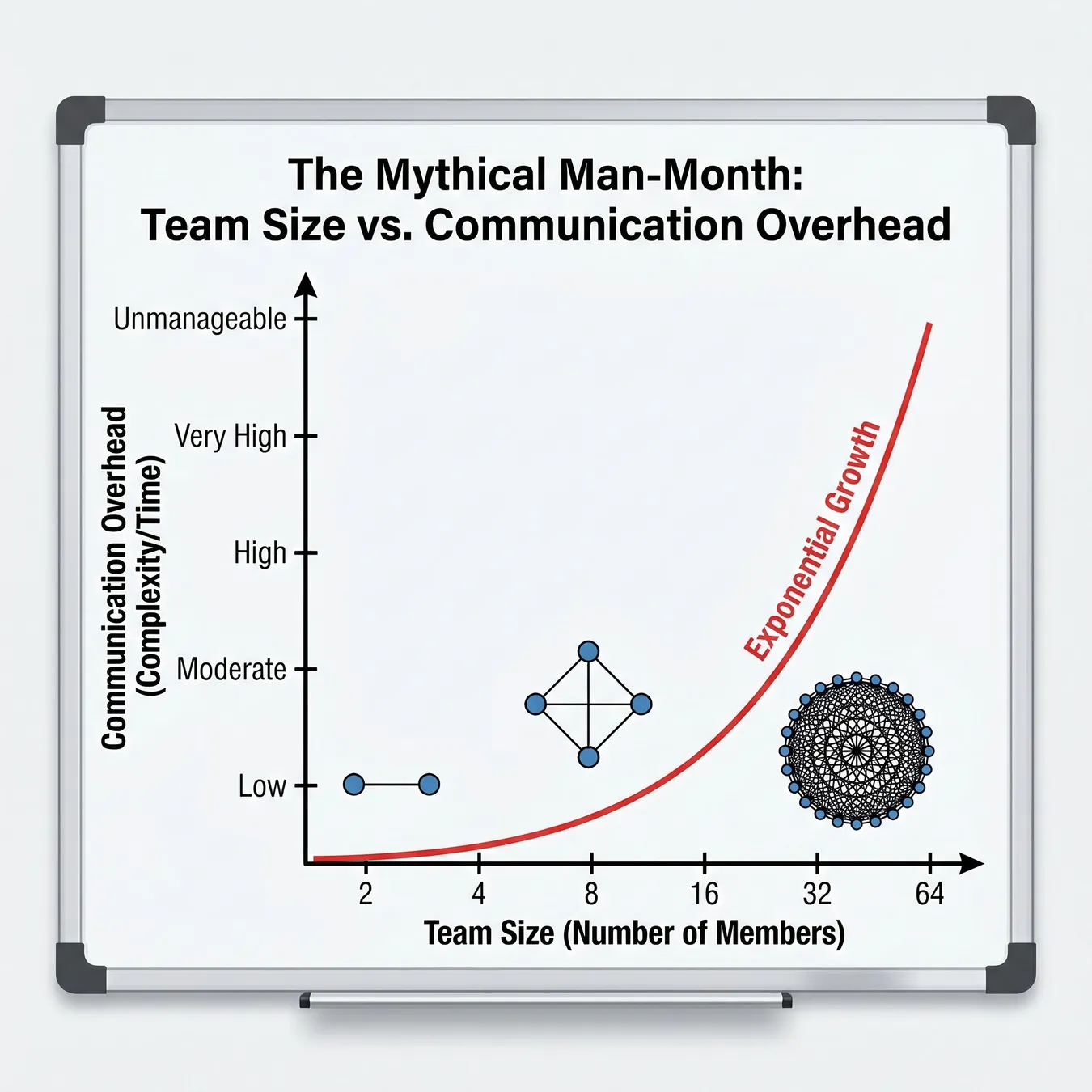
The exponential growth of communication paths as teams scale.
FAQ: Solving Delivery Friction
Bridge: From Diagnosis to Execution
Identifying bottlenecks is only half the battle. Implementing the changes required to restore velocity often requires senior engineering expertise that scaling teams lack in-house.
At Studio 402, we don't just point out where your delivery is slow. We partner with you to rebuild the infrastructure, automate the friction, and harden your codebase for real-world scale.
Why Engineering Leaders Partner with Studio 402
- We audit and refactor fragile codebases that block growth.
- We design cloud infrastructure that supports high release velocity.
- We integrate AI-native systems to automate manual operational drag.
- We provide fractional CTO guidance for critical stack decisions.
Studio 402 didn't just give us a report; they embedded with our team and actually shipped the fixes that restored our shipping speed.
Take the Next Step in Workflow Optimization
If your team is struggling with unpredictable shipping cycles or technical debt, it's time to move beyond temporary patches and build a durable delivery foundation.
Restore Your Engineering Velocity
Stop guessing where your delivery friction is. Let's audit your workflow and build the systems you need to scale.
Further Resources
Keep reading
More in Engineering Velocity & Metrics
Summary of Key Strategies
To summarize, resolving engineering bottlenecks requires a consistent cycle of measurement, identification, and targeted optimization. Focus on lead time and code review health first.
- Engineering Leadership
- DevOps
- Productivity
- Scaling
By following this diagnostic framework, you can transform a sluggish delivery pipeline into a high-velocity engine that supports your company's growth goals.
Final thoughts: The most successful engineering organizations are those that treat their internal process as a product, constantly iterating and removing friction for their developers.
Ready to get started? Reach out to our team at studio@402.studio to discuss your specific engineering challenges.