
Measuring and Reducing Lead Time in Software Delivery
Lead time in software development is a critical indicator of how quickly your team can turn a concept into a production-ready feature. It measures the total time elapsed from the initial commit to the final deployment.
- DORA Metrics
- Engineering Velocity
- DevOps Efficiency
- Cycle Time
Defining Lead Time for Changes
In the context of software engineering efficiency metrics, lead time specifically refers to the duration between a code commit and that code running in production. This metric is one of the four key DORA metrics used to benchmark high-performing teams.
< 1 Hour
Elite Performer Lead Time
1-7 Days
Medium Performer Lead Time
> 6 Months
Low Performer Lead Time
The Components of the Lead Time Clock
To effectively reduce lead time, you must first break it down into its constituent parts. Understanding where time is spent allows you to target specific software development efficiency metrics for improvement.
01 / 04
phase 01 / 04
Coding Time
phase 02 / 04
Pickup Time
phase 03 / 04
Review Time
phase 04 / 04
Deploy Time
Why Lead Time Matters for Your Business
Short lead times enable faster feedback loops. When you can ship quickly, you can validate hypotheses with real users sooner, reducing the risk of building the wrong features.
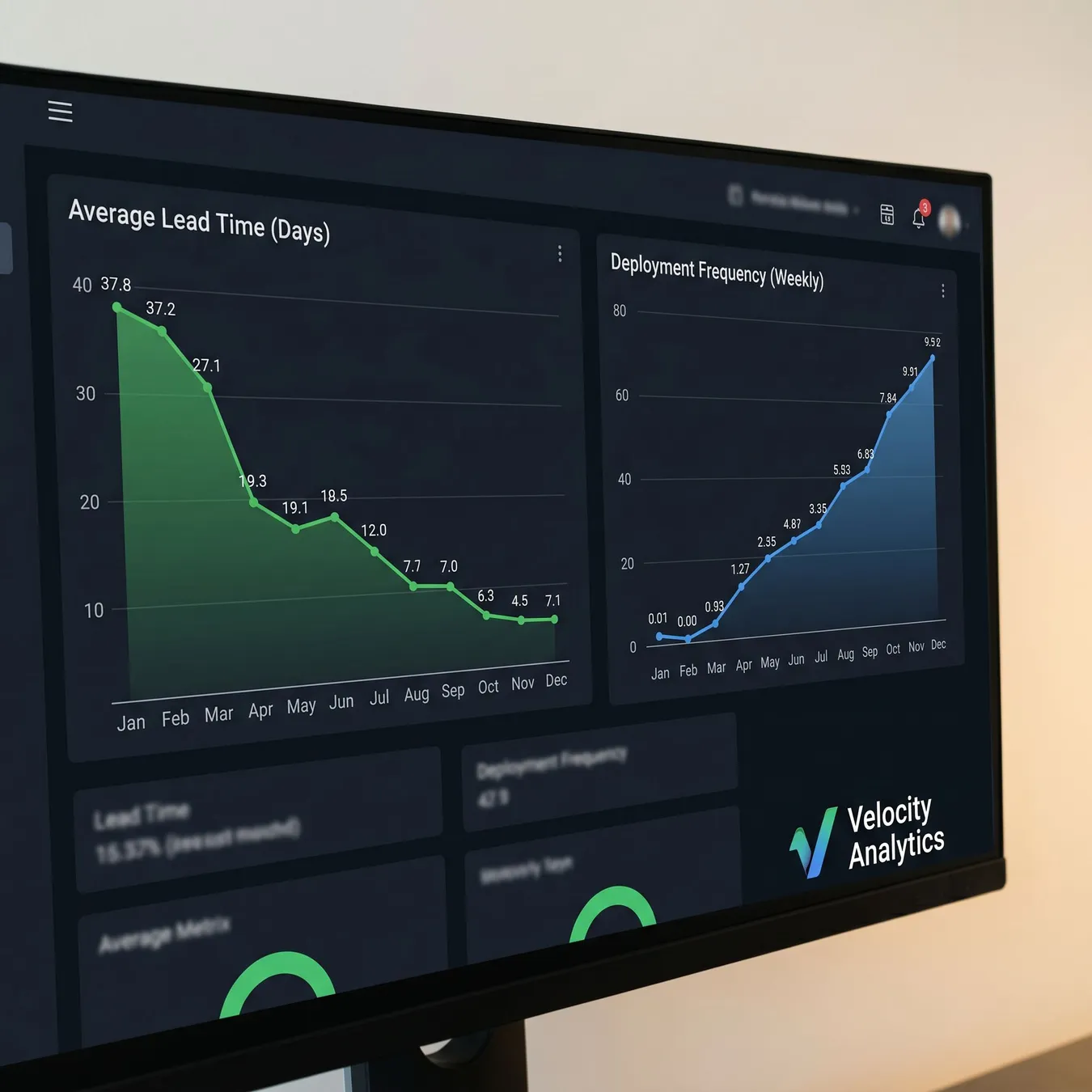
Visualizing the correlation between reduced lead time and increased shipping frequency.
Identifying Common Delivery Bottlenecks
Bottlenecks often hide in the handoffs between stages. By analyzing software engineering performance metrics, leaders can pinpoint exactly where work stalls.
- Large PR sizes that overwhelm reviewers
- Manual QA gates that stop the flow of delivery
- Fragile CI/CD pipelines with frequent random failures
- Lack of automated testing coverage
Strategies for Reducing Lead Time
Reduction isn't about typing faster; it's about removing friction. Implementing code review throughput best practices is often the quickest win for teams with high lead times.
- 01
Decompose large features into small, independent commits.
- 02
Automate your testing suite to eliminate manual regression checks.
- 03
Implement trunk-based development to reduce merge complexity.
- 04
Use feature flags to decouple deployment from release.
The Role of Automation in Velocity
Modern developer productivity engineering focuses on creating a 'golden path' for developers, where the infrastructure handles the heavy lifting of delivery.
Tip.
// Automation First
Technical Debt: The Hidden Lead Time Inflator
When developers must navigate a 'spaghetti' codebase, every change takes longer. This is why quantifying technical debt is essential for maintaining long-term velocity.
Trade-off
3 pros · 3 cons
Pros
Faster bug fixes
Higher developer morale
Predictable release cycles
Cons
Increased regression risk
Higher burnout rates
Unpredictable delivery dates
Measuring Lead Time Correcty
Avoid vanity metrics. Measuring lead time from 'idea to production' is useful for business planning, but 'commit to production' is what helps engineering teams optimize their internal processes.
| Metric | Starts At | Ends At | Focus |
|---|---|---|---|
| Lead Time | Code Commit | Production | Delivery Pipeline |
| Cycle Time | Work Started | Work Finished | Team Throughput |
| Lead Time (Biz) | Ticket Created | Production | Total Value Stream |
Overcoming Resistance to Change
Teams often fear that moving faster will decrease quality. In reality, smaller, more frequent changes are easier to review and safer to deploy than massive quarterly releases.
Measure lead time trends over time
Celebrate small, incremental improvements
Invest in CI/CD stability
Use lead time to punish individuals
Ignore the 'Review' stage of the clock
Sacrifice testing for speed
Lead Time Optimization Checklist
Automated unit tests run on every commit
PRs are restricted to < 200 lines of code
Deployment to staging is fully automated
Reviewers are notified instantly of new PRs
Visualizing the Delivery Pipeline
Seeing the flow of work is the first step toward fixing it. Value stream mapping helps teams visualize where code sits idle.
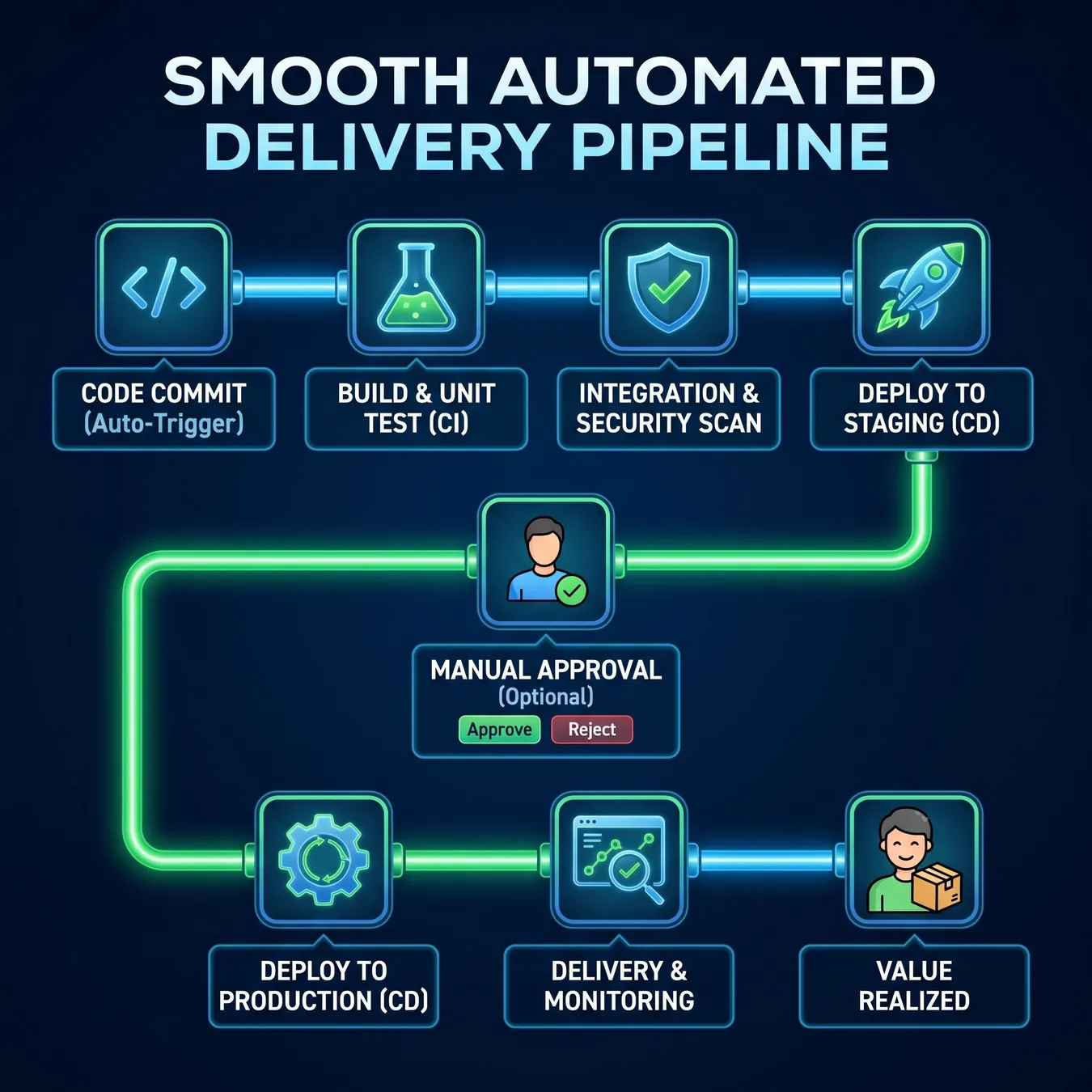
An optimized delivery flow.

A bottlenecked delivery flow.
Lead Time in the Age of AI
AI-assisted development can accelerate the 'Coding Time' portion of lead time, but it can also create a backlog in 'Review Time' if the team isn't prepared for the increased volume of code.
Case Study: Reducing Lead Time by 40%
By shifting from manual QA to automated regression suites and implementing a 'PR first' culture, one growth-stage team slashed their lead time from 5 days to under 48 hours.
Elite engineering teams ship 208x more frequently than low performers.
Source: DORA State of DevOps Report
Common Questions on Lead Time
The Studio 402 Approach to Engineering Velocity
At Studio 402, we don't just build software; we build the systems that build software. We help teams move beyond 'vibe-coded' prototypes into production-grade infrastructure that supports high-velocity delivery.
Whether you are scaling an MVP or rescuing a codebase that has become too slow to iterate on, we focus on the metrics that matter. We implement the CI/CD, automated testing, and architectural foundations required to keep lead times low as you grow.
Shipping speed is a competitive advantage. If your lead time is measured in weeks, you're already losing to the competitor who measures it in hours.
Studio 402 Engineering Lead
Ready to Accelerate Your Delivery?
Optimizing your engineering pipeline requires more than just new tools—it requires a shift in process and architecture. We partner with founders and engineering leaders to eliminate bottlenecks and restore shipping speed.
Build a High-Velocity Engineering Engine
Stop letting delivery bottlenecks stall your growth. Let's audit your pipeline and build a path to elite DORA performance.
Explore More Resources
Keep reading
More in Engineering Velocity & Metrics
Maintaining high software development efficiency metrics is an ongoing process of refinement and technical excellence. By focusing on lead time, you ensure your team remains agile and responsive.
Studio 402 provides the technical consulting and hands-on engineering needed to turn these metrics from goals into reality. From cloud infrastructure to AI-native workflows, we build for scale.
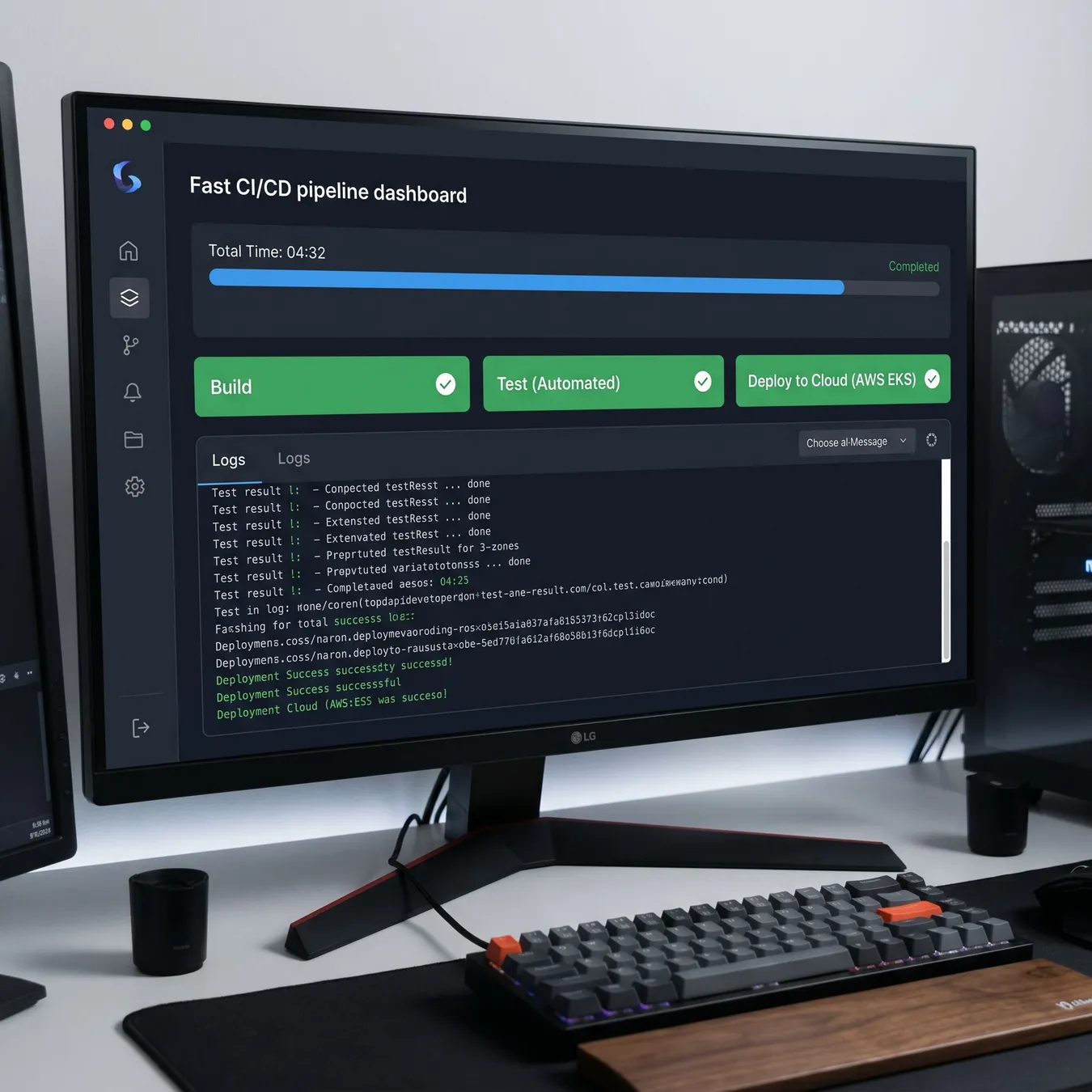
The anatomy of a high-velocity deployment.
Final thoughts: Lead time is the pulse of your engineering organization. Keep it fast, keep it steady, and keep shipping.