
The Need of Capacity Planning in Scaling Engineering Teams
As engineering organizations scale, the informal coordination that worked for a handful of developers begins to fracture. Without a formal system, leadership loses visibility into what is actually achievable, leading to missed deadlines and systemic burnout.
40%
Average over-commitment in unplanned teams
2.5x
Increase in churn for burnt-out engineers
90%+
Predictability rate with formal planning
Why Engineering Capacity Planning is No Longer Optional
The need of capacity planning arises the moment a team grows beyond a single squad. It is the bridge between business ambitions and technical reality, ensuring that the roadmap is a commitment rather than a wish list.
- Prevents chronic over-allocation of senior resources
- Provides data for hiring and headcount justification
- Protects time for maintenance and technical debt
- Enables reliable cross-functional dependencies
The Cost of Ignoring Capacity Constraints
Ignoring capacity doesn't just slow down shipping; it creates a culture of 'heroics' where success depends on unsustainable effort. This eventually leads to significant workflow bottlenecks that paralyze the entire delivery pipeline.
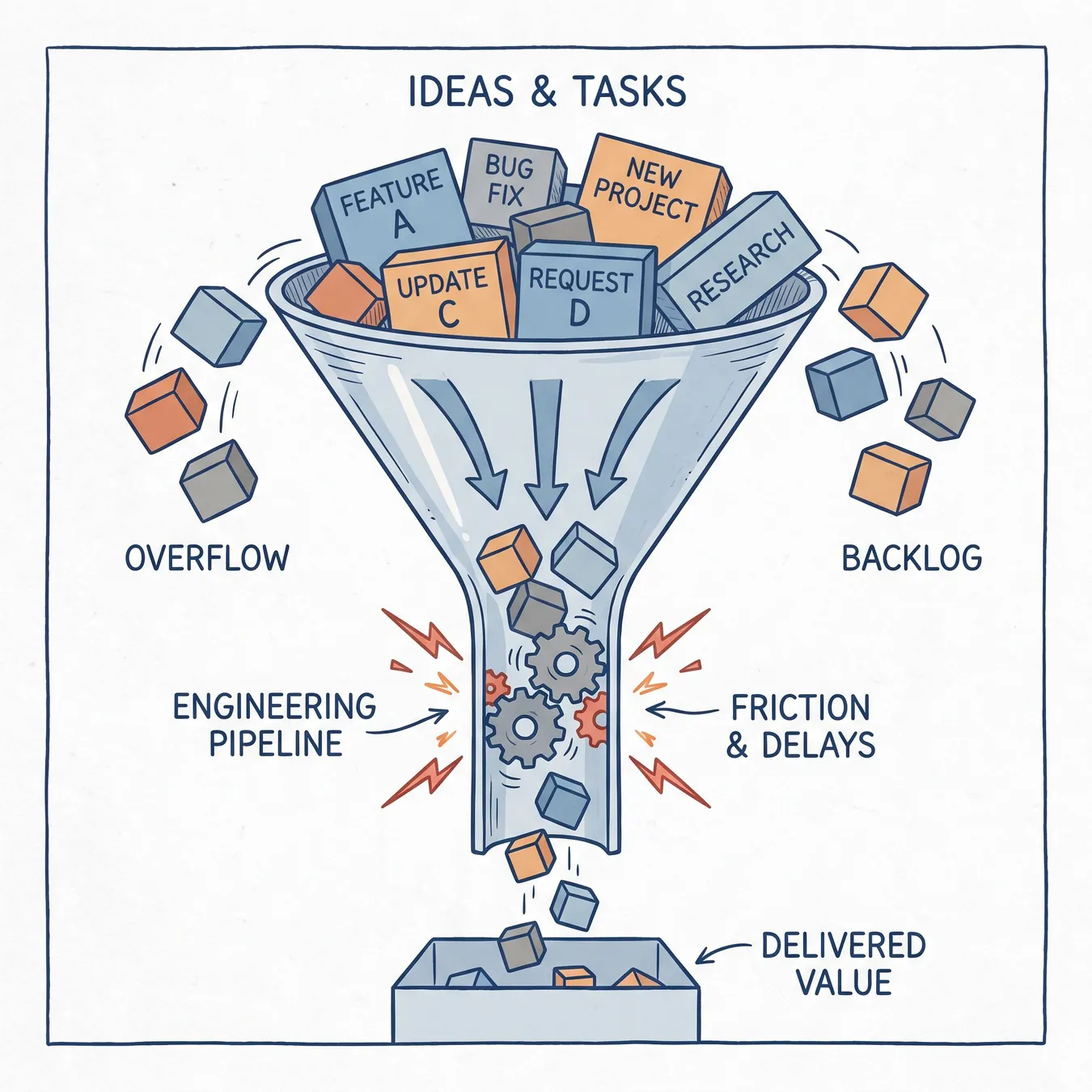
The bottleneck effect: when demand exceeds engineering capacity.
Distinguishing Velocity from Real-Time Capacity
One of the most common mistakes in scaling is using historical averages to predict future output without adjusting for current reality. Understanding velocity vs capacity in scrum is the first step toward stabilizing your delivery cycles.
Trade-off
3 pros · 3 cons
Pros
Historical performance data
Trend analysis over time
Output measurement
Cons
Current availability (PTO/Sick)
Upcoming meeting load
Specific task complexity
How Technical Debt Erodes Your Available Capacity
Capacity is not just about hours; it is about 'effective' hours. The friction between agile and technical debt often means that a significant portion of your team's energy is spent fighting the codebase rather than shipping features.
Warning.
// The Debt Tax
Implementing a Strategic Planning Framework
Moving from reactive to proactive planning requires a shift in how leadership views engineering time. It involves moving away from '100% utilization' toward a model that accounts for the unexpected.
01 / 04
phase 01 / 04
Audit Availability
phase 02 / 04
Allocate Maintenance
phase 03 / 04
Prioritize Features
phase 04 / 04
Review and Adjust
The Role of Scrum in Capacity Management
For teams using Agile methodologies, scrum team capacity planning provides the tactical tools needed to manage these strategic goals at the sprint level.
Common Anti-Patterns in Capacity Planning
Plan for 70-80% utilization to allow for 'buffer'
Include QA and DevOps in the capacity total
Update capacity weekly based on real availability
Assume 40 hours of coding per week per person
Ignore the 'on-boarding' drag of new hires
Use capacity as a performance monitoring tool
Predictability as a Competitive Advantage
When an engineering team is predictable, the rest of the business can plan with confidence. Marketing can time launches, sales can promise features, and investors can see a clear path to ROI.

Visualizing capacity leads to better executive alignment.
Scaling Without Losing Velocity
Scaling is often synonymous with slowing down due to communication overhead. Capacity planning is the antidote, ensuring that as you add people, you are actually adding throughput.
The Psychological Impact on Engineering Teams
Engineers who feel they are constantly behind are prone to burnout. A realistic capacity plan is a form of psychological safety, proving that leadership respects their time and professional limits.
The fastest way to slow down an engineering team is to ask them to do everything at once. Capacity planning is the art of saying 'not yet' so you can say 'done' more often.
Engineering Director · Growth-Stage SaaS
Data-Driven Headcount Justification
When you need more engineers, a gut feeling isn't enough for the CFO. Capacity data provides the objective proof that the current team is maxed out and that growth requires investment.
Tooling and Automation for Planning
While spreadsheets are a start, modern engineering leadership requires integrated tools that pull data directly from Jira, GitHub, and HR systems to provide a real-time view of capacity.
Capacity Planning FAQ
Bridging Strategy to Execution with Studio 402
Understanding the need for capacity planning is only the first step. Implementing these systems while simultaneously shipping critical features is where many growth-stage companies struggle.
At Studio 402, we don't just provide advisory; we act as your senior engineering partner to build the operational scaffolding your team needs to scale. Whether you are fixing a broken delivery process or building an MVP from scratch, we ensure your engineering foundations are production-ready.
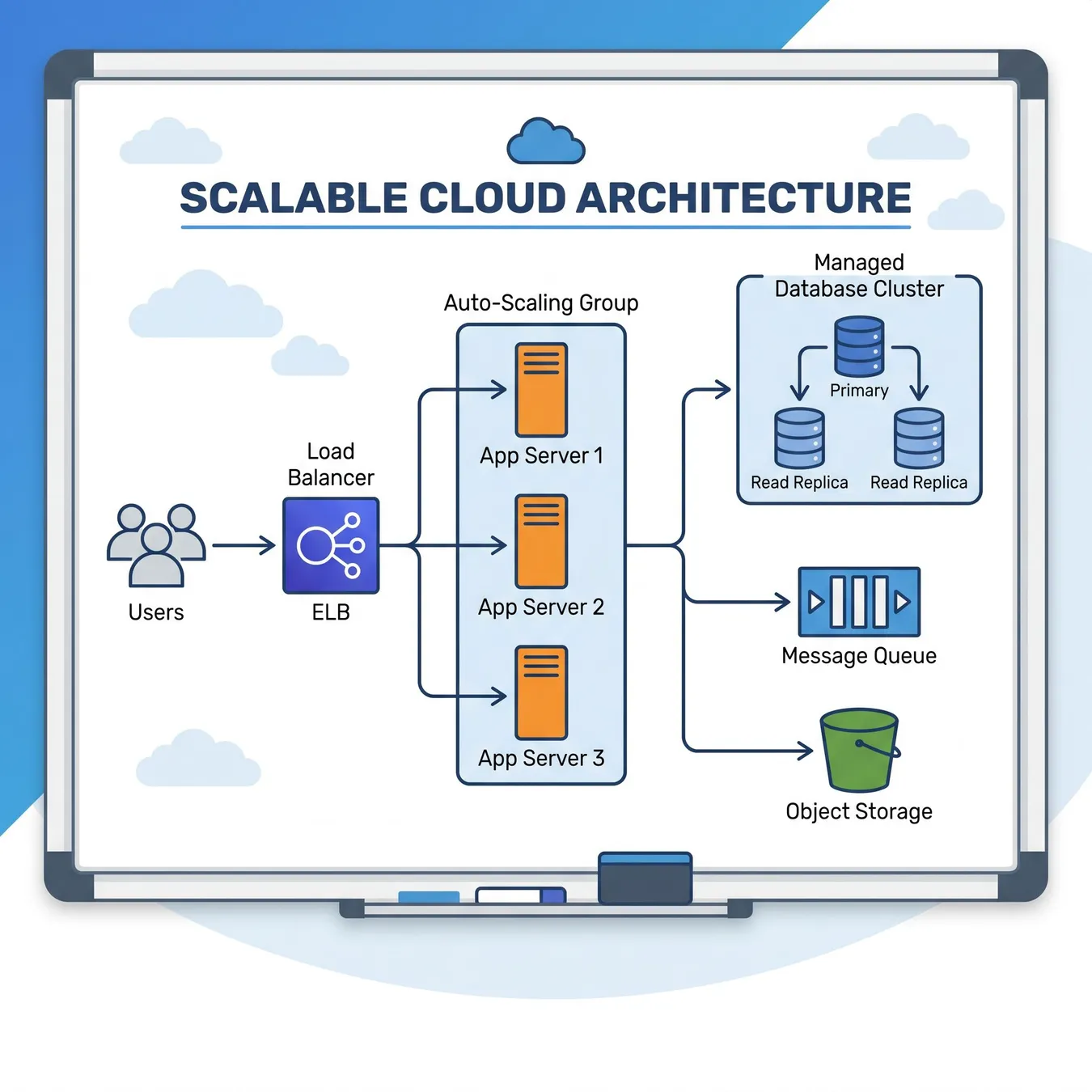
We build for scale from day one.

Strategic partnership for engineering leaders.
How We Help Engineering Leaders
- Audit current delivery bottlenecks and capacity leaks
- Implement DORA metrics and velocity tracking
- Design and build custom internal tools for resource management
- Provide fractional CTO leadership for stack and roadmap decisions
Case Study: Restoring Velocity for a Series B Startup
We recently partnered with a scaling fintech team that had lost 50% of their shipping speed. By implementing a formal capacity planning framework and clearing technical debt, we restored their predictability in under six weeks.
Studio 402 didn't just give us a report; they embedded with our team to fix the underlying systems that were slowing us down. Our delivery is now more predictable than ever.
Next Steps for Your Engineering Team
Calculate your team's true availability for the next month
Identify the top three workflow bottlenecks
Schedule a capacity review with your product counterparts
Reach out to Studio 402 for an architecture and delivery audit
Scale Your Engineering Velocity
Stop guessing and start shipping with confidence. Let's build the systems your team needs to grow.
Explore More Resources
Keep reading
More in Engineering Velocity & Metrics
Summary of Capacity Planning Benefits
| Benefit Area | Impact of Planning | Risk of No Planning |
|---|---|---|
| Predictability | High - Dates are met | Low - Constant delays |
| Team Health | Sustainable pace | High burnout/churn |
| Stakeholders | High trust | Frustration/Conflict |
The transition to formal capacity planning is a hallmark of a maturing engineering organization. It transforms the department from a 'black box' into a reliable engine of business growth.
- Engineering Leadership
- Scaling Strategy
- Operational Excellence