
Accelerating Time-to-Market for Custom Software Projects
In the competitive landscape of digital products, custom software development time-to-market acceleration is no longer just a goal—it is a survival requirement. Engineering leaders must balance the pressure to ship quickly with the necessity of maintaining production-grade stability.
47%
Faster growth for high-velocity teams
3.5x
Higher likelihood of market leadership
60%
Reduction in waste with optimized SDLC
Defining Custom Software Development Time to Market
To effectively target faster shipping, you must first define what time-to-market (TTM) means for your organization. It is the total duration from the initial conceptualization of a feature to its successful deployment in a production environment where users can derive value.
A critical component of this metric is lead time in software development, which tracks how long it takes for a single code change to reach the end user.
How to Speed Up Product Development for SaaS
SaaS products require a unique approach to velocity. Unlike legacy software, SaaS allows for continuous iteration, which means your framework should prioritize small, frequent releases over massive, infrequent updates.
- Implement automated CI/CD pipelines to remove manual deployment friction.
- Adopt feature flags to decouple deployment from release.
- Shift-left on security and testing to catch bugs early.
- Standardize development environments to eliminate 'works on my machine' delays.
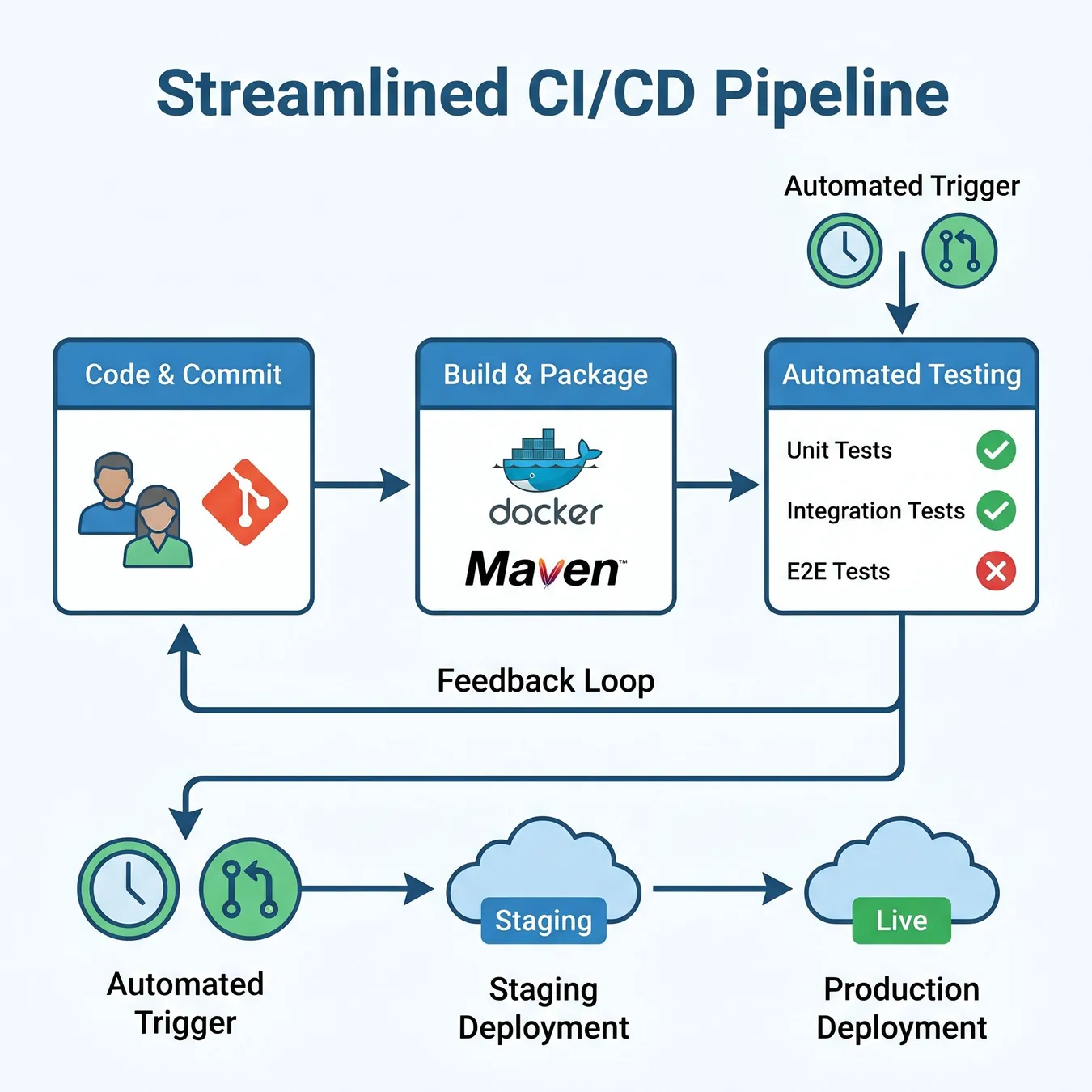
Automation is the foundation of high-velocity software delivery.
Strategies that Shorten Product Development Lifecycles
Shortening the lifecycle requires identifying and removing non-value-added activities. This often involves a deep audit of your software engineering workflow to find where tickets sit idle.
Reducing Scope to the Critical Path
The fastest way to ship is to build less. By focusing on the Minimum Viable Product (MVP) features that solve the core user problem, teams can avoid the 'feature creep' that extends timelines indefinitely.
Tip.
// The 80/20 Rule in Development
Common Bottlenecks in Custom Software Projects
| Bottleneck | Impact on TTM | Recommended Fix |
|---|---|---|
| Manual QA | High Delay | Automated Regression Testing |
| Vague Requirements | High Rework | Strict Definition of Ready |
| Legacy Debt | Slow Iteration | Incremental Refactoring |
Implementing a High-Velocity Shipping Framework
A high-velocity framework isn't about working more hours; it's about creating a system where fast software development is the natural outcome of the process.
01 / 04
phase 01 / 04
Audit
phase 02 / 04
Automate
phase 03 / 04
Standardize
phase 04 / 04
Iterate
The Role of Engineering Leadership
Engineering leaders must protect the team's focus. Context switching is a primary killer of velocity. By ensuring developers have long blocks of uninterrupted time, leaders can significantly improve throughput.
Velocity is a byproduct of clarity and automation, not of individual effort alone.
Studio 402 Engineering Team · Product Engineering Specialists
Balancing Speed and Production Quality
Moving fast and breaking things is a liability for production-grade software. True acceleration comes from building safety nets—like automated testing and observability—that allow developers to ship with confidence.
Invest in automated unit and integration tests.
Use small pull requests for faster reviews.
Prioritize observability to catch issues in production.
Skip documentation in the name of speed.
Ignore technical debt until it halts progress.
Perform manual deployments to production.
Leveraging Modern Tools for Acceleration
Modern cloud infrastructure and AI-native tools can drastically reduce the time spent on boilerplate and configuration. Teams that embrace these technologies can focus their energy on unique business logic.

AI tools can handle repetitive coding tasks.
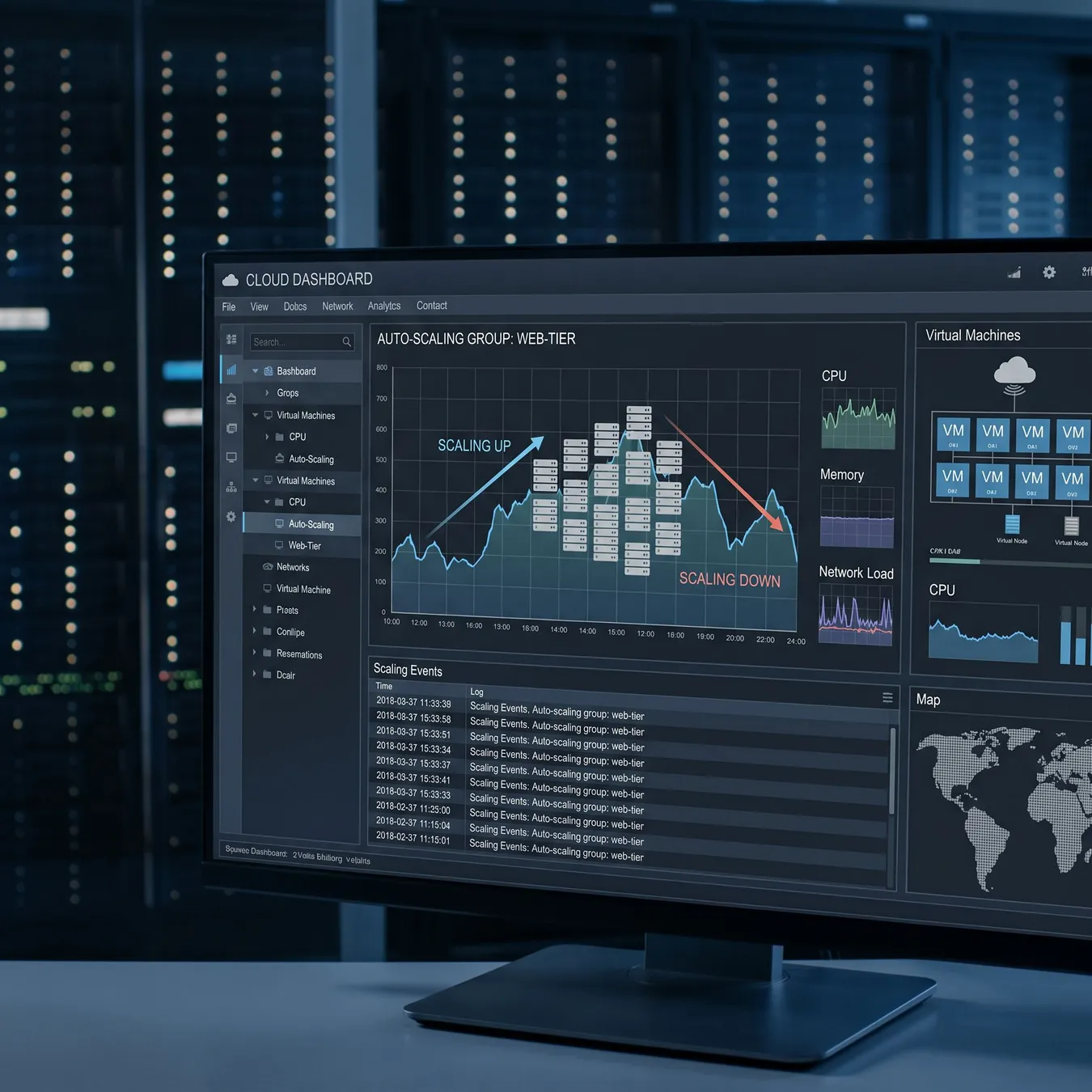
Cloud platforms reduce infrastructure management time.
Measuring Success: Key Velocity Metrics
You cannot improve what you do not measure. Focus on DORA metrics—Deployment Frequency, Lead Time for Changes, Change Failure Rate, and Time to Restore Service—to gauge your acceleration efforts.
- 01
Deployment Frequency: How often code is successfully released.
- 02
Lead Time for Changes: The time from commit to production.
- 03
Change Failure Rate: The percentage of deployments causing failure.
- 04
Mean Time to Recovery: How quickly you recover from a failure.
The Impact of Team Structure on TTM
Cross-functional teams that own a feature from design to deployment eliminate the handoff delays that plague traditional siloed organizations.
Info.
// Conway's Law
When to Seek External Engineering Expertise
Sometimes, internal bottlenecks are too deep to solve from within. Engaging a software engineering consulting company can provide the outside perspective needed to audit processes and implement high-velocity standards.
Frequently Asked Questions
Bridging the Gap: From Strategy to Execution
Accelerating time-to-market is a continuous journey of optimization. At Studio 402, we specialize in helping companies move from broken prototypes and slow shipping cycles to production-ready software built for scale.
Whether you are building a new MVP or rescuing a project that has hit a performance wall, our engineering-first approach ensures that speed never comes at the cost of durability.
Trusted by growth-stage startups to ship production-grade systems.
Studio 402: Engineering excellence for ambitious operators.
Ready to Target Faster Shipping?
If your current development lifecycle is holding back your growth, it’s time to implement a framework that prioritizes both speed and quality. We help you audit your stack, fix bottlenecks, and build foundations that grow with your business.
Accelerate Your Product Development
Stop letting slow shipping cycles delay your market entry. Let's build a high-velocity engineering engine together.
Deep Dives on Engineering Velocity
Related Resources for Leaders
Explore our other guides on engineering leadership, scaling technical teams, and optimizing the science of shipping software.
- Engineering Leadership
- SaaS Strategy
- Velocity Metrics
- Product Engineering
Keep reading
More in Engineering Velocity & Metrics
Final thoughts: Speed is a competitive advantage, but only if the software you ship is reliable. Focus on the systems that enable speed, and the velocity will follow.
Summary Checklist for Faster TTM
Audit current lead time from commit to prod
Automate 100% of the deployment pipeline
Implement feature flags for safer releases
Reduce PR size to under 200 lines of code
By following these steps, you can significantly shorten your product development lifecycles and ensure your custom software development time to market remains competitive in 2026 and beyond.