
The Fastest Path to Developing Production-Ready Web Apps
Finding the fastest way to develop web application products often feels like a choice between speed and stability. For engineering leaders, the goal isn't just to ship, but to ship software that survives real-world traffic and security audits without a complete rebuild.
- Engineering Velocity
- Production-Ready
- Web Architecture
- High-Growth
True fast software development isn't about cutting corners; it's about eliminating the friction that slows down elite teams. By focusing on architectural durability from day one, you ensure that your speed today doesn't become the technical debt of tomorrow.
Defining the High-Velocity Engineering Arc
To accelerate delivery, teams must first understand their current lead time in software development. This metric tracks the journey from initial commit to production deployment, highlighting exactly where bottlenecks occur.
4x
Faster time-to-market with optimized CI/CD
60%
Reduction in rework via early architecture
22%
Higher productivity in automated environments
Strategic Methods for Rapid Web Development
Accelerating the build phase requires a shift toward developer productivity engineering. This involves creating internal tooling and environments that allow engineers to focus on business logic rather than infrastructure setup.
- Standardize the tech stack to reduce decision fatigue.
- Implement automated testing suites to prevent regression.
- Use modular architecture to allow parallel development.
- Leverage pre-built authentication and billing modules.
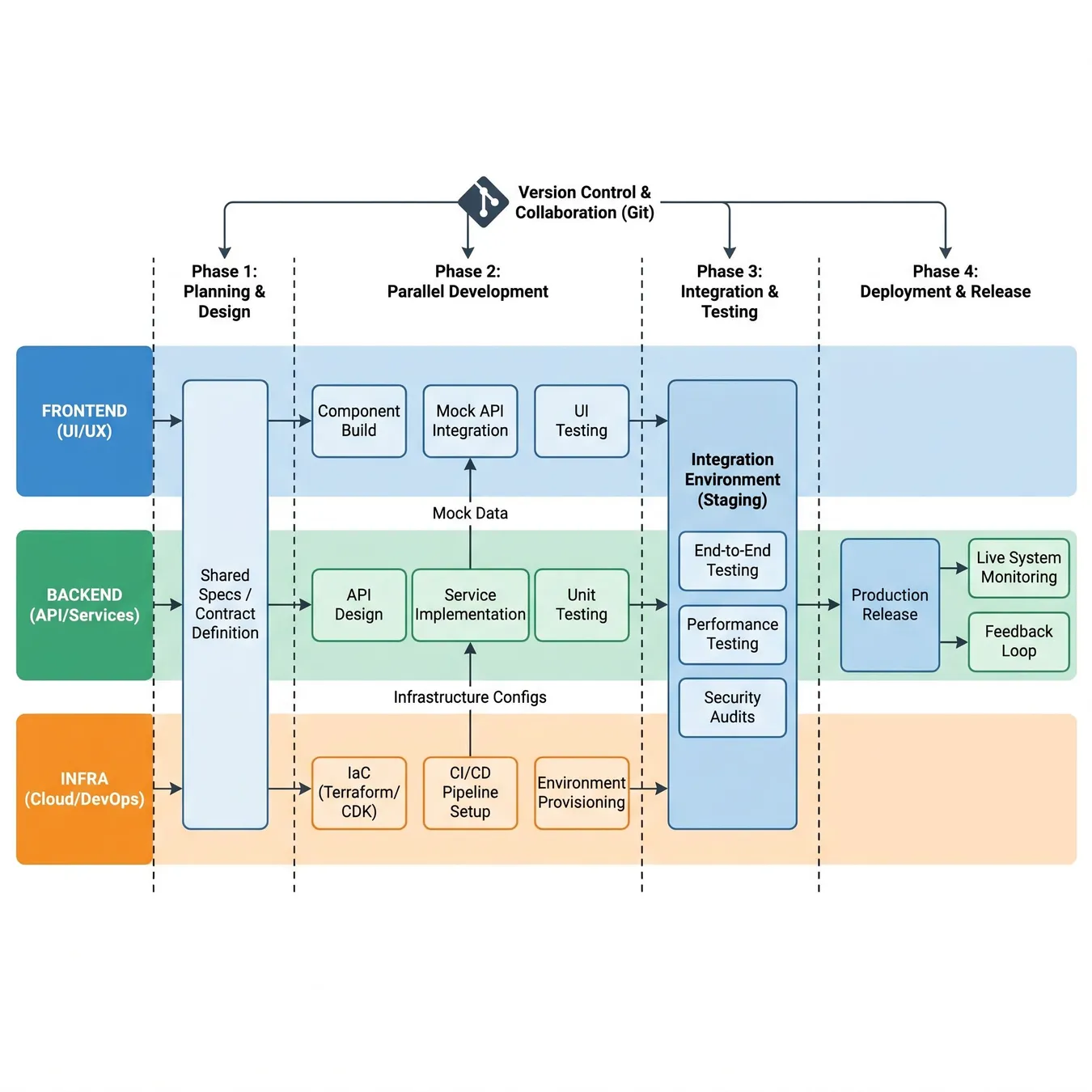
Parallel development workflows significantly reduce the critical path to launch.
Balancing Speed with Architectural Durability
Speed is useless if the application crashes under its first 1,000 users. You must build scalable web applications that incorporate load balancing and database optimization from the start.
Trade-off
3 pros · 3 cons
Pros
Faster initial release cycles
Immediate user feedback loops
Lower upfront capital expenditure
Cons
Risk of accumulating technical debt
Potential security vulnerabilities
Scaling limitations if unmanaged
The Role of Automation in Velocity
Automation is the engine of modern software delivery. By automating the mundane, you free your senior talent for high-impact architectural decisions.
Automated CI/CD pipelines
Infrastructure as Code (IaC)
Automated security scanning
Unit and integration test coverage
Optimizing the Development Lifecycle
A strategic approach to engineering shortens product development lifecycles by removing wait times between design, development, and QA.
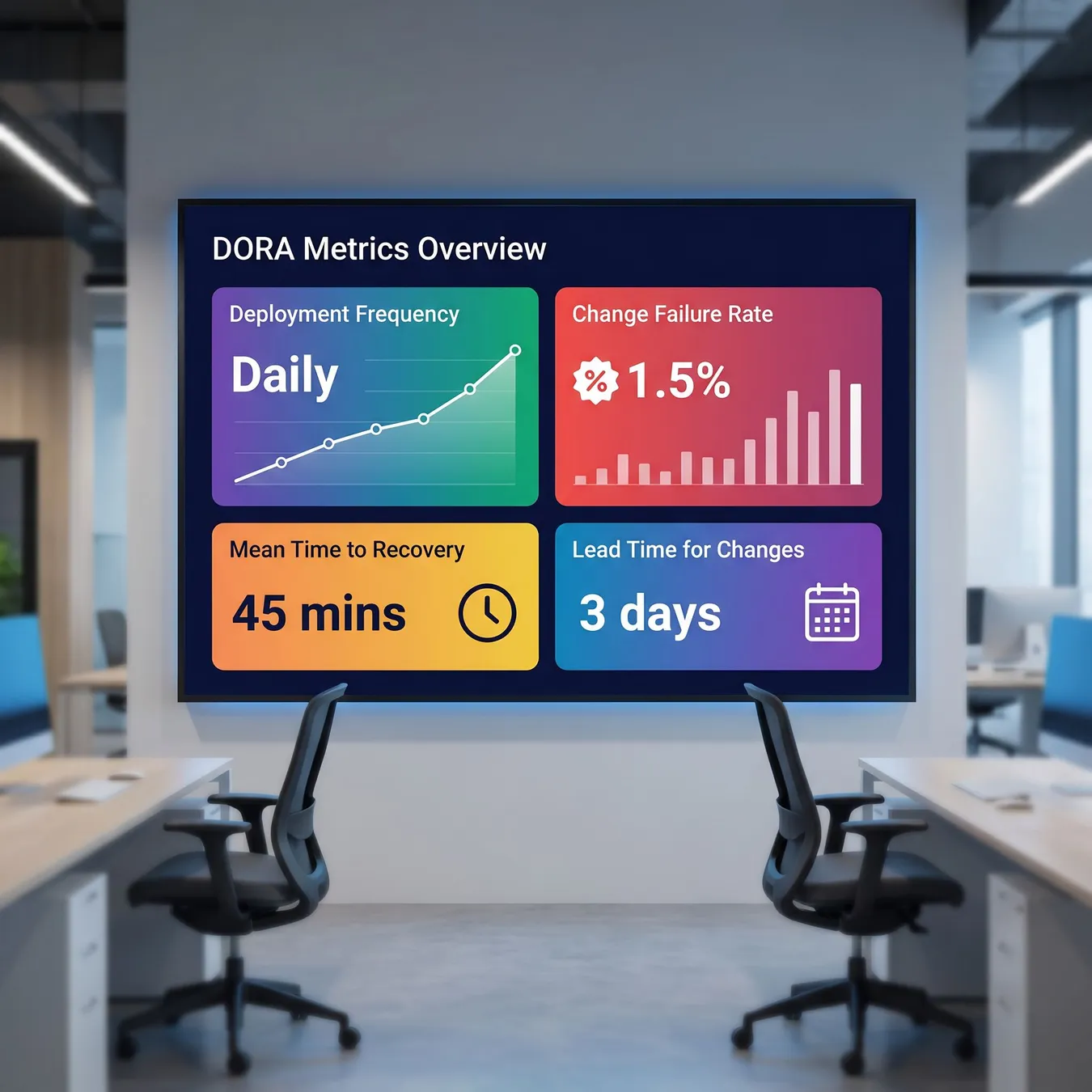
Monitoring velocity metrics ensures speed remains sustainable.

Modern tools can accelerate the coding phase without losing quality.
Common Pitfalls in Fast Development
Prioritize core features for the MVP
Invest in observability early
Maintain clear documentation
Skip code reviews for speed
Hardcode configuration values
Ignore database indexing
The Importance of Production Hardening
Production-ready means more than just 'it works.' It means the application is observable, secure, and maintainable by a team other than the original authors.
Tip.
// The 80/20 Rule of Shipping
Step-by-Step: From Concept to Production
01 / 04
phase 01 / 04
Discovery & Architecture
phase 02 / 04
Foundation Setup
phase 03 / 04
Iterative Build
phase 04 / 04
Hardening & Launch
Measuring Success Beyond the Launch
Velocity isn't a one-time achievement. It requires constant monitoring of engineering metrics to identify new bottlenecks as the team and product scale.
| Metric | Target | Impact |
|---|---|---|
| Deployment Frequency | Daily | Higher Agility |
| Lead Time | < 24 Hours | Faster Feedback |
| Change Failure Rate | < 15% | System Stability |
Scaling Your Engineering Team
As you grow, the processes that worked for two developers will break for twenty. Transitioning to a platform engineering mindset helps maintain speed during headcount growth.
Speed is a byproduct of discipline. The fastest teams are those that have the most rigorous automated safeguards.
Engineering Director · SaaS Platform
Infrastructure as a Velocity Multiplier
Modern cloud providers offer services that can replace months of custom backend work. Choosing the right abstractions is key to the fastest way to develop web application products.
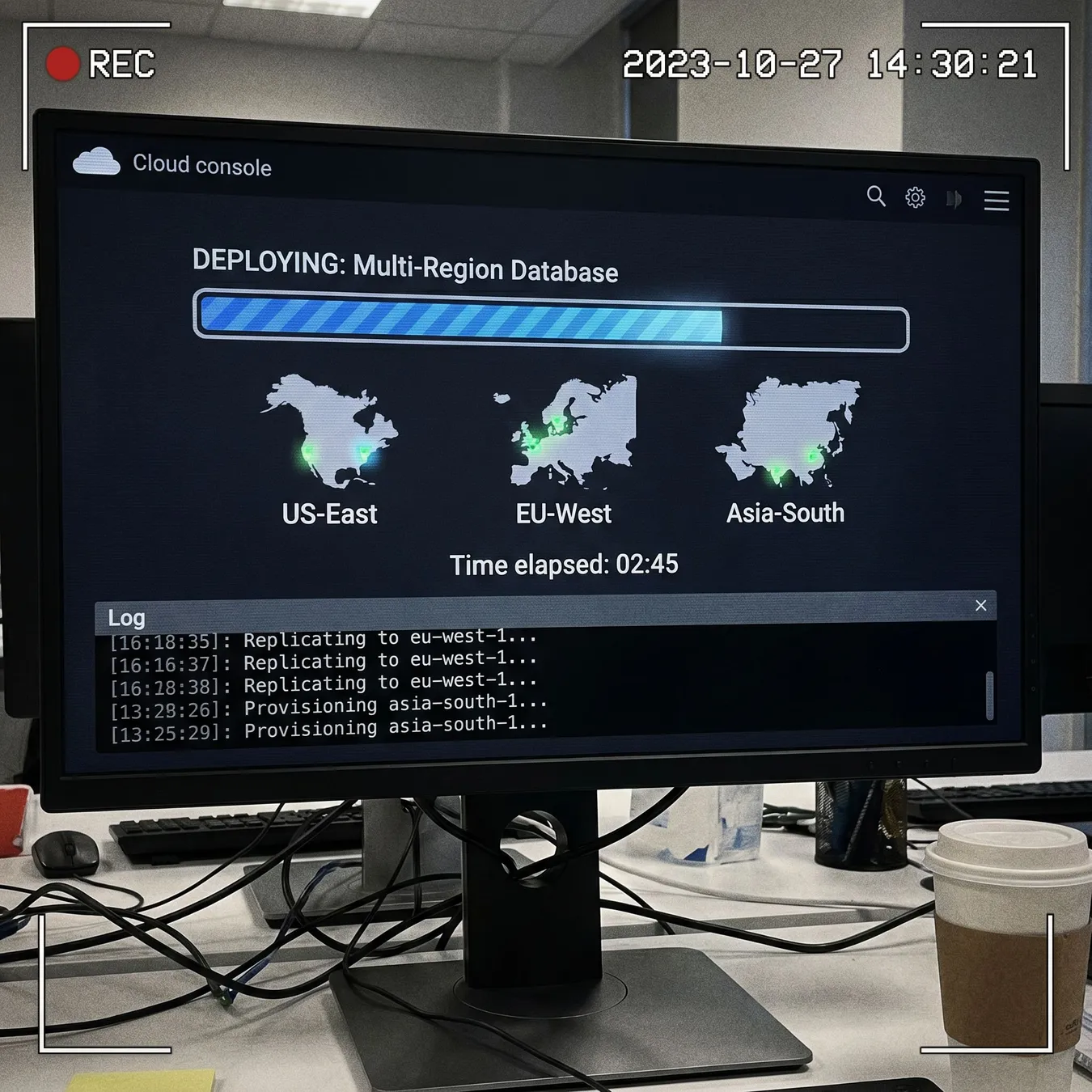
Leveraging managed services allows your team to focus on unique product value.
Frequently Asked Questions
Bridging the Gap: From Strategy to Execution
Understanding the theory of high-velocity engineering is one thing; implementing it while shipping features is another. This is where a dedicated product engineering partner can change the trajectory of your build.
At Studio 402, we specialize in helping companies move from 'vibe-coded' prototypes to durable, production-ready systems. We combine architectural depth with the shipping speed required by modern startups.
Trusted by venture-backed startups to ship production-grade software in weeks.
Studio 402 Engineering Standards 2026
Why Engineering Leaders Choose Studio 402
Whether you are building a new SaaS platform or rescuing a prototype that won't scale, we provide the senior technical leadership and execution power to get you to production safely.
- Full-spectrum product engineering from discovery to launch.
- Expertise in AI integration and AI-native system design.
- Cloud infrastructure and DevOps foundations built-in.
- Transparent, milestone-based delivery with no hidden debt.
Take the Next Step Toward Production
Don't let technical debt or slow shipping cycles hold back your growth. Let's build a foundation that scales with your ambition.
Start Your Production Build Today
Ready to turn your web app vision into a durable, high-velocity reality? Let's discuss your project.
Further Reading on Engineering Excellence
Keep reading
More in Engineering Velocity & Metrics
Final Thoughts on Velocity
The fastest path is rarely the easiest, but it is always the most disciplined. By focusing on the metrics that matter and the architecture that lasts, you ensure your team remains elite.
- Scalability
- Performance
- Reliability
Thank you for exploring the intersection of speed and durability. We look forward to seeing what you build next.