
Refactor vs. Rewrite: A Guide for Legacy Applications
Engineering leaders often face a critical crossroads when product velocity stalls: should you invest in refactoring legacy applications or commit to rewriting them from scratch? This decision impacts your team's output for years.
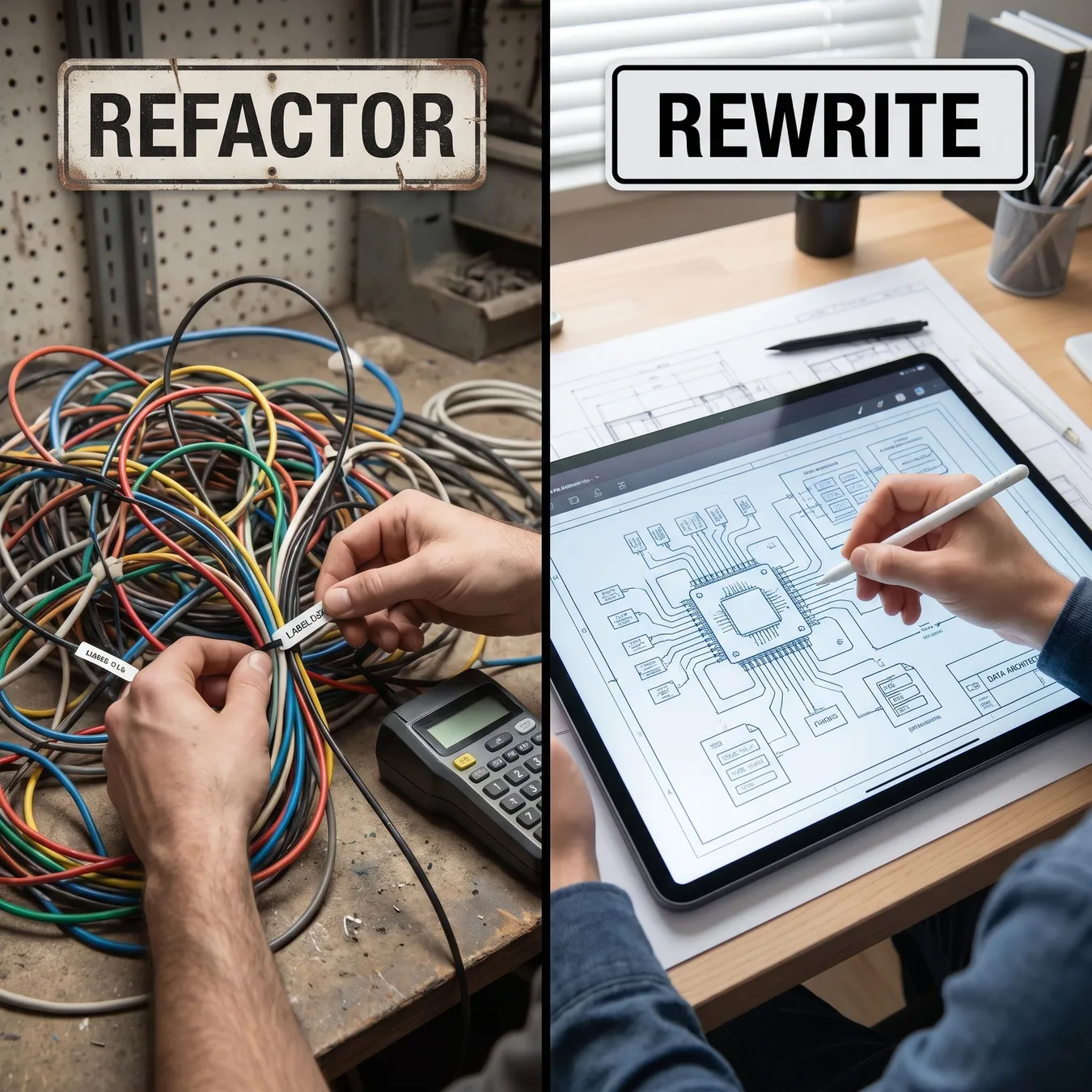
Choosing between incremental improvement and a total system reset.
Defining the Modernization Dilemma
Refactoring legacy applications involves improving the internal structure of code without changing its external behavior. It is a surgical approach to cleaning up technical debt while keeping the system operational.
Rewriting legacy applications means starting from zero, often using a modern tech stack to replicate or expand the original functionality. While it promises a clean slate, it carries significant delivery risk.
When to Choose Refactoring
Refactoring is best when the core business logic is still sound, but the implementation has become brittle. It allows for continuous delivery while addressing the risks of legacy systems.
- The current stack is still supported and scalable.
- The domain logic is complex and poorly documented.
- You need to maintain constant uptime and feature delivery.
- The budget is limited to incremental improvements.
When a Rewrite is Unavoidable
A rewrite becomes necessary when the underlying technology is obsolete or the architecture prevents the business from scaling. This is often the case during a legacy to cloud migration.
- The technology stack is end-of-life or lacks talent availability.
- Fundamental architectural flaws make new features impossible.
- The cost of maintenance exceeds the cost of a new build.
- The system cannot meet modern security or compliance standards.
Comparing Costs and Risks
| Factor | Refactor | Rewrite |
|---|---|---|
| Initial Cost | Lower / Spread out | High / Upfront |
| Risk of Failure | Low (Incremental) | High (Big Bang) |
| Time to Value | Immediate | Delayed until launch |
| Tech Debt | Reduced gradually | Eliminated (initially) |
How to Refactor Legacy Code Safely
Learning how to refactor legacy code requires a disciplined approach to testing. You cannot improve what you cannot verify. Start by wrapping existing logic in unit tests before changing a single line.
- 01
Establish a baseline with automated regression tests.
- 02
Identify and isolate the most brittle modules.
- 03
Apply small, incremental changes using the Boy Scout Rule.
- 04
Continuously integrate and deploy to verify stability.

Safe refactoring relies on a robust automated testing suite.
The Strategic Framework for Decision Making
Before committing to a path, you must spend time managing technical debt to understand its true impact on your bottom line. Use this framework to score your current application.
70%
Average Rewrite Failure Rate
40%
Velocity Gain after Refactor
25%
Cloud Cost Savings
Common Pitfalls in Legacy Modernization
Audit the existing codebase thoroughly.
Define clear success metrics for the project.
Involve stakeholders in the timeline discussion.
Consider a hybrid 'Strangler Fig' approach.
Underestimate the complexity of hidden logic.
Rewrite just to use a 'trendier' framework.
Stop feature development for months during a rewrite.
Ignore the data migration requirements.
The Strangler Fig Pattern: A Middle Ground
If a total rewrite is too risky, many teams choose to convert monolith to microservices by gradually replacing specific features with new services. This provides the benefits of a rewrite with the safety of refactoring.
How the Strangler Pattern Works
You place a proxy in front of the legacy app. New features are built in the new system, while old features are migrated one by one until the legacy system can be decommissioned.
Technical Debt Assessment Checklist
Is the documentation accurate for core logic?
Does the team spend >50% of time on bug fixes?
Are there security vulnerabilities that can't be patched?
Is the deployment process fully automated?
Expert Perspectives on Modernization
The only thing a big bang rewrite guarantees is a big bang.
Martin Fowler · Software Architect
Planning Your Modernization Roadmap
01 / 04
phase 01 / 04
Discovery
phase 02 / 04
Strategy Selection
phase 03 / 04
Execution
phase 04 / 04
Validation
Modernization FAQs
Bridging to Production-Grade Solutions
Deciding the future of your legacy application is a high-stakes engineering move. At Studio 402, we specialize in helping companies navigate these transitions—whether you need a surgical refactor or a complete system rebuild.
We don't just write code; we build durable execution infrastructure. From auditing your current debt to deploying a scalable cloud-native architecture, we ensure your software is built for real-world use.
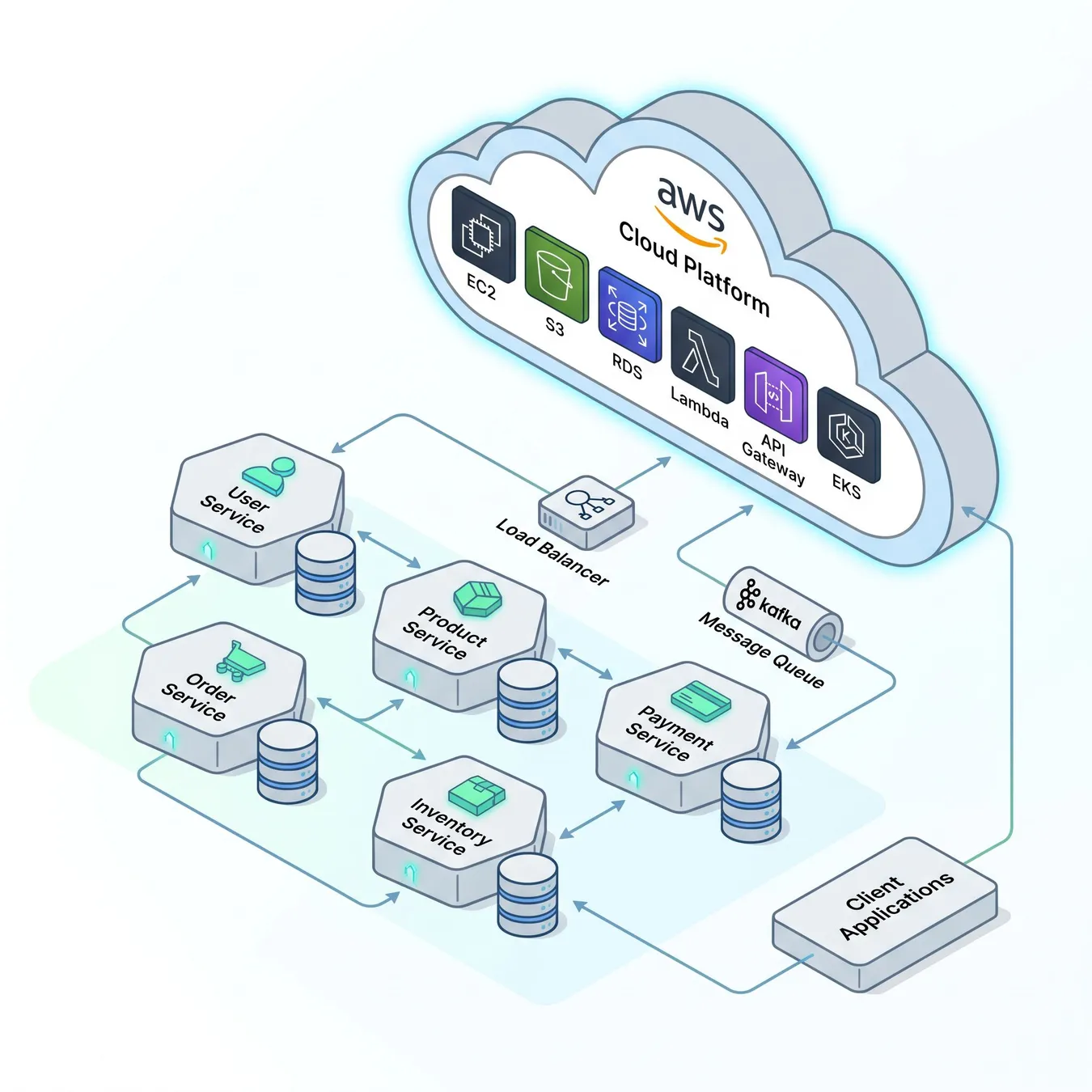
Modern cloud-native architecture.

Expert engineering partnership.
Why Partner with Studio 402?
- Deep expertise in legacy modernization and software rescue.
- Production-first mindset: we build for scale, not just demos.
- Transparent scoping and honest technical consulting.
- End-to-end delivery from architecture to deployment.
Info.
// Rescue Note
Take the Next Step
Don't let technical debt stall your growth. Whether you are looking to refactor for velocity or rewrite for the future, we can help you design the right roadmap.
Ready to Modernize Your Application?
Contact Studio 402 today to discuss your legacy application strategy and restore your engineering velocity.
Further Reading
Keep reading
More in Modernization & Rescue
Modernization Metrics
99.99%
Uptime Improvement
10x
Release Frequency
Modernizing your stack isn't just about the code; it's about the business outcomes. Faster releases and higher stability lead to better customer trust and easier fundraising.
Summary of Strategies
- Refactor for incremental debt reduction.
- Rewrite for fundamental technology shifts.
- Strangle for low-risk, high-reward transitions.
- Audit first to avoid flying blind.
The right choice depends on your specific business context, budget, and risk tolerance. There is no one-size-fits-all answer in software engineering.
Trusted by growth-stage startups to rescue and scale complex systems.
Updated July 2026