
Decomposing Monoliths into Scalable Microservices
The decision to convert monolith to microservices often stems from a breakdown in engineering velocity. As a monolithic application grows, the cognitive load on developers increases, deployment risks skyrocket, and scaling becomes an expensive, all-or-nothing proposition.
To successfully transition a monolithic application to microservices, teams must move beyond simple code splitting. It requires a fundamental shift in how data is managed, how services communicate, and how the underlying infrastructure supports distributed complexity.
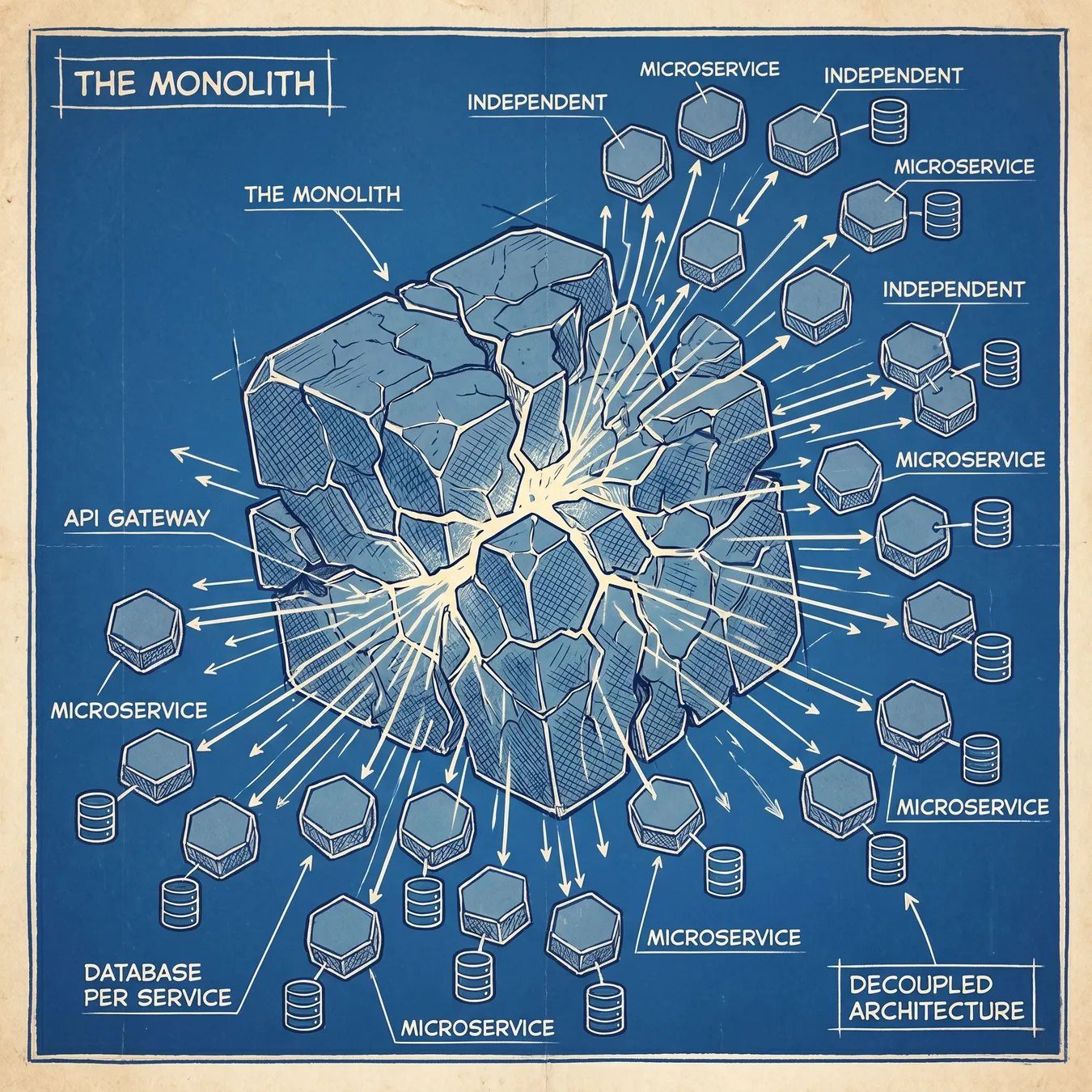
Visualizing the transition from a single codebase to a distributed service architecture.
Why Decompose Your Monolith Now?
Many teams wait until a system failure before considering modernization. However, the best time to start is when you notice 'the wall'—where adding a single feature takes weeks of regression testing and coordination across multiple teams.
40%
Reduction in deployment lead time
3x
Increase in developer productivity
99.99%
Potential fault tolerance improvement
Identifying Service Boundaries
The most critical step in decomposition is identifying bounded contexts. You shouldn't split services based on technical layers (like UI vs Database), but rather on business capabilities like 'Order Management' or 'User Identity'.
Tip.
// Domain-Driven Design
The Risk of the Distributed Monolith
If your services are so tightly coupled that they must be deployed together, you have created a distributed monolith. This anti-pattern combines the complexity of distributed systems with the rigidity of a monolith. Understanding distributed monolith vs microservices is essential to avoid this trap.
Trade-off
4 pros · 4 cons
Pros
Independent scaling of high-load components
Faster deployment cycles for specific features
Technology flexibility per service
Improved fault isolation
Cons
Increased operational complexity
Harder to maintain data consistency
Network latency between services
Complex debugging and observability
Modernizing a Rails Monolith to Microservices
A rails monolith to microservices transition is common for growth-stage startups. Rails is excellent for early velocity, but its 'magic' can make decoupling difficult. Start by extracting background jobs or specific engines into standalone services.
Isolating logic within a Rails monolith.
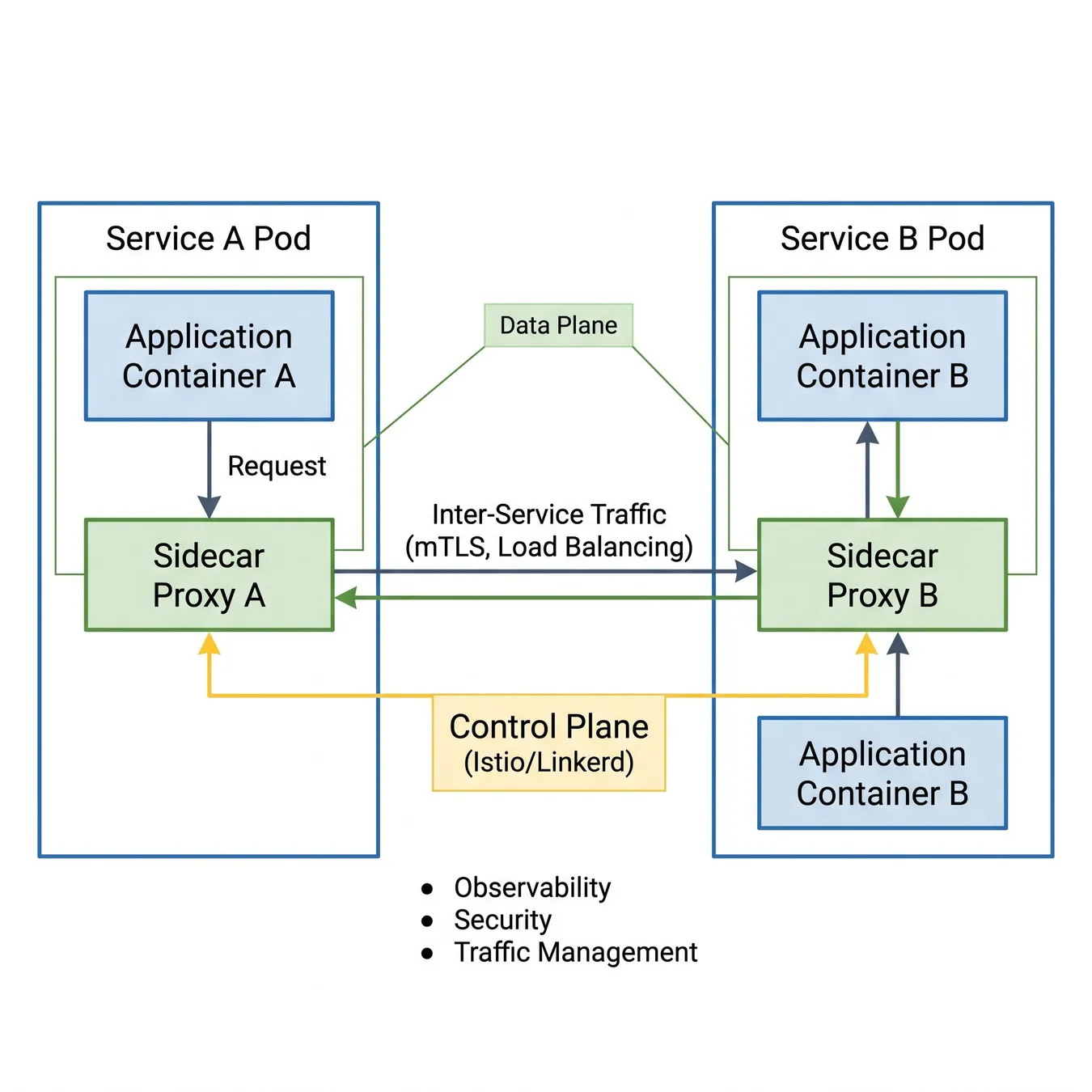
Using sidecars for service-to-service communication.
Essential Decomposition Patterns
There are several proven monolith to microservices patterns that reduce risk. The Strangler Fig pattern is the gold standard, allowing you to gradually replace functionality without a 'big bang' rewrite.
- Strangler Fig: Wrap the monolith and intercept calls.
- Branch by Abstraction: Decouple code within the monolith first.
- Database per Service: Ensure data sovereignty.
- API Gateway: Centralize entry points for clients.
Managing Data During Decomposition
Data is the hardest part of any migration. You cannot have two services sharing the same database table. You must migrate data ownership alongside the logic, often using event-driven synchronization to keep systems in parity.
| Strategy | Complexity | Data Integrity |
|---|---|---|
| Shared Database | Low | High (but risky) |
| Database per Service | High | Eventual Consistency |
| API Composition | Medium | Dependent on APIs |
Infrastructure Readiness
Microservices cannot thrive on legacy hosting. You need robust cloud infrastructure planning and design to handle container orchestration, service discovery, and automated CI/CD pipelines.
Step-by-Step Decomposition Process
01 / 05
phase 01 / 05
Audit & Map
phase 02 / 05
Decouple Logic
phase 03 / 05
Extract Service
phase 04 / 05
Migrate Data
phase 05 / 05
Decommission
Common Pitfalls to Avoid
Automate testing before you start
Use asynchronous messaging where possible
Invest in centralized logging and tracing
Prioritize services that change frequently
Don't split services just for the sake of it
Don't share databases between services
Don't ignore network latency
Don't skip the API gateway layer
Testing in a Distributed Environment
Testing becomes significantly more complex when logic is spread across services. You must implement contract testing to ensure that changes in one service don't break consumers in another.
Unit tests for every service
Consumer-driven contract tests
End-to-end integration smoke tests
Chaos engineering for fault tolerance
The Role of API Gateways
An API gateway acts as the single entry point for all clients. It handles cross-cutting concerns like authentication, rate limiting, and request routing, allowing your microservices to focus on business logic.
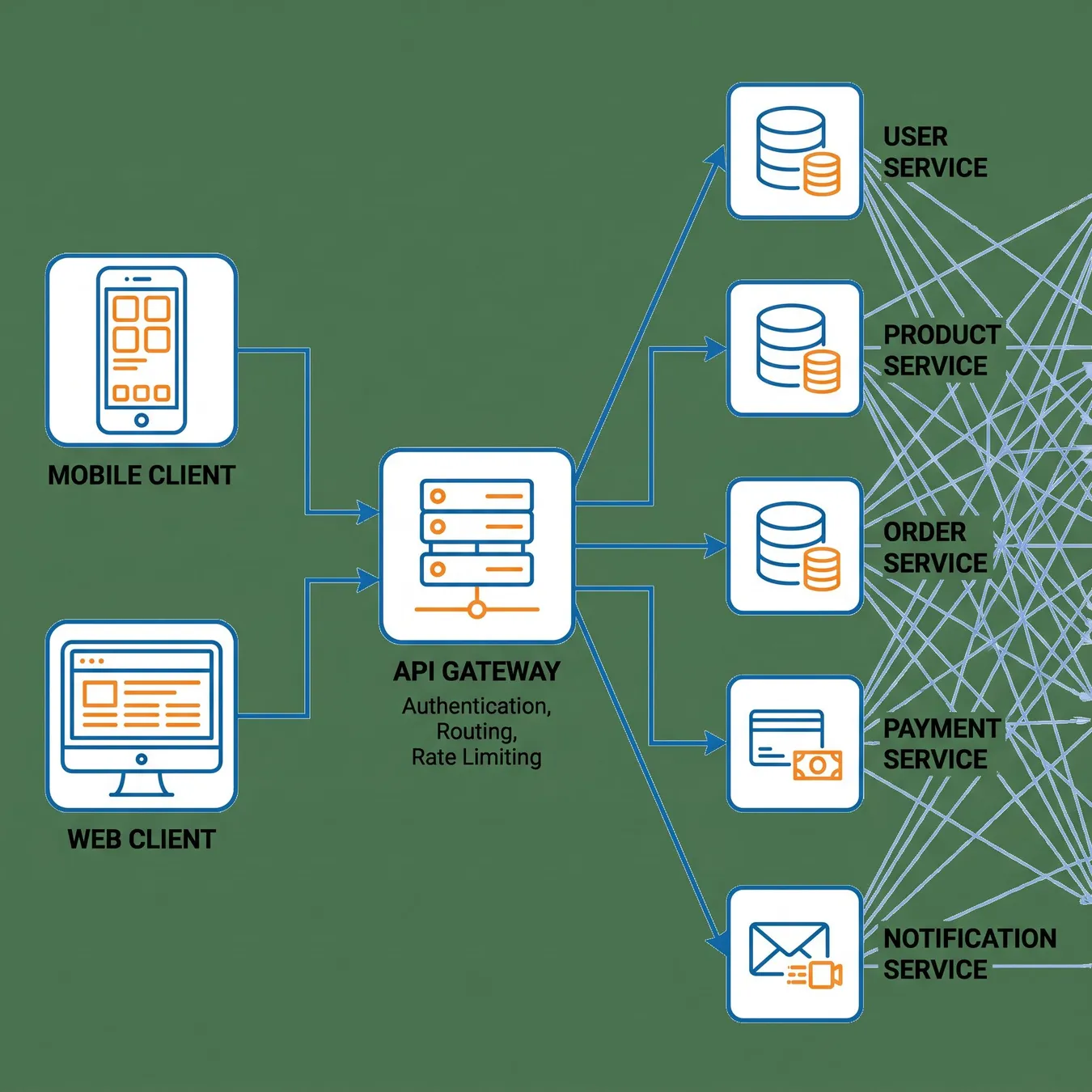
The API Gateway pattern simplifies client-to-service communication.
Observability and Monitoring
In a monolith, a stack trace tells the whole story. In microservices, you need distributed tracing (like Jaeger or Honeycomb) to follow a request as it hops across the network.
Info.
// The Three Pillars
Strategic Planning for Migration
Successful decomposition requires a long-term monolith to microservices migration strategy. It is not a project with a fixed end date, but a continuous evolution of your software architecture.
Frequently Asked Questions
Bridging to Production-Ready Systems
Decomposing a system is a high-stakes engineering challenge. At Studio 402, we specialize in helping growth-stage companies navigate this transition. We don't just give you a plan; we embed with your team to audit, refactor, and build the infrastructure needed for scale.
Whether you are struggling with a brittle Rails monolith or a prototype that has hit its scaling limit, we provide the senior engineering leadership to restore your velocity and harden your systems for the long term.
Studio 402 turned our monolithic nightmare into a streamlined service architecture that actually scales with our users.
Sarah Jenkins · CTO, Fintech Scaleup
Ready to Restore Your Engineering Velocity?
Don't let technical debt and monolithic constraints hold your product back. Let's discuss how a strategic decomposition can unlock your team's potential.
Start Your Modernization Journey
Schedule a technical discovery session to audit your monolith and map your path to microservices.
Further Reading
Keep reading
More in Modernization & Rescue
- Architecture
- Modernization
- Microservices
- Scale
- DevOps
Studio 402 is a premium product engineering studio. We build, fix, and scale custom software for ambitious operators who need production-ready outcomes.
Trusted by 50+ growth-stage companies to solve complex engineering bottlenecks.
Updated for 2026
Our Modernization Expertise
- Legacy system audits
- Cloud-native re-architecture
- Database migration and decoupling
- CI/CD pipeline automation
Every engagement starts with a deep dive into your current state to ensure we are building a foundation that grows with your business.