
Modernizing Legacy Data and Migration Strategies
Legacy data modernization is the process of moving business-critical information from outdated, rigid database schemas into high-performance, cloud-native environments. This transition is essential for companies looking to unlock the power of AI, real-time analytics, and scalable application architectures.
70%
Reduction in query latency after modernization
45%
Lower operational costs on cloud infrastructure
Zero
Downtime achieved with phased migration
Understanding Legacy Data Modernization
Modernizing legacy data isn't just about moving files; it's about re-architecting how data supports your business goals. Aging systems often suffer from the risks of legacy systems, which can include data silos, security vulnerabilities, and an inability to integrate with modern APIs.
- Eliminating technical debt in database schemas
- Enabling real-time data processing and streaming
- Improving data security and compliance posture
- Supporting high-concurrency cloud applications
Key Challenges in Data Migration from Legacy Systems
Executing a data migration from legacy system environments requires careful planning to avoid data loss or corruption. Common hurdles include inconsistent data formats, missing documentation, and the need to maintain uptime during the transition.
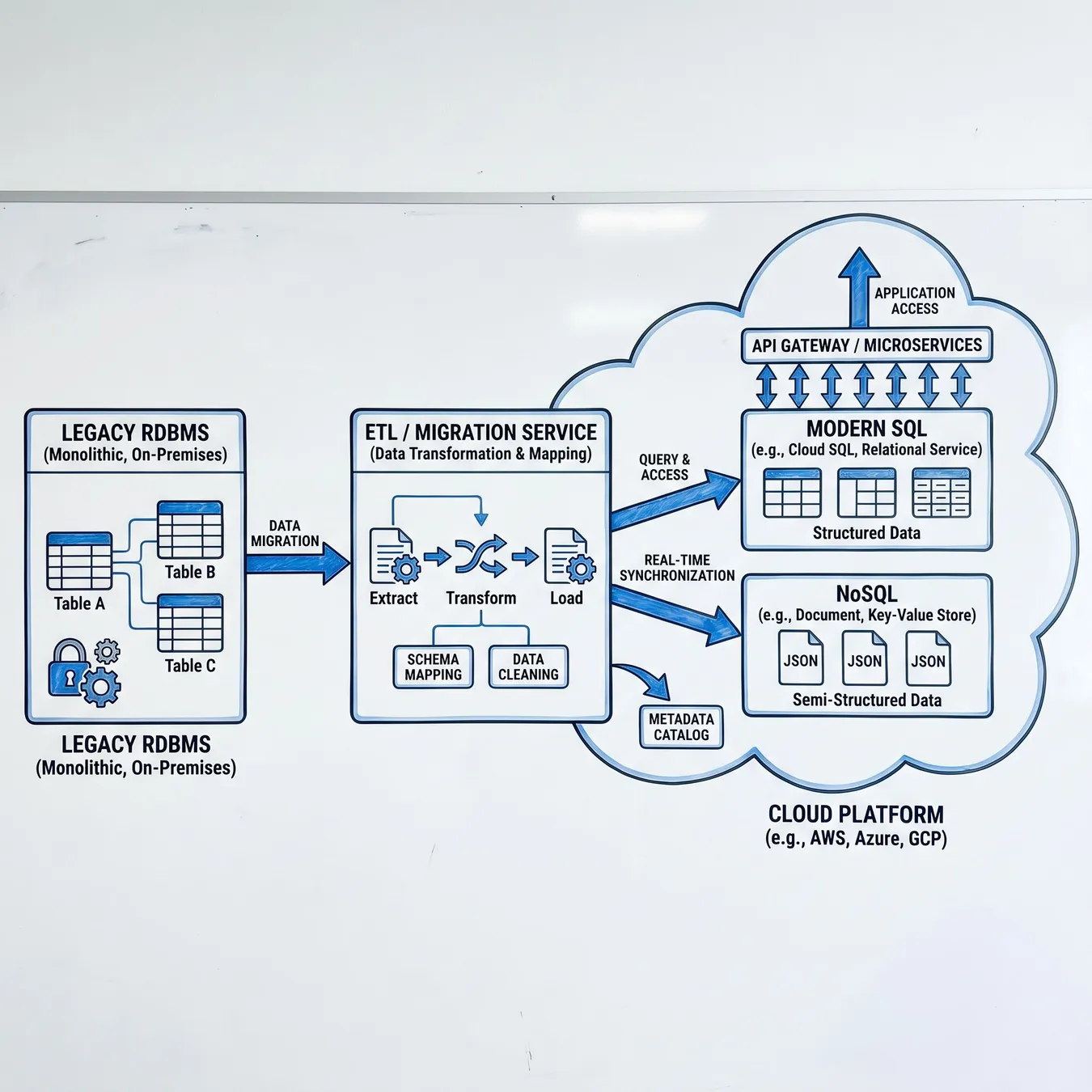
Visualizing the transition from rigid legacy schemas to flexible cloud architectures.
Phased Migration vs. Big Bang Approach
Trade-off
3 pros · 3 cons
Pros
Lower risk of total system failure
Allows for iterative testing and validation
Spreads out the resource requirements
Cons
Requires managing data synchronization
Longer total project duration
Higher complexity in dual-running systems
Steps for Successful Legacy Data Modernization
01 / 04
phase 01 / 04
Discovery and Audit
phase 02 / 04
Schema Mapping
phase 03 / 04
Pilot Migration
phase 04 / 04
Full Execution
Data Cleaning and Transformation Strategies
Before moving data, it must be cleansed. This involves removing duplicates, standardizing formats, and enriching data where necessary. This step is critical for a successful legacy to cloud migration where performance depends on clean data structures.
Validate data integrity at every step
Automate ETL processes where possible
Maintain a rollback plan for every wave
Migrate 'dirty' or redundant data
Ignore security protocols during transit
Assume legacy documentation is 100% accurate
The Role of Application and Data Modernization
Data doesn't live in a vacuum. Effective application and data modernization involves updating the software that consumes the data alongside the database itself. This often involves moving toward a monolithic to microservices roadmap to improve agility.
Choosing the Right Modern Data Architecture
| Architecture | Best For | Scalability |
|---|---|---|
| Relational (SQL) | Structured business data | Vertical/Horizontal |
| Document (NoSQL) | Flexible schemas, JSON | High Horizontal |
| Data Lake | Big data, raw storage | Infinite |
Security and Compliance During Migration
Warning.
// Encryption is Non-Negotiable
Testing and Validation Frameworks
Validation is the final gate. Automated scripts should compare record counts, checksums, and sample data between the source and target systems to ensure 100% fidelity.
Verify record counts match exactly
Perform schema validation checks
Test application connection strings
Run performance benchmarks on new DB
Operationalizing the New Data Environment
Once the migration is complete, the focus shifts to monitoring and optimization. Modern cloud databases offer observability tools that were impossible in legacy environments.
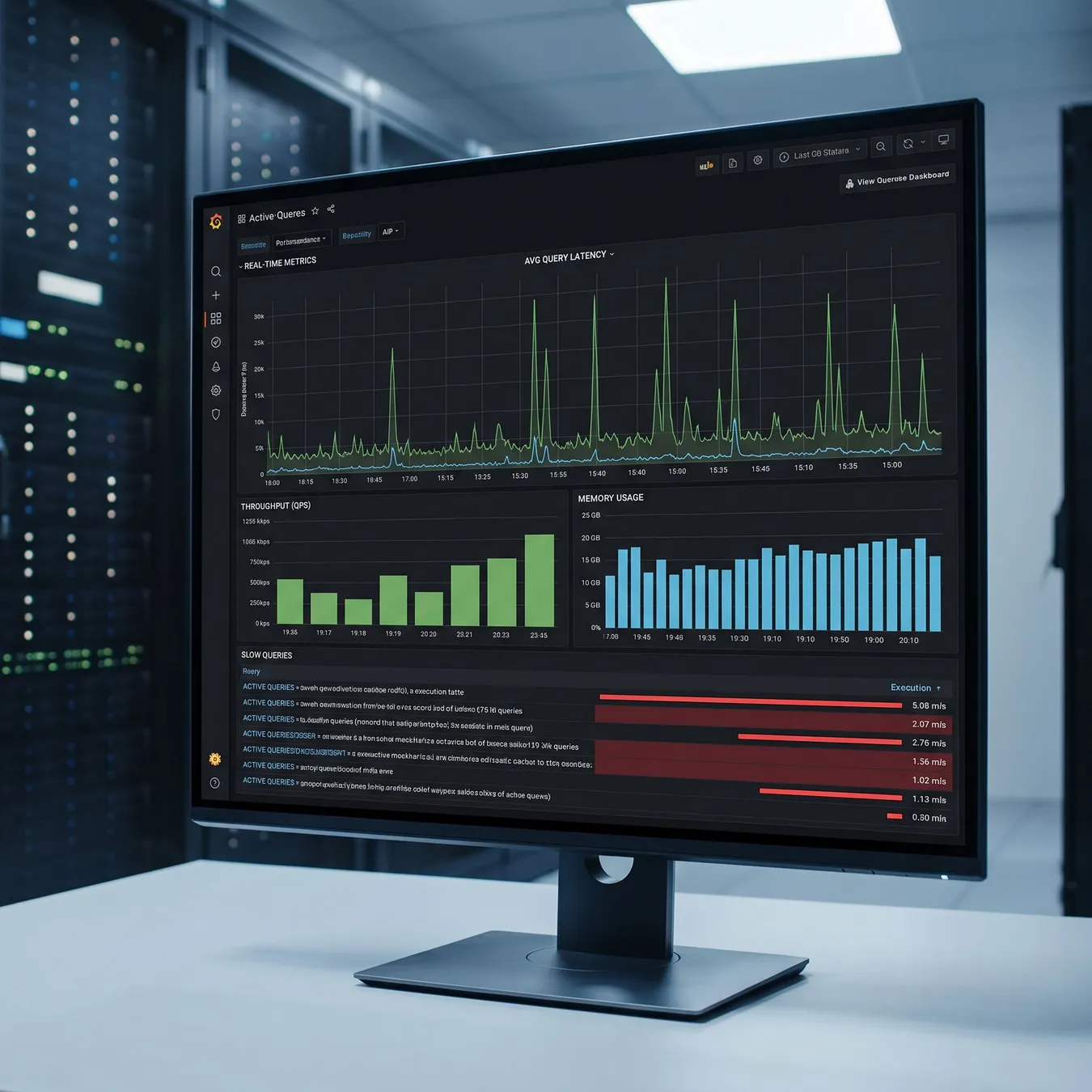
Monitoring tools provide visibility into the health of your modernized data stack.
Common Pitfalls to Avoid
- Underestimating the volume of 'dark data'
- Failing to account for network latency during sync
- Neglecting user training for new data tools
- Incomplete mapping of stored procedures
The Business Value of Data Modernization
Modernizing your data layer unlocks faster product iteration and better customer experiences. It turns a bottleneck into a competitive advantage.
Data is the lifeblood of modern software. If your data is stuck in 2010, your product will be too.
Technical Lead · Studio 402
How Studio 402 Handles Data Modernization
At Studio 402, we specialize in high-stakes data transitions. Whether you are moving from a legacy SQL Server to a modern AWS architecture or cleaning up a fragmented database, our legacy software modernization services ensure a smooth path forward.
Our Migration Methodology
- 01
Deep-dive technical audit of existing schemas
- 02
Custom ETL pipeline development
- 03
Parallel testing and zero-downtime cutover
- 04
Post-migration performance tuning
Frequently Asked Questions
Ready to Modernize Your Data?
Don't let aging infrastructure hold back your growth. Our team of senior engineers can help you audit, plan, and execute a flawless data migration that sets the foundation for your next decade of scale.
Trusted by growth-stage startups to handle critical infrastructure migrations.
Updated for 2026 standards
Start Your Data Modernization Journey
Get a technical audit and a clear roadmap for your legacy data migration.
Explore More Resources
Keep reading
More in Modernization & Rescue
Modernizing data is a complex but rewarding endeavor. By following a structured strategy, businesses can eliminate the drag of legacy systems and move toward a more agile, data-driven future.
- Data Engineering
- Cloud Migration
- Legacy Rescue
- Architecture
Our engineering team is ready to assist with any stage of your modernization journey, from initial audit to final deployment.
We ensure that every byte is accounted for and every schema is optimized for the future of your business.
Contact us today to discuss your specific data challenges and how we can help you overcome them.
Studio 402 is your partner in building durable, production-ready software systems.
Thank you for reading our guide on legacy data modernization.
We look forward to helping you scale your infrastructure.
Finalizing your data strategy is the first step toward true operational excellence.
Let's build something that lasts.