
Auditing and Stabilizing AI-Generated Codebases
AI-assisted software development has revolutionized the speed of prototyping, but it often leaves behind a trail of technical debt and architectural fragility. When a product is built using 'vibe-code'—code that works in a demo but lacks production discipline—it eventually hits a wall of security, performance, and maintainability issues.
To move from a fragile prototype to a durable system, you must first understand the current state of your application. This requires a rigorous audit to identify where the AI-generated logic fails to meet professional standards for ai in software engineering.
70%
AI code security risk
45%
Maintenance overhead
10x
Scale failure rate
Common Risks in AI-Generated Codebases
AI tools like Cursor, Bolt, and LLMs are excellent at generating snippets but often lack the context of a holistic architecture. This leads to several critical failure points that must be addressed during a rescue operation.
- Inconsistent state management across components
- Hardcoded secrets and lack of environment isolation
- Redundant logic and 'hallucinated' library dependencies
- Missing error handling and edge-case validation
- Poor database indexing and inefficient query patterns
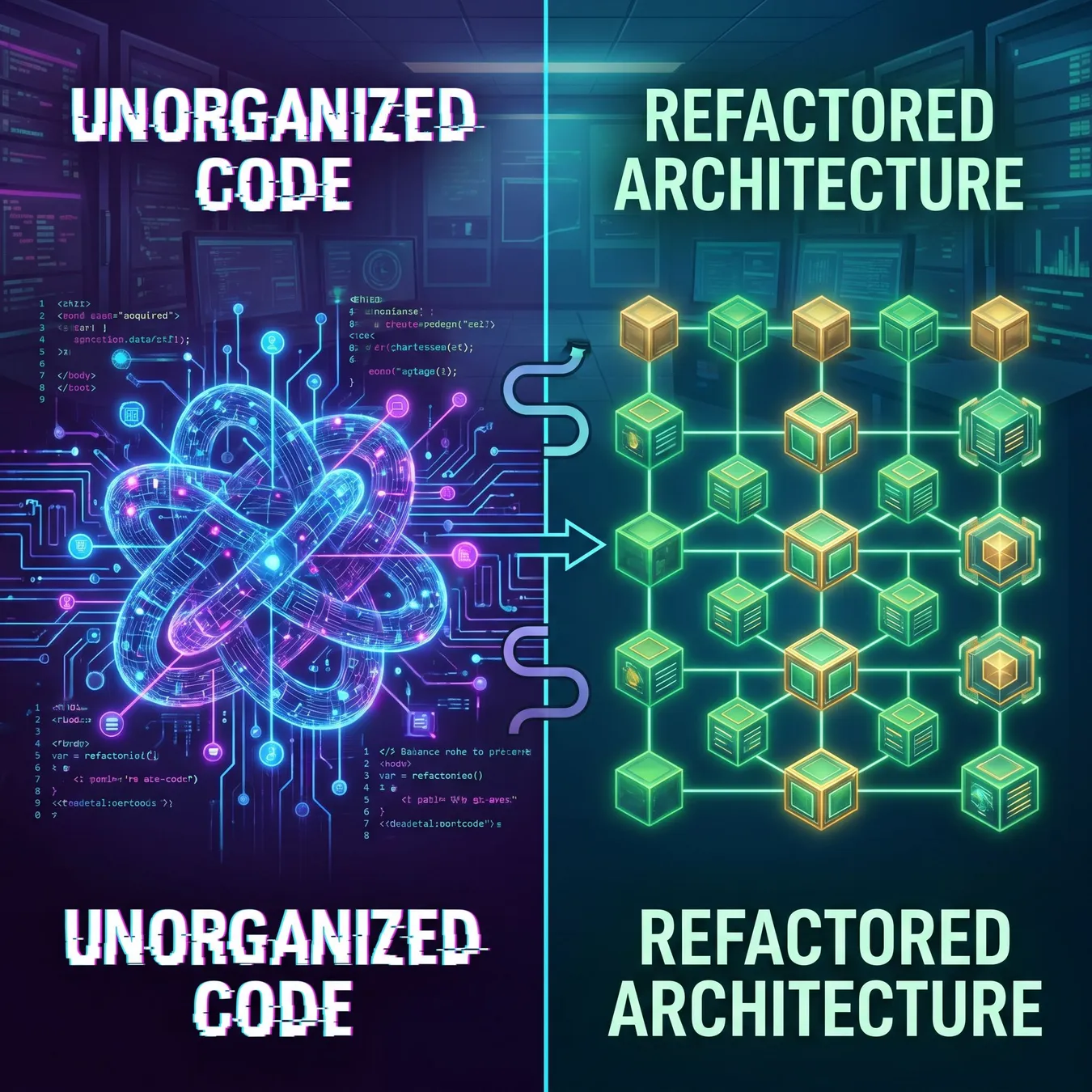
Visualizing the transition from tangled AI prototypes to structured production code.
The Audit Process: Identifying Structural Weakness
A comprehensive audit is the first step in any rescue mission. We look beyond the surface level to evaluate the underlying foundation of your application, ensuring it can support real-world traffic and compliance requirements.
Info.
// Audit Focus Areas
| Audit Layer | Key Concern | Common AI Error |
|---|---|---|
| Security | Auth & Permissions | Insecure direct object references |
| Performance | Latency & Load | N+1 query problems in data fetching |
| Maintainability | Code Quality | Lack of modularity and testing |
Stabilizing the Foundation
Stabilization involves more than just fixing bugs; it requires re-architecting the core components that handle data, identity, and integration. This often involves a professional code review service to validate the new structure.
- 01
Isolate and secure environment variables and API keys.
- 02
Refactor the data model to ensure referential integrity.
- 03
Implement a unified authentication and authorization layer.
- 04
Introduce automated testing for critical business logic.
- 05
Standardize the deployment pipeline for reliability.
Refactoring vs. Rebuilding AI Code
Deciding whether to salvage existing AI code or start fresh is a strategic choice. We evaluate the 'vibe-code' to see if the core logic is sound enough to be hardened or if the technical debt is too high to manage.
Trade-off
3 pros · 3 cons
Pros
Faster time to market for simple features
Lower initial development cost
Good for visual prototyping
Cons
High risk of security vulnerabilities
Difficult to scale for multiple tenants
Lack of long-term maintainability
Best Practices for Reviewing AI Output
When working with AI-generated code, human oversight is non-negotiable. Following ai-assisted code review best practices ensures that the speed of AI doesn't compromise the quality of the final product.
Verify every library import for security
Write manual unit tests for AI logic
Check for hardcoded logic paths
Assume AI code is production-ready
Ignore warnings from static analysis
Deploy without a manual security audit
Modernizing Legacy Applications with AI
Many software development companies modernize legacy applications ai by using LLMs to translate old codebases into modern frameworks. However, without a stabilization phase, you are simply trading old debt for new, AI-generated debt.

Identifying vulnerabilities in AI-generated logic.

Monitoring a stabilized production environment.
Security Hardening for AI Prototypes
Security is often the first casualty of rapid AI development. We provide specialized code audit services for startups to ensure that their rapid growth doesn't leave them exposed to data breaches.
Sanitize all user inputs to prevent injection
Implement proper CORS and CSP headers
Audit third-party dependencies for CVEs
Encrypt sensitive data at rest and in transit
Performance Tuning AI-Generated Systems
AI often generates code that is functionally correct but computationally expensive. Stabilization includes optimizing these paths to prevent high cloud costs and slow user experiences.
Tip.
// Optimization Tip
The Role of Code Climate in AI Development
As a code climate ai assisted software development company, we use advanced static analysis to measure the health of your codebase. This allows us to quantify the technical debt and prioritize the most critical refactoring tasks.
Preparing for Scale
Once the code is stabilized, the focus shifts to scalability. This means ensuring the infrastructure can handle an influx of users without the 'vibe-code' crumbling under the pressure.
01 / 04
phase 01 / 04
Initial Audit
phase 02 / 04
Stabilization
phase 03 / 04
Refactoring
phase 04 / 04
Hardening
Case Study: From Prototype to Production
We recently helped a fintech startup rescue a mobile app built entirely with AI tools. The app worked in demos but failed during the first week of beta testing due to race conditions in the transaction logic.
The AI got us 80% of the way there in a week, but the last 20% was where the real engineering happened. Studio 402 saved us months of rework.
Sarah J. · Founder
Why AI Code Needs Human Engineering
AI is a tool for generation, not for judgment. It cannot understand your business context or the long-term implications of a specific architectural choice. That is where professional engineering studios provide the most value.
Frequently Asked Questions
The Studio 402 Approach to Rescue
At Studio 402, we specialize in turning fragile prototypes into production-ready software. Whether you are dealing with AI-generated debt or legacy system constraints, we provide the engineering depth needed to scale.
Trusted by 50+ startups to harden and scale their codebases.
Updated for July 2026
Next Steps for Your Codebase
Don't wait for your system to fail under load. Identifying risks early is the best way to protect your investment and maintain customer trust.
Ready to Harden Your Product?
If your AI-generated prototype is hitting its limits, we can help. From deep-dive audits to full-scale refactors, we ensure your software is built for real-world use.
Start Your Code Rescue Today
Get a professional audit and stabilization plan for your AI-generated codebase.
Explore Related Modernization Topics
Keep reading
More in Modernization & Rescue
Our team at Studio 402 is dedicated to providing high-craft engineering solutions for the most complex software challenges. We bridge the gap between rapid AI experimentation and durable production systems.
- Code Audit
- AI Rescue
- Refactoring
- Production Hardening
Ensuring your codebase is ready for the next stage of growth requires a partner who understands both the speed of modern AI and the discipline of traditional engineering.
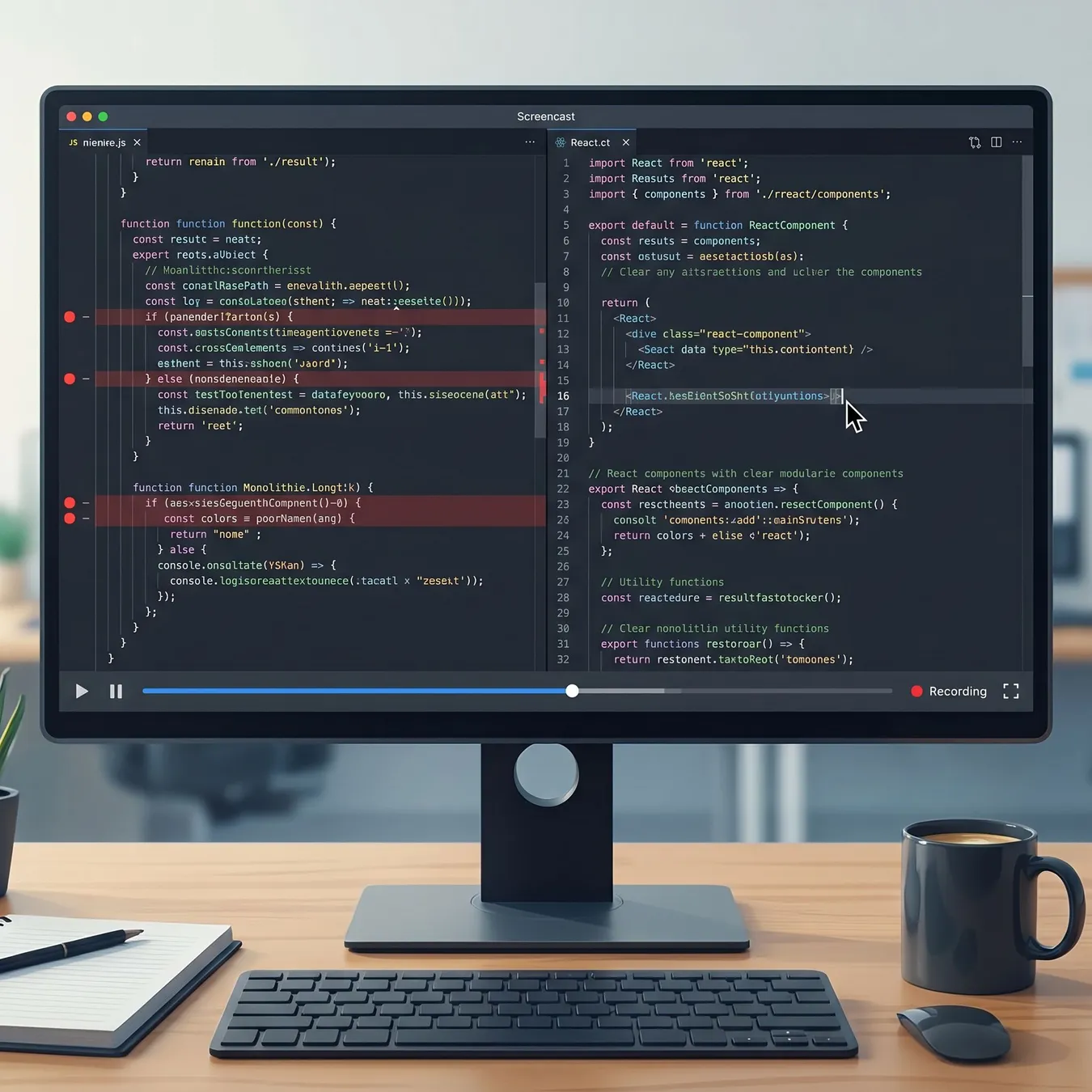
Watch our process for refactoring fragile AI logic into production-grade systems.
Thank you for exploring our guide on AI code rescue. We look forward to helping you build a more stable and scalable future for your product.