
How to Evaluate and Manage Technical Debt
Technical debt is the inevitable byproduct of shipping software in a competitive market. While often viewed as a failure, it is more accurately described as a financial instrument: a loan taken against future engineering time to achieve immediate product goals.
To effectively manage technical debt, leadership must move beyond seeing it as a 'mess' and start treating it as a strategic variable. This guide provides a framework for identifying, quantifying, and resolving the architectural shortcuts that slow down your team.
33%
Engineering time lost to debt
42%
Higher churn in high-debt teams
2.5x
Slower feature delivery
How to Evaluate Technical Debt in Legacy Systems
The first step in evaluation is distinguishing between intentional and unintentional debt. Intentional debt is a conscious trade-off for speed; unintentional debt arises from poor practices or shifting requirements.
When learning how to evaluate technical debt in legacy systems, you must look at both the code quality and the operational drag it creates. High debt often manifests as 'fear of change' in the codebase.
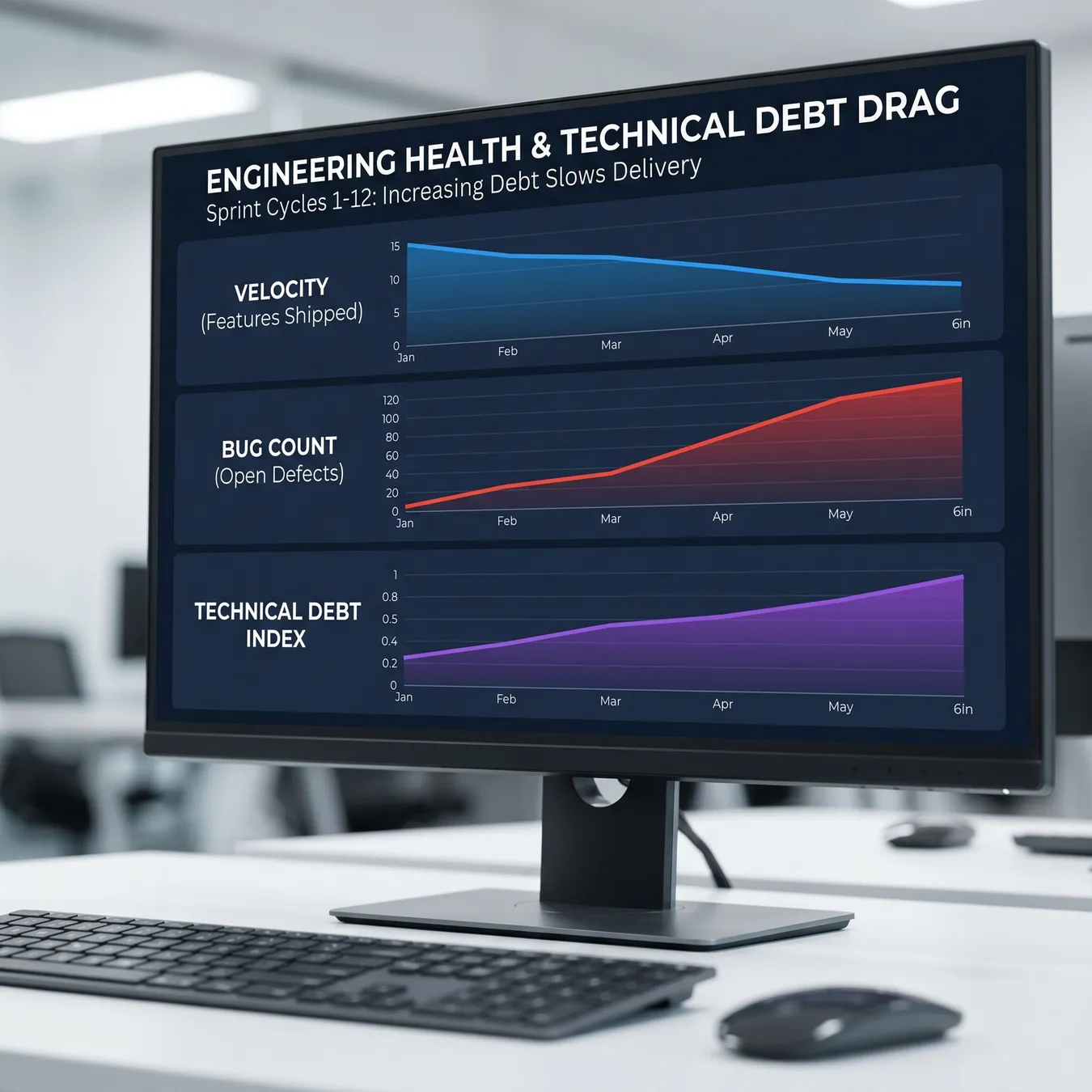
Visualizing the correlation between debt accumulation and velocity drop.
Key Indicators of Systemic Debt
- Fragile deployments that require manual intervention
- Lack of automated test coverage for critical paths
- Outdated dependencies and unpatched security vulnerabilities
- High 'bus factor' where only one person understands a module
- Circular dependencies and tight coupling between services
How to Manage Technical Debt Effectively
Successful leaders don't aim for zero debt; they aim for manageable debt. Learning how to manage technical debt requires a consistent process of discovery and prioritization.
Info.
// The Debt Interest Rate
Categorizing Your Debt
| Category | Description | Urgency |
|---|---|---|
| Critical | Blocks releases or causes outages | Immediate |
| Frictional | Slows down daily development | Next Sprint |
| Strategic | Architectural misalignment | Quarterly |
Technical Debt Best Practices for Engineering Leaders
Implementing technical debt best practices involves cultural shifts as much as technical ones. It requires transparency between the engineering team and product stakeholders.
Maintain a visible technical debt backlog
Allocate 20% of every sprint to refactoring
Use automated linting and static analysis
Document the 'why' behind architectural shortcuts
Ignore debt until the system stops scaling
Blame previous developers for legacy code
Refactor without clear performance or velocity goals
Hide debt from non-technical stakeholders
Managing Debt in Agile Workflows
The relationship between agile and technical debt is complex. While agile encourages speed, it can lead to 'feature factories' that ignore underlying stability.
A Framework for Prioritizing Debt Resolution
Not all debt is worth paying back. Use a quadrant-based approach to determine which issues require immediate intervention and which can be deferred.
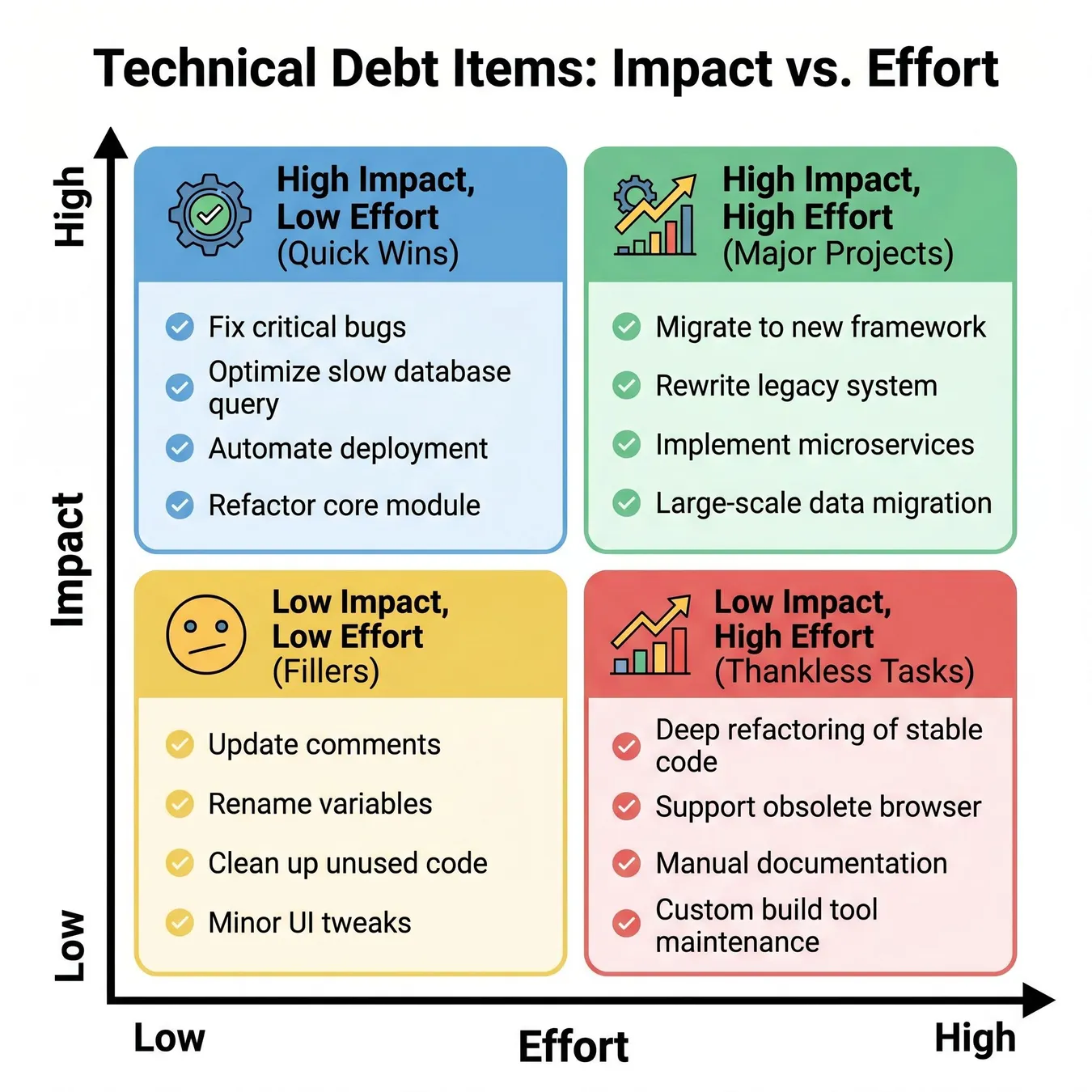
The Impact-Effort Matrix for prioritization.
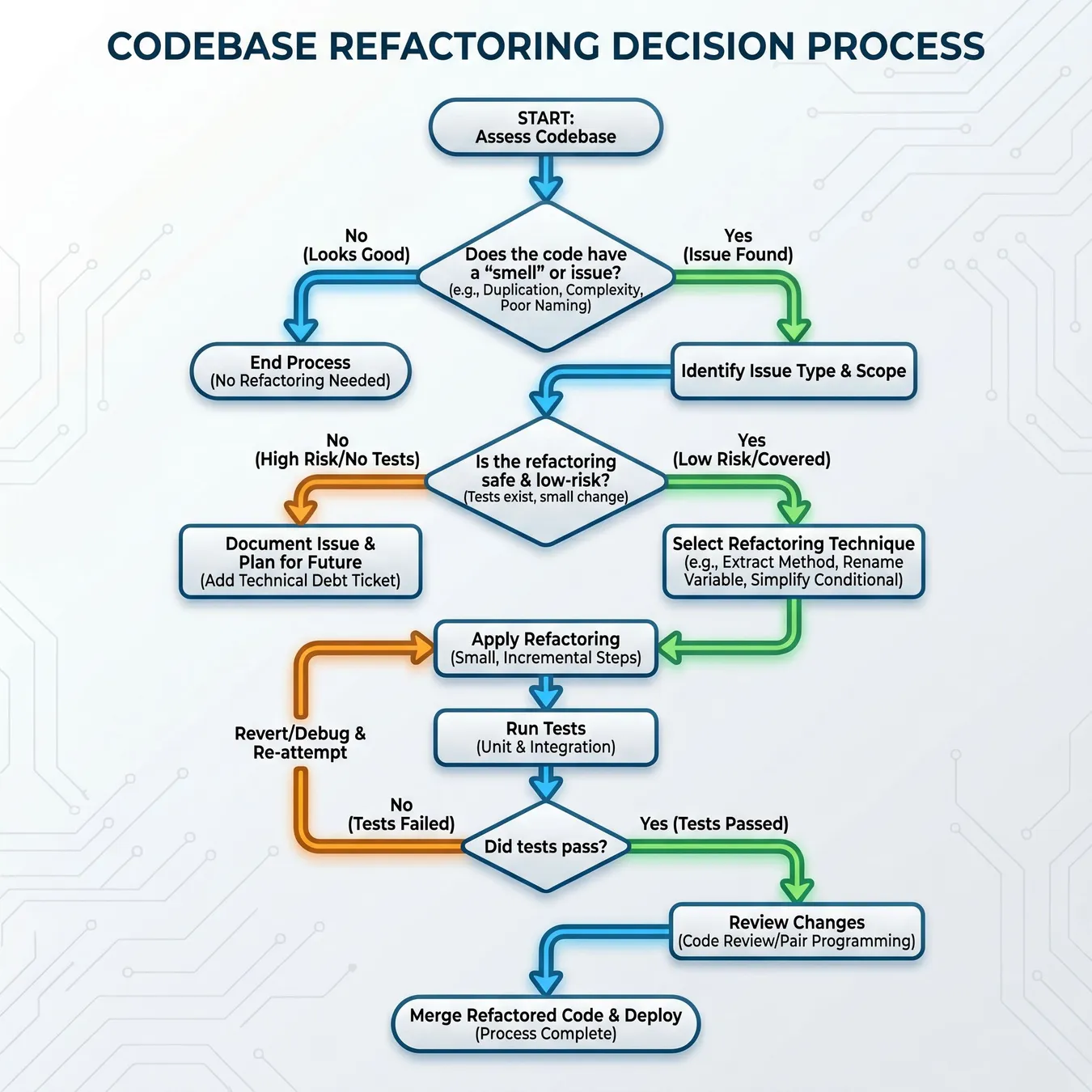
Decision tree: To refactor or to defer?
The Cost of Delay
When you manage technical debt, you must calculate the cost of delay. If a refactor saves 10 hours a week for a 5-person team, the ROI is realized in months, not years.
How to Handle Technical Debt in Infrastructure
Debt isn't limited to application code. Often, the most paralyzing issues reside in the cloud configuration, CI/CD pipelines, and database schemas.
Addressing infrastructure technical debt is critical for scaling. Manual server setups or brittle scripts create bottlenecks that no amount of code refactoring can fix.
Common Infrastructure Debt Patterns
Hardcoded environment variables
Lack of Infrastructure as Code (IaC)
Over-provisioned or zombie resources
Single points of failure in network topology
The Impact of Debt on Product Velocity
When debt accumulates, engineering velocity slows to a crawl. This creates a vicious cycle where teams take more shortcuts to meet deadlines, further increasing the debt load.
Technical debt is like a credit card. You can use it to buy time today, but if you don't pay it back, the interest will eventually consume your entire budget.
Ward Cunningham · Inventor of the Tech Debt Metaphor
Measuring the Drag
To justify refactoring to the board, you need data. Track metrics like 'Change Failure Rate' and 'Mean Time to Recovery' to show the tangible cost of a brittle system.
Refactoring vs. Rewriting: Making the Choice
One of the hardest decisions is knowing how to refactor legacy code versus when to scrap it entirely. A total rewrite is rarely the answer, but sometimes the foundation is too cracked to save.
Trade-off
3 pros · 3 cons
Pros
Lower risk of regression
Immediate incremental value
Keeps existing business logic
Cons
Takes longer to see major change
Can be limited by old architecture
Harder to sell as a 'big win'
When to Consider a Rewrite
A rewrite is appropriate only when the cost of maintaining the legacy system exceeds the cost of a new build, or when the technology stack is no longer supported.
Technical Debt in the Startup Lifecycle
For early-stage companies, debt is often necessary to find product-market fit. However, many founders struggle with mvp software development challenges when that debt comes due during a growth phase.
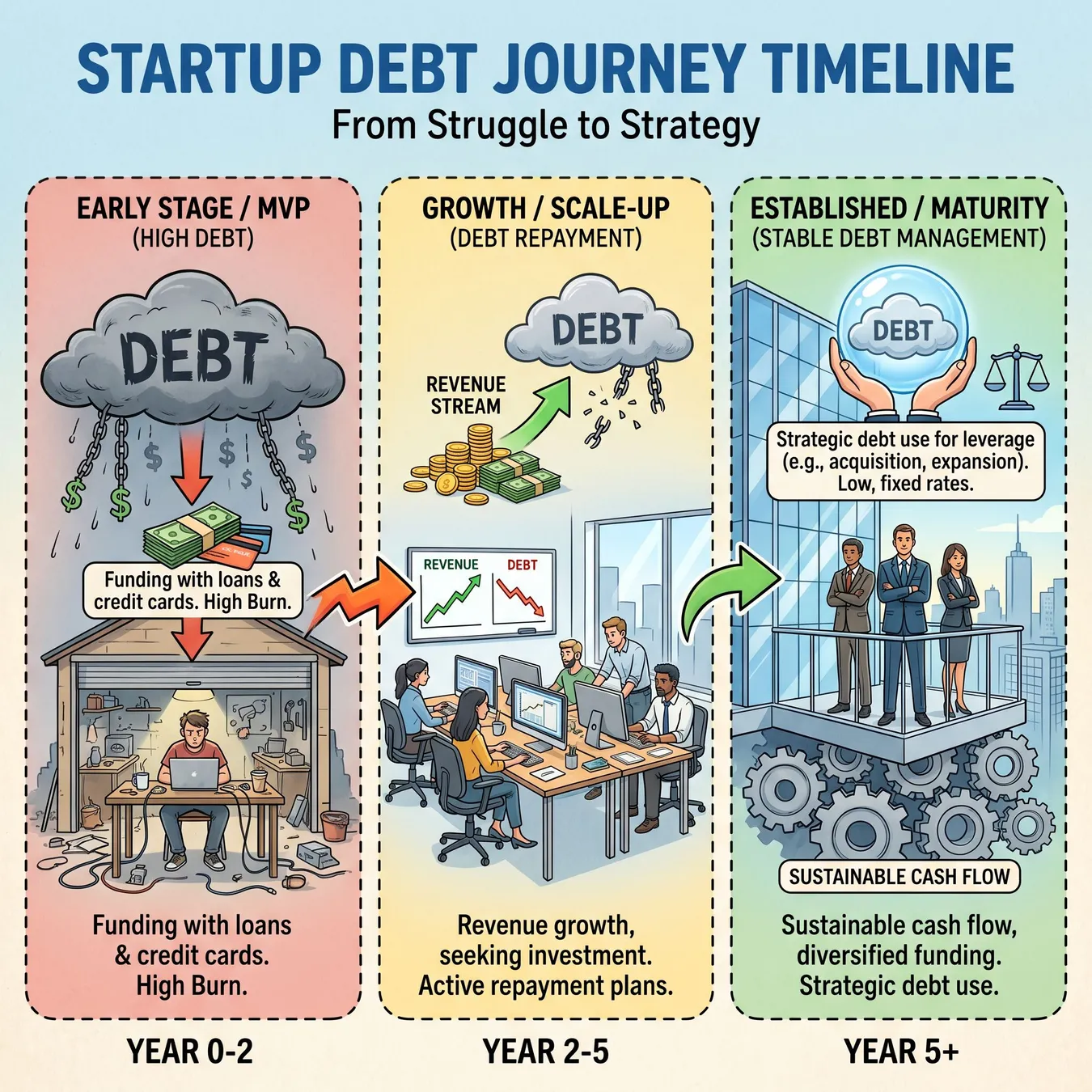
The lifecycle of technical debt in a growing company.
The Series A Debt Crisis
Many startups hit a wall after fundraising because their prototype cannot handle the influx of new users. This is the moment where 'vibe-code' must be hardened into production software.
How Studio 402 Helps Manage Technical Debt
At Studio 402, we specialize in rescuing products that have hit a technical ceiling. We don't just point out the mess; we provide the engineering muscle to clean it up while keeping your product moving.
Whether you are dealing with a brittle legacy monolith or an AI-generated prototype that won't scale, our team audits the architecture and implements a sustainable path forward.
01 / 03
phase 01 / 03
Technical Audit
phase 02 / 03
Prioritization Roadmap
phase 03 / 03
Execution & Hardening
Frequently Asked Questions
Restore Your Engineering Velocity
Stop letting legacy debt hold back your roadmap. Let's audit your system and build a path to stability.
Keep reading