
DevOps for SaaS: Engineering High-Availability Platforms
Modern SaaS companies face a unique set of infrastructure challenges. Unlike single-tenant software, a devops saas platform must handle multi-tenant isolation, dynamic scaling, and 99.99% availability while supporting rapid feature releases.
- Multi-tenancy
- High Availability
- CI/CD Automation
- Cloud Native
The Core Pillars of DevOps for SaaS Platforms
Engineering a devops saas environment requires more than just automated scripts. It demands a holistic approach to platforms for agile saas development at scale, ensuring that infrastructure grows alongside your customer base.
- Infrastructure as Code (IaC) for reproducible environments
- Automated tenant provisioning and isolation
- Continuous integration and zero-downtime deployment
- Real-time observability and proactive alerting
- Security-first pipeline architecture
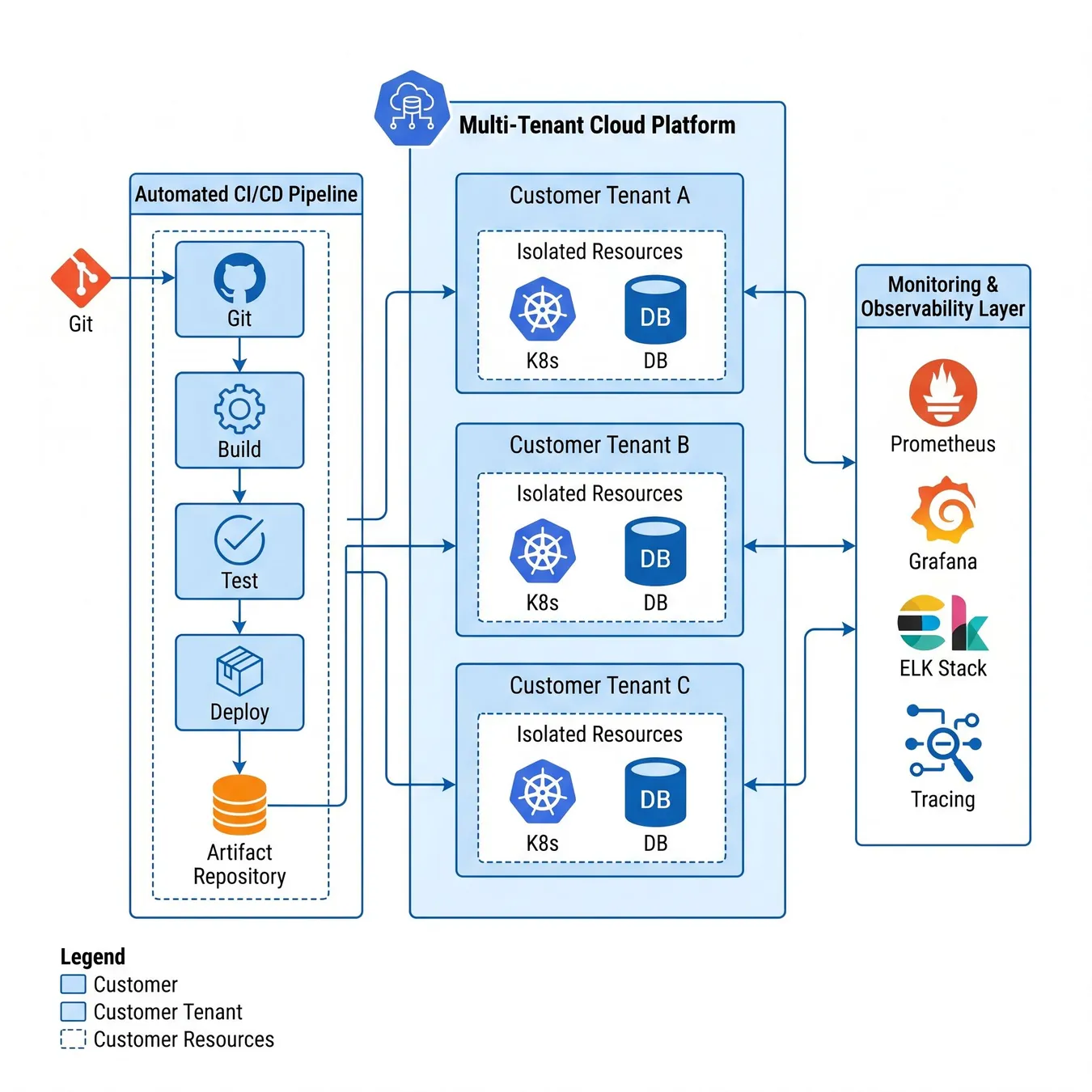
The architectural foundation of a high-availability SaaS platform.
Achieving High Availability in Multi-Tenant Environments
Reliability is the currency of SaaS. To maintain managed saas applications effectively, teams must implement redundant systems that can survive regional cloud outages without impacting user data or access.
99.99%
Uptime Target
< 5 min
Recovery Time
100%
Automated Deploys
Scaling Agile SaaS Development
As your user base grows, your engineering team needs a cloud platform engineering foundation to prevent bottlenecks. This allows developers to self-serve infrastructure without compromising security.
Info.
// Scaling Strategy
Infrastructure as Code: The SaaS Blueprint
Using tools like Terraform or Pulumi ensures that every tenant environment is identical. This consistency is vital for debugging and maintaining security compliance across thousands of instances.
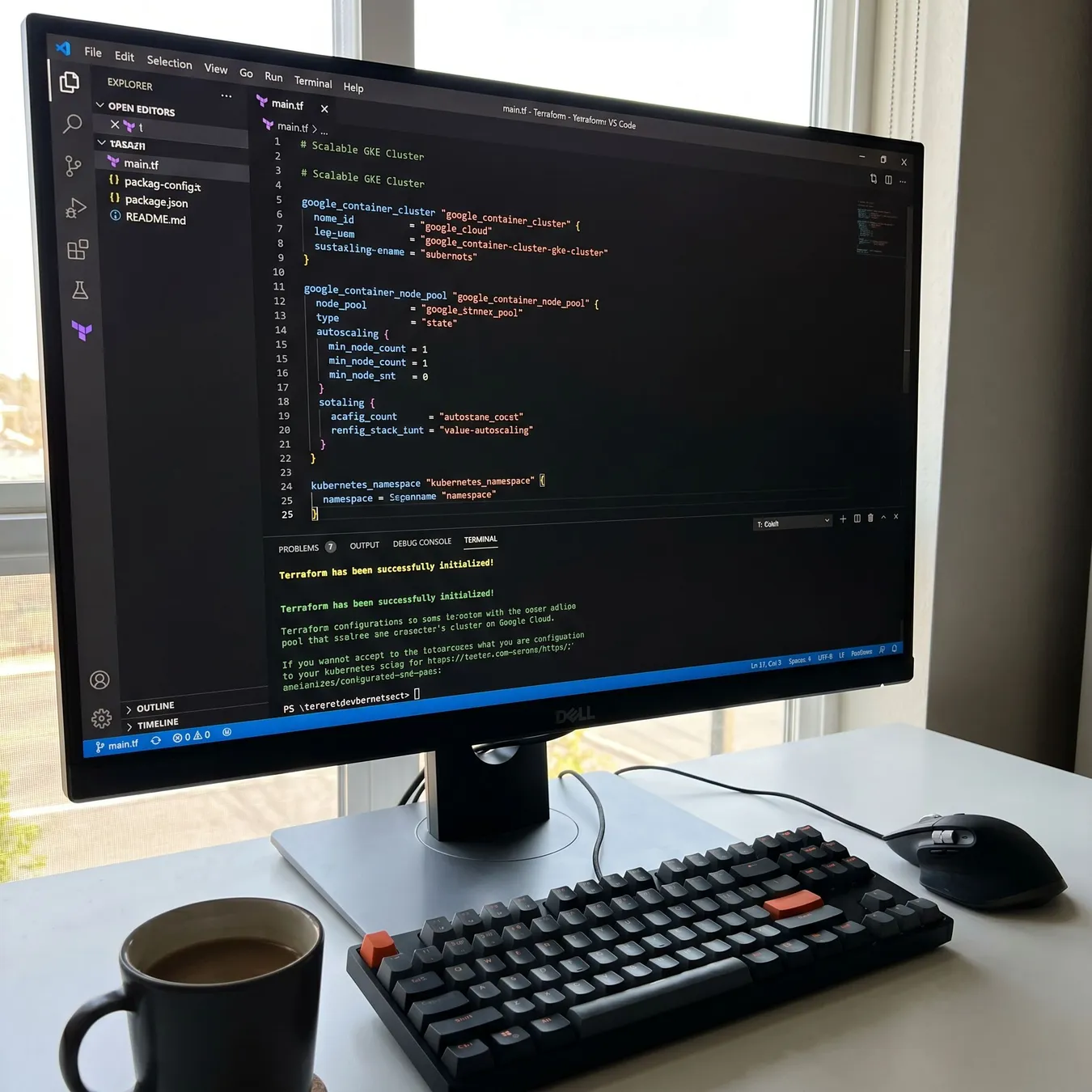
Infrastructure as Code ensures consistency.

Automated environment management.
CI/CD Strategies for Zero-Downtime SaaS
For SaaS products, downtime equals lost revenue. Implementing blue-green or canary deployments allows teams to test new features in production with minimal risk to the broader user base.
- 01
Automated build and unit testing
- 02
Staging environment validation with production-like data
- 03
Canary release to a small subset of tenants
- 04
Full rollout after health check confirmation
- 05
Automated rollback on error detection
Monitoring and Observability for SaaS
Standard monitoring isn't enough for multi-tenant apps. You need tenant-aware observability to understand how specific customers are experiencing your platform and where performance bottlenecks exist.
| Metric Type | SaaS Focus | Tooling Example |
|---|---|---|
| Availability | Per-tenant uptime | Datadog / Prometheus |
| Performance | API Latency by Tier | New Relic / OpenTelemetry |
| Cost | Unit cost per tenant | CloudHealth / Kubecost |
Security and Compliance in the Pipeline
SaaS platforms are high-value targets. By securing cloud infrastructure directly within the CI/CD pipeline, you ensure that every code change is audited for vulnerabilities before it ever reaches production.
Encrypt data at rest and in transit
Use IAM roles with least-privilege access
Automate security scanning in CI/CD
Regularly rotate secrets and keys
Hardcode credentials in application code
Ignore container vulnerability reports
Grant broad administrative access
Skip logging of administrative actions
Managing Multi-Cloud and Hybrid SaaS
Some SaaS providers must support multiple cloud regions or even hybrid deployments for enterprise clients. This requires a provider-agnostic DevOps strategy that abstracts the underlying infrastructure.
The Role of Kubernetes in SaaS Scaling
Kubernetes has become the de facto standard for SaaS platforms. It provides the orchestration needed to manage thousands of containers, ensuring high availability through self-healing and auto-scaling.
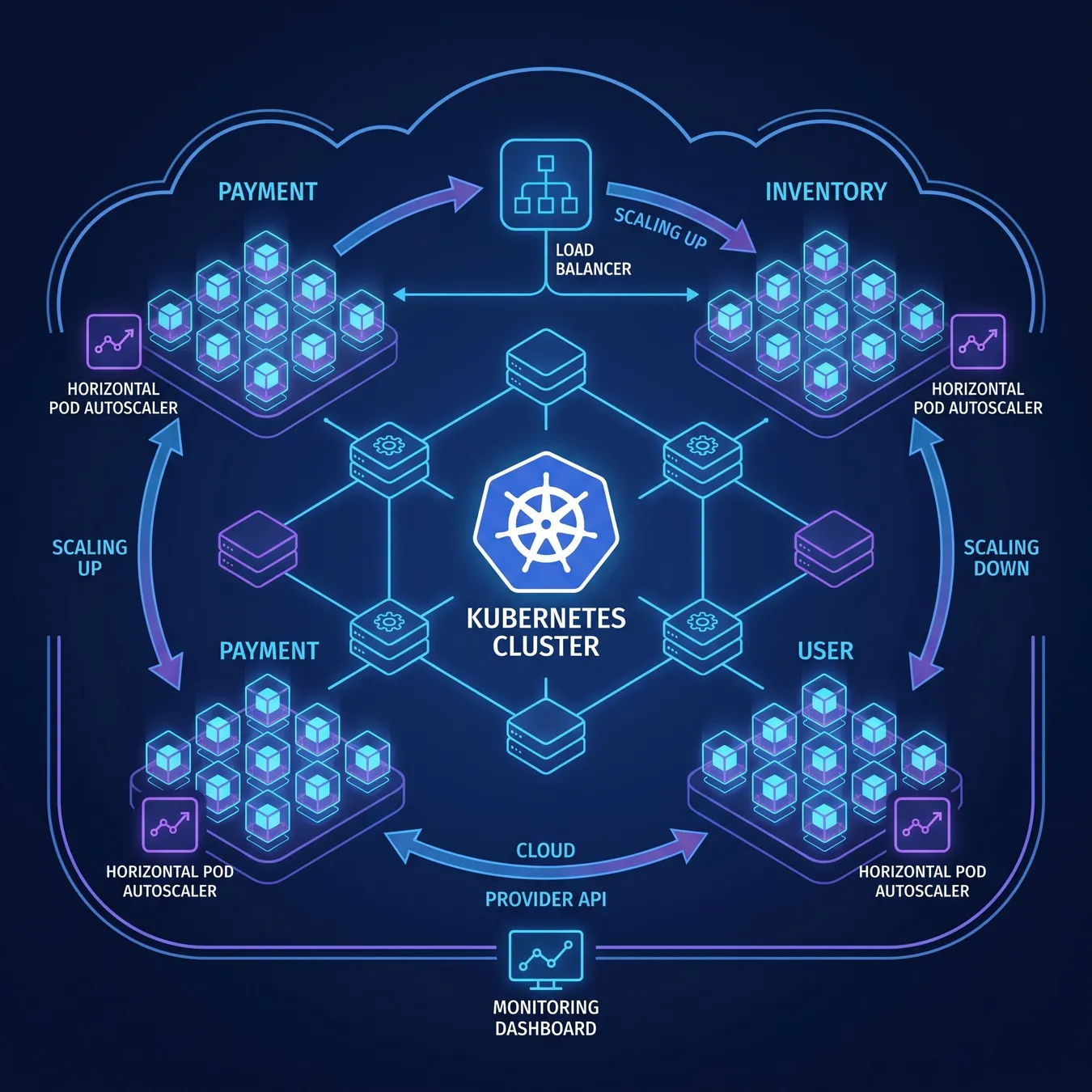
Kubernetes provides the orchestration layer for modern SaaS.
Optimizing SaaS Infrastructure Costs
As a SaaS grows, cloud bills can spiral. Effective DevOps involves continuous cost optimization, using spot instances for non-critical workloads and right-sizing resources based on actual tenant usage.
Building for Global SaaS Performance
Latency kills user experience. Implementing a scalable cloud architecture ensures that your application remains responsive for users across the globe by leveraging edge computing and CDN distribution.
Database DevOps for SaaS
Managing database migrations across a multi-tenant platform is one of the hardest DevOps challenges. Automated schema management and zero-downtime migrations are essential for maintaining data integrity.
The Evolution of SaaS Platform Engineering
We are moving toward a world where the platform itself is a product. By focusing on the internal developer experience, SaaS companies can ship faster while maintaining the high standards required for production use.
SaaS DevOps FAQ
Bridging the Gap: From Code to Production Scale
Building a SaaS product is only half the battle. The other half is ensuring it survives the real world. At Studio 402, we specialize in the aws cloud devops required to turn fragile prototypes into durable, high-availability platforms.
Whether you are launching a new MVP or scaling a seed-stage product, our team provides the platform engineering depth needed to automate your releases, secure your data, and optimize your cloud spend.
How We Build Your SaaS Foundation
01 / 04
phase 01 / 04
Audit & Strategy
phase 02 / 04
Infrastructure Setup
phase 03 / 04
Pipeline Automation
phase 04 / 04
Observability & Handover
Our goal is to make infrastructure invisible so your developers can focus entirely on building features that your customers love.
Studio 402 Engineering Team · Platform Specialists
Ready to Scale Your SaaS Platform?
Don't let manual deployments and infrastructure debt slow your growth. Let's build a platform that scales with your ambition.
Build a Scale-Ready SaaS Platform
Get expert DevOps and platform engineering to scale your SaaS product with confidence.
Explore More Resources
Keep reading
More in Cloud & DevOps Engineering
Trusted by venture-backed startups to scale production infrastructure.
Studio 402 | Product Engineering & Systems
Our approach to DevOps for SaaS is rooted in real-world operational experience. We don't just hand over scripts; we build the systems that sustain your business.
Automated multi-tenant provisioning
Zero-downtime deployment pipelines
Tenant-aware observability dashboards
Automated security compliance checks
High availability is not an accident; it is the result of intentional engineering. By prioritizing automation and observability, we help SaaS companies reduce their operational drag and increase their shipping velocity.
From early-stage MVPs to growth-stage platforms, the infrastructure choices you make today will determine your ability to scale tomorrow. Partner with a studio that understands the full stack.