
Auditing and Reducing Infrastructure Technical Debt
Infrastructure technical debt represents the accumulated cost of choosing fast, manual, or temporary cloud configurations over sustainable, automated solutions. Left unchecked, this debt creates fragile environments that fail under load and block engineering velocity.
30-50%
Engineering time lost to debt
4.5x
Higher risk of critical downtime
20%
Average cloud spend waste
What is Infrastructure Technical Debt?
Unlike application debt, infrastructure debt lives in your deployment pipelines, network configurations, and cloud resource settings. It often manifests as 'click-ops'—manual changes made in the console that aren't captured in code.
- Manual resource provisioning without Infrastructure as Code (IaC)
- Hardcoded secrets and environment variables
- Outdated OS images and unpatched dependencies
- Over-provisioned resources leading to cost bloat
- Lack of centralized logging and observability
The Cost of Ignoring Infrastructure Gaps
When you delay an audit, you aren't just slowing down; you are increasing your blast radius. A single misconfigured IAM role or an unpatched server can lead to catastrophic security breaches.
Effective managing technical debt requires a shift from reactive patching to proactive auditing. Without this, your team will spend more time 'keeping the lights on' than shipping new features.
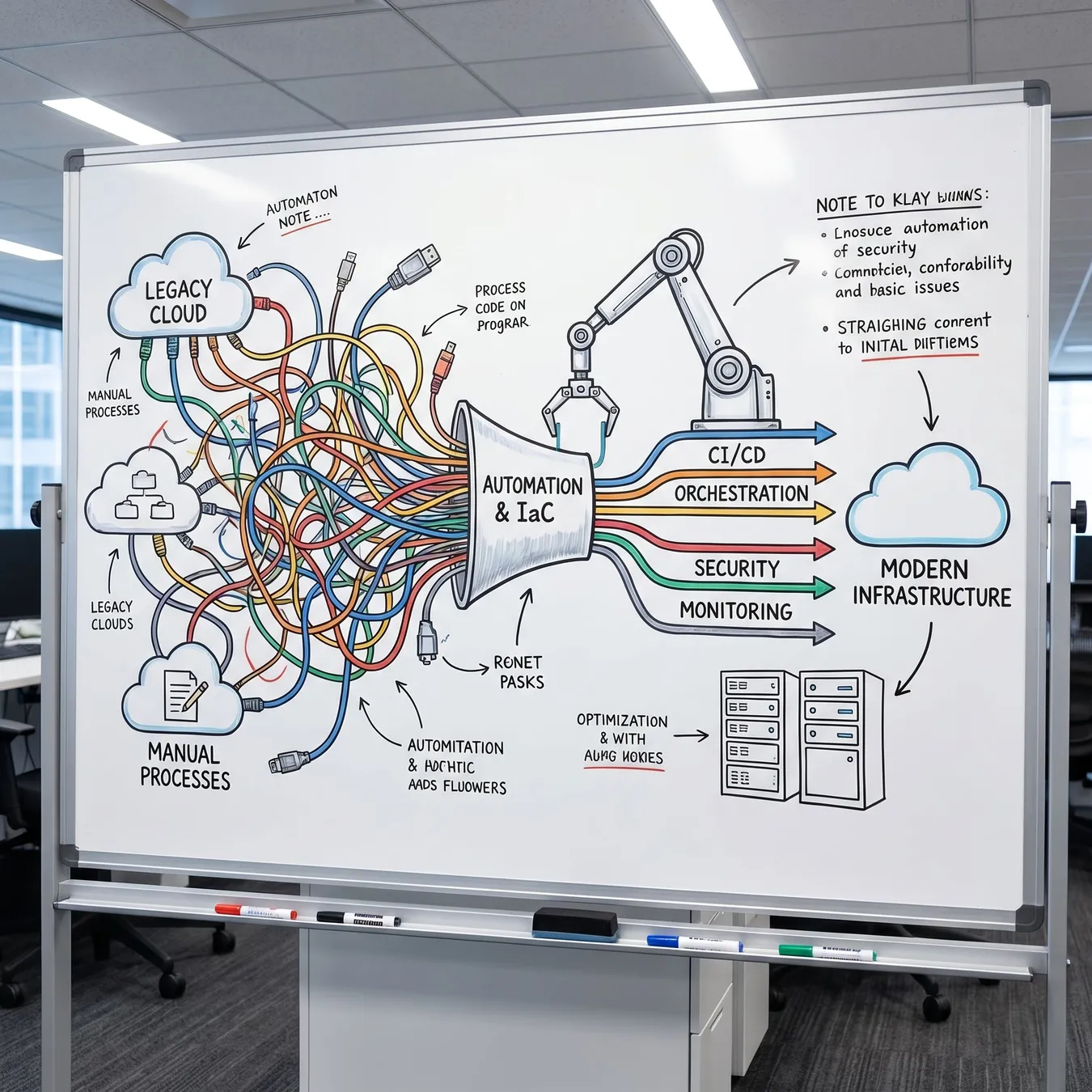
Visualizing the transition from tangled manual debt to streamlined automation.
How to Conduct a Comprehensive Infrastructure Audit
A successful audit looks beyond the surface. It examines the 'how' and 'why' of your current setup to identify where manual bottlenecks are slowing you down.
Step 1: Inventory and Mapping
You cannot fix what you cannot see. Start by cataloging every resource across your AWS, GCP, or Azure accounts, including 'shadow IT' instances spun up for testing and never deleted.
Step 2: Security and Compliance Review
Focus on securing cloud infrastructure by auditing permissions, encryption at rest, and network ingress/egress rules. Security debt is the most dangerous form of infrastructure debt.
Quantifying the Drag on Your Team
To get stakeholder buy-in for a refactor, you must speak the language of business. This means quantifying technical debt in terms of lost hours, increased latency, and cloud spend.
| Debt Type | Impact | Refactor Effort |
|---|---|---|
| Manual Deploys | High Risk / Low Speed | Medium |
| No Monitoring | High Downtime | Low |
| Legacy OS | Security Risk | High |
Prioritizing the Refactor Strategy
You cannot fix everything at once. Use a risk-based matrix to decide which infrastructure components require immediate intervention and which can be handled in later sprints.
Automate high-frequency manual tasks first
Store all infrastructure configuration in version control
Implement least-privilege access across all environments
Don't perform 'big bang' migrations without rollbacks
Don't ignore small alerts that signal systemic fragility
Don't hardcode secrets in your IaC templates
Modernizing with Infrastructure as Code (IaC)
The primary antidote to infrastructure debt is automation. By moving to Terraform, Pulumi, or CloudFormation, you ensure that your environment is reproducible and auditable.
Tip.
// The Golden Rule of IaC
Eliminating Manual Bottlenecks
Manual bottlenecks often hide in the release process. If a human needs to approve a ticket to scale a database or rotate a certificate, you have infrastructure debt.
- 01
Identify manual touchpoints in the CI/CD pipeline
- 02
Script the repetitive tasks using CLI tools
- 03
Integrate automated testing for infrastructure changes
- 04
Implement self-healing policies for common failure modes
The Infrastructure Refactor Timeline
01 / 04
phase 01 / 04
Discovery
phase 02 / 04
Risk Assessment
phase 03 / 04
Foundation Building
phase 04 / 04
Migration
Maintaining a Debt-Free Environment
Auditing is not a one-time event. To stay agile, you must implement technical debt reduction strategies that include regular reviews and automated drift detection.
Drift Detection and Remediation
Use tools that alert your team when the live environment deviates from the defined code. This prevents 'configuration drift' from re-introducing debt over time.
Common Infrastructure Debt FAQ
Bridging the Gap to Production Excellence
At Studio 402, we don't just identify problems; we build the execution infrastructure that solves them. We specialize in turning fragile, manual cloud setups into resilient, automated platforms.
Whether you are recovering from a 'vibe-coded' prototype or preparing for a Series B scale-up, our team provides the senior engineering depth required to harden your systems.
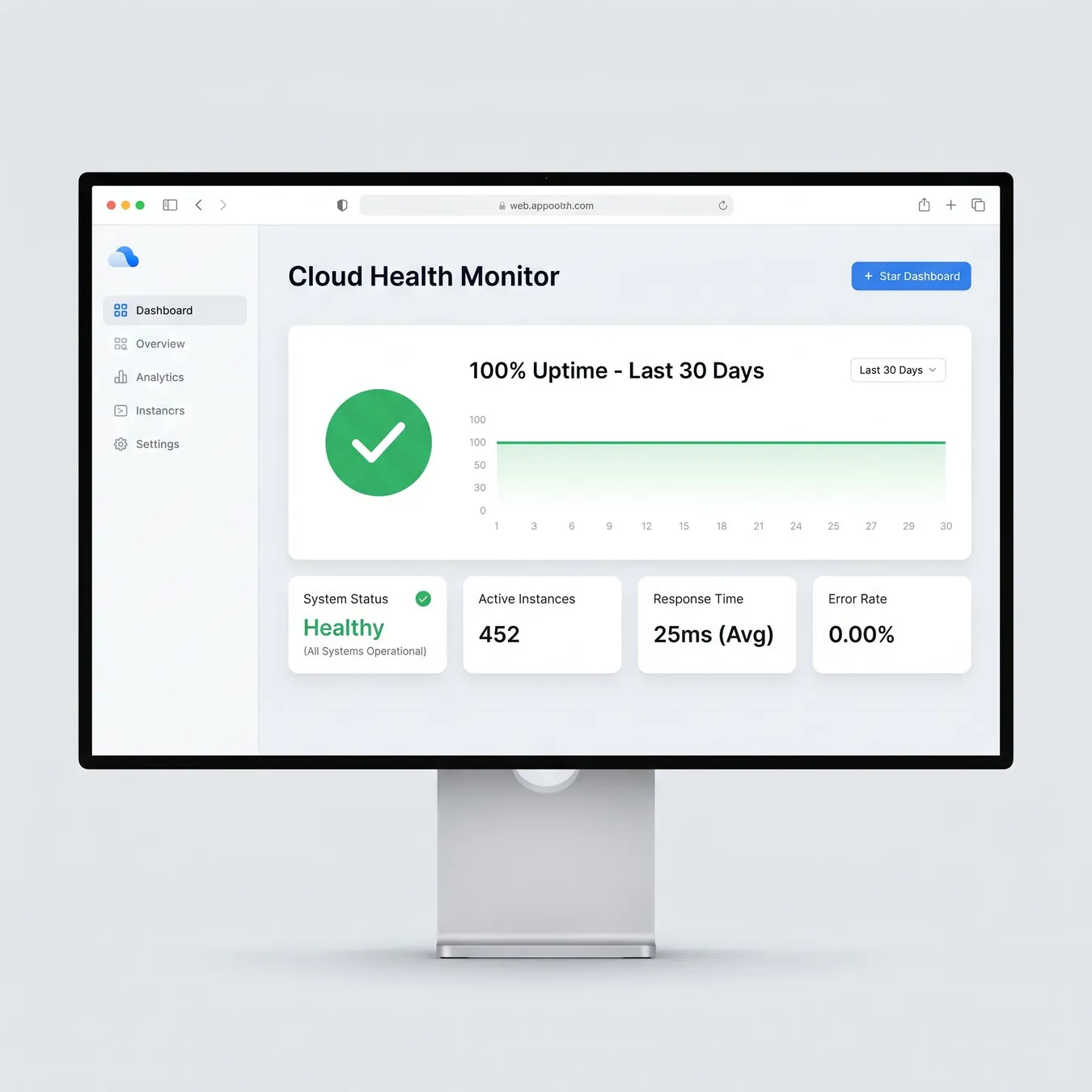
Real-time observability is the hallmark of a healthy infrastructure.

Automation empowers your team to focus on building, not fixing.
How Studio 402 Can Help
We offer comprehensive audits and hands-on refactoring to ensure your cloud environment is a catalyst for growth, not a liability. Our approach combines architecture review with rapid execution.
Full cloud resource inventory and cost optimization
Security hardening and IAM permission cleanup
Migration of manual resources to Terraform/IaC
CI/CD pipeline optimization for faster releases
Our Audit Methodology
We look at the intersection of security, cost, and performance. By identifying the 'drag' on your engineering team, we provide a roadmap that prioritizes high-impact fixes.
Studio 402 took our fragile AWS setup and turned it into a fully automated, SOC2-ready environment in weeks. We finally stopped worrying about downtime.
Sarah Jenkins · CTO, GrowthScale
Ready to Stabilize Your Infrastructure?
Don't let technical debt be the reason your next launch fails. Our senior engineers are ready to audit your stack and build a foundation that scales with your ambition.
Trusted by 50+ high-growth startups to manage production cloud scale.
Updated for July 2026
Start Your Infrastructure Audit
Identify fragile gaps and build a scalable cloud roadmap with our senior engineering team.
Keep reading
More in Cloud & DevOps Engineering
Additional Resources for Engineering Leaders
Building a culture of operational excellence starts with understanding the tools and frameworks available to your team. Explore our guides on cloud security and automation.
- Best practices for AWS multi-account strategy
- Implementing zero-trust networking in the cloud
- Automating patch management for legacy systems
- Cost-effective scaling for AI-native applications
Infrastructure is the silent partner in your product's success. When it works, no one notices. When it fails, everyone does. Let's make sure yours stays silent and strong.