
Implementing Continuous Delivery for Reliable Releases
Continuous delivery is a software engineering approach where teams produce software in short cycles, ensuring that the software can be reliably released at any time. By building a robust continuous delivery pipeline, organizations can automate software development lifecycle stages to reduce manual errors and improve speed.
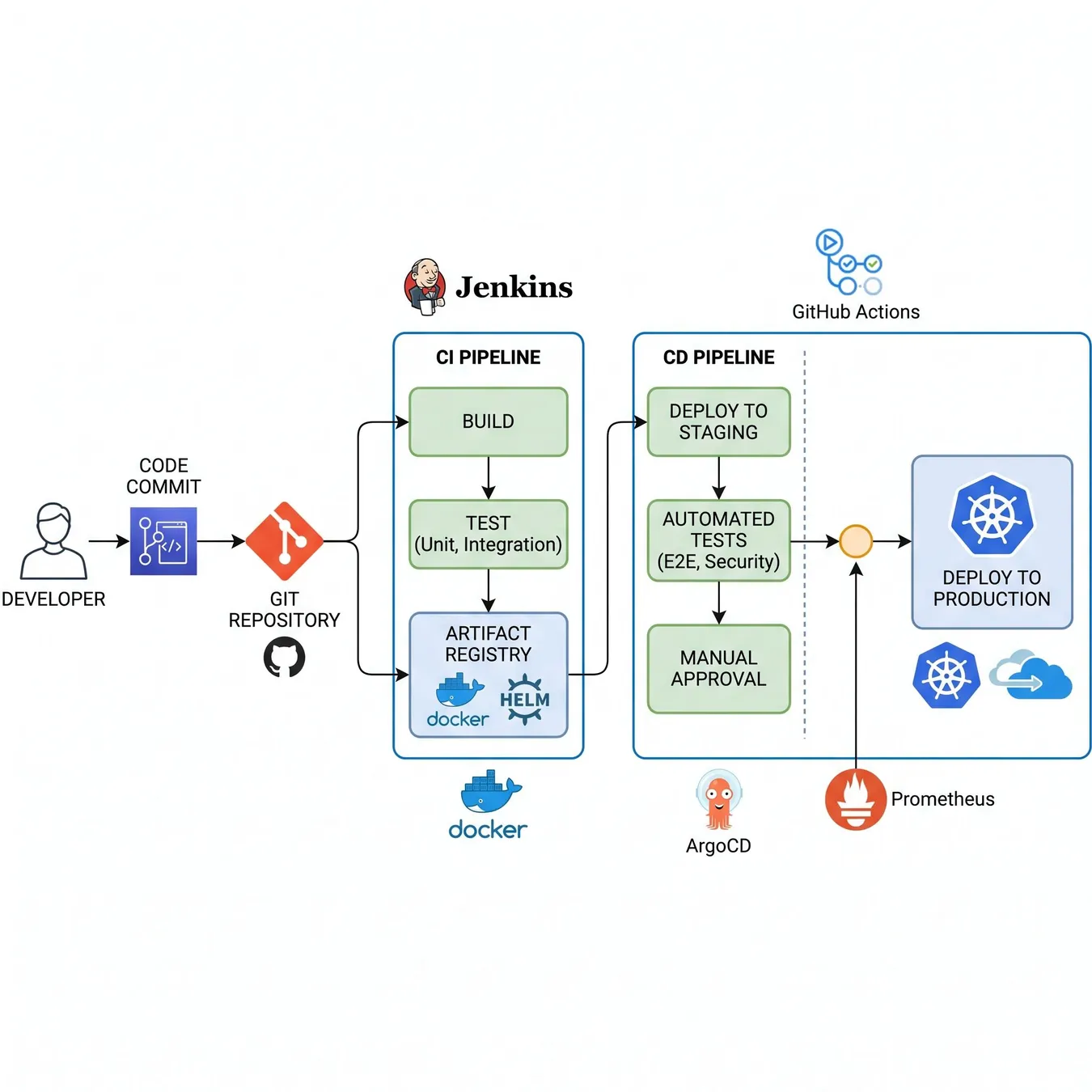
The core stages of a production-grade continuous delivery pipeline.
The Core Principles of Continuous Delivery Methodology
The continuous delivery methodology shifts the focus from infrequent, high-risk deployments to frequent, low-risk releases. This requires a culture of automation and a commitment to keeping the main branch in a deployable state at all times.
- Automate everything that can be automated.
- Keep everything in version control.
- Build quality into the process from the start.
- Done means released to users or ready for release.
- Everyone is responsible for the delivery process.
Stages of a Continuous Delivery Pipeline
A standard pipeline consists of several automated stages designed to validate the code. This includes the build phase, unit testing, integration testing, and finally, deployment to a staging environment for final verification.
01 / 04
phase 01 / 04
Source Stage
phase 02 / 04
Build Stage
phase 03 / 04
Test Stage
phase 04 / 04
Deploy Stage
Ensuring Reliable Software Releases
To achieve continuous delivery reliable software releases, teams must implement rigorous testing. This often involves software quality assurance automation to catch regressions before they reach the user base.
Tip.
// Release Small, Release Often
Essential Continuous Delivery Tools
Selecting the right continuous delivery tools depends on your stack and scale. Popular choices include Jenkins, GitHub Actions, and GitLab CI, which provide the orchestration layer for your automation.
| Tool Category | Popular Examples | Primary Use Case |
|---|---|---|
| CI/CD Orchestration | GitHub Actions, Jenkins | Pipeline management |
| Infrastructure as Code | Terraform, Pulumi | Environment provisioning |
| Containerization | Docker, Kubernetes | Consistent environments |
Security in the Delivery Pipeline
Automation should not come at the cost of safety. Integrating security checks directly into the pipeline, often called DevSecOps, involves securing cloud infrastructure through automated scanning and policy enforcement.

Integrating security gates within the automated release process.
Measuring Success with Velocity Metrics
Effective CD implementation should result in a lower lead time software development. By tracking DORA metrics, teams can quantify the impact of their pipeline improvements on business outcomes.
46x
Faster deployment frequency
2,500x
Shorter lead times
7x
Lower change failure rate
Common Challenges in CD Implementation
Many teams struggle with legacy codebases that lack tests or environments that are manually configured. Overcoming these hurdles requires a phased approach to automation and cultural buy-in.
Automate database migrations.
Use feature flags for dark launches.
Run tests in production-like environments.
Manual approvals for every minor change.
Ignoring flaky tests in the pipeline.
Deploying large, monolithic batches.
Advanced Strategies: Blue-Green and Canary Deploys
Advanced deployment strategies minimize downtime and risk. Blue-green deployments allow for instant rollbacks, while canary releases test new features on a small subset of users before a full rollout.
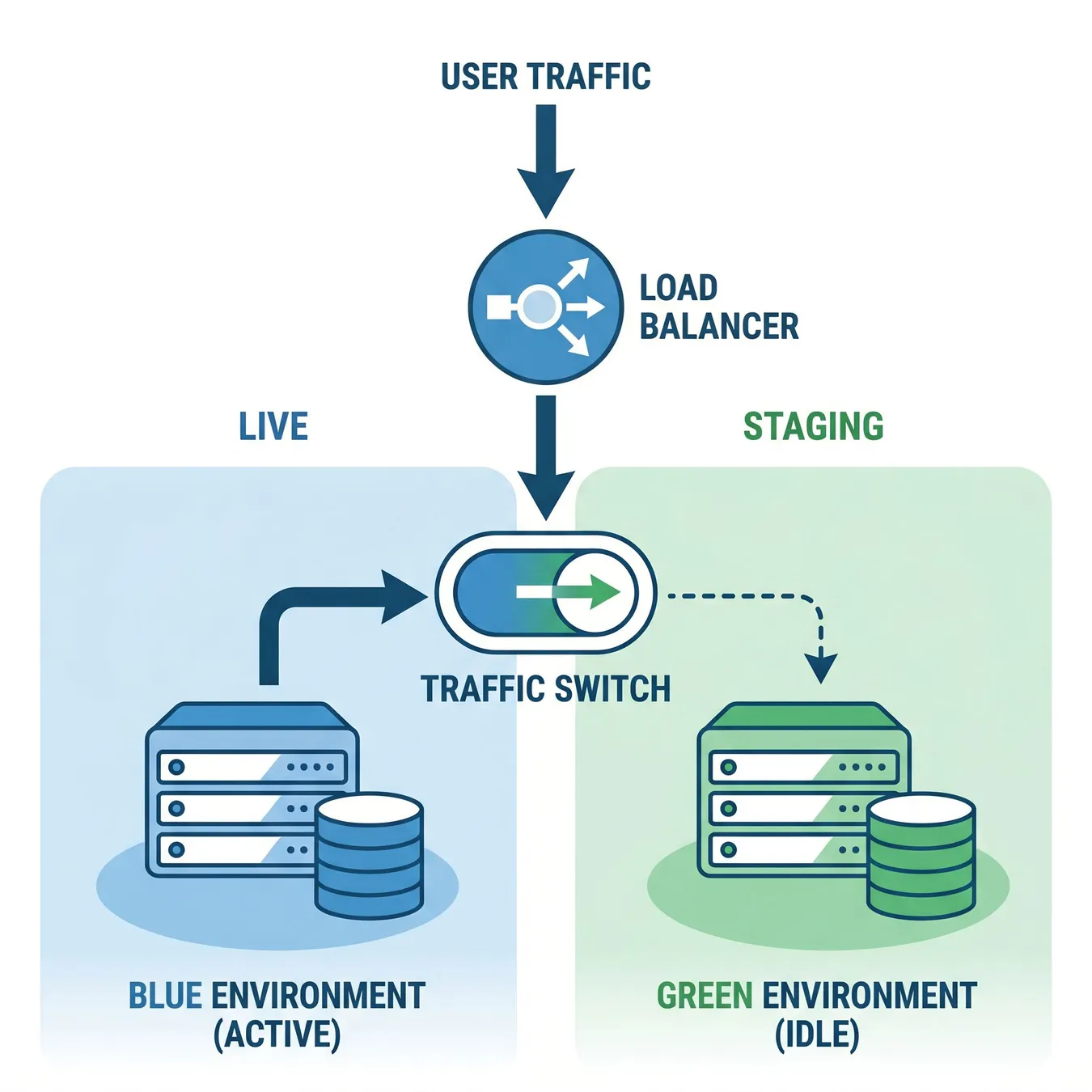
Blue-Green Deployment Strategy
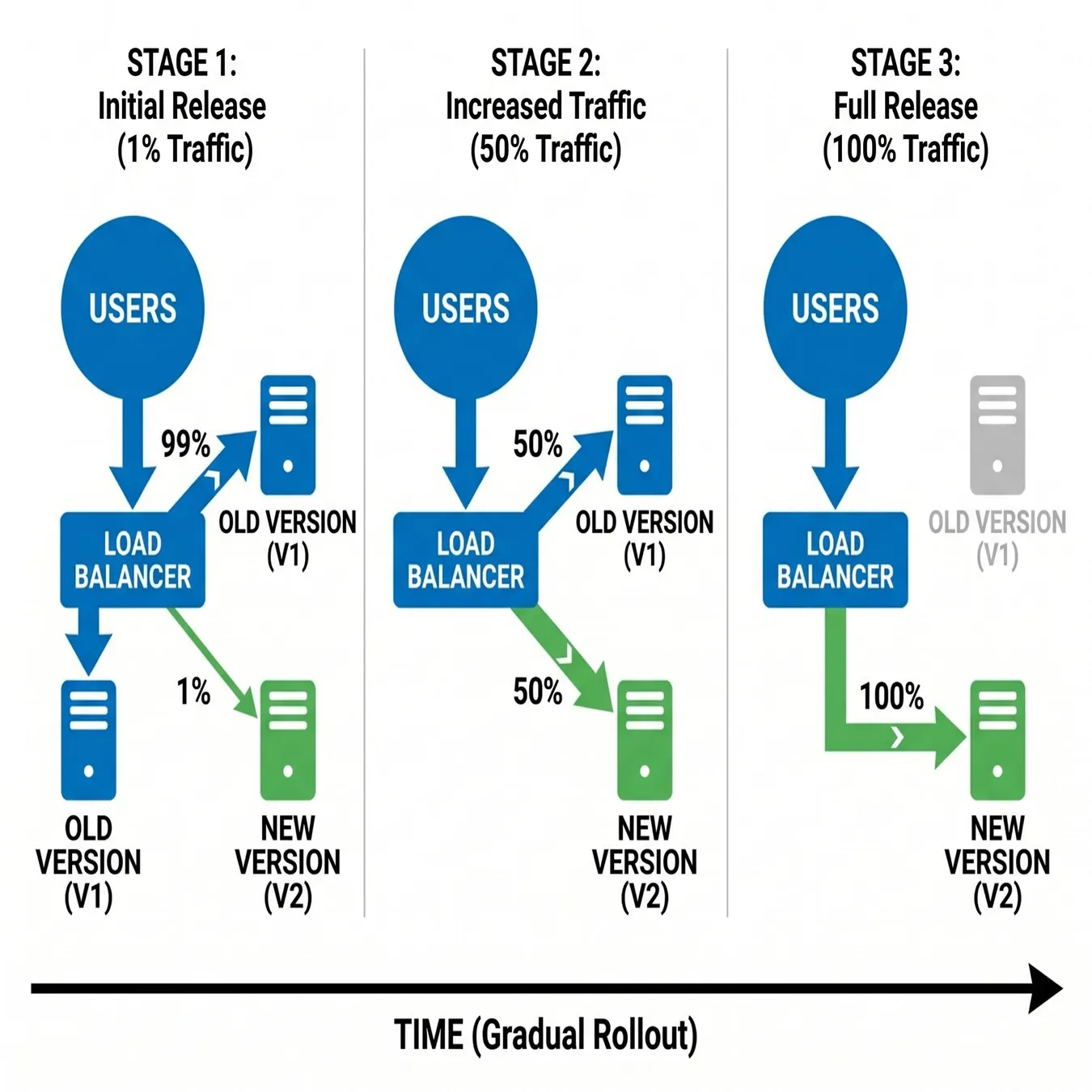
Canary Release Strategy
Infrastructure as Code (IaC) and CD
You cannot have reliable continuous delivery without consistent infrastructure. Managing your cloud resources as code ensures that your environments are reproducible and versioned alongside your application.
Benefits of IaC in Pipelines
- Elimination of configuration drift.
- Faster environment spin-up for testing.
- Audit trails for infrastructure changes.
- Simplified disaster recovery processes.
The Role of Containerization
Containers provide the consistency needed for code to run the same way on a developer's laptop as it does in production. This 'build once, run anywhere' capability is a cornerstone of modern CD.
Continuous Delivery vs. Continuous Deployment
While often used interchangeably, continuous delivery means code is always ready to be released, while continuous deployment means every change that passes tests is automatically pushed to production.
Trade-off
3 pros · 3 cons
Pros
Manual control over release timing
Lower risk for sensitive industries
Easier compliance auditing
Cons
Slower feedback from real users
Potential for manual bottlenecks
Release process can still feel heavy
Building a Culture of Quality
CD is as much a cultural shift as a technical one. It requires developers to take ownership of their code in production and operations teams to provide the platforms that enable self-service delivery.
Continuous Delivery is not just about the tools; it's about the discipline to keep your software in a releasable state every single day.
Senior DevOps Architect · Studio 402
Continuous Delivery Implementation Checklist
Version control for all application and infra code
Automated unit and integration tests
Automated build and artifact generation
Production-like staging environment
Automated deployment scripts
Monitoring and observability in place
How Studio 402 Accelerates Your Delivery
At Studio 402, we specialize in building the execution infrastructure that high-growth companies need. Whether you are struggling with manual releases or need a complete pipeline overhaul, our team provides the engineering depth to stabilize and scale your delivery.
Our Approach to CD Consulting
We don't just hand over a set of scripts. We partner with your team to design a custom delivery strategy that balances speed with the rigorous safety standards required for production-grade software.
Studio 402 transformed our release process from a monthly nightmare into a daily non-event. Our developers are happier and our product is more stable than ever.
Frequently Asked Questions
Next Steps for Your Engineering Team
Transitioning to a continuous delivery model is a journey. Start by automating your most painful manual step and build momentum from there. If you need expert guidance, our continuous delivery consulting can help you avoid common pitfalls.
Ready to Ship Faster and More Reliably?
Let's build the automated systems your product needs to scale. Contact Studio 402 today to start a conversation about your infrastructure.
Keep reading
More in Cloud & DevOps Engineering
- DevOps
- Cloud Infrastructure
- Automation
- Software Engineering