
Migrating from Monoliths to Microservices on AWS
Transitioning from a monolithic to microservices AWS architecture is a strategic move to unlock scalability and developer velocity. Many teams find that as their product grows, a single codebase becomes a bottleneck for deployment and performance.
- AWS Architecture
- Cloud Migration
- Scalability
- Microservices
Before diving into the technical execution, it is critical to evaluate the microservices vs monolith performance trade-offs. While microservices offer isolation, they introduce network latency that must be managed through proper cloud infrastructure planning and design.
Identifying the Need for Migration
The primary driver for re-architecting is often the presence of database performance bottlenecks. When a single database serves every function of a large application, lock contention and resource exhaustion become inevitable as traffic scales.
- Deployment cycles taking hours or days due to massive build sizes
- Scaling the entire application to support a single high-demand feature
- Difficulties in onboarding new engineers to a million-line codebase
- Frequent outages where a bug in one module crashes the whole system
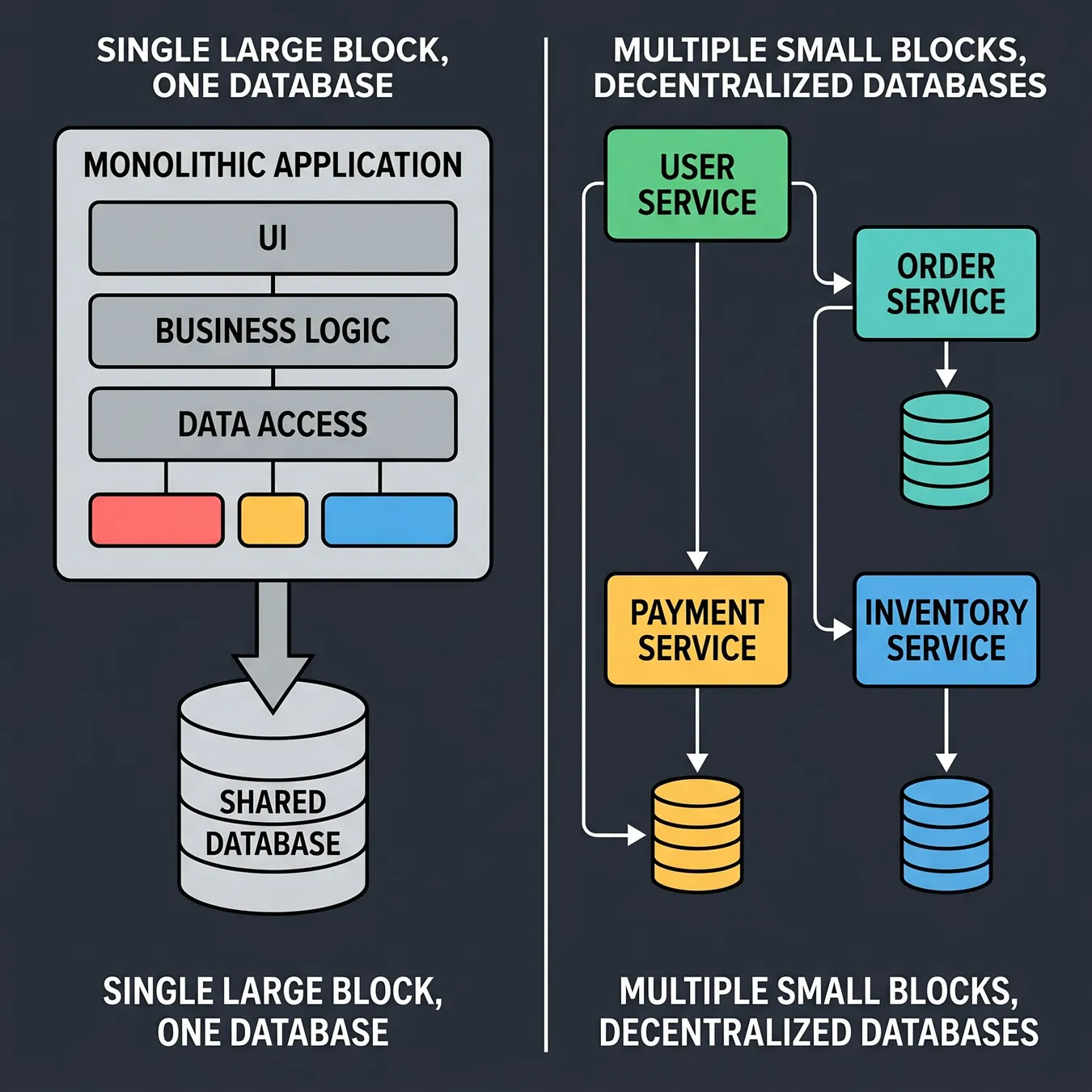
Visualizing the shift from shared resources to isolated service domains.
Strategic Cloud Infrastructure Planning and Design
Successful migration requires a blueprint that accounts for service discovery, inter-service communication, and data consistency. AWS provides a robust suite of tools to facilitate this transition, but they must be implemented with a clear operational roadmap.
Tip.
// Migration Tip
Core AWS Services for Microservices
| Service Category | AWS Tool | Primary Use Case |
|---|---|---|
| Compute | AWS Fargate | Serverless container execution |
| Orchestration | Amazon EKS | Managed Kubernetes for complex clusters |
| Communication | Amazon EventBridge | Event-driven asynchronous messaging |
| API Management | Amazon API Gateway | Unified entry point for services |
Solving Database Performance Bottlenecks
In a monolith, the database is often the hardest part to decouple. Migrating to microservices allows you to move from a 'one size fits all' database to purpose-built data stores like Amazon DynamoDB for key-value needs or Aurora for relational data.
40%
Latency Reduction
10x
Deployment Speed
99.99%
System Uptime
Avoiding the Distributed Monolith
A common failure mode is creating a microservices vs distributed monolith scenario where services are so tightly coupled that they cannot be deployed independently. This negates the benefits of migration and increases operational complexity.
Define clear bounded contexts for each service
Use asynchronous communication where possible
Automate your CI/CD pipelines from day one
Implement centralized logging and tracing
Share a single database across multiple services
Build services that require synchronous 'chain' calls
Migrate without a comprehensive testing strategy
Ignore the overhead of managing many small repos
The Migration Roadmap: Step-by-Step
01 / 05
phase 01 / 05
Decomposition
phase 02 / 05
Infrastructure Setup
phase 03 / 05
Pilot Service
phase 04 / 05
Data Decoupling
phase 05 / 05
Iterative Extraction
Operational Excellence with AWS Cloud DevOps
Managing a microservices fleet is impossible without professional aws cloud devops practices. Infrastructure as Code (IaC) using Terraform or AWS CDK ensures that your environments are reproducible and secure.

Observability is the backbone of a healthy microservices ecosystem.
Security Considerations in Microservices
Moving to microservices increases the 'attack surface' of your application. Implementing Zero Trust architecture and using AWS Secrets Manager for credential rotation are essential steps in securing your new infrastructure.
Enable VPC Flow Logs for network auditing
Implement mTLS for inter-service communication
Configure AWS WAF for API Gateway protection
Set up automated container vulnerability scanning
When to Reconsider Migration
Microservices are not a silver bullet. For small teams or early-stage startups, the operational overhead can outweigh the benefits. In some cases, a well-structured monolith is more efficient than a premature microservices to monolith transition.
Common Migration Challenges
Cost Management on AWS
Microservices can lead to higher AWS bills if not managed correctly. Utilizing Savings Plans, Spot Instances for non-critical workloads, and right-sizing your Fargate tasks are key to maintaining a cost-effective architecture.
Trade-off
3 pros · 3 cons
Pros
Independent scaling of services
Fault isolation and resilience
Technology stack flexibility
Cons
Increased network costs
Higher management overhead
Complex monitoring requirements
Case Study: Scaling to Millions of Users
We have seen companies transform their delivery speed by adopting these patterns. By breaking down a legacy monolith, one partner reduced their release cycle from once a month to multiple times per day.
The migration to AWS microservices allowed us to finally address our database bottlenecks and ship features without fearing a total system collapse.
Technical Lead · SaaS Growth Startup
How Studio 402 Accelerates Your Migration
At Studio 402, we specialize in rescuing fragile systems and re-architecting them for production-grade scale. Whether you are dealing with a vibe-coded prototype or a decade-old monolith, we provide the senior engineering depth to execute your AWS migration safely.

Expert architecture review.
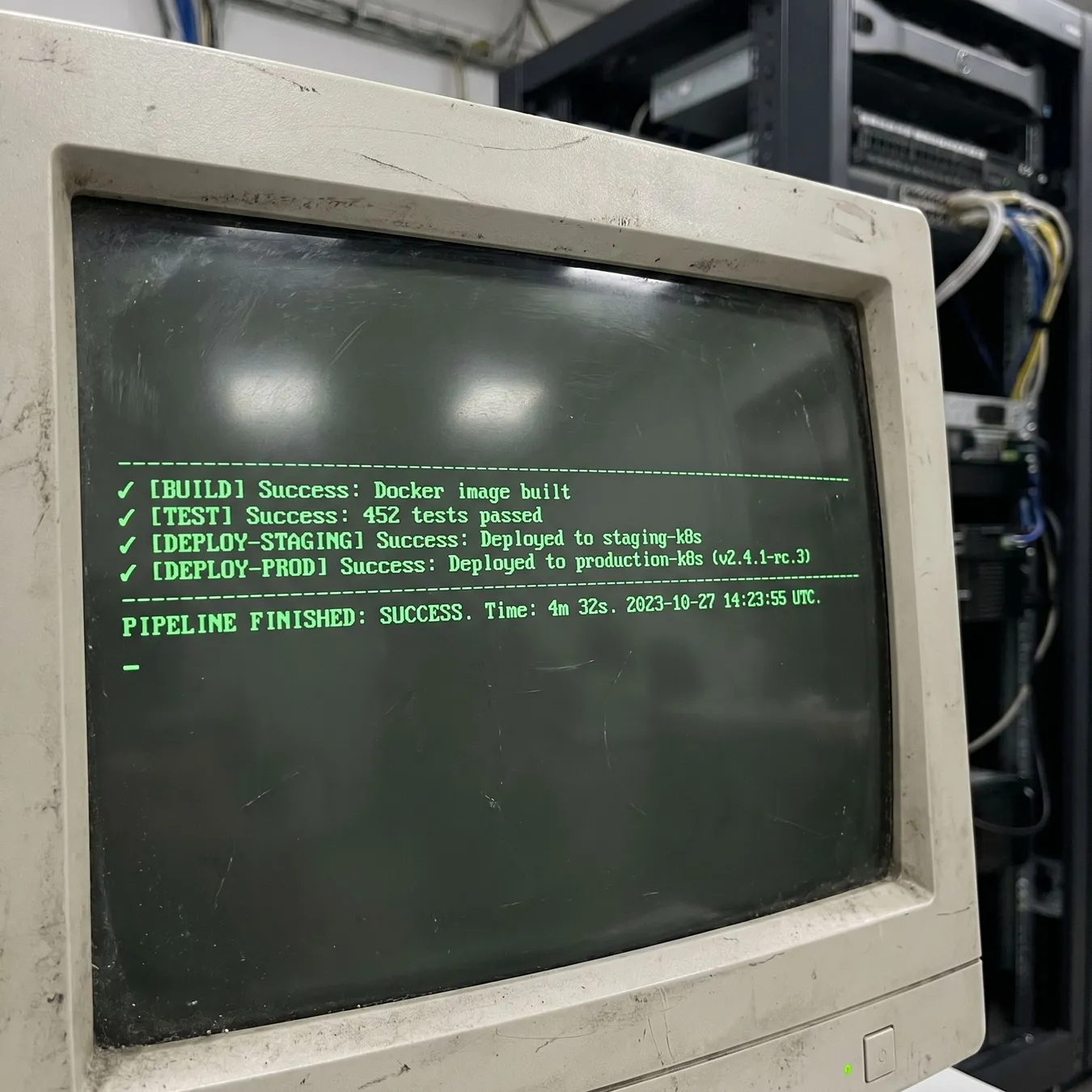
Automated release systems.
Our Approach to Infrastructure Modernization
We don't just hand over a PDF of recommendations. We embed with your team to build the automated deployment systems, secure cloud foundations, and decoupled services required for long-term growth.
- 01
Comprehensive audit of current technical debt and bottlenecks
- 02
Design of a multi-account AWS landing zone
- 03
Implementation of automated CI/CD and observability
- 04
Hands-on extraction of core services and data migration
- 05
Ongoing support and knowledge transfer to your team
Trusted by venture-backed startups to scale infrastructure from zero to production.
Studio 402: Engineering for real-world scale.
Ready to Scale Your Infrastructure?
If your monolithic system is holding back your product roadmap, it's time to build a foundation that grows with your business. Let's discuss how a strategic AWS migration can unlock your team's velocity.
Modernize Your Architecture
Contact Studio 402 today to discuss your migration strategy and cloud infrastructure needs.
Explore More Architecture Resources
Keep reading
More in Cloud & DevOps Engineering
Additional AWS Migration Considerations
When planning your migration, consider the impact on your internal developer experience. A well-designed platform allows developers to provision resources without waiting on DevOps tickets.
- Standardized service templates for new microservices
- Automated environment provisioning via AWS CloudFormation
- Centralized IAM policy management for least-privilege access
- Integrated security scanning in the build process
Monitoring and Reliability
Reliability is a feature. By using AWS Managed Services like Amazon CloudWatch and SNS, you can build automated healing systems that respond to infrastructure failures before they impact users.
Note.
// Operational Note
Final Thoughts on Architectural Evolution
Architecture is never 'finished.' It is an ongoing process of aligning your technical systems with your business goals. Moving to microservices on AWS is a significant step toward a more resilient and agile future.