
Manufacturing Systems Engineering for Industrial Scale
Manufacturing systems engineering is the discipline of designing and integrating the software layers that govern physical production. It bridges the gap between raw factory floor hardware and the high-level operational logic required to run a modern industrial facility at scale.
For many operators, the challenge lies in custom software development for manufacturing that can handle the unique constraints of real-world hardware while providing the flexibility of modern cloud-native systems.
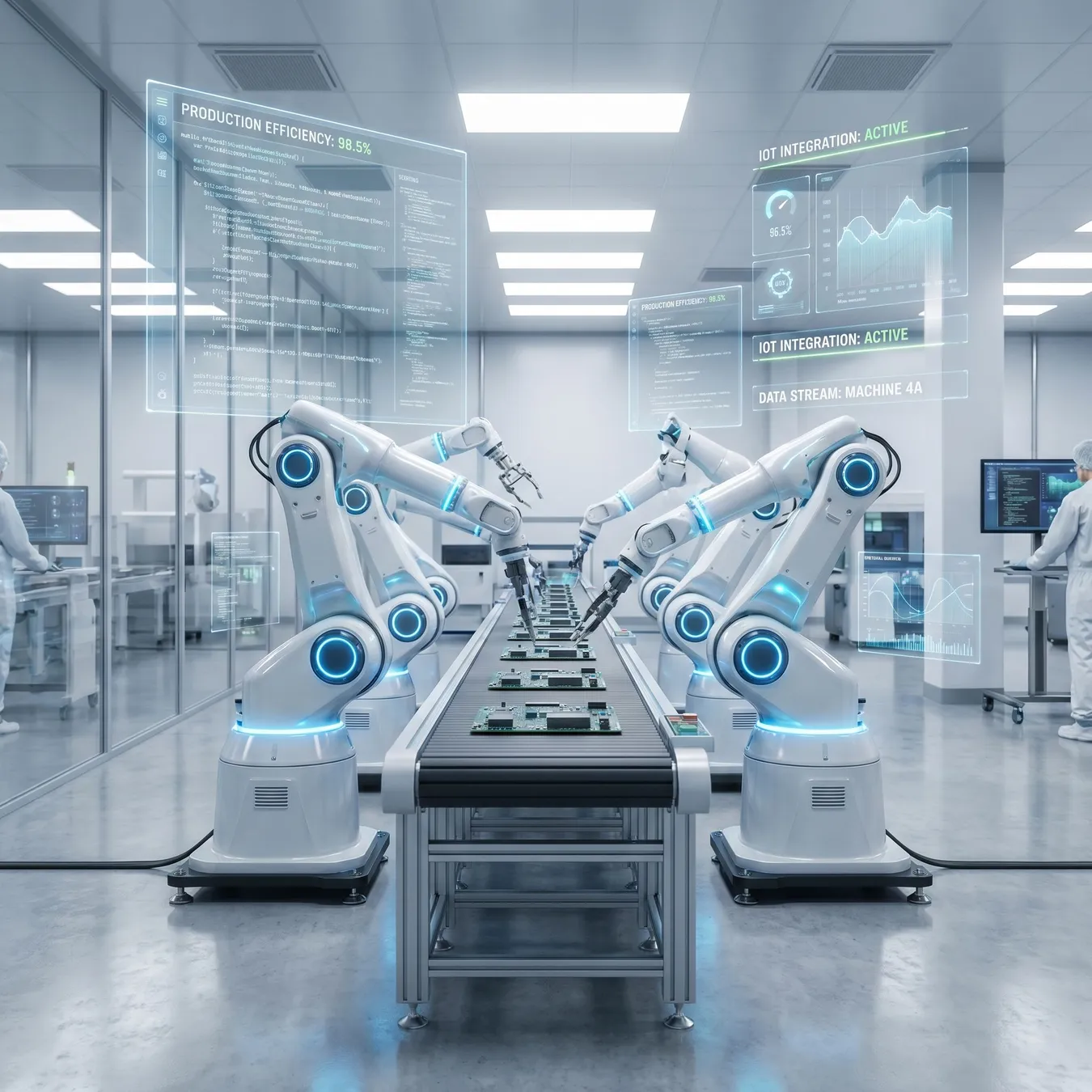
Modern manufacturing relies on the seamless integration of physical hardware and custom software systems.
The Core Pillars of Industrial Systems Engineering
Successful industrial software is built on three pillars: hardware connectivity, data orchestration, and operational visibility. Without these, production lines remain siloed and prone to manual error.
- Hardware Abstraction: Creating a software layer that communicates with diverse PLC and sensor protocols.
- Real-time Orchestration: Ensuring that software logic keeps pace with high-speed physical production cycles.
- Data Integrity: Maintaining a single source of truth from the sensor level to the executive dashboard.
- Scalability: Designing systems that can expand from a single cell to a global network of factories.
Bridging Hardware and Software Lifecycles
One of the primary friction points in manufacturing is the mismatch between hardware and software lifecycles. While software iterates in weeks, hardware often stays in service for decades.
Info.
// Engineering for Longevity
Optimizing Production with Custom Software
Off-the-shelf solutions often fail to account for the specific nuances of a custom production line. This is where custom production management software becomes essential for tracking real-time throughput.
25%
Average increase in throughput via custom automation
40%
Reduction in manual data entry errors
99.9%
System uptime required for industrial scale
Automating Quality Control and Compliance
In high-stakes manufacturing, quality isn't just a goal—it's a requirement. Integrating quality management system software directly into the engineering stack ensures that every unit meets specifications.
Automated vision inspection integration
Real-time SPC (Statistical Process Control) tracking
Digital twin synchronization for defect analysis
Automated compliance reporting and audit trails
Reducing Operational Drag via Automation
Operational drag occurs when manual handoffs and disconnected tools slow down production. By implementing workflow automation software, teams can synchronize engineering and shop floor activities.
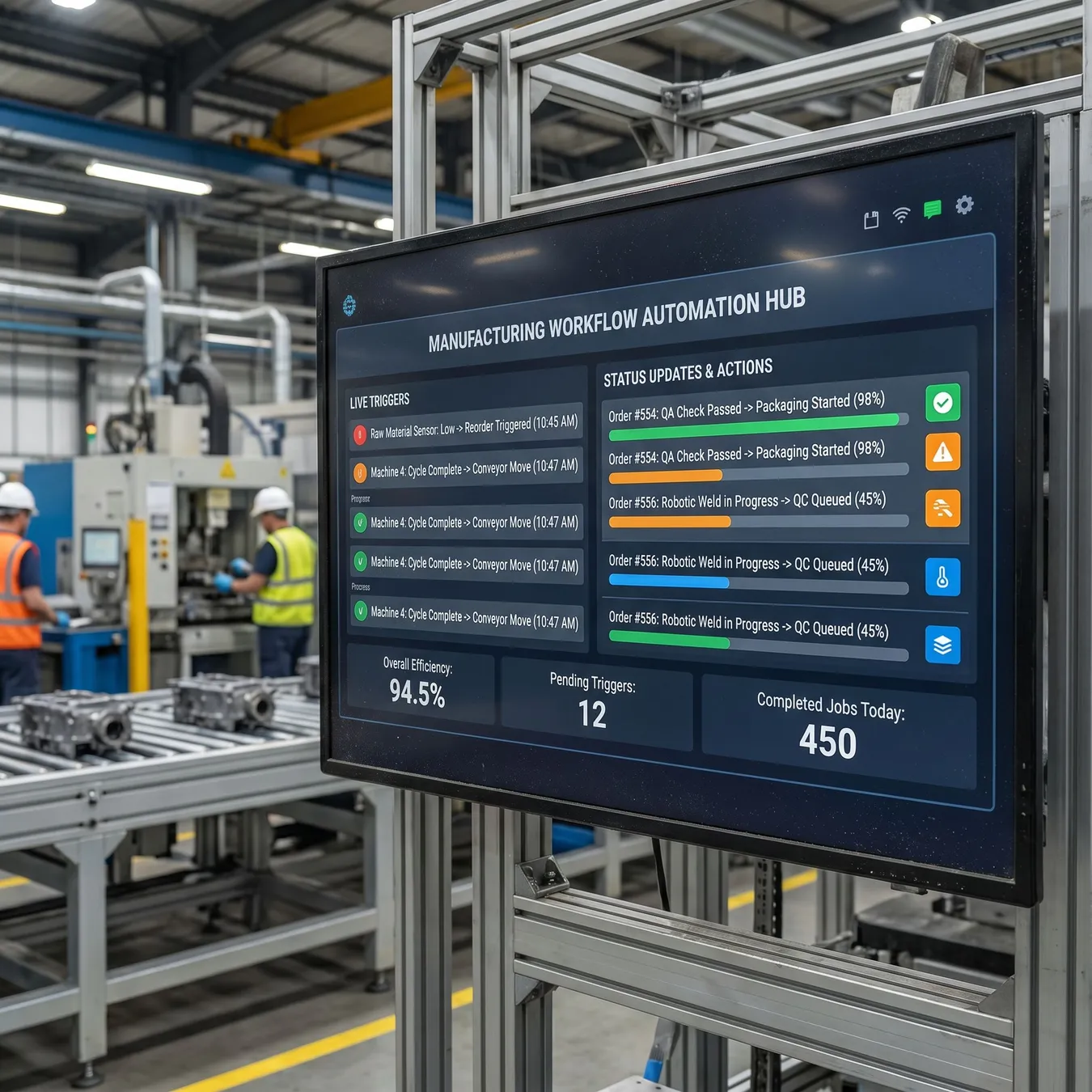
Workflow automation reduces manual coordination overhead.
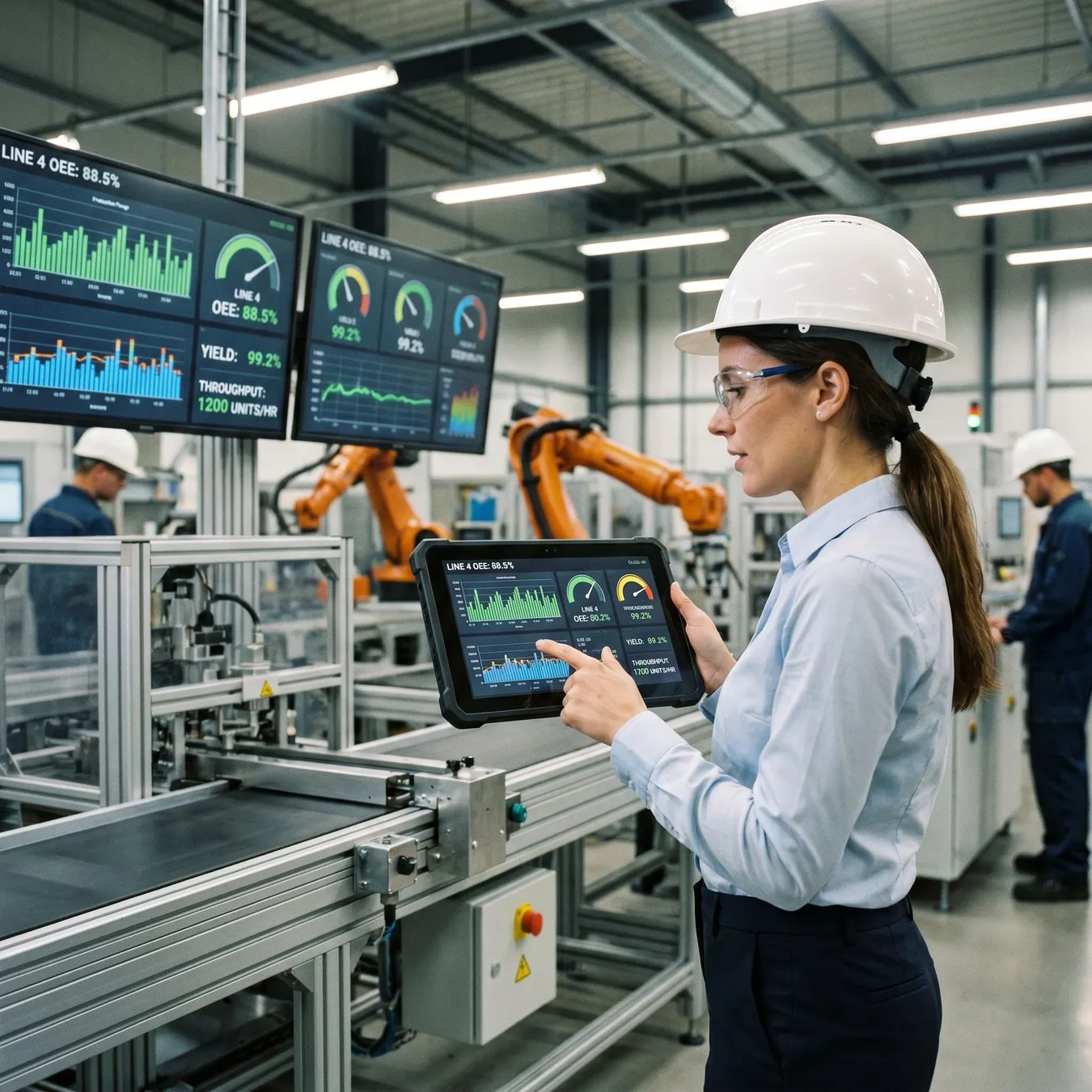
Mobile interfaces provide visibility where it's needed most.
The Role of AI in Industrial Systems
AI is no longer a futuristic concept in manufacturing; it is a practical tool for predictive maintenance and yield optimization. Integrating these capabilities requires a robust data foundation.
Modern systems use machine learning to identify patterns in sensor data that precede equipment failure, allowing for proactive servicing that prevents costly downtime.
Data Orchestration and Industrial IoT
The Industrial Internet of Things (IIoT) generates vast amounts of data. The challenge for systems engineering is not just collecting this data, but orchestrating it into actionable insights.
| Data Type | Frequency | Primary Use Case |
|---|---|---|
| Sensor Telemetry | Millisecond | Real-time process control |
| Production Logs | Batch-based | Traceability and compliance |
| Energy Metrics | Minute-by-minute | Operational cost optimization |
Legacy Modernization in Manufacturing
Many factories run on legacy monoliths that are difficult to update. Modernizing these systems involves wrapping old logic in modern APIs or incrementally replacing modules with cloud-native services.
Use API gateways to bridge legacy hardware and new software.
Implement edge computing for low-latency requirements.
Prioritize data security at the hardware-software interface.
Don't perform 'rip and replace' on stable physical lines.
Don't ignore the security risks of connected factory floors.
Don't build proprietary silos that prevent future integration.
Engineering for High-Performance Environments
Industrial environments are harsh, not just physically but digitally. Systems must be resilient to network drops, power fluctuations, and extreme data loads without losing state.
In manufacturing, software is a physical force. If the code fails, the line stops. Engineering for this reality requires a different level of rigor than standard web development.
Senior Systems Architect · Studio 402
The Implementation Roadmap
Moving from a manual or fragmented setup to an integrated manufacturing system follows a structured path. It begins with an audit of existing hardware and data flows.
01 / 04
phase 01 / 04
Discovery & Audit
phase 02 / 04
Architecture Design
phase 03 / 04
Pilot Integration
phase 04 / 04
Full-Scale Rollout
Security and Compliance in Industrial Software
As factory floors become more connected, they also become more vulnerable. Robust manufacturing systems engineering includes air-gapping critical logic and implementing strict identity management.
Future-Proofing Your Industrial Stack
The goal of custom software development for manufacturing is to create a foundation that can evolve. This means using open standards and modular architectures that allow for the integration of future technologies.
Common Questions in Manufacturing Engineering
The Studio 402 Approach to Industrial Systems
At Studio 402, we don't just build apps; we build durable operational infrastructure. We understand that in manufacturing, software must be as reliable as the machines it controls.
Whether you are launching a new automated line or modernizing a legacy facility, we provide the engineering depth to ensure your software is production-ready from day one.
Trusted by industrial operators to manage mission-critical production data.
Engineering systems that survive real-world scale.
Next Steps for Your Manufacturing System
Transitioning to a modern, software-driven manufacturing environment requires a partner who understands both the code and the machine. We help you bridge that gap with precision.
Build Your Industrial Software Foundation
Ready to build durable software for your industrial operations? Let's discuss your manufacturing systems engineering needs.
Explore Related Engineering Insights
Keep reading
More in Hardware-Software Integrated Systems
System Reliability Metrics
Reliability in an industrial context is measured by the system's ability to maintain state and recover from hardware-level failures without data loss.
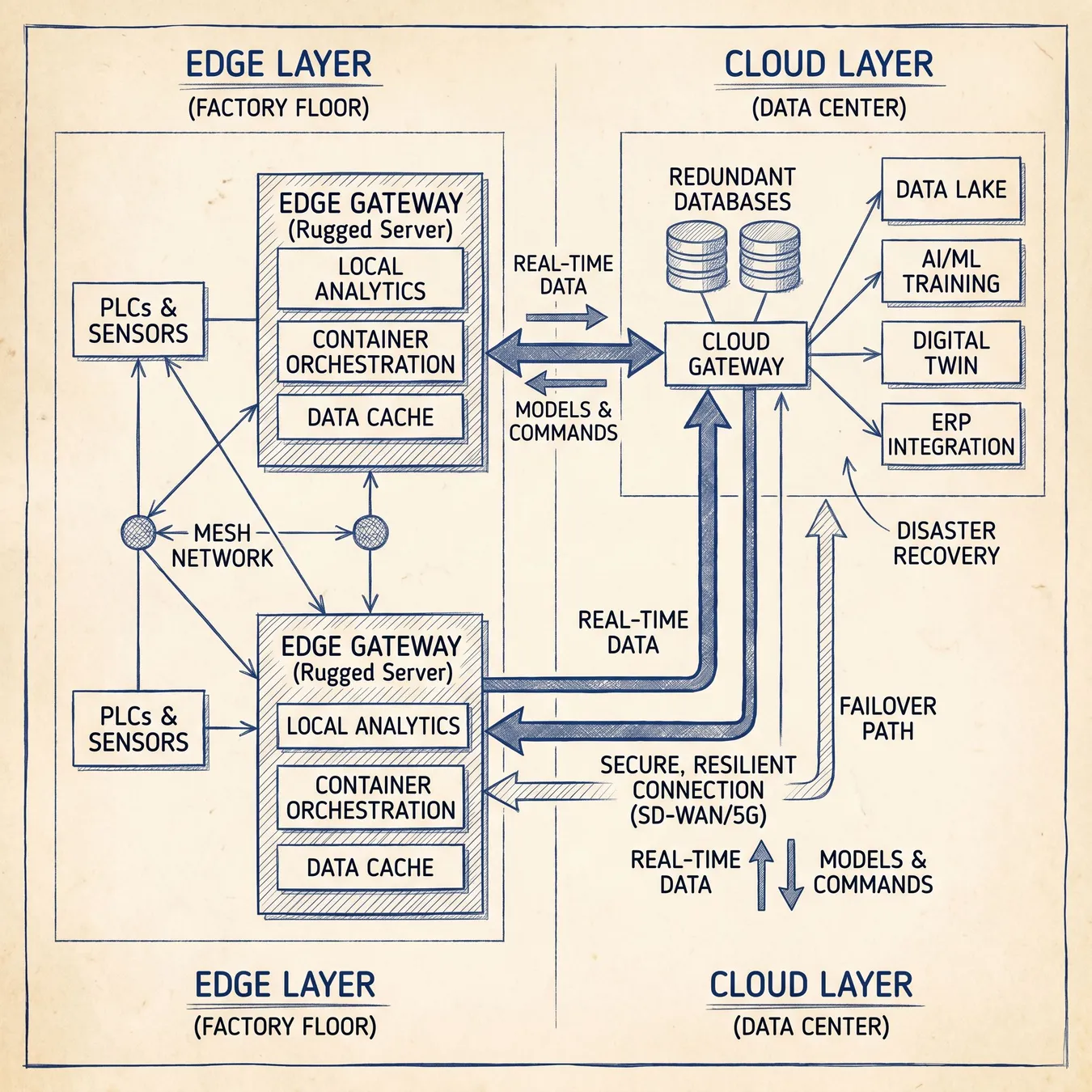
Resilient architecture is the backbone of industrial scale.
Edge vs. Cloud in Manufacturing
The decision of where to process data—at the edge or in the cloud—depends on latency requirements and the need for local autonomy during network outages.
Trade-off
3 pros · 3 cons
Pros
Ultra-low latency for control
Offline operational capability
Reduced bandwidth costs
Cons
Higher hardware costs per node
Complex distributed management
Limited long-term storage
Interoperability Standards
Adopting standards like OPC UA and MQTT ensures that your manufacturing system remains open to new vendors and technologies as they emerge.
- OPC UA
- MQTT
- REST API
- Industrial IoT
User Interface for the Shop Floor
Software on the factory floor must be designed for high-glanceability and ease of use, often in environments where operators are wearing gloves or protective gear.
We focus on high-contrast, touch-optimized interfaces that provide clear visual cues for system status and required actions.
Scalability and Multi-Site Management
As your operations grow, your software must support multi-site visibility, allowing for benchmarking and resource optimization across different geographic locations.