
Custom Software Development for the Manufacturing Industry
The modern factory floor is no longer just about heavy machinery; it is about the data flowing between those machines and the business logic that orchestrates them. Custom software development for manufacturing industry players bridges the gap between physical production and digital intelligence, ensuring that every cycle, shipment, and quality check is captured in real-time.
- Industrial IoT
- ERP Integration
- Production Ops
- Smart Factory
For many organizations, software development for manufacturing companies is the difference between operational drag and scalable growth. Off-the-shelf solutions often fail to account for the unique hardware constraints and legacy systems found in industrial environments, making bespoke systems a necessity for high-performance teams.
How Custom Software Development Helps Manufacturing Industry Growth
Custom software development helps manufacturing industry leaders by centralizing fragmented data sources. Instead of relying on disparate spreadsheets and manual logs, custom software for manufacturing provides a single source of truth that connects procurement, production, and logistics.
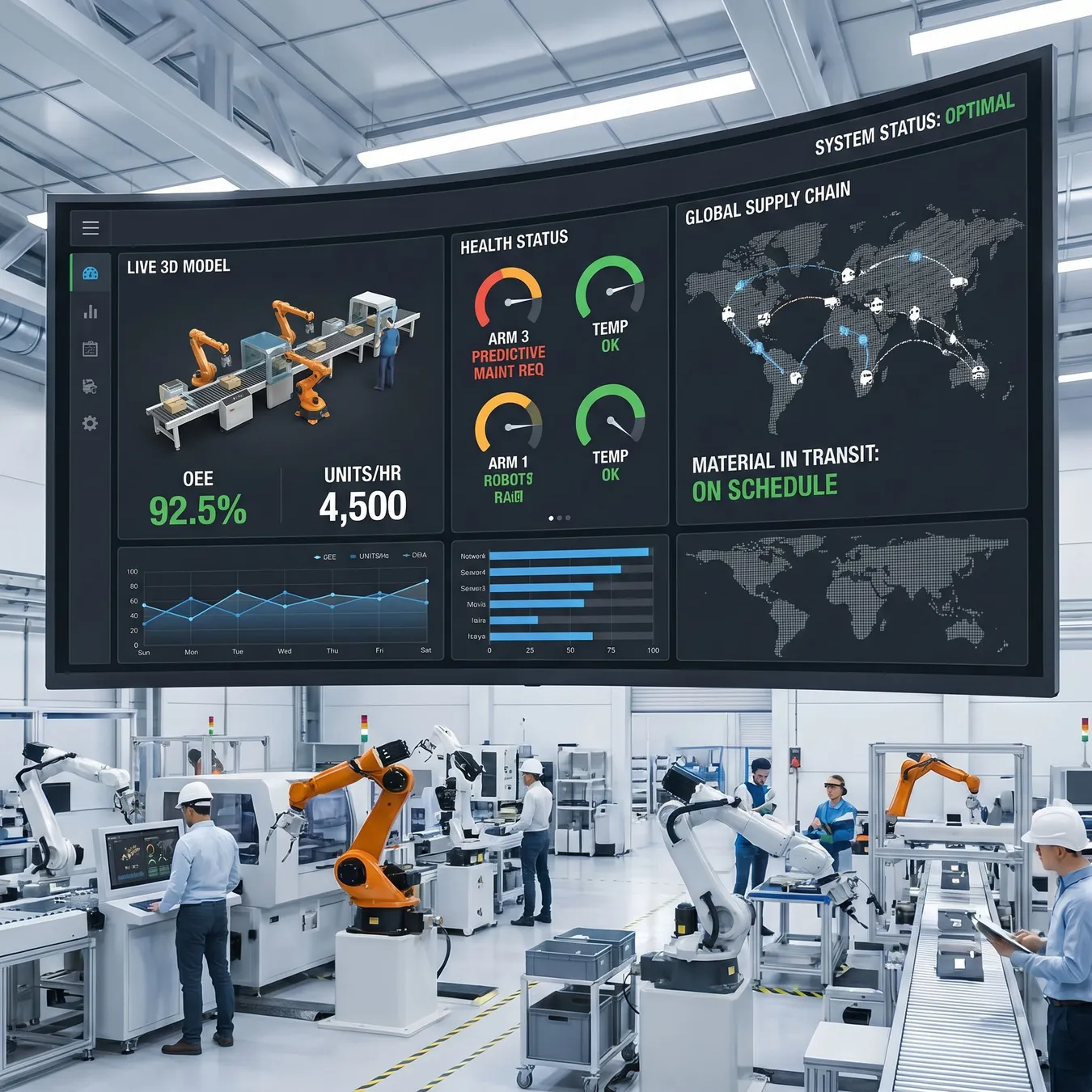
Real-time operational dashboards provide immediate visibility into factory floor performance.
- Elimination of manual data entry errors through automated sensor integration.
- Real-time tracking of raw materials and finished goods across the facility.
- Improved predictive maintenance schedules based on actual machine usage data.
- Seamless synchronization between shop floor operations and executive reporting.
Key Components of Modern Manufacturing Software
Building custom software development manufacturing solutions requires a deep understanding of both high-level business goals and low-level hardware communication protocols. These systems must be durable enough to handle 24/7 operations while remaining flexible enough to adapt to changing market demands.
30%
Average reduction in downtime via predictive alerts
24/7
Real-time monitoring of critical production lines
99.9%
Data accuracy for inventory and compliance logs
Bridging the Gap with Custom Production Management Software
One of the most critical layers is custom production management software, which acts as the nervous system for the factory. It translates high-level orders into specific machine instructions and labor assignments, ensuring that resources are never wasted.
The Role of AI and Advanced Engineering in Industrial Systems
Integrating artificial intelligence engineering into the manufacturing stack allows for sophisticated anomaly detection. By analyzing vibration, heat, and throughput data, AI agents can predict failures before they occur, saving millions in lost production time.
Info.
// Architectural Resilience
Integrating Quality and Supply Chain Logic
Efficient manufacturing requires a holistic view of the ecosystem. Through custom industrial software development, companies can link their production schedules directly to vendor lead times and logistics pipelines, reducing the need for excess safety stock.
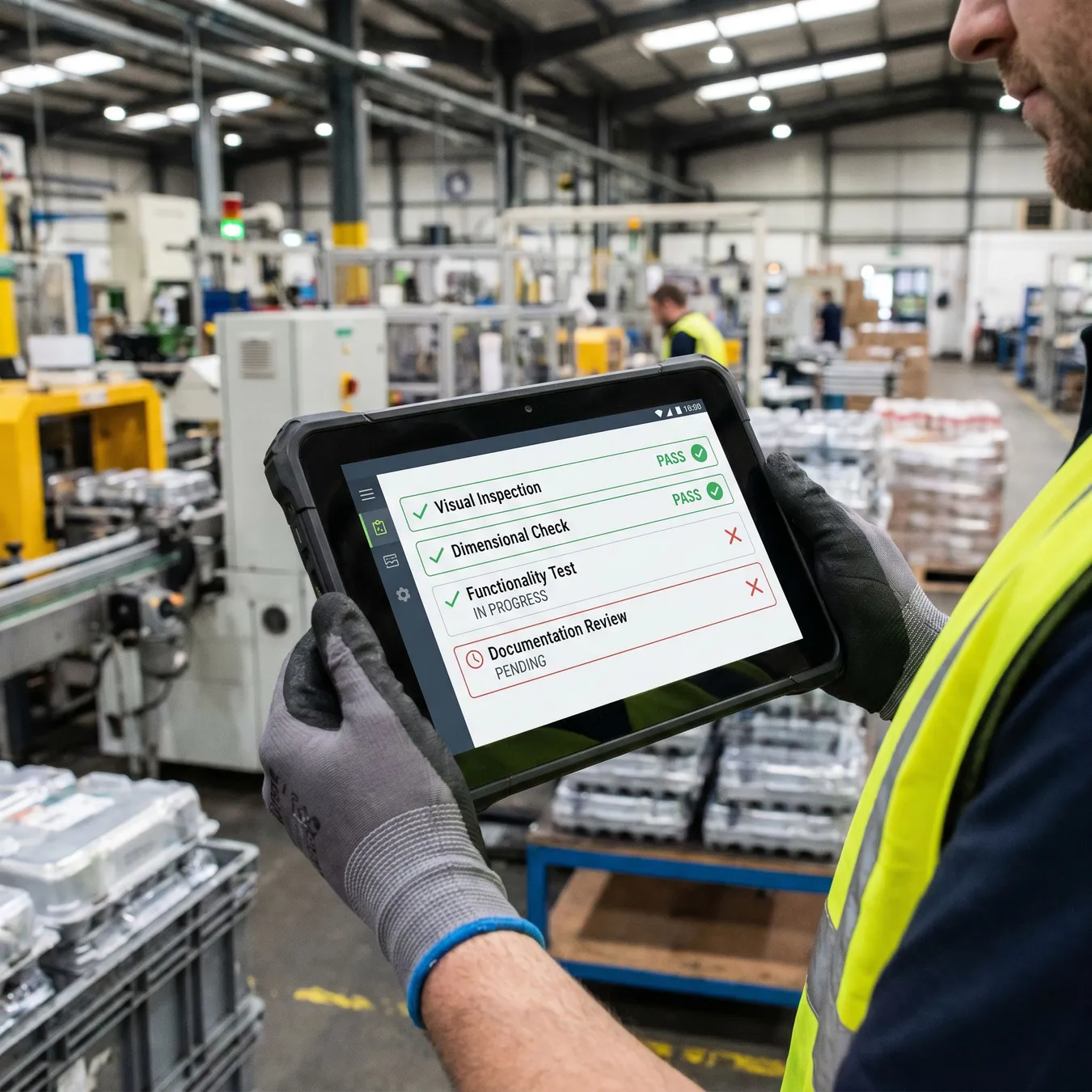
Mobile-first quality checks ensure compliance at every station.

Supply chain integration provides end-to-end visibility.
Furthermore, embedding quality management system software directly into the workflow ensures that compliance is a byproduct of the process, not an afterthought. This automated documentation is essential for highly regulated industries like aerospace and medical devices.
Common Challenges in Manufacturing Software Migration
Trade-off
4 pros · 4 cons
Pros
Complete ownership of data and logic
Zero-friction integration with legacy hardware
Scales exactly with your specific workflows
Significant long-term ROI through efficiency
Cons
High initial cost compared to generic SaaS
Requires deep domain expertise to build
Longer implementation timeline for hardware sync
Risk of disrupting active production lines
Step-by-Step: Implementing Custom Manufacturing Systems
01 / 05
phase 01 / 05
Operational Discovery
phase 02 / 05
System Architecture
phase 03 / 05
Iterative Development
phase 04 / 05
Production Hardening
phase 05 / 05
Scale & Optimization
Best Practices for Industrial Software Design
Prioritize high-contrast UIs for factory floor visibility.
Implement robust offline-first capabilities.
Use standard industrial protocols for hardware sync.
Build modular features that can be updated independently.
Overload operator screens with unnecessary data.
Ignore legacy system security vulnerabilities.
Assume constant high-speed internet connectivity.
Hardcode business logic that changes seasonally.
Manufacturing Software FAQs
Bridging Strategy and Execution with Studio 402
At Studio 402, we understand that manufacturing software isn't just about code—it's about uptime. We build production-ready systems that bridge the gap between complex industrial hardware and high-level business intelligence. Whether you are moving away from spreadsheets or rescuing a fragile prototype, we provide the engineering depth required for industrial scale.
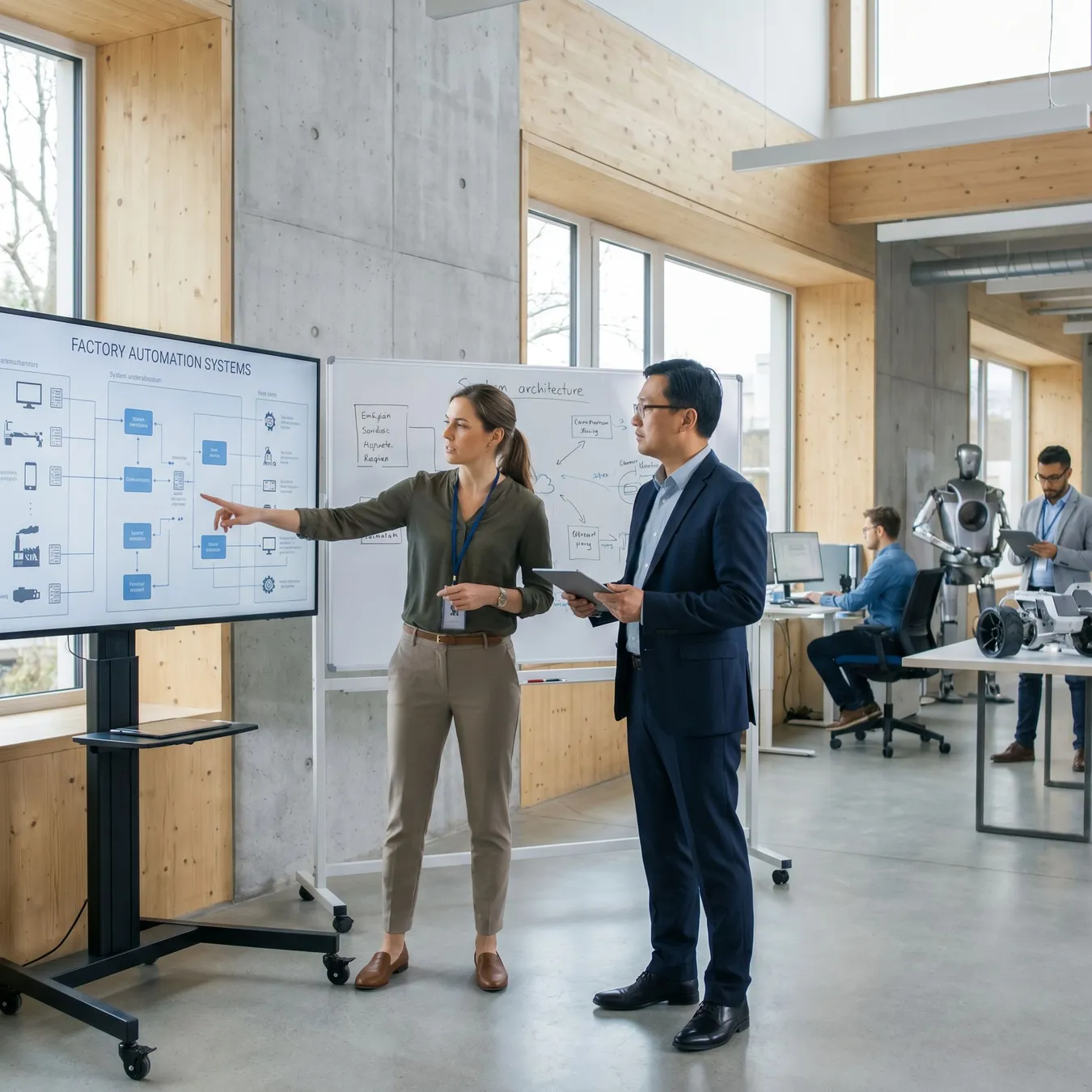
Studio 402 partners with industrial operators to build durable, scalable software foundations.
Our approach combines product engineering with platform depth. We don't just deliver a dashboard; we build the infrastructure that allows your factory to iterate faster, reduce waste, and maintain a competitive edge in an increasingly automated market.
Ready to Modernize Your Production Operations?
If your current systems are creating operational drag or if you're ready to launch a new smart-factory initiative, let's discuss how a custom build can transform your throughput. From initial architecture to long-term support, we are your senior technical partner for industrial-scale software.
Build Your Industrial Software Foundation
Discuss your manufacturing software needs with our senior engineering team today.
Explore Related Industrial Solutions
Keep reading
More in Hardware-Software Integrated Systems
Operational Excellence in Manufacturing
Achieving operational excellence requires more than just new tools; it requires a shift in how data is utilized. By integrating real-time feedback loops into the production cycle, manufacturers can move from reactive troubleshooting to proactive optimization.
Identify core production bottlenecks
Map data flow from machine to database
Define KPI dashboards for floor managers
Establish automated quality alert protocols
Integrate supply chain lead-time data
The Future of Smart Manufacturing
As we look toward the future, the integration of edge computing and AI-native systems will further decentralize decision-making on the factory floor. Custom software will not only monitor but also autonomously adjust production parameters to maintain peak efficiency.
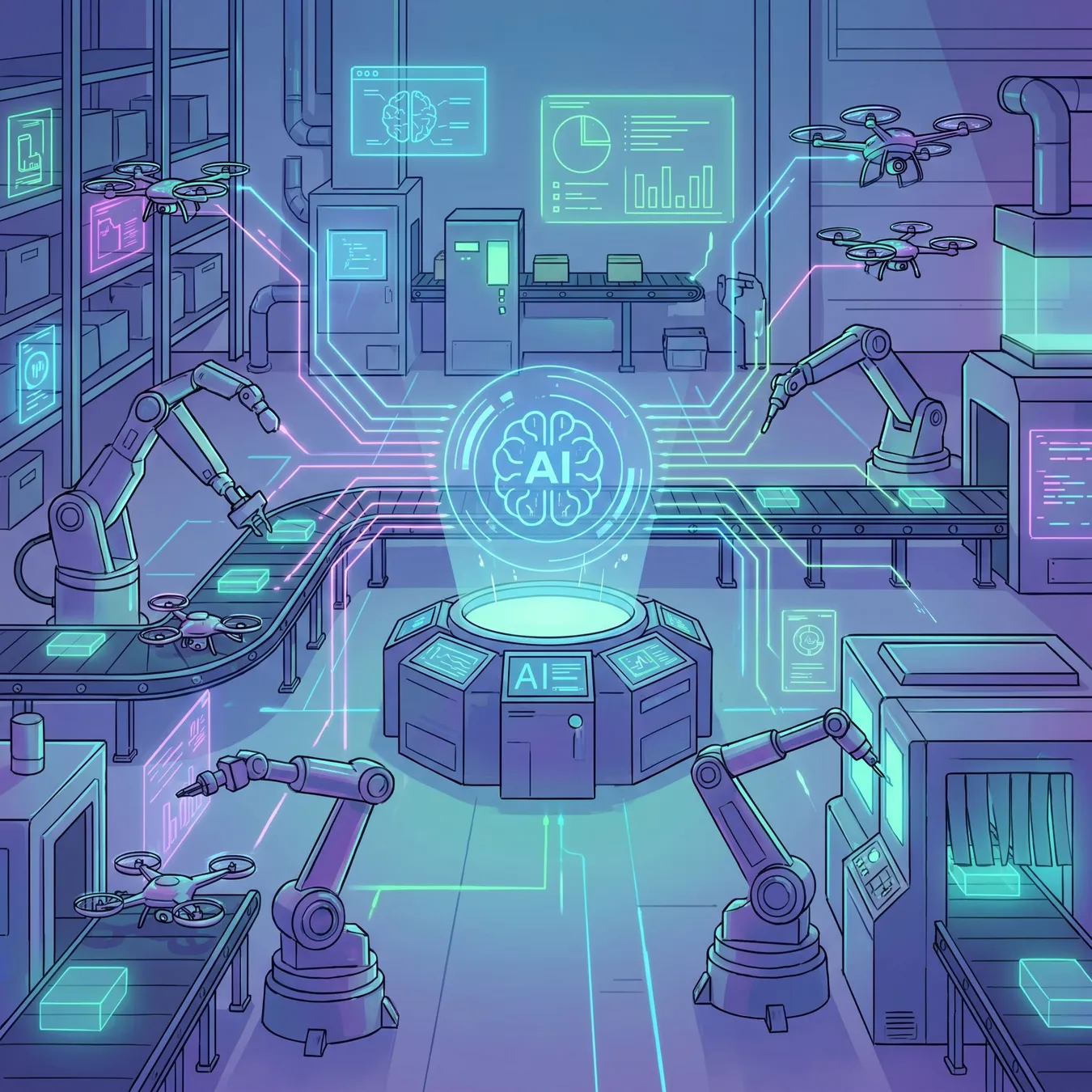
The next generation of manufacturing is defined by seamless software-hardware integration.
Technical Consulting for Industrial Scale
Deciding whether to build or buy is a critical choice for any manufacturing leader. Our technical consulting services provide the architecture review and roadmap planning needed to make informed decisions that protect your long-term operational stability.
The transition from manual tracking to a custom integrated system reduced our lead times by 22% in the first six months. It wasn't just a tool; it was a new way of working.
Industrial Operations Lead · Fortune 500 Manufacturer
Hardening Your Industrial Infrastructure
Production environments are harsh—not just for hardware, but for software too. We implement CI/CD pipelines and observability tools that ensure your manufacturing systems are as reliable as the machines they control, with zero-downtime deployments and instant rollbacks.
Trusted by growth-stage industrial teams to build production-grade systems.
Updated for 2026 operational standards.
Custom Software as a Competitive Advantage
In a market where margins are thin, software efficiency is a primary differentiator. Custom solutions allow you to implement proprietary logic that off-the-shelf vendors simply cannot support, giving you a unique edge in production speed and quality control.
Building for the Long Term
We don't build throwaway code. Every manufacturing system we design is architected with a clear path to scale, ensuring that the software you build today remains a valuable asset for the next decade of your company's growth.
Final Thoughts on Industrial Digitalization
The journey toward a fully digital factory floor is iterative. By starting with high-impact custom software development for the manufacturing industry, you lay the foundation for a future-proof operation that can adapt to any challenge.
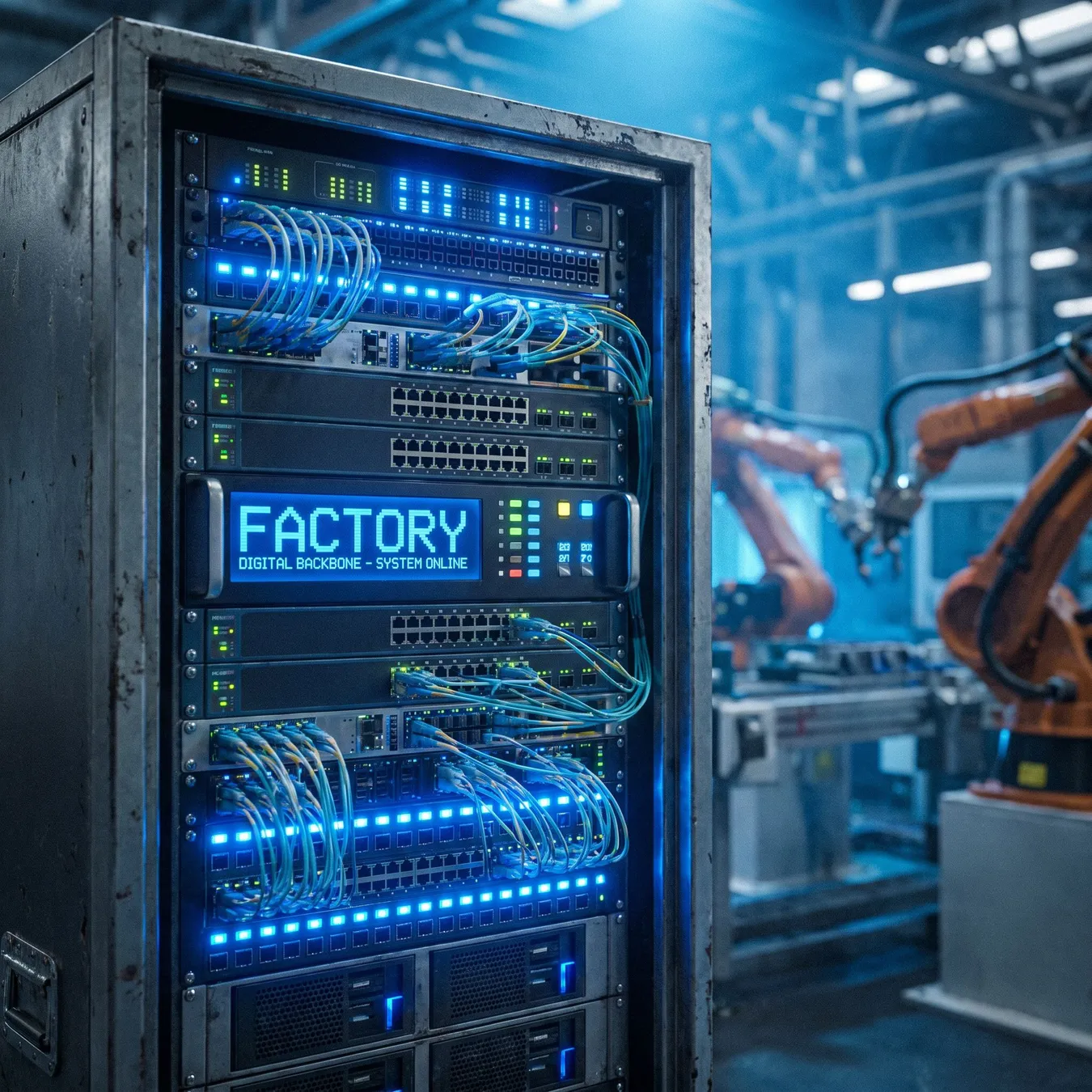
Durable infrastructure is the foundation of every successful manufacturing software project.
Next Steps for Your Manufacturing Project
Every great system begins with a conversation. Whether you need an audit of your current stack or a complete greenfield build, Studio 402 is ready to help you navigate the complexities of industrial software engineering.