
Overview
Scaling Small Business AP Automation
Move beyond manual invoice entry and fragile spreadsheets. Build durable, automated accounts payable systems that scale with your growth.
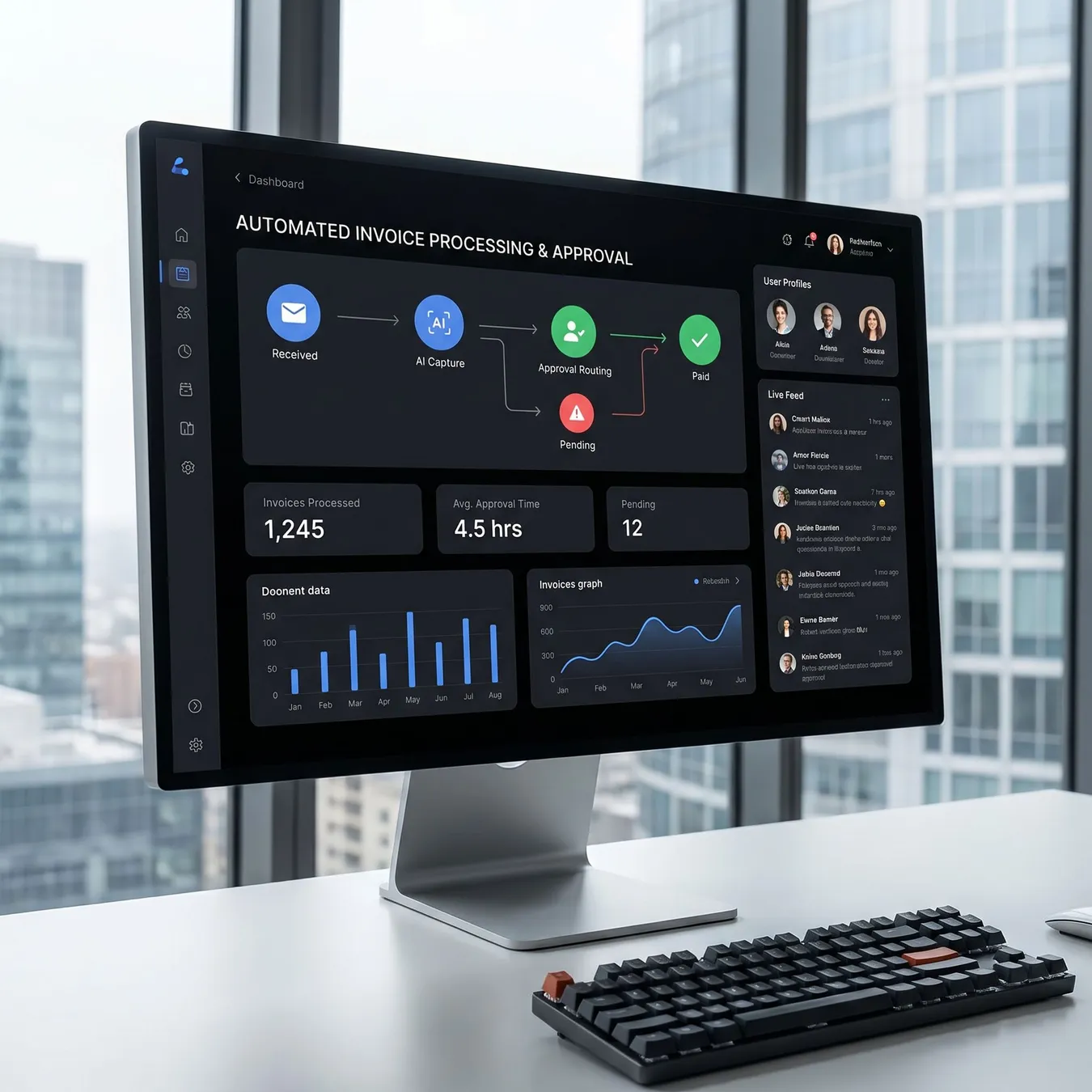
AP Automation for Small Business: Beyond Spreadsheets
For many growing companies, the accounts payable process starts in a spreadsheet. While manual entry works for a handful of monthly bills, it quickly becomes a bottleneck that leads to missed payments, duplicate entries, and zero visibility into cash flow. Transitioning to professional accounts payable automation for small business is the only way to maintain control as you scale.
80%
Reduction in manual data entry time
0%
Duplicate payment risk with automation
24h
Average invoice approval turnaround
The Limits of Manual Accounts Payable
Manual systems rely on human memory and physical or digital paper trails that are easily lost. When you automate accounting processes, you replace these fragile links with a structured system of record.
Trade-off
4 pros · 4 cons
Pros
Real-time visibility into liabilities
Automated OCR data extraction
Standardized approval workflows
Seamless ERP integration
Cons
High risk of human error
Slow approval cycles
Difficult to audit
Limited scalability
Key Features of Best AP Automation Software
Finding the best ap automation software for small business requires looking beyond basic features. You need a system that handles the entire lifecycle from receipt to reconciliation.
- Intelligent Invoice Capture (OCR)
- Multi-level Approval Routing
- Electronic Payment Execution
- Automated Ledger Syncing
- Vendor Portal Management
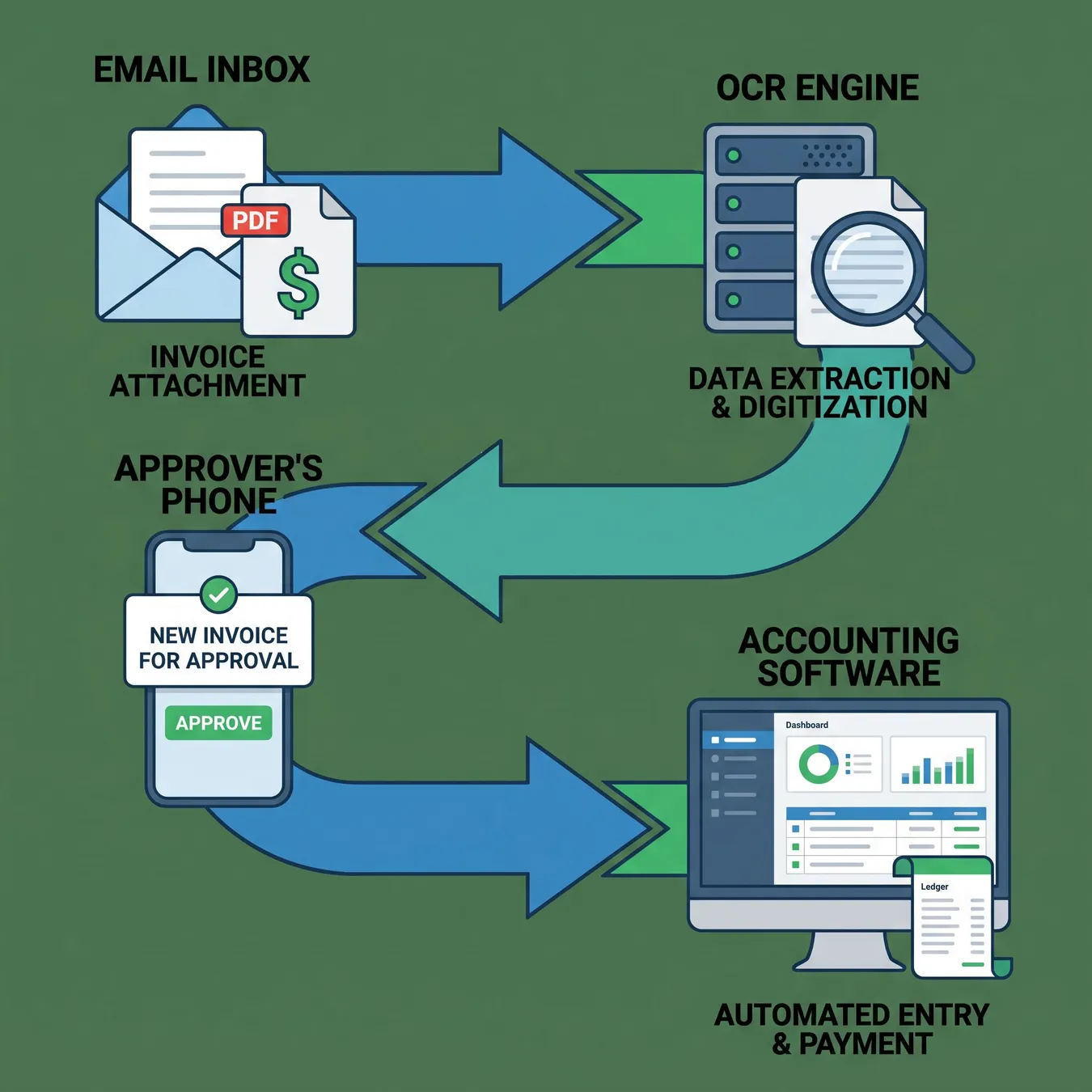
The lifecycle of an automated invoice.
Designing Your Accounts Payable Workflow
Success isn't just about the software; it's about the logic. Proper accounts payable workflow automation ensures that the right people see the right invoices at the right time without manual intervention.
- 01
Centralize invoice receipt via a dedicated email alias.
- 02
Implement OCR to extract vendor, date, and amount data.
- 03
Set threshold-based approval rules (e.g., >$500 requires manager).
- 04
Verify invoice against purchase orders or contracts.
- 05
Schedule payments based on cash flow and early-pay discounts.
Moving Beyond Spreadsheets Safely
The transition from Excel to a dedicated system can feel daunting. However, the cost of staying on spreadsheets is often higher than the investment in new tools due to operational drag and errors.
Tip.
// Migration Tip
Data Integrity and Audit Trails
One of the primary benefits of accounts payable automation small business owners appreciate is the instant audit trail. Every action, from upload to payment, is timestamped and logged.
Evaluating AP Automation Software
When comparing ap automation software for small business, prioritize integration. If the tool doesn't talk to your existing accounting stack, you're just moving the manual entry problem to a different screen.
| Feature | Basic Software | Custom Systems |
|---|---|---|
| OCR Accuracy | Standard | High/Customized |
| Approval Logic | Linear | Complex/Conditional |
| ERP Sync | Batch | Real-time |
The Role of AI in Modern Payables
Modern accounts payable automation for small business now leverages AI to predict GL coding and detect anomalies. This reduces the cognitive load on your finance team, allowing them to focus on strategy rather than data entry.
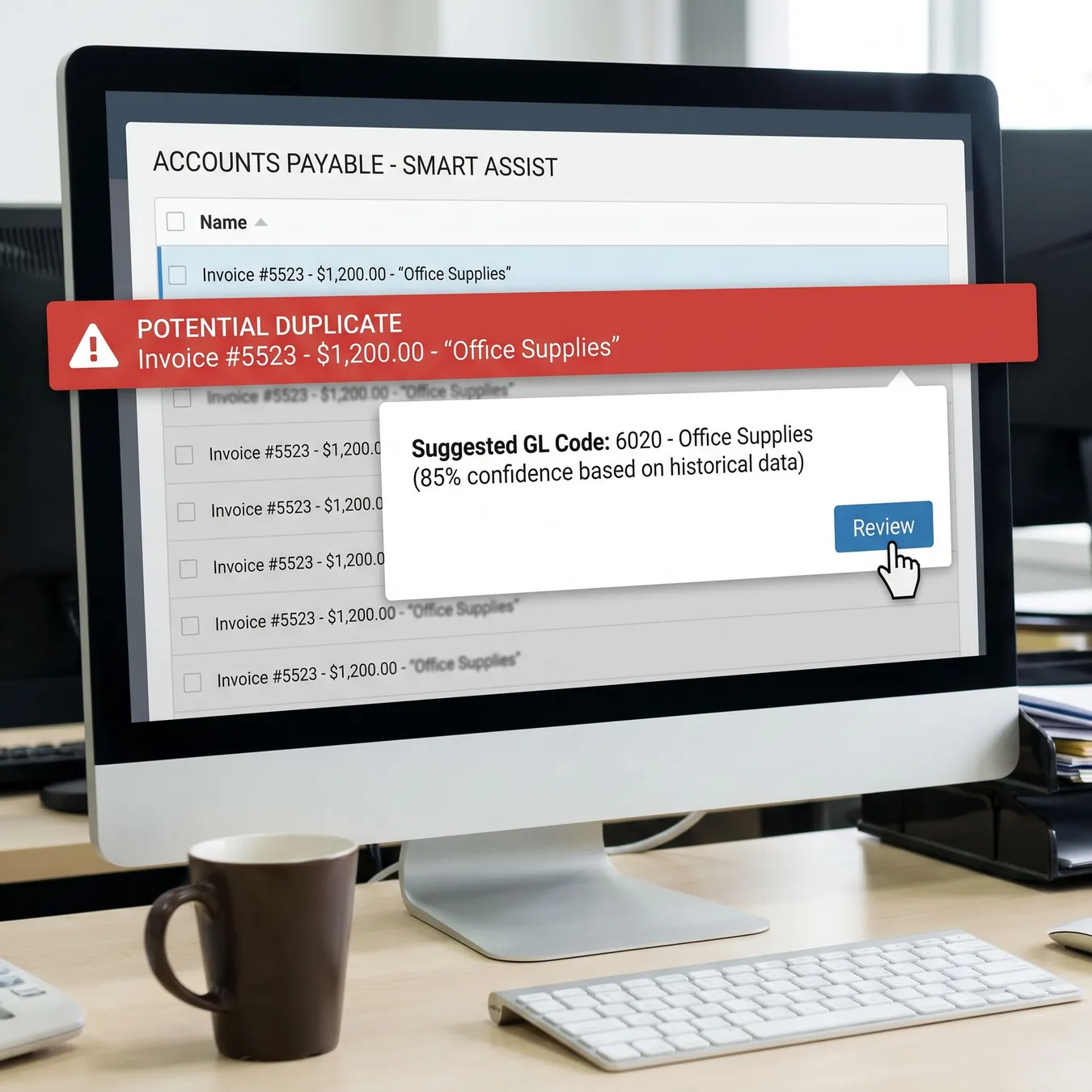
AI-driven anomaly detection in AP.
Scaling Your Financial Infrastructure
As your transaction volume grows, you need professional accounts payable automation systems that don't break under load. This often means moving toward cloud-native solutions that offer better security and accessibility.
Integrating with the Broader Ecosystem
AP is just one piece of the puzzle. True efficiency comes when you look at automation in finance and accounting as a whole, connecting payables to procurement and cash management.
Common Implementation Pitfalls
Clean up your vendor master file before migrating.
Define clear approval hierarchies.
Test OCR with your most complex invoices.
Automate a broken or inefficient process.
Ignore the need for staff training.
Forget to set up multi-factor authentication.
Small Business AP Automation FAQ
The Transition Path: From Manual to Automated
To successfully automate accounting processes, you must first map your current manual steps. This allows you to identify where bottlenecks occur and where software can provide the most immediate relief.
01 / 04
phase 01 / 04
Audit
phase 02 / 04
Selection
phase 03 / 04
Configuration
phase 04 / 04
Launch
Why Custom Systems Beat Off-the-Shelf
While generic software works for simple needs, many small businesses have unique operational requirements. Custom-engineered small business ap automation allows you to build a system that fits your business, rather than changing your business to fit the software.
Moving to a custom AP system didn't just save us time; it gave us the data we needed to negotiate better terms with our suppliers.
Sarah Jenkins · Operations Director
Building Your Durable Finance Foundation
At Studio 402, we specialize in helping companies move past the 'vibe-code' and spreadsheet phase. We build production-ready financial systems that don't just solve today's problems but provide a foundation for your next stage of growth.

Engineering durable financial systems.

Architecture designed for scale.
How Studio 402 Can Help
Whether you need to rescue a broken prototype or build a custom AP workflow from scratch, our team provides the engineering depth required for financial-grade software. We focus on reliability, security, and seamless integration.
Custom workflow engine design
Secure ERP and banking integrations
AI-native data extraction and coding
Audit-ready logging and reporting
Trusted by growth-stage teams to build production-ready systems.
From MVPs to complex financial infrastructure.
Ready to Automate Your Payables?
Stop fighting spreadsheets and start scaling. Let's build a durable AP system tailored to your business.
Keep reading
More in Financial & AP Automation
The Future of Small Business Finance
The gap between enterprise-grade tools and small business capabilities is closing. By adopting automated systems now, you position your company to compete with larger players who have much higher overhead.
- Finance Ops
- Automation
- Scalability
- Small Business
Final thoughts: Don't wait for a crisis to upgrade your systems. Proactive automation is an investment in your company's sanity and its bottom line.