
Robotic Process Automation in Finance: Implementation Guide
Robotic process automation finance solutions are transforming how modern departments handle high-volume, repetitive tasks. By deploying software bots to manage data entry and validation, teams can eliminate manual operational drag and focus on strategic analysis.
80%
Reduction in manual data entry time
99.9%
Accuracy in transaction processing
24/7
Operational availability of RPA bots
Core Robotic Process Automation Finance Use Cases
Understanding the most impactful robotic process automation finance use cases is the first step toward a successful deployment. Most organizations start with high-friction areas like accounts payable and bank reconciliation.
- Automated Invoice Processing: Extracting data from PDFs and entering it into ERP systems.
- Bank Reconciliation: Matching internal ledger entries with bank statements automatically.
- Financial Reporting: Aggregating data across multiple entities for month-end closing.
- Compliance Auditing: Generating audit trails and verifying transaction logs.
- Accounts Receivable: Automating payment reminders and aging report generation.
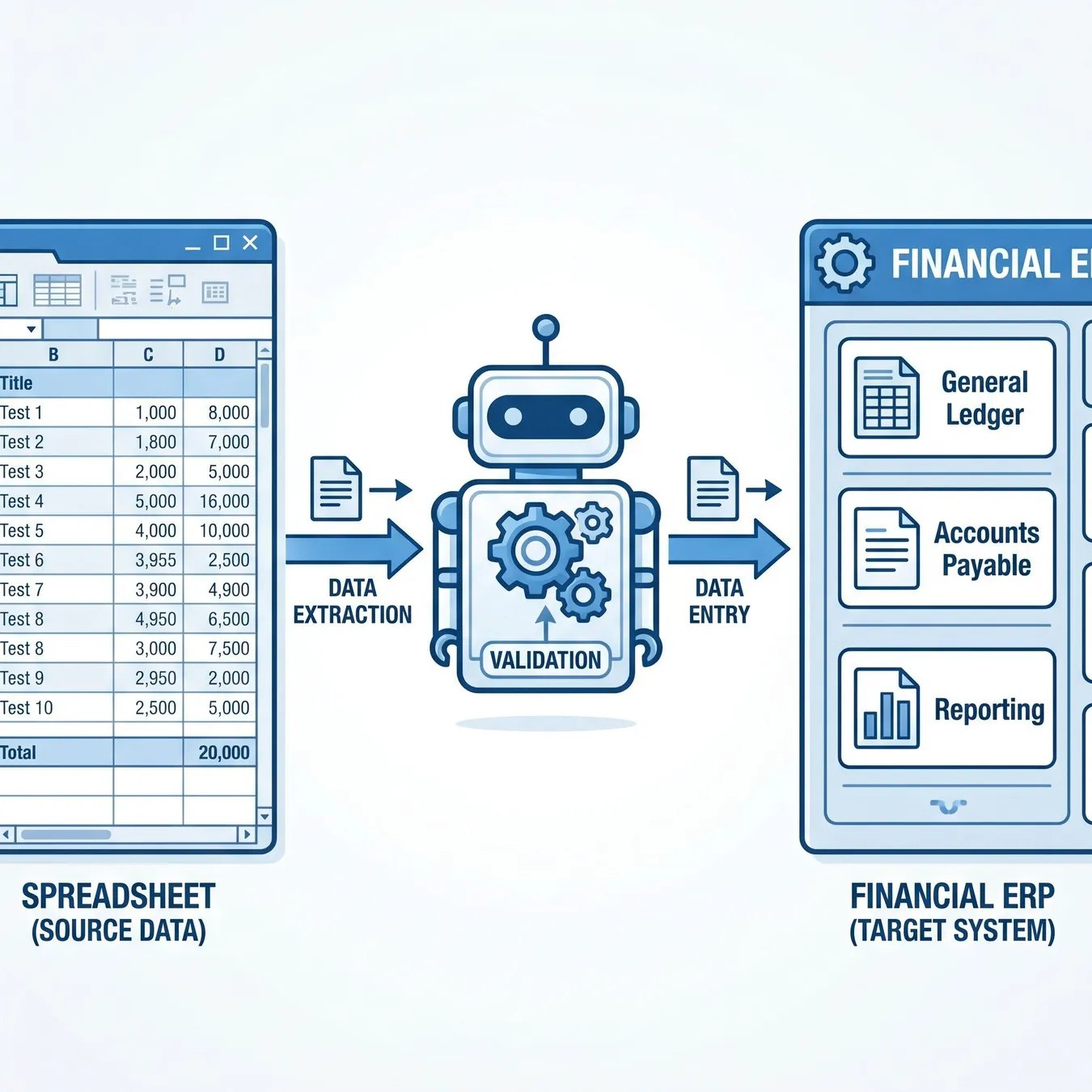
RPA bots bridge the gap between legacy spreadsheets and modern financial platforms.
Optimizing the Finance Automation Process
A successful finance automation process requires more than just installing software; it demands a clear mapping of existing workflows to identify bottlenecks. You must ensure that the logic used by bots mirrors your most efficient manual procedures.
Info.
// Process Mapping Tip
RPA vs. Traditional Automation in Finance
While traditional automation often requires deep API integrations, RPA works at the user interface level. This makes it ideal for legacy systems that lack modern connectivity.
Trade-off
3 pros · 3 cons
Pros
Works with legacy software without APIs
Faster deployment timelines
Non-invasive to existing IT architecture
Cons
Sensitive to UI changes
Requires structured data inputs
May require frequent maintenance
Steps to Implement RPA in Your Finance Team
01 / 04
phase 01 / 04
Opportunity Identification
phase 02 / 04
Vendor & Tool Selection
phase 03 / 04
Bot Development & Testing
phase 04 / 04
Deployment & Monitoring
Common Challenges in Financial RPA
Many teams struggle when they try to automate accounting processes that are inherently unstructured. RPA thrives on consistency; if your data sources vary wildly, the bot will fail.
To succeed, many organizations choose to automate accounting processes by first standardizing their input formats.
Standardize input data formats
Start with a small pilot project
Involve IT and security teams early
Automate a broken or inefficient process
Ignore the need for human-in-the-loop
Underestimate maintenance requirements
Technical Requirements for Financial RPA
Deploying RPA in a regulated environment requires strict adherence to security protocols. This includes encrypted data handling, role-based access control, and comprehensive logging for audit purposes.

Monitoring dashboards are essential for maintaining visibility into automated financial workflows.
The Role of Data Accuracy in Automation
Garbage in, garbage out applies heavily to RPA. If the source data is incorrect, the bot will simply process the error faster than a human would. Implementing validation steps is critical.
| Task Type | Complexity | RPA Suitability |
|---|---|---|
| Data Entry | Low | High |
| Reconciliation | Medium | High |
| Financial Analysis | High | Low |
Scaling RPA Across the Enterprise
Once a pilot is successful, the challenge shifts to scaling. This often involves creating a Center of Excellence (CoE) to manage bot governance and shared resources.
RPA for Fintech and High-Growth Teams
For rapid-growth companies, robotic process automation fintech strategies allow for scaling transaction volumes without linearly increasing headcount.
The Future: Beyond Basic RPA
The industry is moving toward more intelligent systems. While RPA handles the 'doing,' agentic ai in finance is beginning to handle the 'thinking' and decision-making.

The convergence of RPA and AI is creating more resilient financial operations.
Integrating RPA with Reporting Systems
Bots are excellent at gathering data for financial reporting automation tools, ensuring that your month-end dashboards are populated with real-time, validated information.
Security and Compliance in Financial RPA
Financial data is sensitive. Any RPA implementation must include SOC2 compliance considerations, audit logs, and secure credential management for the bots.
Encrypted credential vault for bot logins
Detailed transaction logging for audits
Regular security reviews of bot scripts
Measuring RPA Return on Investment
ROI in finance automation isn't just about hours saved. It's also about the reduction in costly errors, faster closing cycles, and improved employee satisfaction.
RPA allowed our finance team to reclaim 40 hours a week previously spent on manual reconciliation, letting us focus on high-level treasury management.
Sarah Jenkins · Director of Finance Operations
Maintaining Your RPA Fleet
Bots are not 'set it and forget it.' When an ERP updates its interface or a bank changes its statement format, your bots will need updates to continue functioning.
Transitioning from RPA to Custom Software
While RPA is a great bridge, many companies eventually find that custom-built operational systems offer more stability and lower long-term maintenance costs.
How Studio 402 Builds Durable Finance Systems
At Studio 402, we help finance teams move beyond fragile bots and spreadsheets. We design and build production-grade software that integrates directly with your financial stack for maximum reliability.
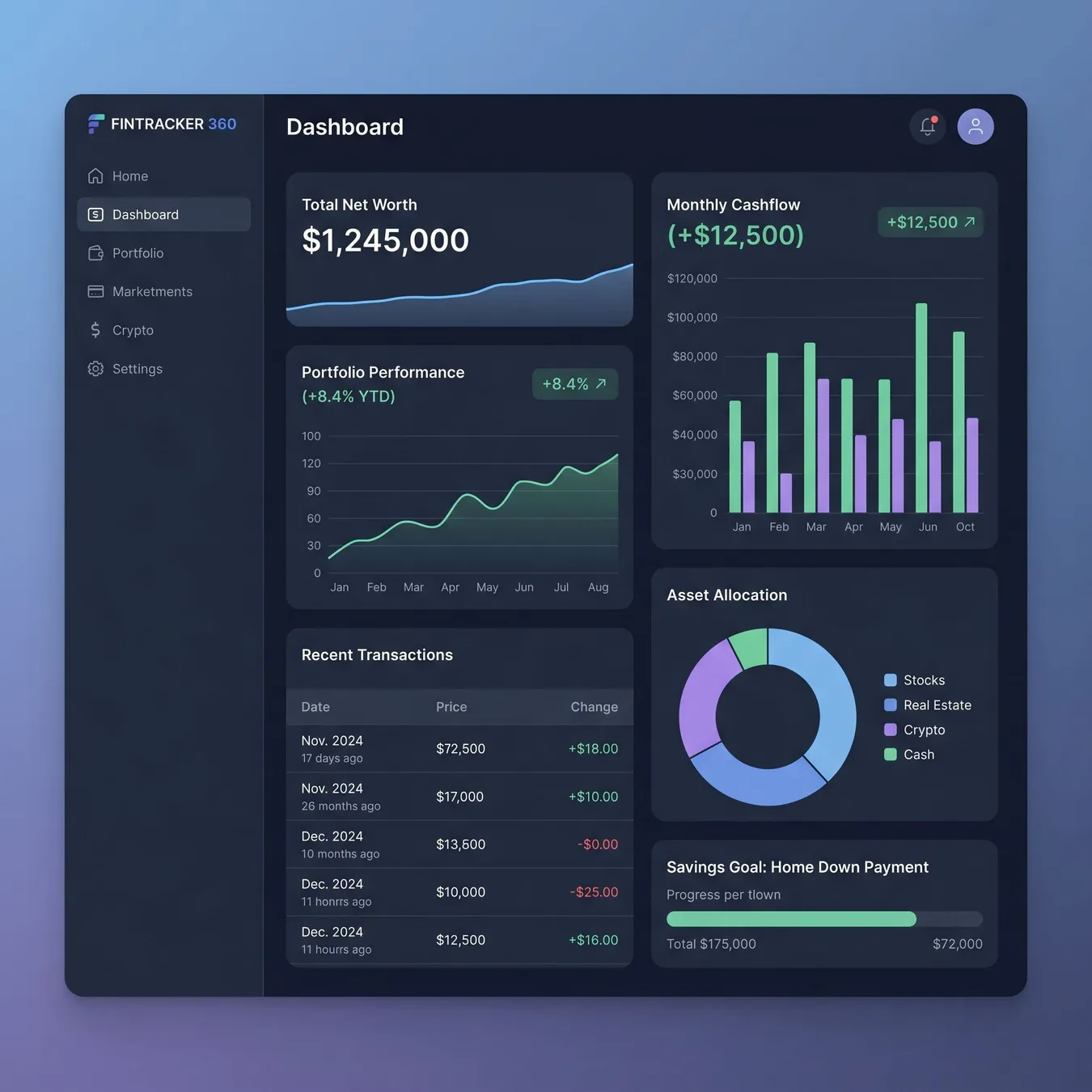
Custom internal tools provide a more robust alternative to UI-based bots.
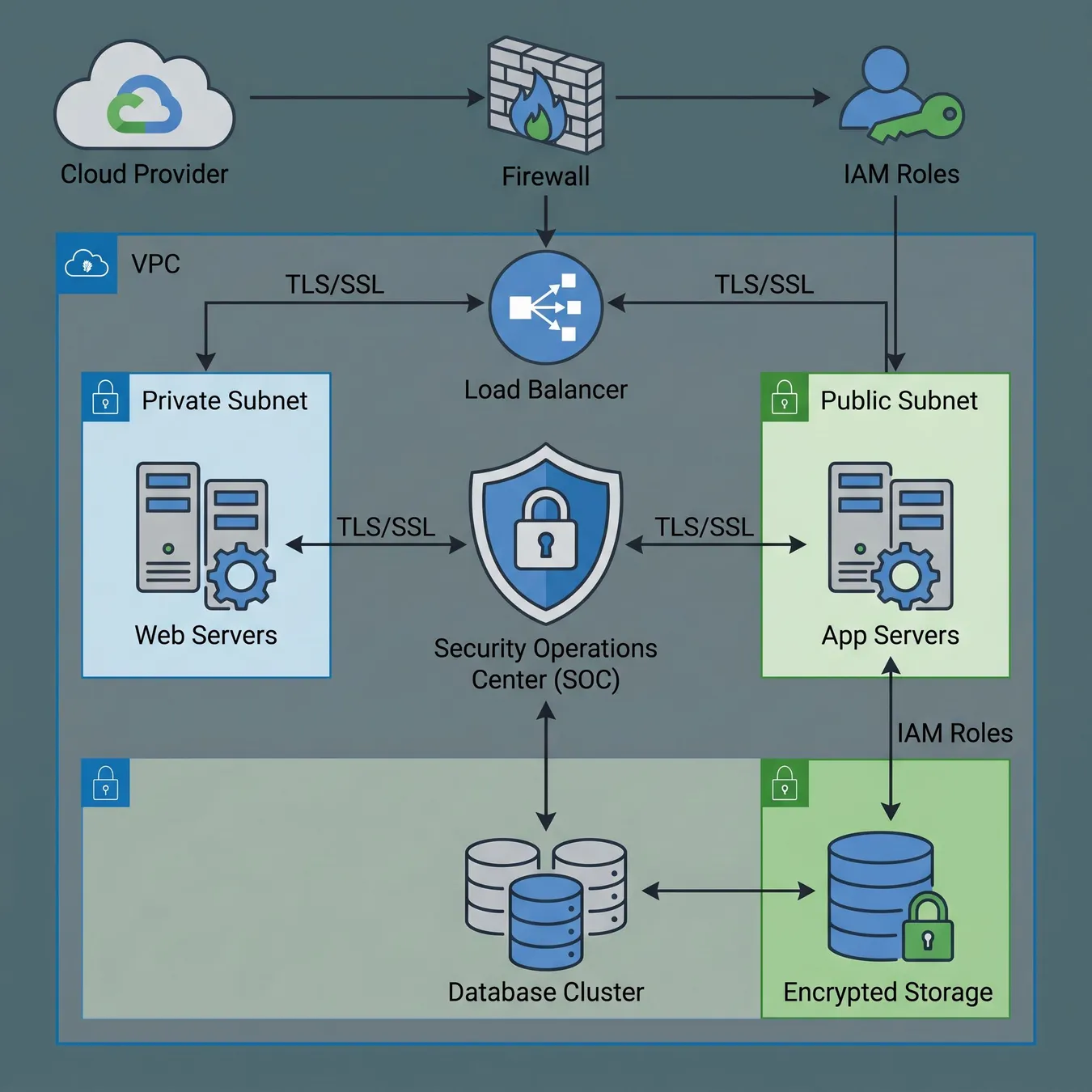
We build on secure, scalable cloud foundations.
Frequently Asked Questions
Ready to Automate Your Finance Workflows?
Stop fighting manual drag. Let Studio 402 build the durable systems your finance team needs to scale.
Keep reading
More in Financial & AP Automation
- Fintech Ops
- RPA Guide
- Automation Strategy
- Enterprise Finance
Trusted by growth-stage teams to build production-ready financial infrastructure.
Updated for 2026
Whether you are just starting with robotic process automation finance or looking to refactor a legacy setup, a structured approach is key to long-term success.
Our team specializes in bridging the gap between temporary fixes and permanent, scalable software solutions.
Next Steps for Your Implementation
- 01
Audit your current manual workflows.
- 02
Prioritize tasks by volume and error rate.
- 03
Consult with a technical partner on build-vs-buy.
- 04
Launch a scoped pilot project.