
Automation in Finance and Accounting: Intelligent Systems
Modern finance departments are moving away from manual data entry toward high-velocity operations. Implementing automation in finance and accounting allows teams to focus on strategic analysis rather than repetitive administrative tasks.
40%
Reduction in processing costs
99.9%
Data entry accuracy rate
5x
Increase in closing speed
Understanding Automation in Finance Department Operations
The scope of automation in finance department workflows covers everything from simple data extraction to complex decision-making logic. By integrating intelligent systems, organizations can eliminate the friction inherent in legacy accounting processes.
- Automated invoice processing and verification
- Real-time expense management and auditing
- Continuous bank reconciliation
- Automated financial statement generation
- Predictive cash flow forecasting

Intelligent dashboards provide real-time visibility into automated financial workflows.
The Role of Robotic Process Automation in Finance and Accounting
Many teams start their journey by using robotic process automation finance to handle high-volume, rule-based tasks. RPA acts as a digital workforce that bridges the gap between disconnected legacy software systems.
Trade-off
3 pros · 3 cons
Pros
Eliminates human error in data entry
Operates 24/7 without fatigue
Scales instantly with transaction volume
Cons
Requires structured data inputs
Can break if UI elements change
Lacks cognitive decision-making
Key Benefits of Automation and Accounting Integration
The synergy between automation and accounting creates a foundation for scalable growth. When financial data flows seamlessly through automated pipelines, the risk of compliance failures and reporting delays is significantly reduced.
Info.
// Efficiency Gains
Implementing Finance and Accounting Automation
Transitioning to a modern stack requires a clear roadmap. Most successful implementations follow a phased approach, starting with the most manual and error-prone areas of the ledger.
01 / 04
phase 01 / 04
Audit
phase 02 / 04
Design
phase 03 / 04
Deploy
phase 04 / 04
Optimize
Overcoming Manual Bottlenecks
To truly modernize, you must automate manual business processes that currently rely on spreadsheets and email threads. This shift ensures that data is captured at the source and validated automatically.
Standardize invoice formats
Implement multi-factor approval
Maintain a human-in-the-loop for exceptions
Automate a broken or messy process
Ignore data security protocols
Over-complicate initial workflows
Automation for Finance: Strategic Use Cases
Broadly speaking, automation for finance is not just about cost-cutting. it is about operational agility. High-growth companies use these systems to manage complex vendor relationships and global payment rails.
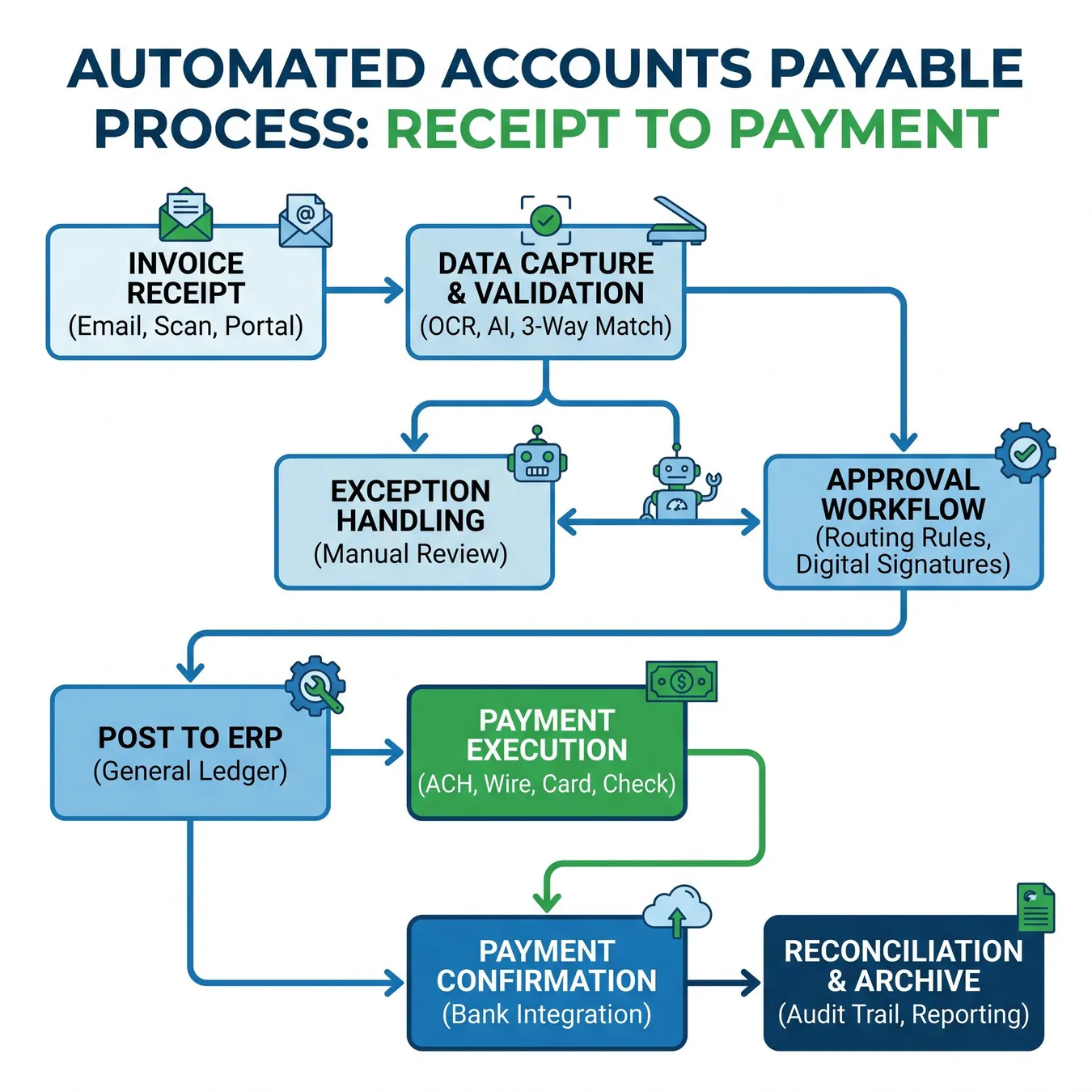
Visualizing the automated AP lifecycle.
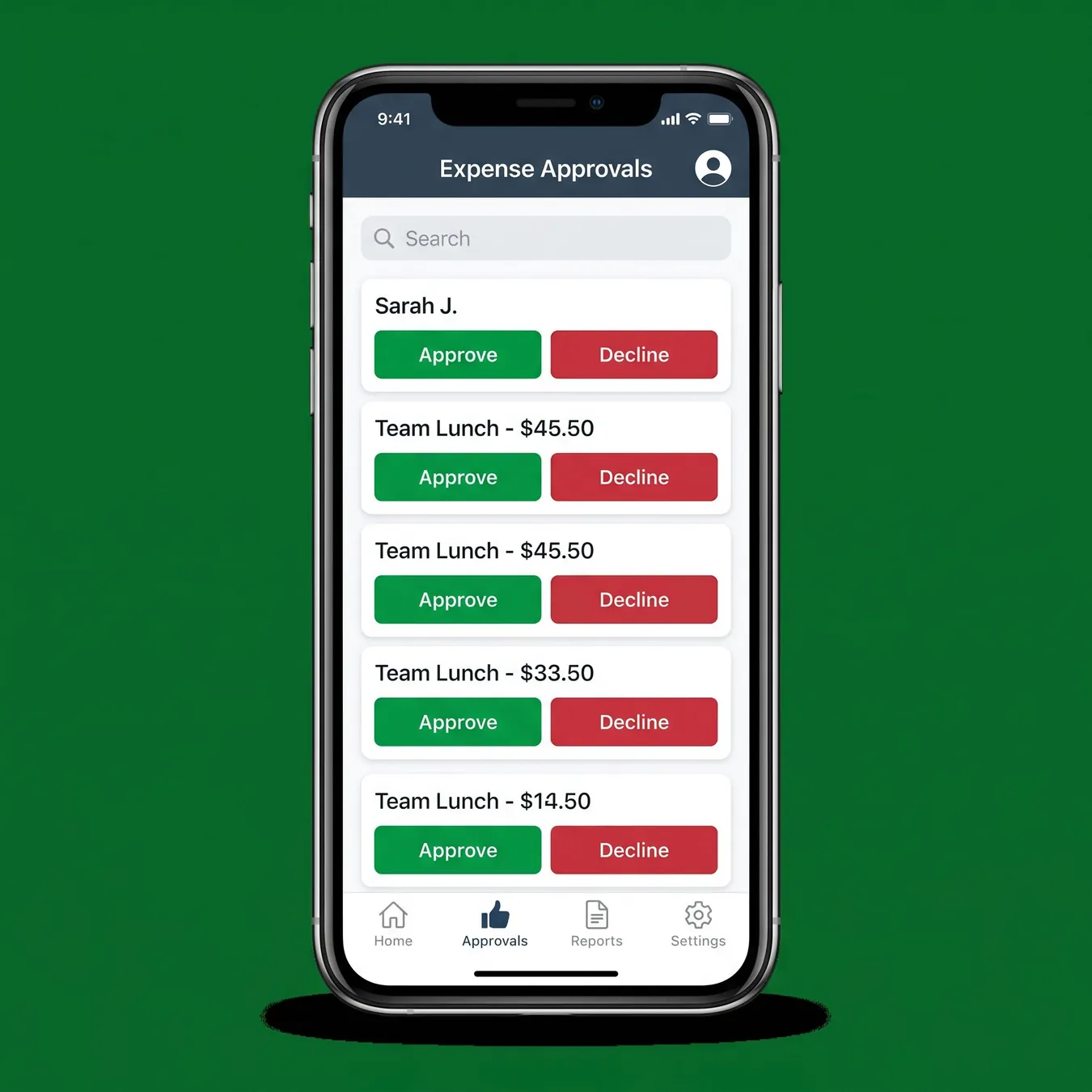
Mobile-first approval workflows.
Scaling with Corporate Finance Automation
For enterprise-level organizations, corporate finance automation provides the governance needed to manage thousands of transactions across multiple entities and jurisdictions.
Managing Multi-Entity Consolidations
Consolidating books across different subsidiaries often takes weeks. Automation reduces this to hours by standardizing chart of accounts and automating intercompany eliminations.
Designing Accounts Payable Workflow Automation
One of the most immediate ROI areas is accounts payable workflow automation. By removing manual entry, teams can capture early payment discounts and avoid late fees consistently.
| Process | Manual Time | Automated Time | Accuracy |
|---|---|---|---|
| Invoice Entry | 15 mins | < 1 min | High |
| Approval Routing | 3 days | Instant | Absolute |
| Reconciliation | 8 hours | 10 mins | High |
The Impact of AI-Native Financial Systems
AI-native systems go beyond simple rules. They use machine learning to identify anomalies, detect fraud, and suggest optimal payment timing based on cash flow patterns.
Automation is no longer a luxury for finance teams; it is the baseline requirement for maintaining a competitive edge in a digital economy.
Financial Systems Architect · Studio 402 Partner
Common Challenges in Finance Automation
While the benefits are clear, implementation can be hindered by dirty data or resistance to change. Successful teams prioritize data hygiene before switching on automated pipelines.
Cleanse vendor master data
Define clear approval thresholds
Integrate with core ERP
Train staff on exception handling
Future Trends in Accounting Technology
We are moving toward 'autonomous finance' where the majority of routine transactions are handled by agents that only flag unusual items for human review.
Real-Time Auditability
Instead of year-end audits, automated systems provide a continuous audit trail, making compliance a background process rather than a seasonal crisis.
Bridging the Gap with Studio 402
If your finance department is struggling with manual coordination and fragile spreadsheets, Studio 402 can help. We build production-ready software that turns operational drag into a scalable asset.
Custom Engineering for Finance
We don't just recommend tools; we architect and build the integrations and custom platforms that your unique sales and operations motion requires.
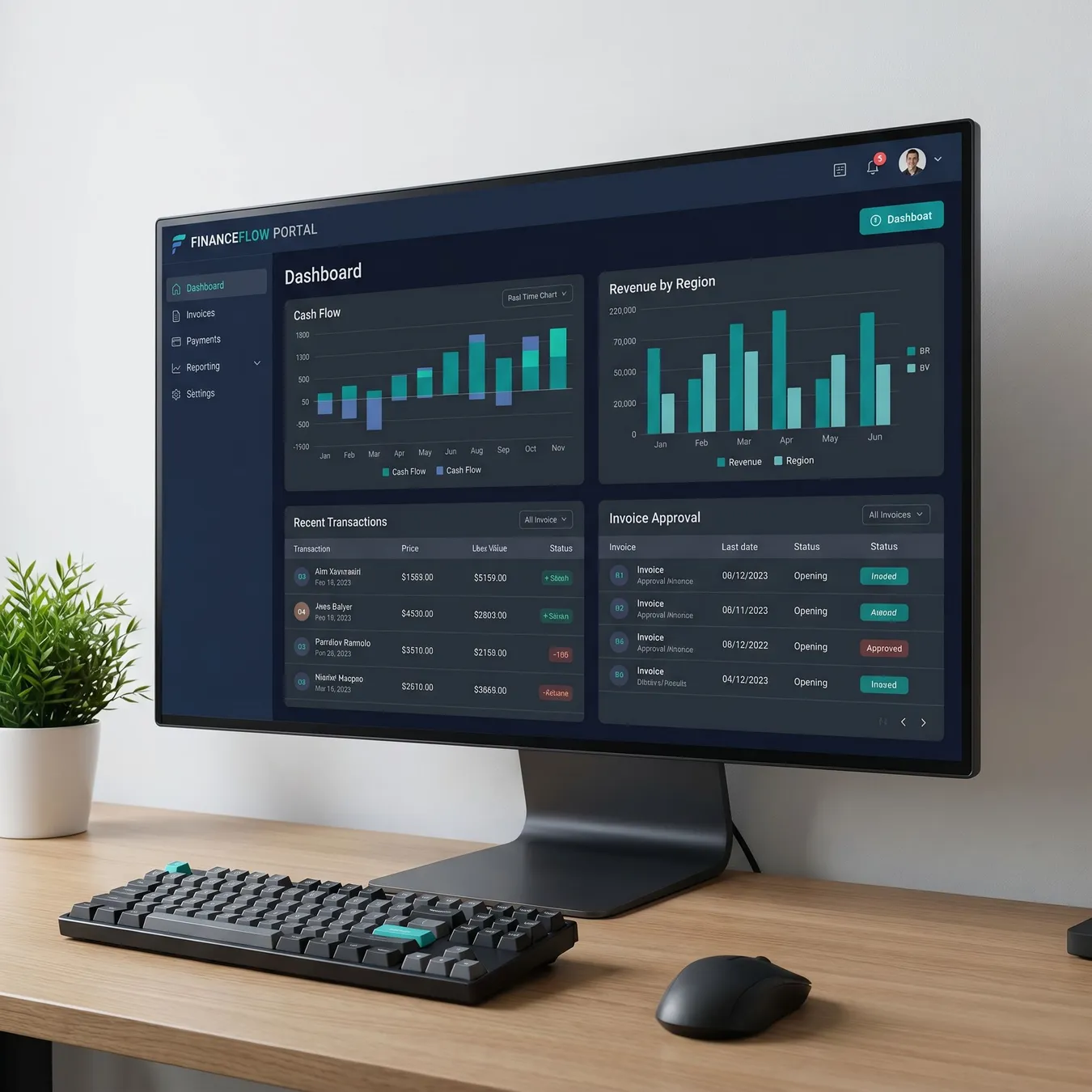
Custom internal tools built by Studio 402 for finance teams.
Frequently Asked Questions
Take the Next Step in Financial Transformation
Ready to eliminate manual bottlenecks? Explore our specific services and guides to see how we can modernize your infrastructure.
Modernize Your Finance Operations
Stop fighting spreadsheets and start building durable systems. Let's discuss your automation roadmap.
Keep reading
More in Financial & AP Automation
- Fintech Ops
- AI Integration
- Workflow Automation
- Production-Ready
Trusted by growth-stage companies to scale financial infrastructure.
Studio 402 Engineering Excellence
Studio 402 transformed our manual billing process into a fully automated system that handles 10x the volume with zero new hires.