
Automated Financial Reporting and Data Pipelines
Manual financial reporting is a significant operational bottleneck for growth-stage companies. By implementing financial reporting automation tools, teams can shift from reactive data entry to proactive business intelligence finance, ensuring that every decision is backed by real-time, accurate data.
75%
Reduction in manual data entry time
100%
Data consistency across reporting surfaces
Real-time
Visibility into cash flow and burn rates
The Architecture of Modern Financial Data Pipelines
A robust financial data pipeline acts as the central nervous system for your business operations. It connects disparate sources—like Stripe, QuickBooks, and internal databases—into a unified stream that feeds your reporting dashboards without human intervention.
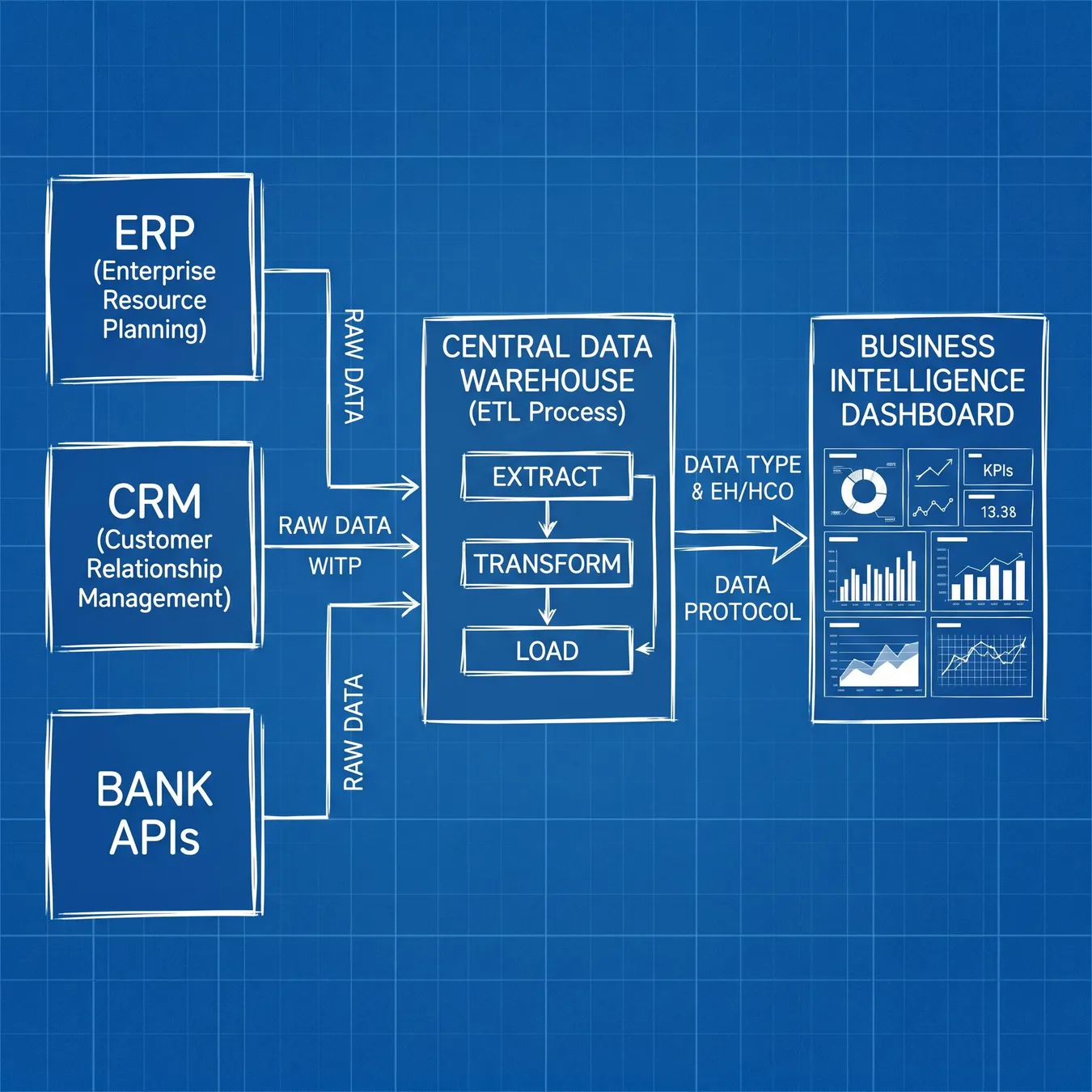
A modern financial data pipeline architecture.
Data Extraction and Ingestion
The first step involves pulling raw data from various APIs and databases. This stage often utilizes robotic process automation finance to handle legacy systems that lack modern connectivity, ensuring no data point is left behind.
Transformation and Normalization
Raw data is rarely ready for analysis. Automated pipelines clean, format, and normalize this data, converting different currencies or date formats into a single standard for accurate cross-departmental comparison.
Benefits of Automating Your Financial Reporting
- Elimination of human error in spreadsheet formulas
- Instant access to P&L and Balance Sheet statements
- Improved compliance through immutable audit trails
- Faster month-end closing cycles
- Enhanced forecasting accuracy using historical data trends
Info.
// Proactive Intelligence
Comparing Manual vs. Automated Reporting
Trade-off
3 pros · 3 cons
Pros
Real-time data updates
Scalable with transaction volume
Single source of truth
Cons
Delayed insights (days or weeks)
High risk of manual entry errors
Fragile spreadsheet formulas
Implementing Automated Digital Workflows
To achieve true efficiency, reporting must be integrated into automated digital workflows. This ensures that when a transaction occurs, the reporting layer is updated instantly, triggering necessary approvals or alerts.
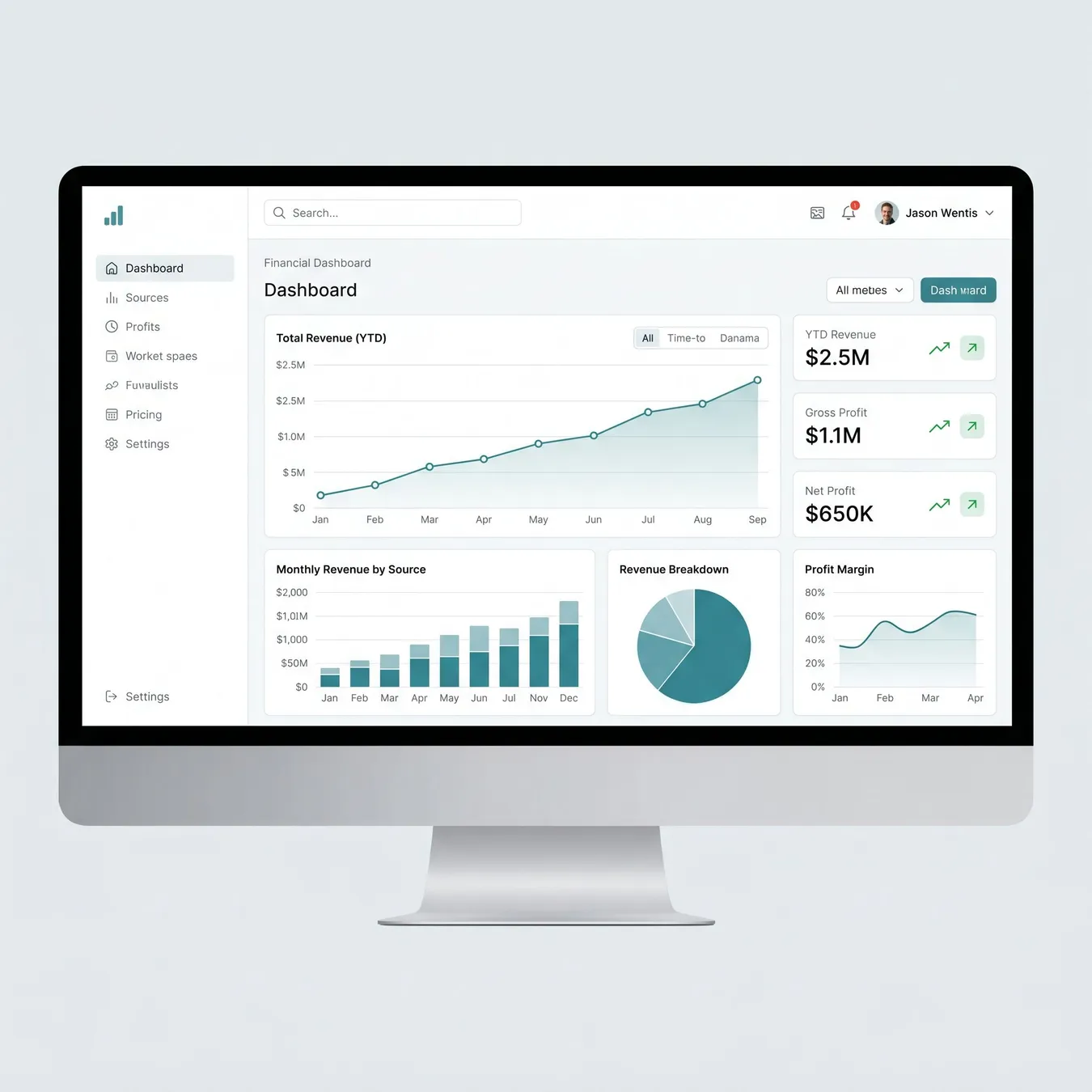
Real-time revenue tracking.

Mobile-ready financial approvals.
Step-by-Step: Building Your First Pipeline
01 / 04
phase 01 / 04
Audit Data Sources
phase 02 / 04
Define Key Metrics
phase 03 / 04
Select Integration Tools
phase 04 / 04
Design the Dashboard
Advanced Intelligence with Agentic AI
The next frontier in reporting is the use of agentic ai in finance. These systems don't just move data; they analyze it for anomalies, suggest cost-saving measures, and even draft initial commentary for monthly reports.
Common Reporting Challenges
Scaling for Large Teams
For enterprise-grade needs, corporate finance automation provides the necessary governance and scale. This includes multi-currency consolidation and complex intercompany eliminations that smaller tools can't handle.
Data Governance and Compliance
Automated systems ensure that every change to financial data is logged. This creates a transparent environment that simplifies audits and ensures compliance with global financial standards.
Best Practices for Data Integrity
Validate data at the point of entry
Use a centralized data warehouse
Automate reconciliation daily
Rely on manual CSV exports
Hard-code logic into dashboards
Ignore data latency issues
Visualizing Financial Performance
Data is only useful if it is understood. Modern reporting tools use interactive visualizations to help executives spot trends, identify outliers, and drill down into specific transaction details instantly.

Executive-level financial visualization.
Technical Requirements for Automation
| Component | Requirement | Purpose |
|---|---|---|
| ETL Layer | High Availability | Continuous data flow |
| Data Warehouse | Scalable Storage | Historical archiving |
| BI Tool | Custom Logic | Stakeholder reporting |
The Path to Financial Maturity
Moving away from manual processes is a journey. Start by identifying the most time-consuming report and automating its data source first. This iterative approach reduces risk and shows immediate ROI.
Identify all manual data entry points
Map data flow from source to report
Select a pilot reporting project
Why Studio 402 for Financial Systems?
At Studio 402, we don't just build dashboards; we engineer the underlying infrastructure that makes them reliable. We specialize in helping companies transition from fragile setups to production-grade financial systems.
Our Approach to Data Engineering
We focus on building durable data pipelines that survive real-world scale. Whether you are integrating AI agents or cleaning up legacy debt, our team ensures your financial data is secure, accurate, and actionable.
Studio 402 transformed our month-end process from a week-long headache into a two-hour automated verification.
Sarah Chen · VP of Finance
Ready to Modernize Your Finance Stack?
If your team is still spending hours in Excel every month, it's time to upgrade. We help you build the systems that allow your finance team to focus on growth, not data cleanup.
Automate Your Financial Reporting
Stop wrestling with spreadsheets. Let us build the data pipelines and dashboards your business needs to scale.
Explore More Resources
Keep reading
More in Financial & AP Automation
Frequently Asked Questions
Financial reporting automation is no longer a luxury; it is a requirement for modern business intelligence. By investing in durable data pipelines, you empower your leadership with the clarity needed to win.
- Fintech Ops
- Data Engineering
- AI Automation
- Business Intelligence