
Intelligent Automation in Financial Services
Intelligent automation in financial services is the strategic integration of AI-native systems and process automation to solve complex operational challenges. Unlike legacy scripts, these systems learn and adapt to financial data patterns.
70%
Reduction in manual entry
24/7
Operational availability
99.9%
Data accuracy target
The Core of Intelligent Automation in Finance
Modern financial services automation combines traditional logic with machine learning to handle unstructured data. This shift allows teams to move from simple task execution to complex decision support and predictive analysis.
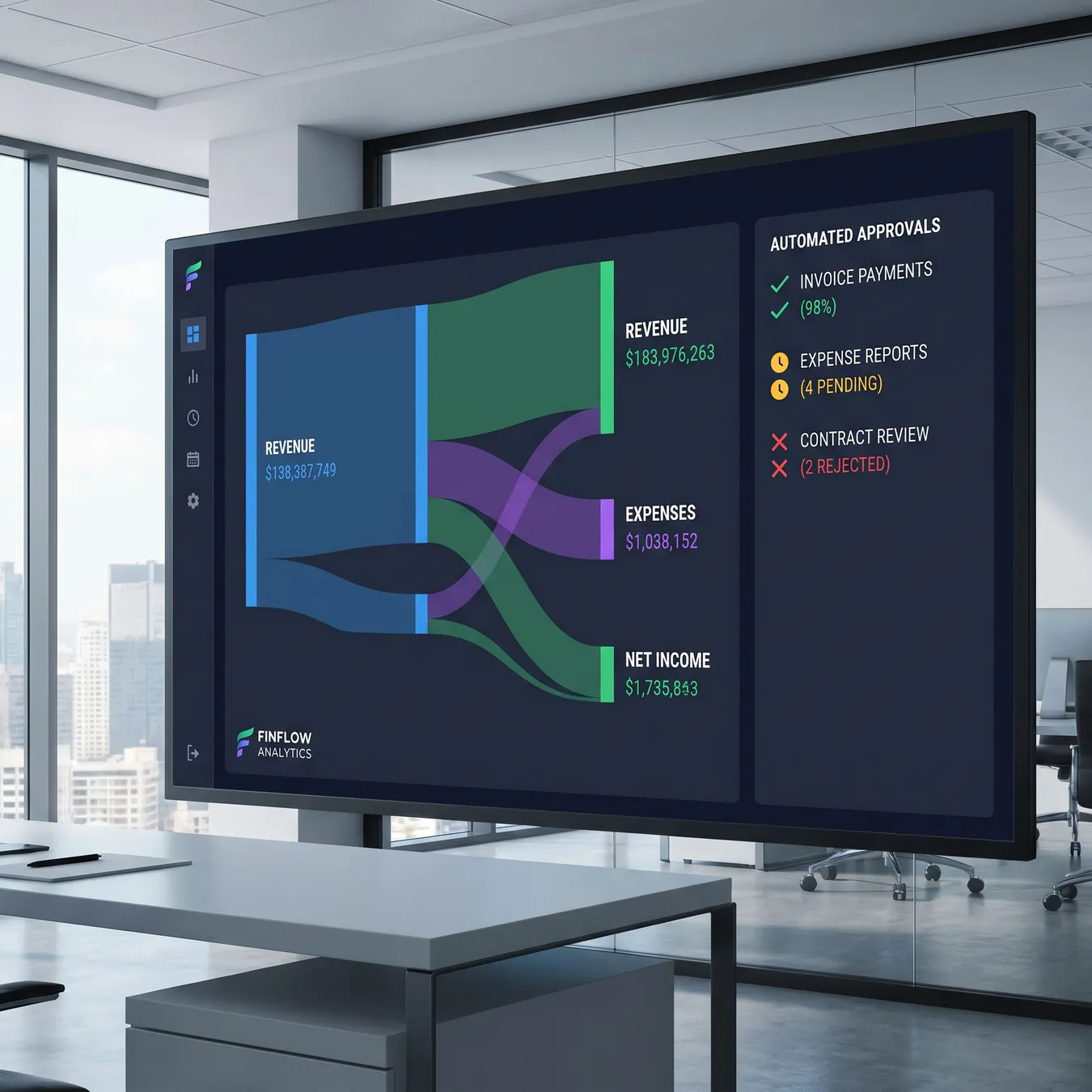
Visualizing automated financial workflows and real-time data processing.
Key Strategies for Financial Services Automation
Implementing intelligent process automation financial services requires a focus on data integrity and auditability. Leaders must prioritize workflows where manual bottlenecks create the highest risk of error or delay.
- Automated invoice extraction and validation
- Real-time fraud detection and anomaly alerts
- Dynamic approval routing based on transaction risk
- Automated ledger reconciliation and reporting
RPA vs. Intelligent Automation
While robotic process automation finance handles repetitive, rule-based tasks, intelligent systems manage exceptions and learn from human feedback. Most high-growth teams use a hybrid approach.
Trade-off
3 pros · 3 cons
Pros
Handles unstructured data
Self-correcting workflows
Scales with complexity
Cons
Higher initial setup time
Requires quality training data
Needs ongoing monitoring
Implementing Intelligent Process Automation
Successful intelligent automation financial services deployments start with a clear map of existing manual processes. Identify where data handoffs fail and where human intervention is currently mandatory.
01 / 04
phase 01 / 04
Discovery
phase 02 / 04
Architecture
phase 03 / 04
Development
phase 04 / 04
Hardening
Overcoming Common Implementation Barriers
Many teams struggle with legacy system integration. Modern intelligent automation in finance relies on robust API layers and secure cloud infrastructure to bridge the gap between old and new tech stacks.
Start with a high-volume, low-complexity pilot
Ensure full auditability for every automated step
Involve compliance teams early in the design phase
Automate a broken or inefficient manual process
Ignore the need for human-in-the-loop approvals
Use black-box AI without explainable logic
The Role of Agentic AI in Modern Finance
The next frontier involves agentic ai in finance, where autonomous systems can research discrepancies and suggest resolutions. This reduces the cognitive load on finance professionals significantly.
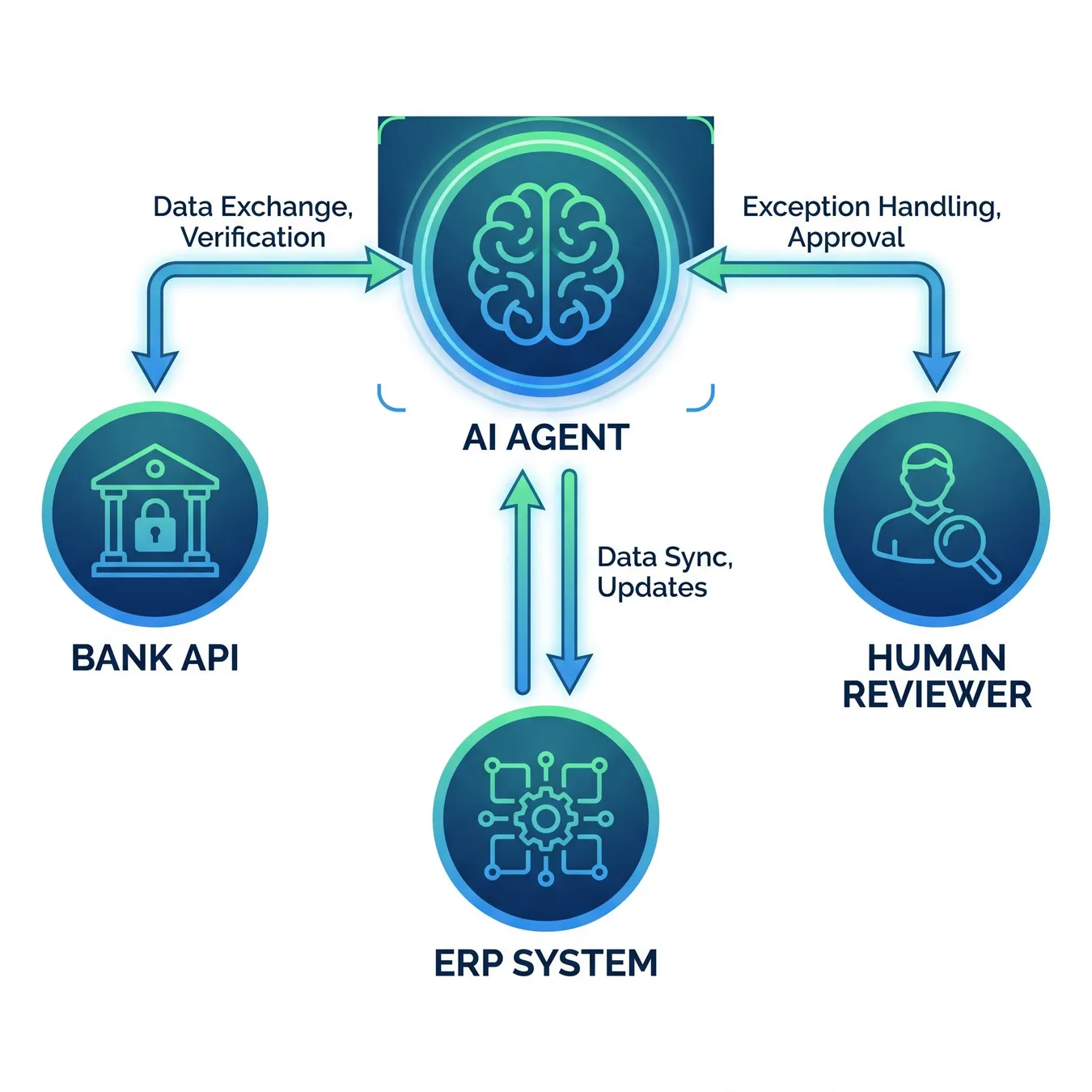
Agentic workflows orchestrating complex financial tasks.
Data Security and Compliance Standards
In financial services, automation must be production-hardened. This means implementing role-based access controls, data encryption, and immutable logs to satisfy regulatory requirements.
Info.
// Compliance Note
Measuring the ROI of Financial Automation
ROI isn't just about headcount. It's about the speed of closing the books, the reduction in late payment penalties, and the ability to scale without linear cost increases.
| Metric | Manual Process | Automated System |
|---|---|---|
| Processing Time | 3-5 Days | Minutes |
| Error Rate | 2-5% | <0.1% |
| Audit Readiness | Reactive | Real-time |
Scaling Your Automation Strategy
Once a pilot is successful, the focus shifts to horizontal scaling. This involves applying the same intelligent logic to different departments, from AP to treasury and procurement.
Standardize data ingestion formats
Establish a centralized automation COE
Define clear success metrics for each phase
Building Durable Financial Systems with Studio 402
At Studio 402, we don't just build prototypes; we engineer production-ready financial infrastructure. We help finance leaders bridge the gap between fragile spreadsheets and scalable, AI-native software.
The goal of intelligent automation is to turn your finance department from a cost center into a high-velocity engine for growth.
Studio 402 Engineering Team
Frequently Asked Questions
Scale Your Finance Operations
Ready to eliminate manual bottlenecks with custom-engineered automation? Let's build a system that grows with your business.
Keep reading