
Overview
What is an MVP in Software Development?
A strategic guide to building production-ready foundations that balance speed with long-term scalability in 2026.
MVP in Software Development: A Strategic Engineering Guide
In the fast-paced world of tech, understanding what does mvp mean in software development is crucial for any founder. A Minimum Viable Product (MVP) is not just a basic prototype; it is the most pared-down version of a product that can still be released to early customers to gather validated learning.
The core purpose of an mvp in software engineering is to test business hypotheses with minimal resources. By focusing on the core value proposition, teams can avoid the common pitfall of building features that users don't actually want, ensuring a more efficient path to product-market fit.
70%
Startups that fail due to premature scaling
2-4x
Faster time-to-market with a lean MVP
100%
Focus on core user value
Defining the Minimum Viable Product (MVP)
When we discuss mvp meaning software development, we are looking at a strategy that prioritizes learning over perfection. It is about finding the intersection between what is 'Minimum' (the smallest set of features) and 'Viable' (something that actually solves a problem and users are willing to use).
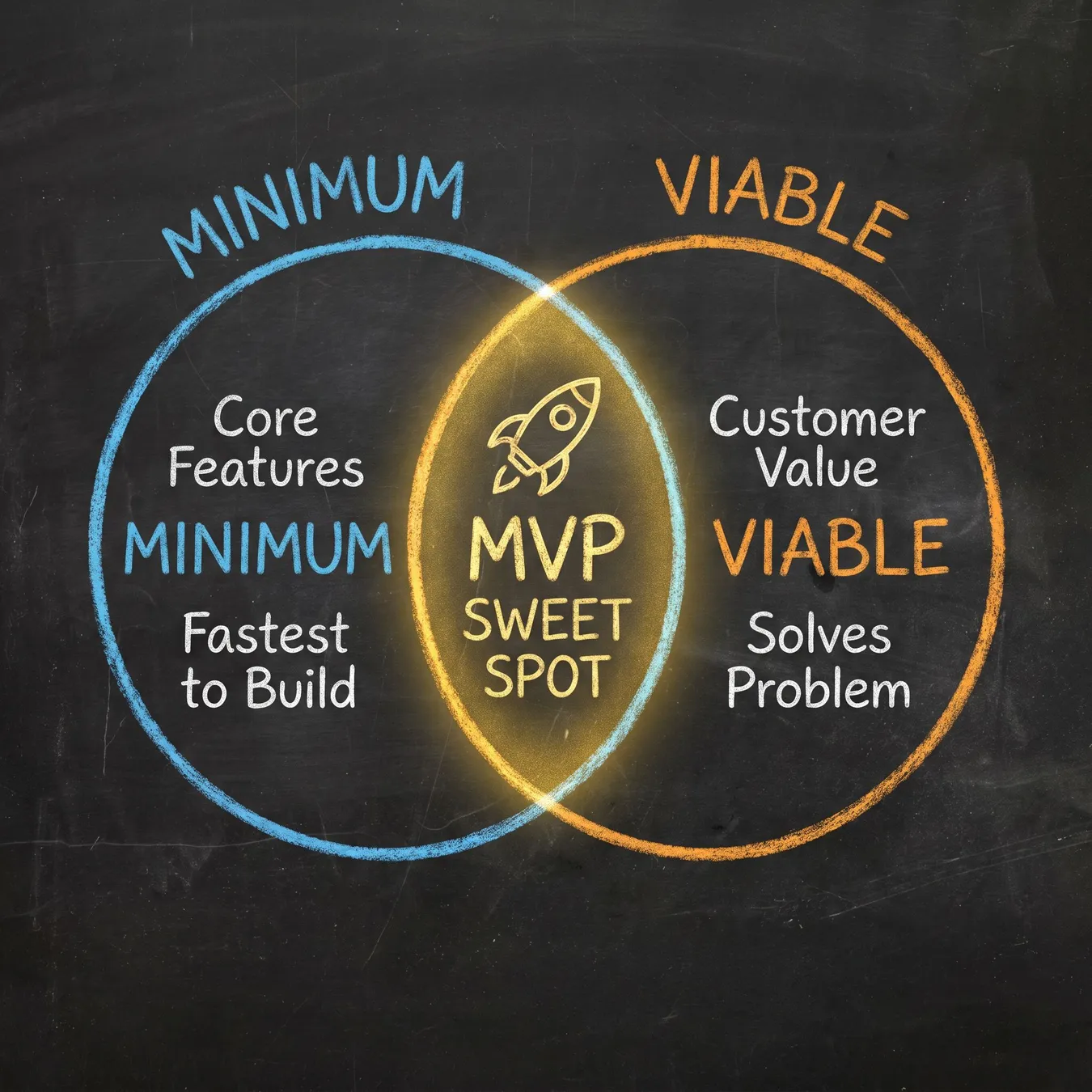
The balance between minimal scope and viable utility.
The Strategic Importance of 'Viable'
Many teams focus too heavily on 'Minimum' and forget that the product must be 'Viable'. In 2026, users expect a high level of quality. A minimum viable product mvp must still be secure, performant, and reliable, even if its feature set is limited.
In Which Stage is a Minimum Viable Product MVP Created?
An MVP is typically created during the early development phase, immediately following initial discovery and ideation. It serves as the bridge between a conceptual prototype and a full-scale commercial product.
01 / 04
phase 01 / 04
Discovery & Ideation
phase 02 / 04
MVP Scoping
phase 03 / 04
Engineering & Build
phase 04 / 04
Launch & Feedback
MVP vs. Prototype: Understanding the Difference
It is a common mistake to use these terms interchangeably. However, the transition from prototype to production is a significant technical leap. While a prototype is often a 'vibe-coded' demo, an MVP is a functional piece of software.
| Feature | Prototype | MVP |
|---|---|---|
| Primary Goal | Visual validation | Market validation |
| Target Audience | Internal stakeholders | Early customers |
| Code Quality | Disposable/Demo-ware | Production-ready |
Core Benefits of Building an MVP
- Faster time-to-market for critical feedback
- Reduced development costs by avoiding waste
- Clear focus on the primary value proposition
- Early user acquisition and brand building
- Easier path to securing investor funding
Risk Mitigation Through Lean Principles
Building an MVP is the ultimate risk mitigation strategy. Instead of spending months on a full-featured product that might fail, you spend weeks on a core version that proves the concept.
Strategic MVP Engineering: The Studio 402 Approach
At Studio 402, we believe in agile development mvp frameworks that don't cut corners on architecture. We build MVPs that are designed to scale, not just to demo.

Clean code is the foundation of a scalable MVP.
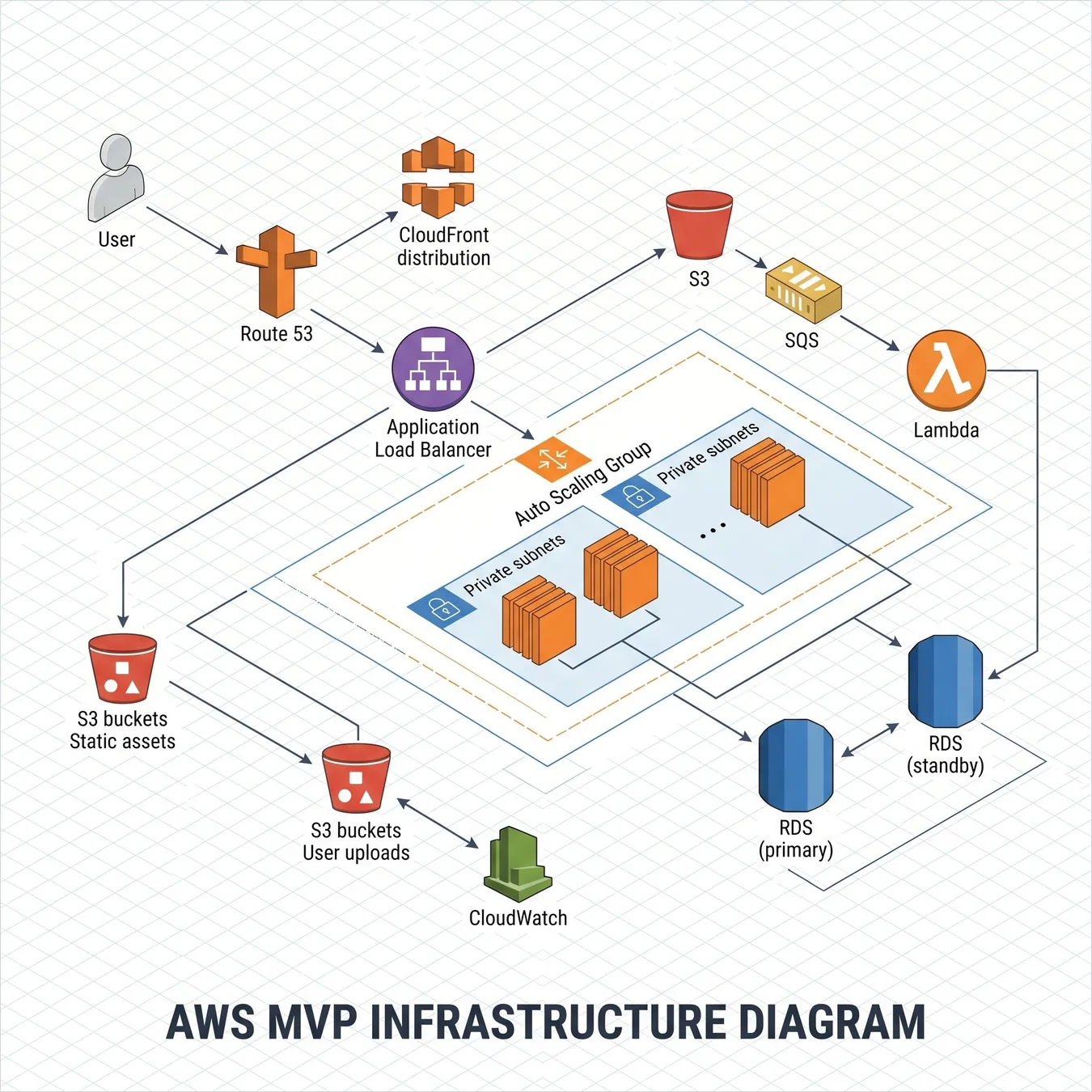
Infrastructure built for future growth.
Key Considerations for Different Product Types
The strategy for an MVP varies significantly depending on your platform. For example, a mobile app mvp requires a focus on smooth UI and offline capabilities from day one.
Building for SaaS and B2B
When building saas mvp products, multi-tenancy and data security are not optional features—they are part of the 'viable' foundation.
Common Pitfalls in MVP Development
Focus on one primary user problem
Invest in a solid data architecture
Gather analytics from the first user
Prioritize security and auth early
Include 'nice-to-have' features
Ignore performance bottlenecks
Build on non-scalable 'no-code' tools
Wait too long to launch
The Engineering Process: From Zero to One
- 01
Identify the 'Killer Feature' that solves the core pain point.
- 02
Design a user flow that is frictionless and intuitive.
- 03
Select a modern, scalable tech stack (e.g., Next.js, Node, AWS).
- 04
Build the core engine with production hardening.
- 05
Implement essential integrations like Stripe or Postmark.
- 06
Deploy to a staging environment for rigorous testing.
Measuring MVP Success
Success isn't measured by feature count, but by user engagement and feedback. Are users completing the core action? Are they coming back? This data informs your post-MVP roadmap.
If you are not embarrassed by the first version of your product, you’ve launched too late.
Reid Hoffman · Founder of LinkedIn
Why Quality Matters in a 2026 MVP
In the current market, 'minimum' no longer means 'broken'. Users have zero tolerance for bugs. A production-ready MVP is your best chance at retaining early adopters.
Warning.
// Pro Tip: Avoid Vibe-Coding
Transitioning to a Full Product
Once your MVP has validated the market, the next step is iteration. This involves hardening the infrastructure, adding secondary features, and scaling the user base.
Frequently Asked Questions about MVPs
How Studio 402 Can Help
We specialize in turning ambitious ideas into durable software. Whether you are starting from zero or need to rescue a prototype that isn't scaling, our team provides the engineering depth you need.
Trusted by founders to ship production-ready MVPs in weeks.
Studio 402 Engineering Excellence 2026
Ready to Build Your Foundation?
Don't settle for a disposable prototype. Build an MVP that serves as a true foundation for your business. Let's discuss your vision and how we can bring it to life with precision engineering.
Start Your MVP Journey Today
Work with a senior engineering partner to build a production-ready MVP that scales with your ambition.
Explore More Resources
Keep reading
More in MVP Development & Product Strategy
- MVP Strategy
- Software Engineering
- Startup Growth
- Product Design
Studio 402 is a premium product studio based in the US, helping companies worldwide build, fix, and scale custom software systems.
Define core user persona
Identify primary pain point
Map essential user journey
Select production-grade tech stack
For more information on launching your product, see our related guide on how to launch mvp effectively.