
Average Time for Custom Software Development MVP in 2026
Building a Minimum Viable Product (MVP) is the fastest way to validate a startup idea, but 'fast' is relative. In 2026, the average time for custom software development mvp builds typically ranges from 8 to 16 weeks depending on complexity and the depth of production hardening required.
8-12 Weeks
Standard SaaS MVP
12-16 Weeks
Complex AI/Mobile Build
2-4 Weeks
Discovery & Design
The MVP Timeline Breakdown: From Concept to Launch
Understanding the timeline of software development requires looking at the specific phases that turn a vision into a functional product. Skipping these stages often leads to technical debt that slows down future growth.
01 / 04
phase 01 / 04
Discovery & Scoping
phase 02 / 04
Design & Prototyping
phase 03 / 04
Core Engineering
phase 04 / 04
Hardening & QA
Factors That Influence Your MVP Build Speed
Not all MVPs are created equal. A simple internal tool will move much faster than a multi-tenant SaaS platform with complex AI integrations or financial compliance requirements.
- Third-party API integrations (Payments, CRM, Auth)
- Data complexity and migration needs
- Platform requirements (Web vs. iOS vs. Android)
- Regulatory compliance (HIPAA, GDPR, SOC2)
- AI and Machine Learning model orchestration
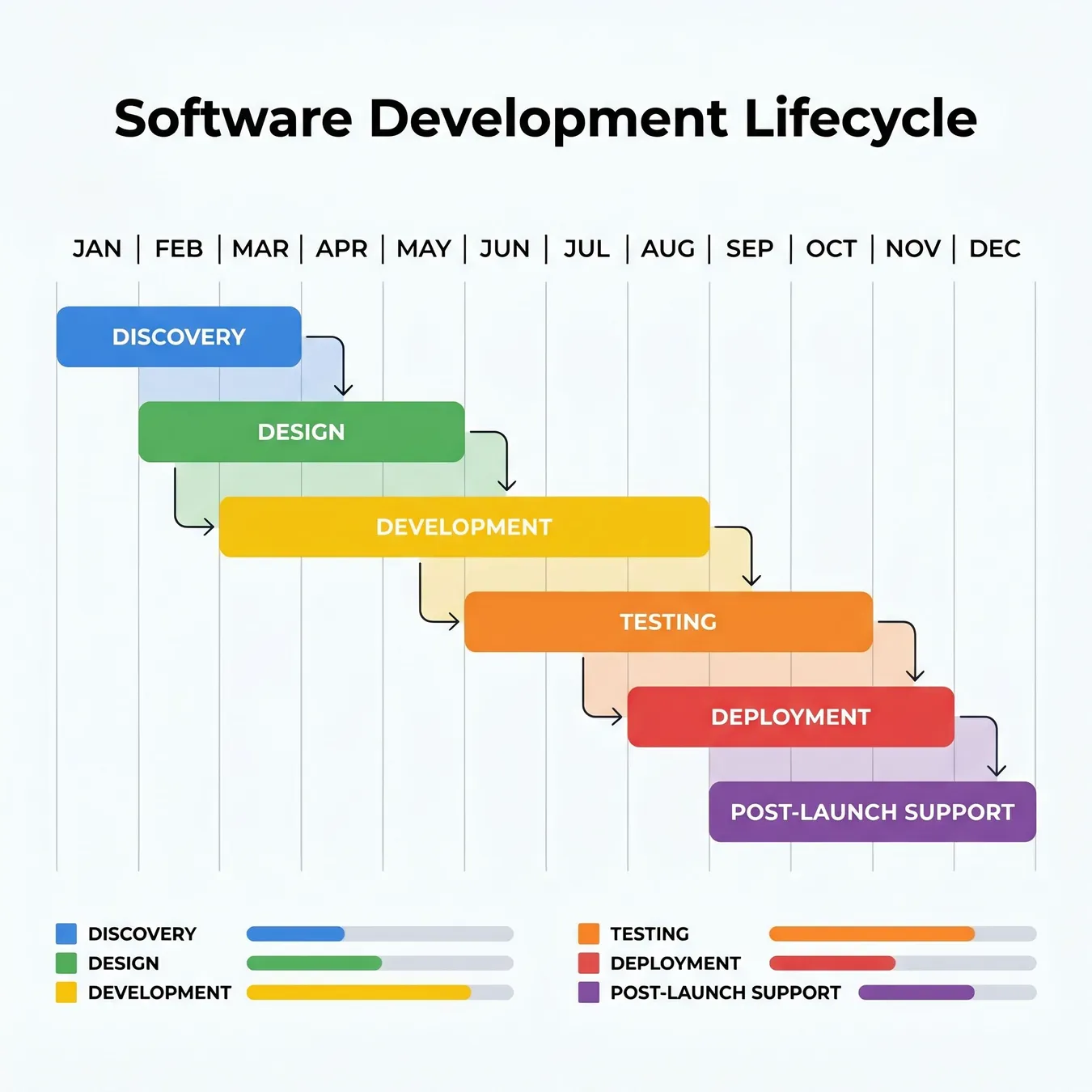
A typical 12-week development sprint schedule for a production-ready MVP.
Why Estimating Software Development Time is Difficult
Founders often struggle with estimating software development time because they focus on features rather than the underlying systems. A single 'simple' button might trigger a complex chain of background jobs and third-party webhooks.
Info.
// The 20% Rule
Comparing MVP Build Approaches
| Approach | Avg. Timeline | Quality Level |
|---|---|---|
| No-Code Tools | 2-4 Weeks | Low Scalability |
| Freelance Dev | 12-20 Weeks | Variable |
| Product Studio | 8-14 Weeks | Production-Ready |
Speed vs. Stability: The Founder's Dilemma
In 2026, 'vibe-coding' and AI-generated prototypes have made it easier to see a demo quickly, but these often fail in production. Real speed comes from using an agile development mvp framework that prioritizes architectural integrity from day one.
Trade-off
4 pros · 3 cons
Pros
Faster time to market
Lower initial capital risk
Immediate user feedback
Focused feature set
Cons
Potential for technical debt
Limited initial scalability
Narrower market appeal
How to Accelerate Your MVP Launch
If your internal team is struggling to hit deadlines, mvp development outsourcing can provide the senior engineering leverage needed to bypass common bottlenecks like infrastructure setup and security audits.
Define a strict 'Must-Have' list
Use proven tech stacks (React, Node, AWS)
Automate your CI/CD pipeline early
Focus on one core user problem
Add 'nice-to-have' features mid-sprint
Over-engineer for millions of users on day 1
Ignore security and auth basics
Skip the discovery phase
Common Timeline Killers in MVP Projects
Even the best-planned projects can face delays. Recognizing these 'timeline killers' early allows you to pivot or adjust expectations before the launch date slips.
- 01
Scope Creep: Adding features during the build phase.
- 02
Integration Hell: Struggling with poorly documented third-party APIs.
- 03
Design Indecision: Changing UI layouts after coding has begun.
- 04
Technical Debt: Fixing bugs in the foundation while building the roof.

Complex integrations are the most common cause of MVP timeline delays.
Technical Requirements for a 2026 MVP
Modern users expect more than a basic prototype. To be 'production-ready' in 2026, your MVP must include several foundational elements that take time to implement correctly.
Secure Authentication (OAuth/SSO)
Responsive Mobile-First Design
Basic Analytics Integration
Automated Database Backups
Error Logging and Monitoring
The Role of AI in Modern MVP Timelines
AI tools can speed up boilerplate generation, but they often introduce subtle bugs that require senior oversight. We use AI to accelerate the build without compromising the long-term maintainability of the codebase.
The goal of an MVP isn't just to launch; it's to launch a foundation that doesn't need to be deleted when you hit 1,000 users.
Studio 402 Engineering Lead · Product Strategy
Discovery: The Most Critical Two Weeks
The first 14 days of any project determine the next 90. During discovery, we map out every edge case and user permission level to ensure the engineering phase runs without interruption.
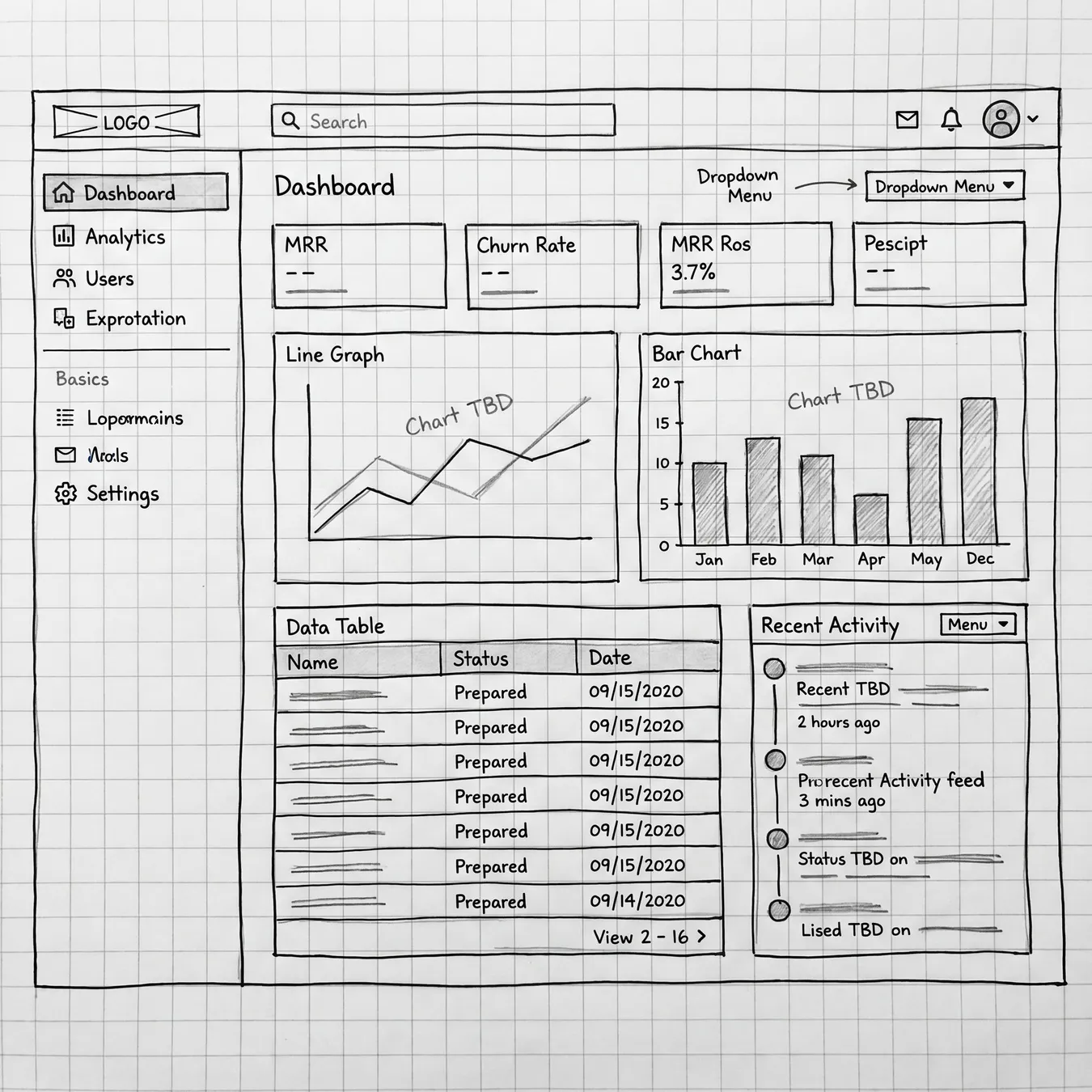
Mapping user flows during discovery.
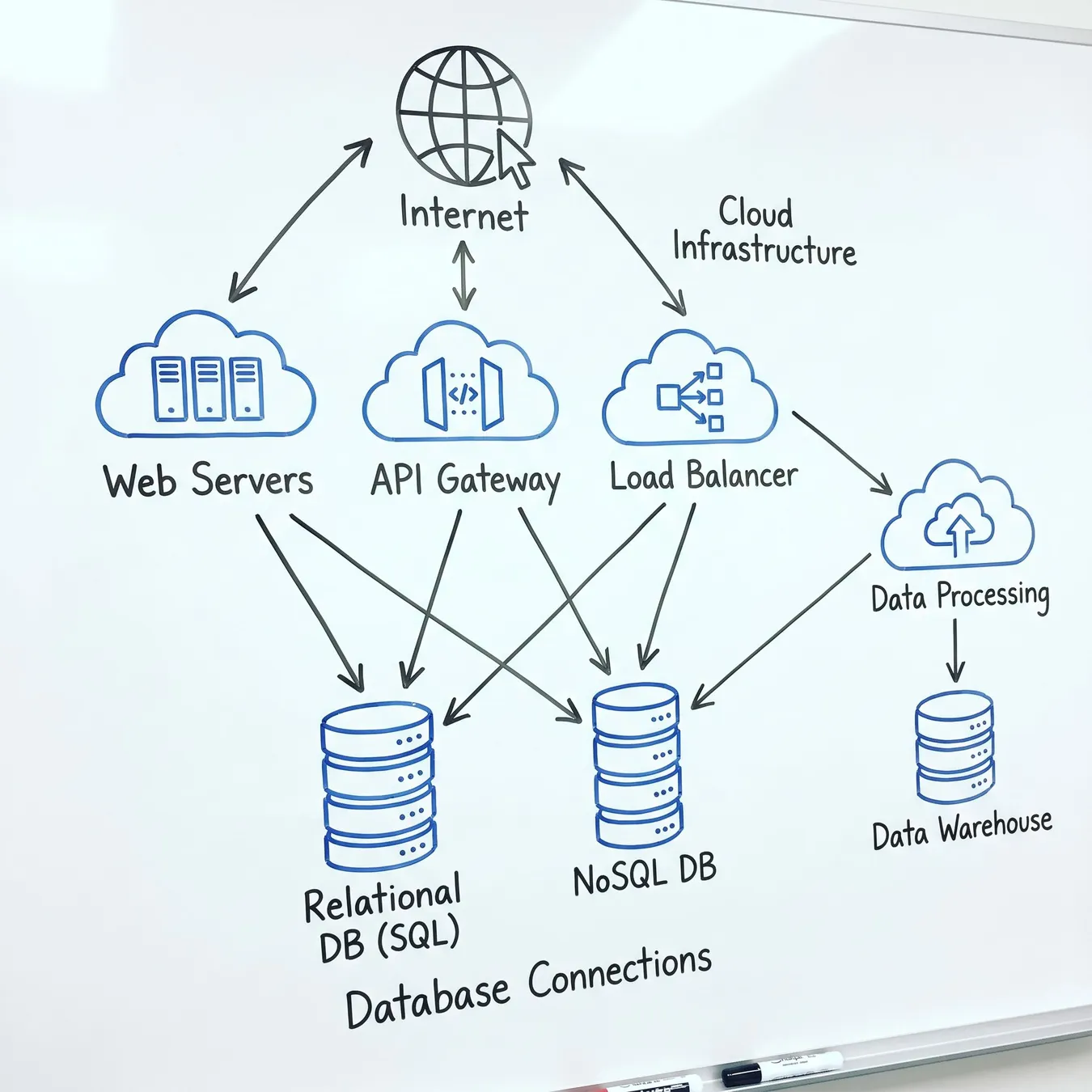
Defining the technical stack for scale.
Post-Launch: What Happens After Week 12?
Launch is just the beginning. A realistic timeline includes a post-launch support phase where real-world user data informs the first set of iterations and feature refinements.
- Iteration
- Scaling
- Security Hardening
- User Feedback
Is an 8-Week MVP Right for You?
If you have a clear, narrow problem to solve and a validated target audience, an 8-week build is achievable. If you are building a complex marketplace or AI-native system, 12 to 16 weeks is a more honest estimate.
Studio 402 has helped 50+ startups move from idea to production in under 100 days.
Based on 2024-2026 project data.
Bridging the Gap Between Idea and Execution
At Studio 402, we don't just build prototypes; we engineer production-ready software. We understand that for a startup, time is the most valuable currency. Our process is designed to maximize shipping velocity while ensuring your MVP is a durable asset, not throwaway code.
Whether you are a non-technical founder needing a partner to lead the build or a funded team looking to hit an aggressive milestone, we provide the senior engineering depth required to launch with confidence.
Frequently Asked Questions About MVP Timelines
Next Steps for Your MVP Journey
Ready to move from a timeline estimate to a concrete roadmap? Explore our resources on specific MVP services and the challenges you might face along the way.
Build Your Production-Ready MVP
Stop guessing your launch date. Let's scope your project and build a foundation that scales with your business.
The Studio 402 Approach to Rapid Delivery
We combine product engineering with platform depth to ensure your MVP isn't just a demo. We focus on the high-leverage features that prove your business model.
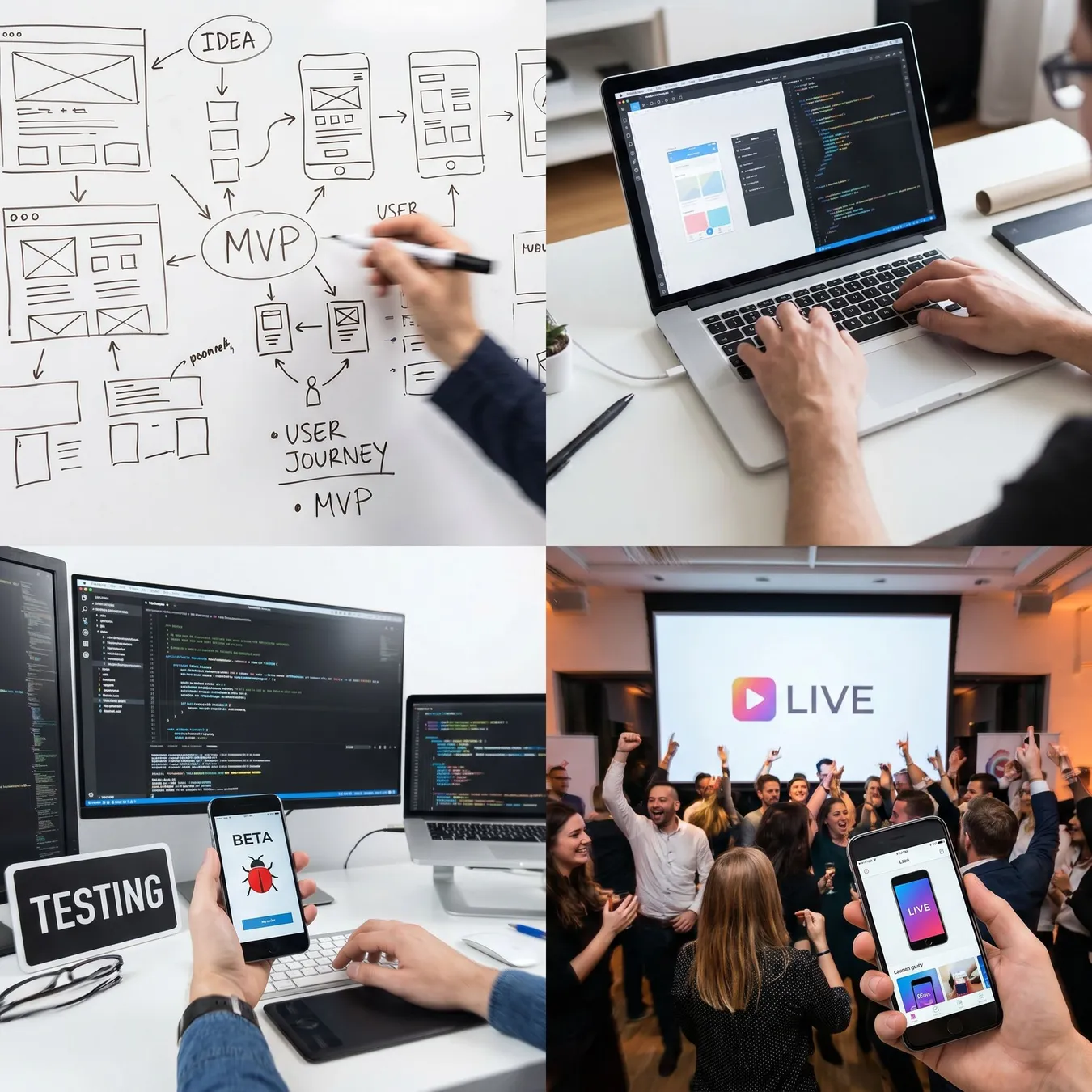
Our end-to-end process from discovery to production release.
Why We Prioritize Hardening
A fast launch that crashes on day two is a failure. We spend the final weeks of every build ensuring your app is secure, observable, and ready for real users.
Studio 402 took us from a broken prototype to a production-ready SaaS in 10 weeks. They understood the trade-offs between speed and quality perfectly.
Our Tech Stack for Speed
We use modern, scalable technologies like Next.js, TypeScript, and AWS to ensure your MVP can grow into a full-scale platform without a total rewrite.
- Next.js
- TypeScript
- PostgreSQL
- AWS
- Tailwind
Keep reading