
Planning Your Product Roadmap Post-MVP
Launching your Minimum Viable Product is a major milestone, but the real work of scaling begins the day after you launch mvp. Transitioning from a lean startup product roadmap to a growth-oriented strategy requires a shift from validation to optimization.
- Post-MVP Strategy
- Lean Startup
- Feature Prioritization
- Growth Phase
Defining the Post-MVP Product Roadmap
A product roadmap mvp focuses on the core value proposition, but the post-launch roadmap must address user feedback, technical debt, and market expansion. It is a living document that balances immediate fixes with long-term vision.
- User-centric iteration based on real usage data
- Technical hardening to support increased traffic
- Strategic expansion into secondary feature sets
- Alignment with business growth and revenue goals
The Lean Startup Approach to Prioritization
Applying lean startup product development principles ensures that you don't waste resources on features users don't actually want. Every roadmap item should be treated as a hypothesis to be tested.
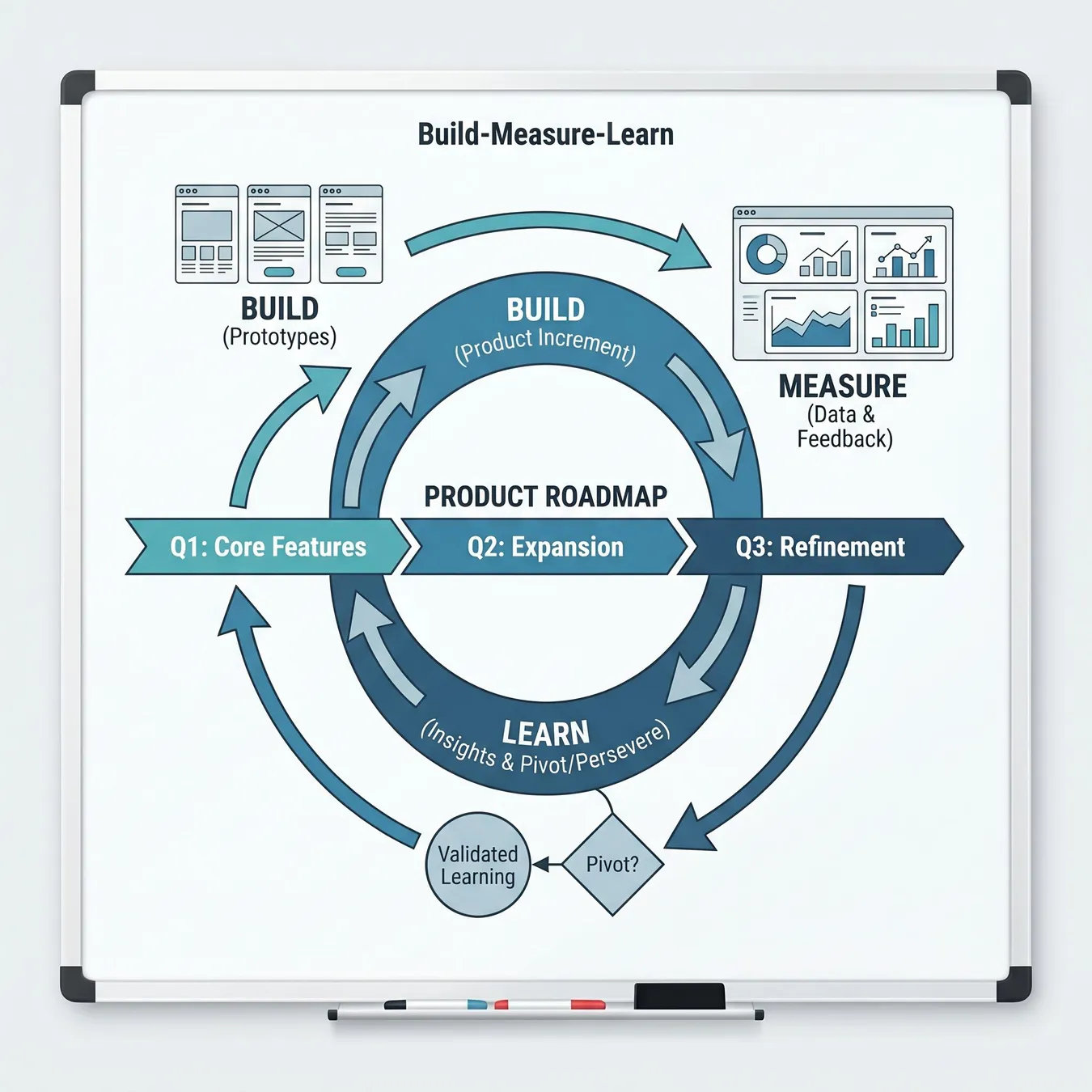
The continuous feedback loop of lean product development.
Post-MVP Feature Prioritization Frameworks
Choosing what to build next is the hardest part of being a founder. Use structured frameworks to remove emotion from the decision-making process.
| Framework | Best For | Key Metric |
|---|---|---|
| RICE | Objective scoring | Reach, Impact, Confidence, Effort |
| Kano Model | User satisfaction | Delighters vs. Basic Needs |
| MoSCoW | Immediate release planning | Must-have vs. Should-have |
Managing Technical Debt After Launch
Most MVPs are built for speed, not scale. Post-launch, you must allocate time to refactor code and harden your infrastructure to prevent future outages.
Tip.
// The 20% Rule
A Startup Product Roadmap Example
A successful startup product roadmap example often follows a 'Now, Next, Later' structure rather than a rigid calendar. This allows for flexibility as you learn from your users.
01 / 03
phase 01 / 03
Now (0-3 Months)
phase 02 / 03
Next (3-6 Months)
phase 03 / 03
Later (6+ Months)
Gathering and Filtering User Feedback
Not all feedback is created equal. You must distinguish between 'loud' users and the 'silent majority' who represent your core growth opportunity.
Look for patterns in support tickets
Conduct 1-on-1 user interviews
Analyze drop-off points in your funnel
Build every feature a single user requests
Ignore feedback from your churned users
Prioritize features based on internal 'vibes'
Iterating with Agile Methodologies
To maintain momentum, your team should adopt agile development mvp practices. This allows for rapid shipping and constant course correction based on real-world data.
Measuring Success: Post-MVP Metrics
40%+
Retention Rate
20%+
DAU/MAU Ratio
50+
NPS Score
Scaling Your Infrastructure
As your user base grows, your initial cloud setup may struggle. Your roadmap must include milestones for database optimization, caching, and global delivery.
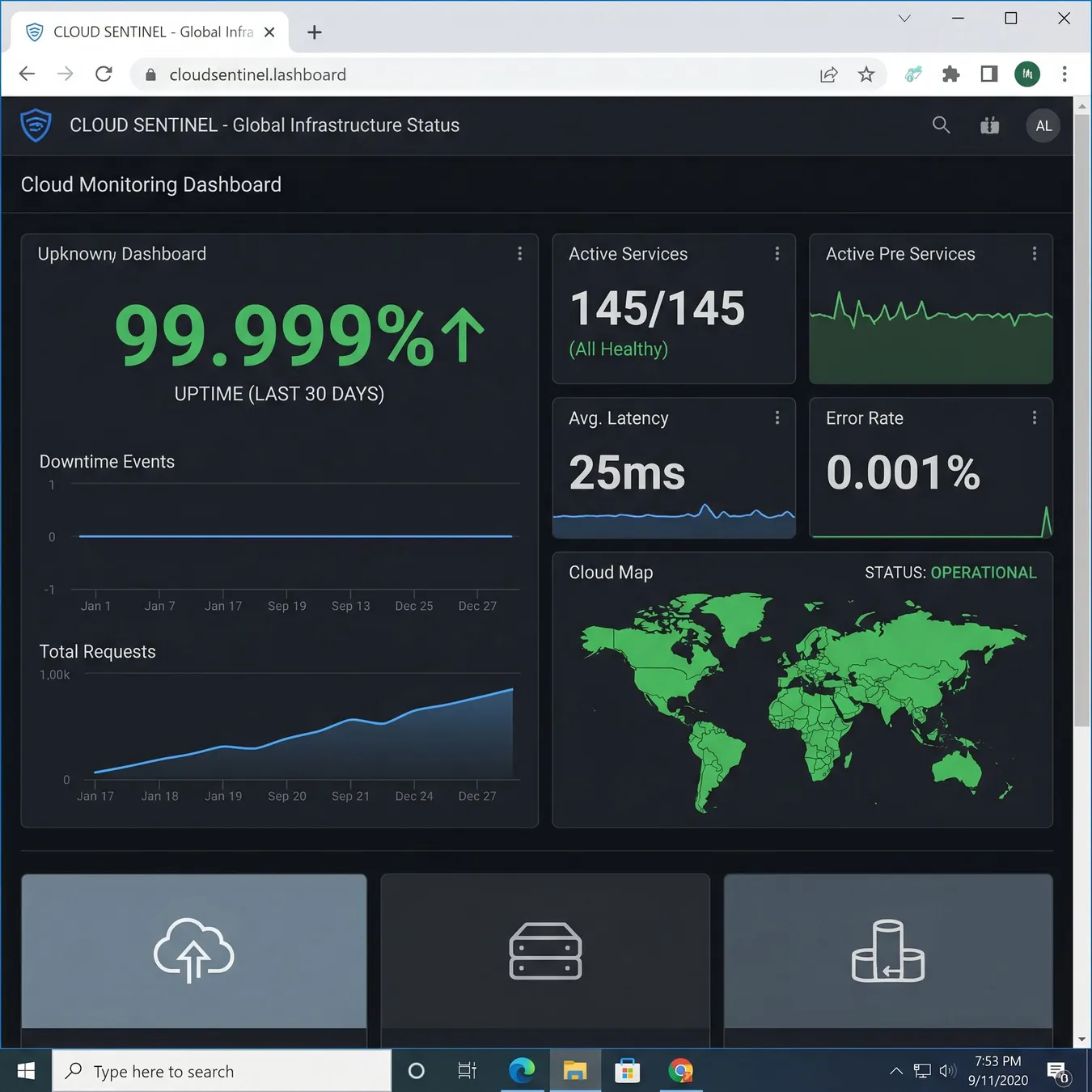
Monitoring is key to post-MVP stability.
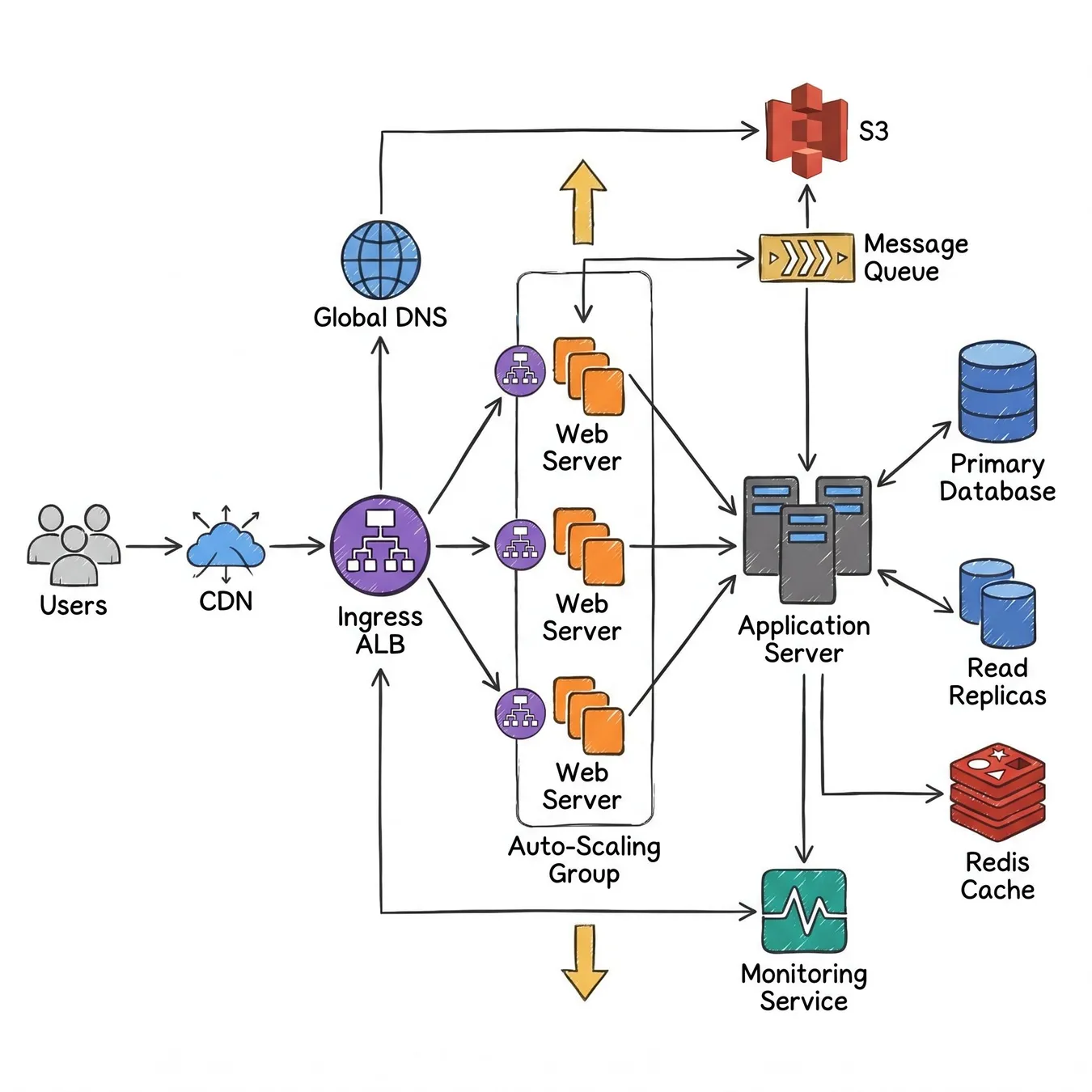
Moving from single-server to distributed systems.
Strategic Alignment with Stakeholders
A product roadmap startup needs to communicate vision to investors and internal teams. It’s not just a task list; it’s a strategic narrative.
Common Pitfalls in Post-MVP Planning
Over-complicating the product too early
Ignoring performance bottlenecks
Failing to update the roadmap as market conditions change
Losing sight of the core value proposition
When to Pivot vs. Persevere
Your roadmap might reveal that your initial assumptions were wrong. A successful post-MVP strategy includes 'kill switches' for features that aren't gaining traction.
Trade-off
3 pros · 3 cons
Pros
Strong user engagement
Positive unit economics
Clear path to monetization
Cons
Low user retention
High cost of acquisition
No organic growth
Integrating AI into Your Roadmap
In 2026, every product roadmap should consider how AI can enhance the user experience. Whether it's automation or personalization, AI is now a core requirement.
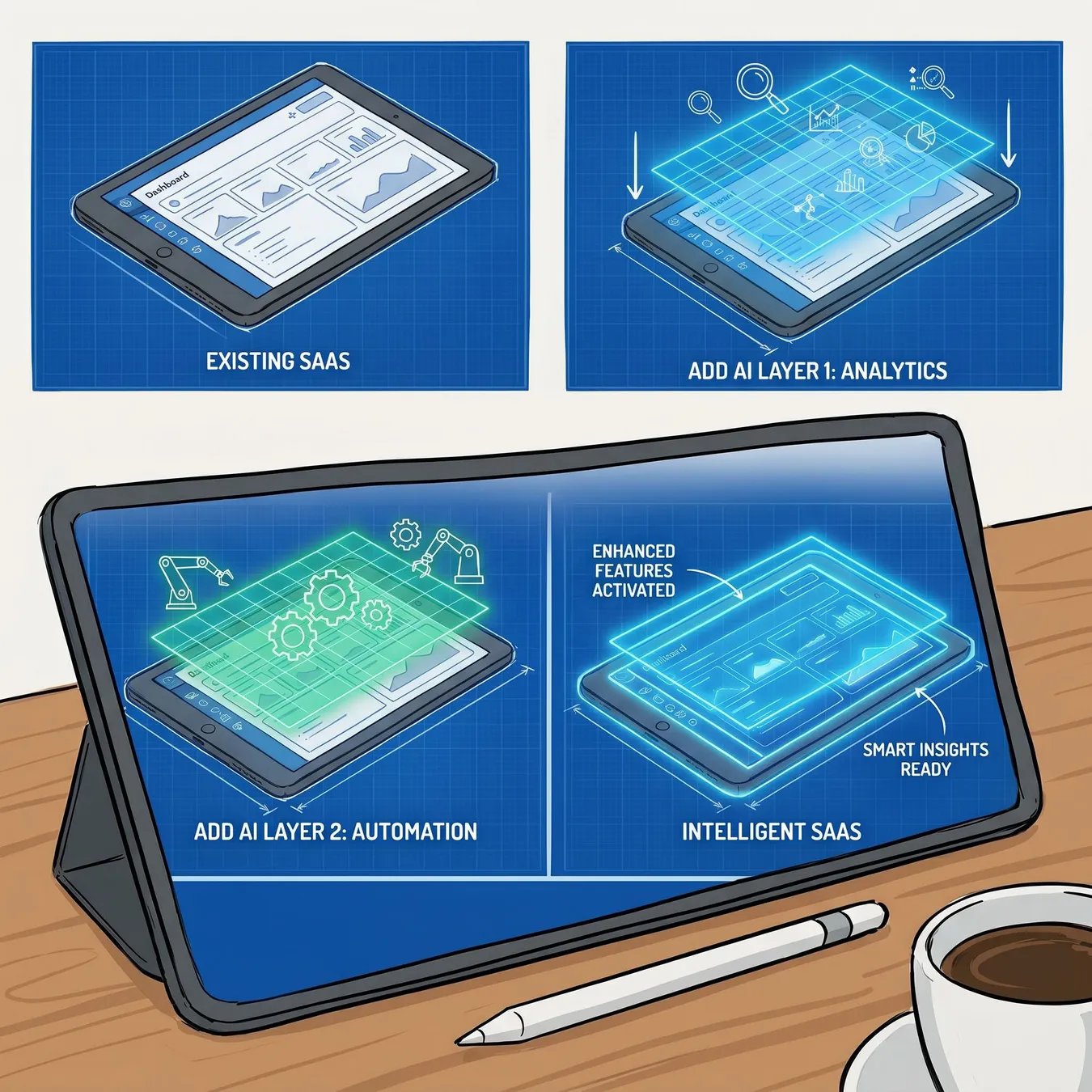
Enhancing your product with AI-native features.
Building a Culture of Shipping
The best roadmap is useless if your team can't execute. Focus on reducing friction in your deployment pipeline to ensure you can ship updates daily.
The Role of a Technical Partner
Many founders find that their initial development team isn't equipped for the scaling phase. Partnering with a studio that understands production-grade software can accelerate your roadmap.
The transition from MVP to a full product is where most startups fail. You need a roadmap that prioritizes stability as much as new features.
Alex Rivera · CTO at ScaleUp
How Studio 402 Supports Your Roadmap
At Studio 402, we don't just build MVPs; we help you navigate the complex journey of scaling. We bridge the gap between a successful launch and a market-leading platform.
Frequently Asked Questions
Next Steps for Your Startup
Ready to turn your MVP into a scalable powerhouse? Planning is the first step, but execution is what wins. Let's discuss how we can harden your codebase and accelerate your feature delivery.
Scale Your Product with Confidence
Work with Studio 402 to build, fix, and scale your product roadmap with production-ready engineering.
Further Reading
Keep reading
More in MVP Development & Product Strategy
Trusted by 50+ startups to scale from MVP to Series B.
Updated for July 2026