
Prototype to Production: A Technical Hardening Framework
Moving from a prototype to production is the most critical transition in a software product's lifecycle. While a prototype validates a concept, a production-ready system must survive real-world traffic, security threats, and operational demands.
- MVP Strategy
- Technical Hardening
- Scalability
- Production-Ready
Defining the Proof of Concept vs. Minimum Viable Product
It is essential to distinguish between a proof of concept minimum viable product and a throwaway demo. A POC proves feasibility, but an MVP is the first version of your product that users actually rely on for value.
Trade-off
4 pros · 4 cons
Pros
Dynamic, scalable database
CI/CD pipeline integration
Automated error monitoring
Hardened authentication
Cons
Hardcoded data and logic
No automated testing
Manual deployment processes
Minimal security protocols
The Core Pillars of Technical Hardening
Hardening is the process of securing and stabilizing your codebase. This involves moving beyond 'vibe-coding' and into disciplined custom software development for prototype and mvp validation.
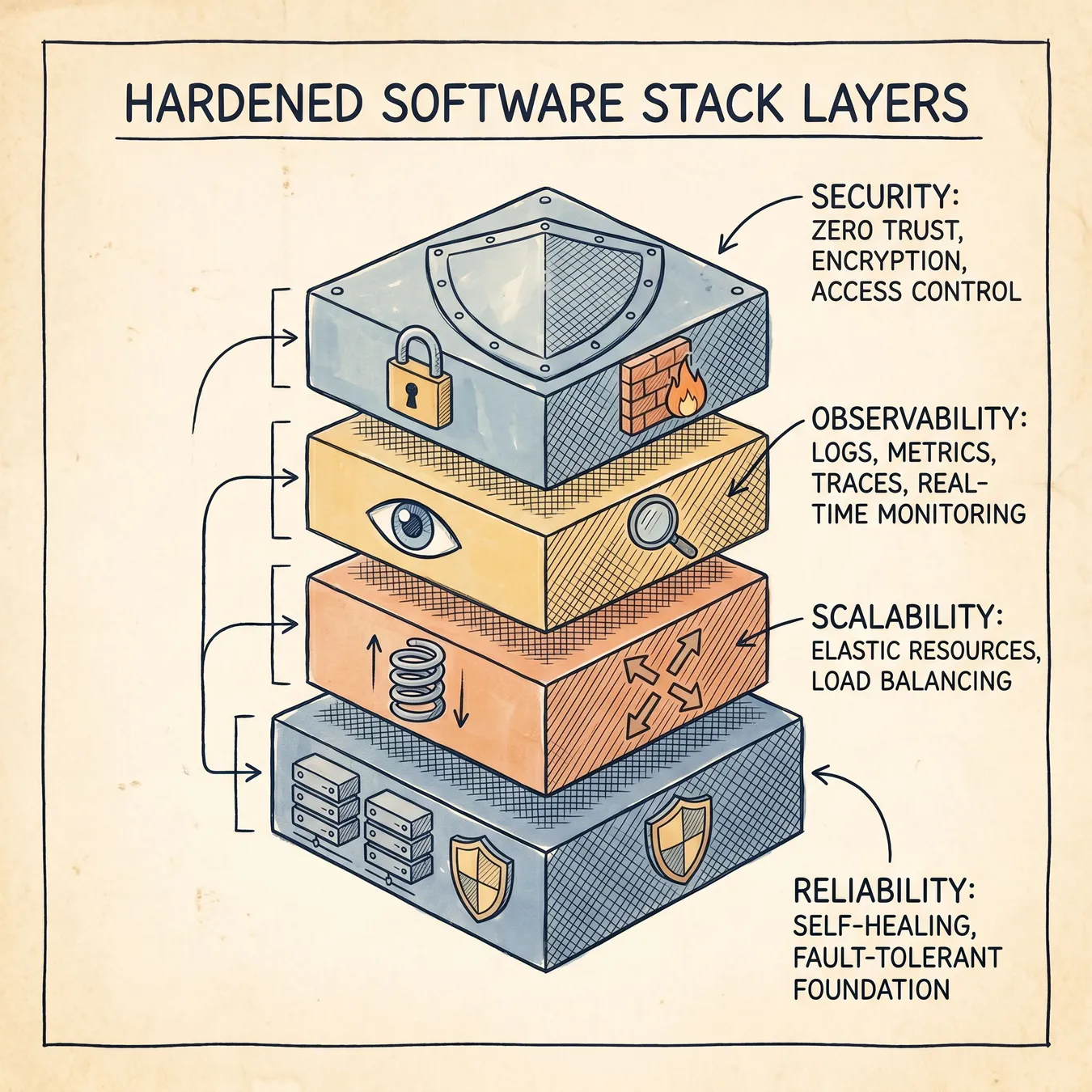
The four pillars of production-grade software architecture.
Security and Identity Management
Security cannot be an afterthought. Transitioning from prototype to production requires moving from simple login forms to robust, role-based access control (RBAC) and encrypted data handling.
Implement multi-factor authentication (MFA)
Rotate all API keys and secrets
Enable Row Level Security (RLS) in the database
Audit third-party library vulnerabilities
Infrastructure and Deployment Reliability
A production system must be observable. If a service fails, you need to know why before your customers do. This is where many teams face mvp software development challenges during the scaling phase.
99.9%
Uptime Target
<200ms
Max Latency
>80%
Test Coverage
Database Optimization for Real-World Load
Prototypes often use flat files or unindexed tables. Production requires a normalized schema, proper indexing, and connection pooling to handle concurrent users without crashing.
Tip.
// Production Safety Tip
Hardening Mobile Applications
If you are launching a mobile app mvp, hardening includes offline sync capabilities, crash reporting, and App Store compliance checks that web-only prototypes ignore.
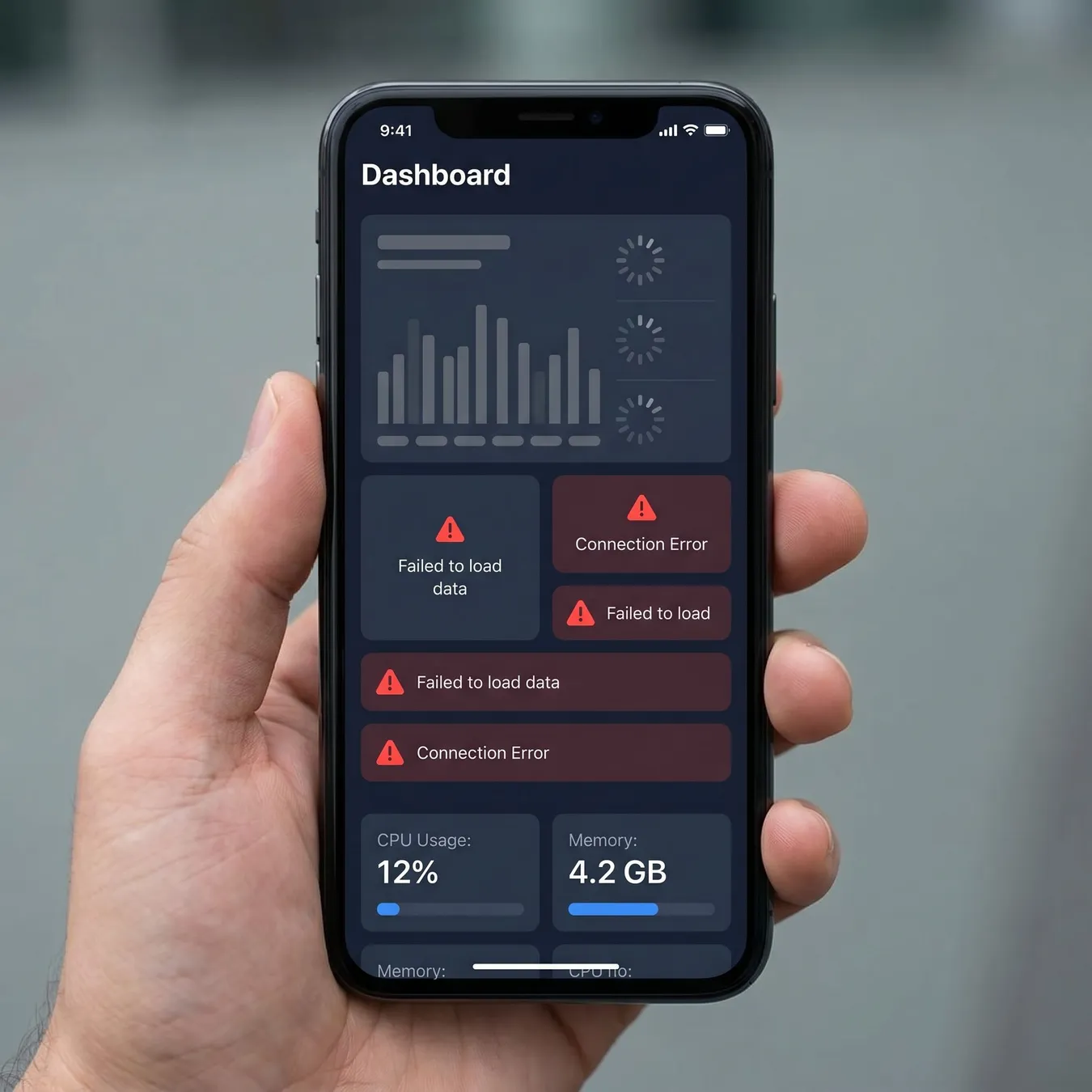
Production mobile apps require polished error handling and state management.
The Transition Timeline: Prototype to Production
01 / 04
phase 01 / 04
Audit
phase 02 / 04
Refactor
phase 03 / 04
Infrastructure
phase 04 / 04
Load Testing
Error Handling and Observability
In a prototype, a console log is enough. In production, you need centralized logging and alerting. Tools like Sentry or Datadog become non-negotiable for maintaining trust.
- Centralized log aggregation
- Real-time error alerting
- Performance bottleneck tracing
- User session replay for debugging
API Design and Documentation
Production APIs must be versioned and documented. This ensures that as your product evolves, your frontend or third-party integrations don't break unexpectedly.
| Feature | Prototype State | Production State |
|---|---|---|
| API Versioning | None | Header or URL based |
| Rate Limiting | Infinite | Tiered by user role |
| Documentation | None | Swagger/OpenAPI |
Automated Testing Strategies
Manual testing doesn't scale. Hardening your framework involves writing unit tests for core logic and end-to-end (E2E) tests for critical user paths like signup and checkout.
Write tests for edge cases
Automate tests in the CI pipeline
Use mock data for external APIs
Skip tests to meet a deadline
Test implementation details
Rely solely on manual QA
Managing Technical Debt Post-Launch
Even the best production launches create debt. You must integrate hardening into your long-term product roadmap mvp to ensure the system remains maintainable as you grow.
Production isn't a destination; it's a standard of operation. If it's not monitored, it's not in production.
Senior Engineering Lead · Studio 402
Scalability: Vertical vs. Horizontal
Hardening includes preparing for success. Whether you scale by adding more powerful servers or by distributing load across many small instances, your architecture must support it.
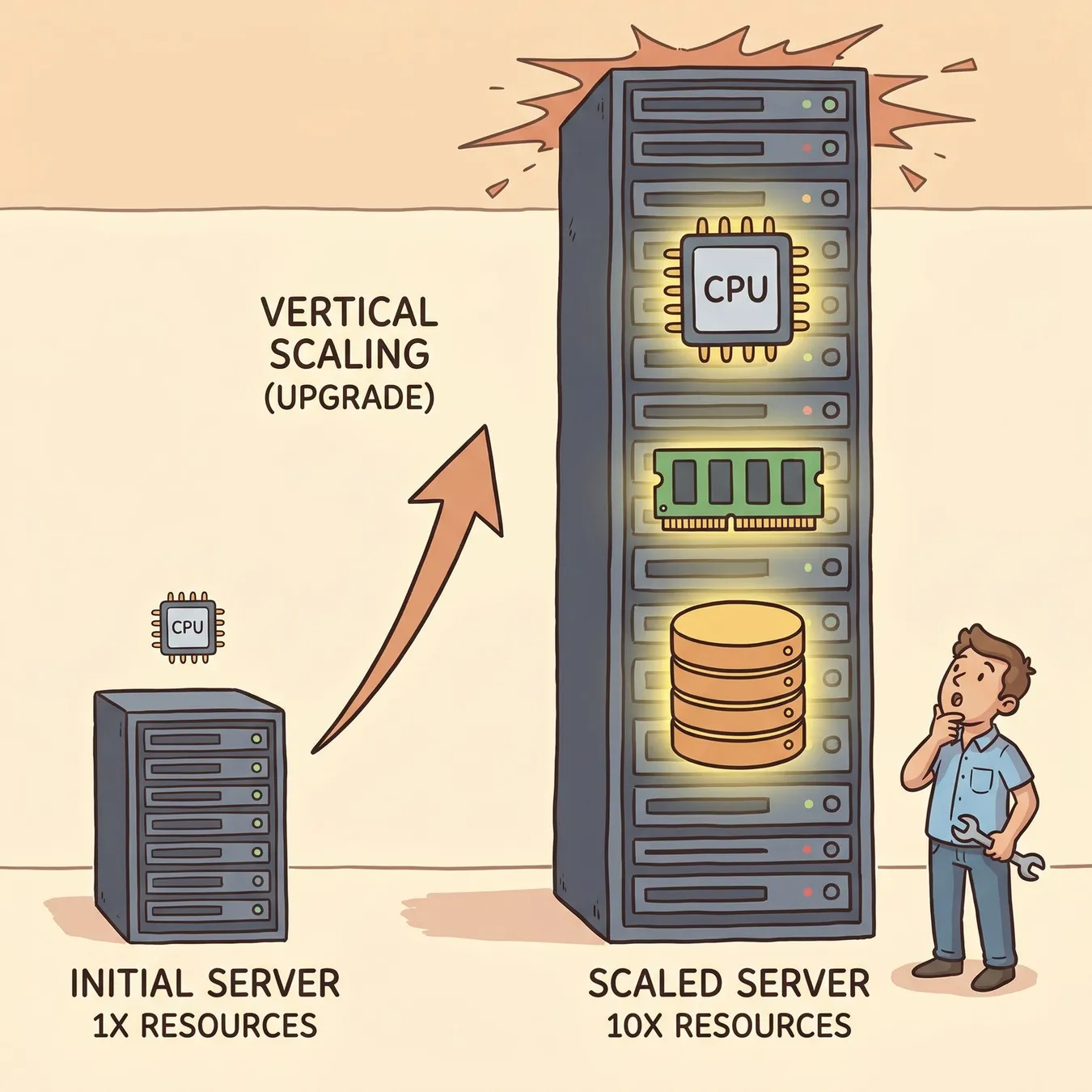
Vertical Scaling: Increasing capacity.
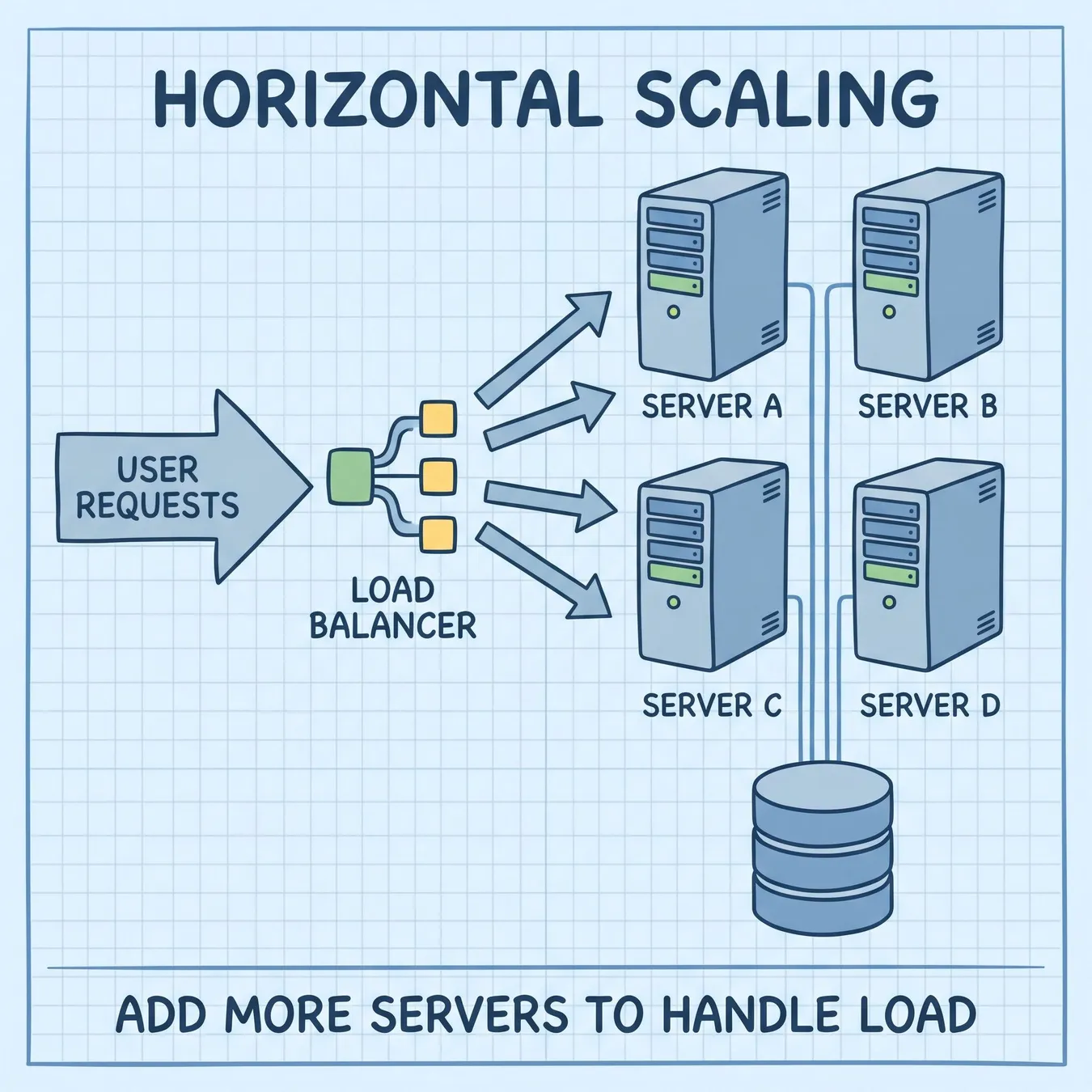
Horizontal Scaling: Distributing load.
Compliance and Data Privacy
Depending on your industry, moving to production may require SOC2, HIPAA, or GDPR compliance. A hardened framework includes the audit trails and data isolation these standards demand.
Info.
// Privacy First
Leveraging External Expertise for Hardening
Many founders find that mvp development outsourcing is the fastest way to access the senior architectural knowledge required for a production-grade release.
Studio 402 has hardened over 50 prototypes into production-ready SaaS platforms.
Updated for 2026 standards.
Common Hardening Pitfalls to Avoid
The most common mistake is 'over-engineering'—building for millions of users when you only have hundreds. The goal of hardening is reliability and security, not infinite complexity.
- Ignoring database migration safety
- Hardcoding environment variables
- Neglecting backup and recovery drills
- Over-complicating the microservices architecture
Preparing for the Production Launch
Once the technical framework is hardened, the focus shifts to the operational launch. This involves final smoke tests, DNS cutovers, and monitoring the first real user sessions.
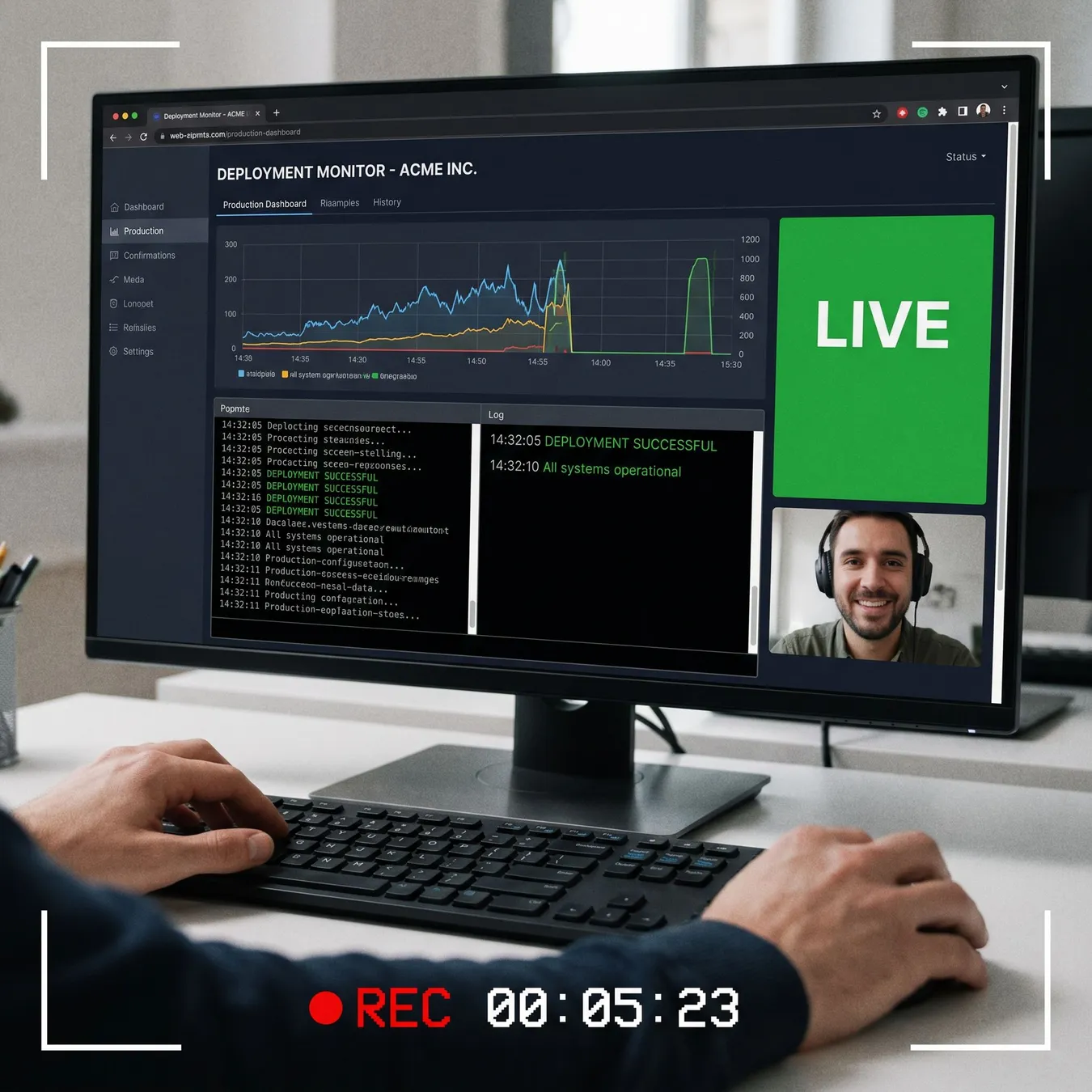
Real-time deployment monitoring in action.
How Studio 402 Bridges the Gap
At Studio 402, we specialize in taking fragile prototypes and turning them into durable software. We don't just fix bugs; we rebuild foundations to ensure your product can scale with your business.
Whether you are dealing with 'vibe-code' that won't scale or a proof of concept that needs a security overhaul, our engineering team provides the production-grade discipline your startup needs.
Studio 402 took our messy prototype and turned it into a production-ready platform in weeks. We finally have the confidence to scale.
Frequently Asked Questions
Build for Real-World Scale
Ready to move from a fragile prototype to a production-ready system? Let's discuss your technical hardening framework.
Keep reading