
Lean Product Development for Modern Software Teams
Lean startup product development is more than just a buzzword; it is a rigorous engineering framework designed to eliminate waste and maximize learning. By focusing on the lean startup mvp, teams can validate core business hypotheses without over-investing in unproven features.
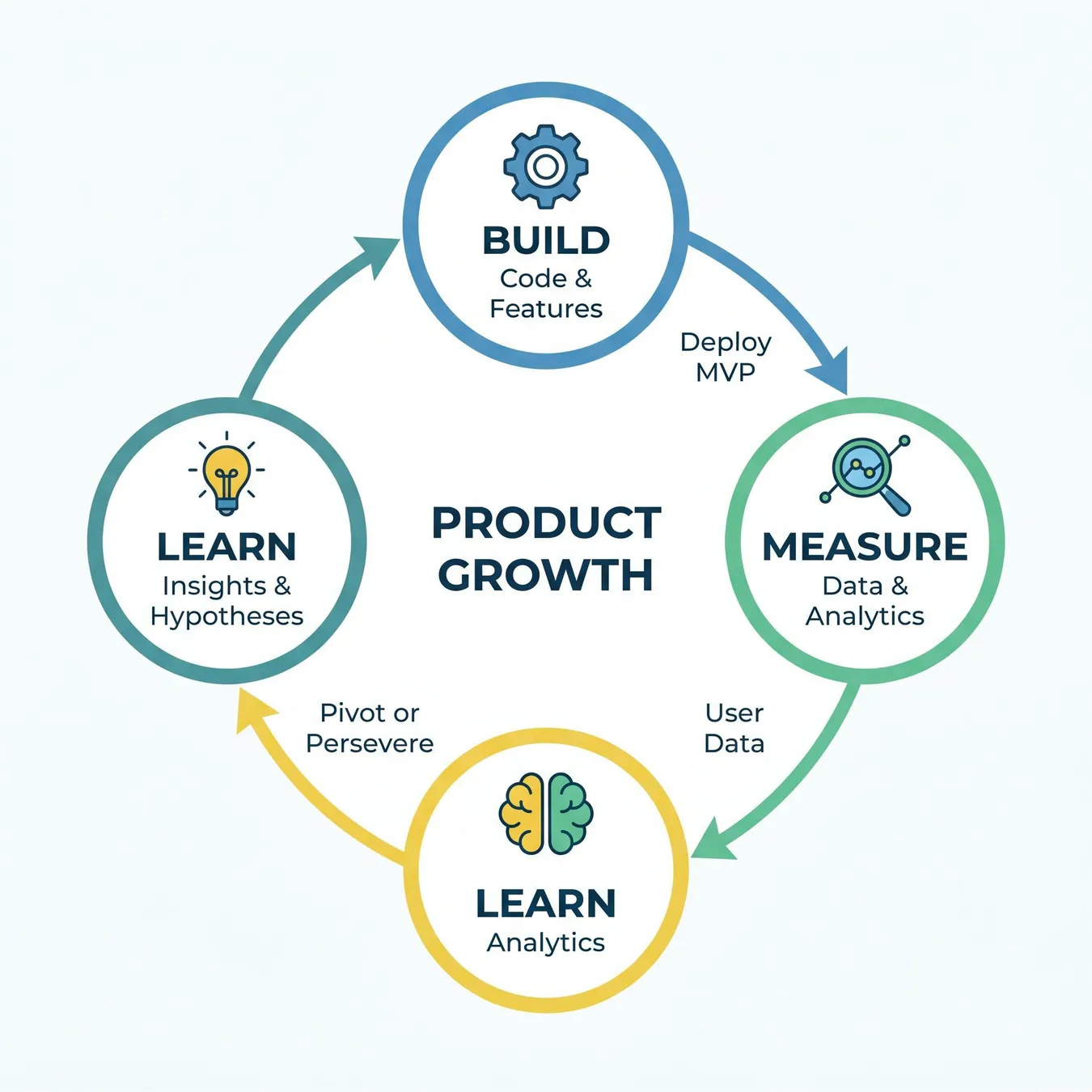
The core iterative cycle of lean startup software development.
Defining the Lean Startup Minimum Viable Product
Understanding the role of an mvp in software development is critical for any team looking to ship fast. It is not a half-baked prototype, but the smallest version of a product that allows a team to collect the maximum amount of validated learning about customers with the least effort.
- Focus on solving one core problem exceptionally well.
- Identify and test the riskiest assumptions first.
- Prioritize speed to market over feature completeness.
- Establish clear metrics for success before writing code.
The Three Pillars of Lean Software Engineering
1. Eliminate Waste
In software, waste includes partially done work, extra features, and task switching. Lean startup software development encourages teams to cut anything that does not contribute directly to customer value or validated learning.
2. Build-Measure-Learn
The goal of a lean start up mvp is to move through this loop as quickly as possible. You build a feature, measure how users interact with it, and learn whether to pivot or persevere.
3. Validated Learning
Every line of code should be an experiment. If you cannot measure the impact of a change, you are not practicing lean startup minimum viable product principles effectively.
64%
Features in typical software rarely or never used
3x
Faster time-to-market with lean frameworks
Lean vs. Traditional Product Development
Trade-off
4 pros · 4 cons
Pros
Rapid market validation
Reduced capital risk
Higher team morale
Customer-centric roadmap
Cons
Longer upfront planning
High risk of building wrong features
Delayed user feedback
Expensive pivot costs
How to Build a Lean Startup MVP
01 / 04
phase 01 / 04
Hypothesis Formation
phase 02 / 04
Feature Pruning
phase 03 / 04
Rapid Engineering
phase 04 / 04
Deployment & Data Collection
Integrating agile development mvp workflows ensures that your engineering team stays flexible while following lean principles. This synergy allows for continuous integration and faster release cycles.
Common Pitfalls in Lean Development
Many teams struggle with mvp software development challenges, such as over-engineering the initial version or failing to set up proper analytics. It is vital to balance speed with technical debt management.
Talk to users before coding
Instrument everything for data
Be prepared to scrap code
Polish UI before validation
Build for 1 million users on day one
Ignore negative feedback
Measuring Success in Lean Cycles
Vanity metrics like total signups can be misleading. Focus on actionable metrics: retention, conversion rates, and the time it takes for a user to reach the 'aha' moment.
| Metric Type | Example | Lean Value |
|---|---|---|
| Vanity | Total Downloads | Low |
| Actionable | Daily Active Usage | High |
| Financial | Customer Acquisition Cost | Critical |
Transitioning from MVP to Growth
Once your core hypothesis is validated, you need a lean startup product roadmap to guide your scaling efforts. This prevents the 'feature factory' trap where you build without strategic intent.
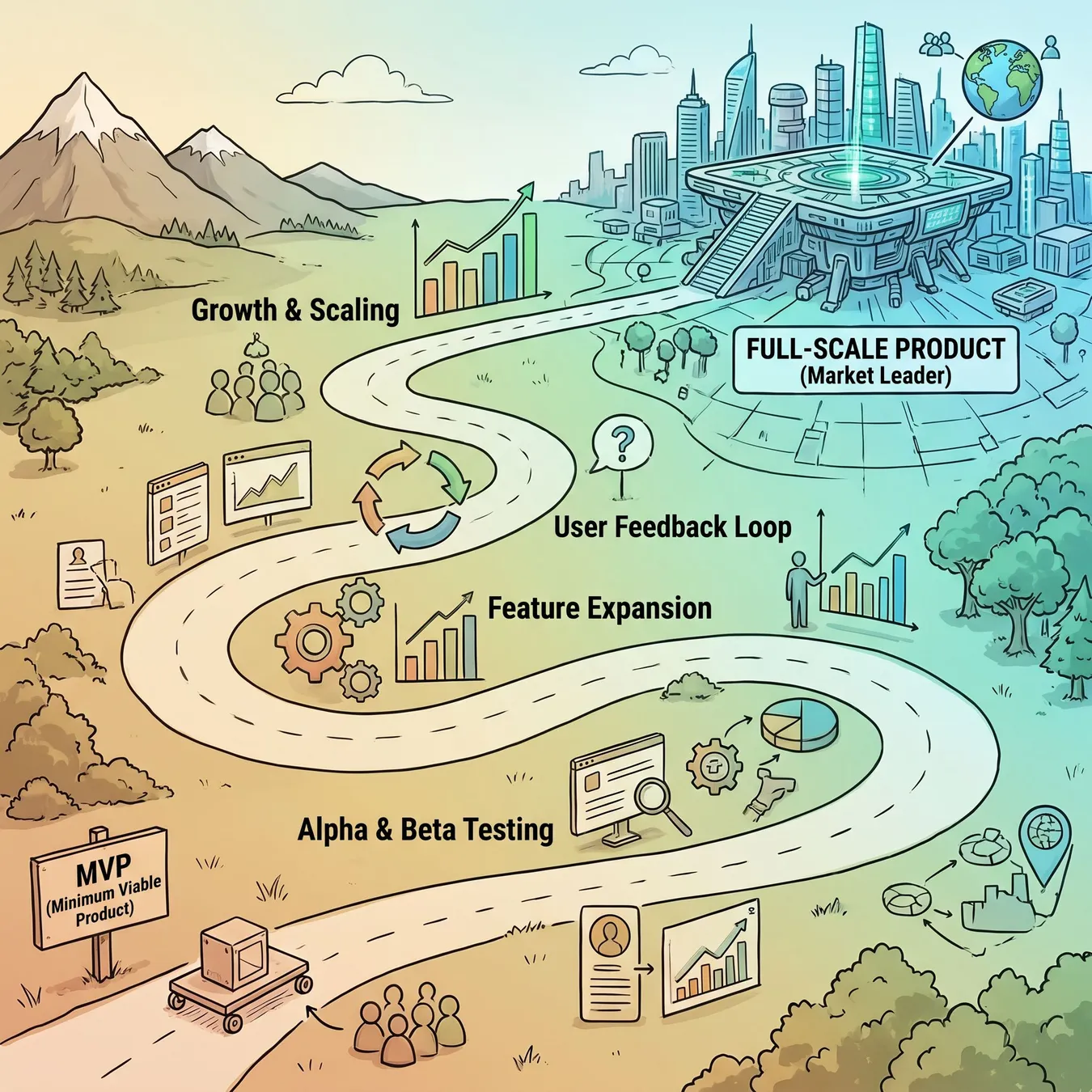
Planning for scale after initial lean validation.
Lean Principles for AI and Modern Stacks
In 2026, lean startup software development often involves integrating AI. The challenge is avoiding 'vibe-coding'—building something that looks cool but lacks a durable architectural foundation.
Info.
// The 2026 Lean Standard
Case Study: Lean Success in SaaS
By applying lean principles, we cut our development time by 40% and found our product-market fit three months earlier than projected.
Lean Startup FAQ
Engineering for the Long Term
While lean startup product development prioritizes speed, your underlying infrastructure shouldn't be disposable. Building on a production-ready foundation ensures that when you find success, your system doesn't crumble.
Bridging Lean Theory and Production Reality
At Studio 402, we specialize in taking lean startup principles and applying them to high-stakes software engineering. We don't just build prototypes; we build the first version of your real company.
Why Studio 402 for Your Lean MVP?
- Senior engineers who understand business outcomes.
- Cloud-native architecture from day one.
- Expertise in AI integration and workflow automation.
- A focus on security and scalability, even in early versions.
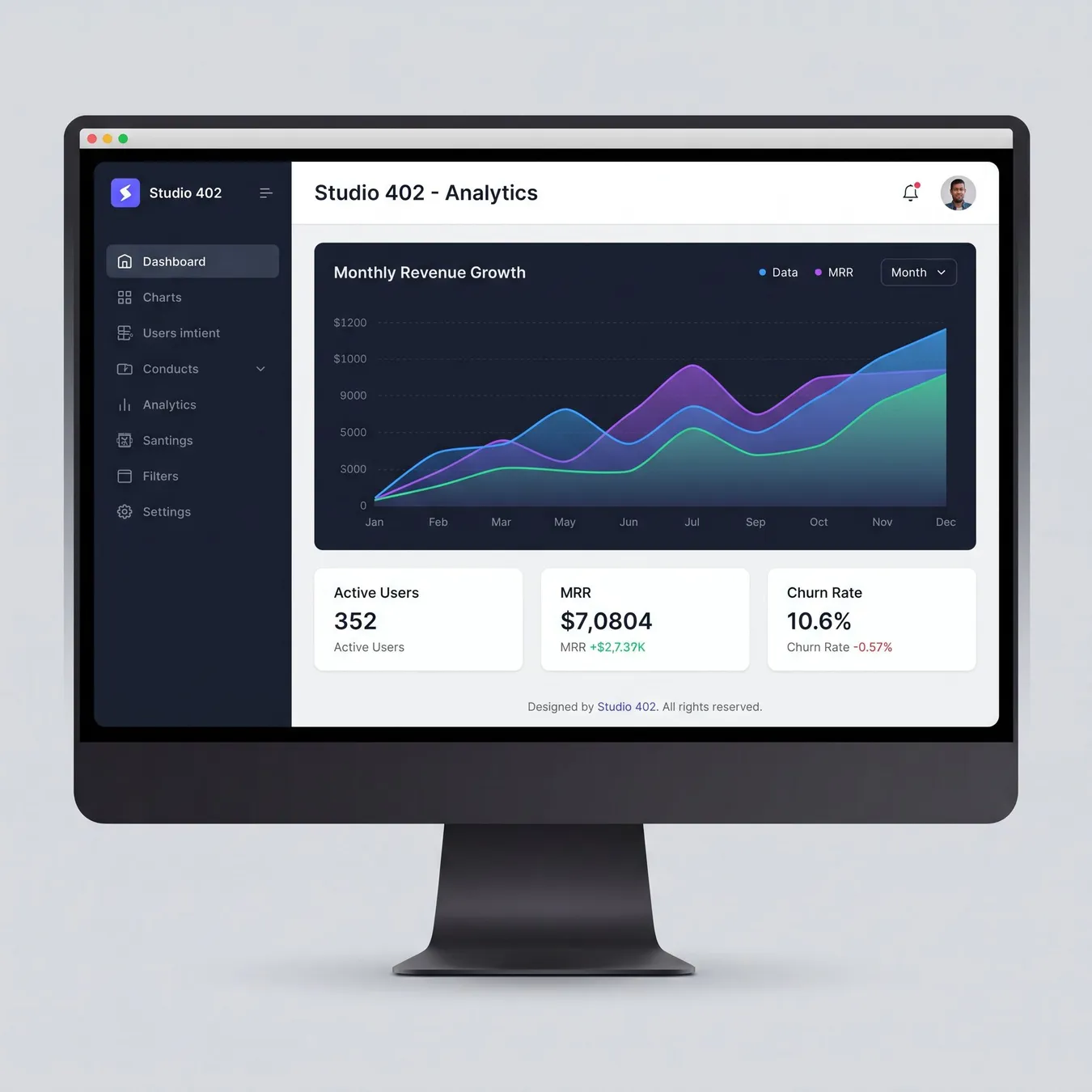
Production-ready SaaS interfaces.

Scalable mobile MVP development.
Ready to Build Your Lean MVP?
If you are ready to move from a concept to a production-ready product, we can help you navigate the complexities of lean startup software development with precision and speed.
Start Your Lean Development Journey
Let's discuss how to turn your product vision into a scalable, production-ready MVP.
Explore More Resources
Checklist for Your Lean Launch
Define core value proposition
Set up analytics and event tracking
Identify target beta user group
Establish CI/CD pipeline
Building a successful product requires more than just code. It requires a partner who understands the intersection of lean methodology and robust engineering. We are here to be that partner.
Trusted by 50+ startups to launch production-ready systems.
Updated for 2026 standards.
Keep reading
More in MVP Development & Product Strategy
Final Thoughts on Lean Methodology
The lean startup methodology is a marathon of sprints. Stay focused on the data, be honest about what isn't working, and keep building for the users who need your solution today.
The only way to win is to learn faster than anyone else.
Eric Ries · Author of The Lean Startup