
AI Business Ideas and Technical Implementation
In 2026, the landscape for business ideas using ai has shifted from simple wrappers to deep architectural integrations. Founders are no longer just looking for a prompt; they are seeking durable systems that solve complex operational bottlenecks.
- 2026 Strategy
- Technical Guide
- MVP Development
- AI Architecture
Successful business ideas with ai now require a production-first mindset. This means moving beyond the vibe-code phase and focusing on how to implement ai in business with security, scalability, and maintainability as core requirements.
High-Potential AI Business Categories for 2026
The most viable opportunities currently lie in vertical SaaS, automated operations, and intelligent customer interfaces. These sectors benefit most from the current state of LLM reasoning and agentic workflows.
- Automated Compliance and Audit Platforms
- AI-Native Supply Chain Orchestration
- Intelligent Revenue Operations (RevOps) Systems
- Vertical SaaS for Regulated Industries
- Agentic Customer Success Infrastructure
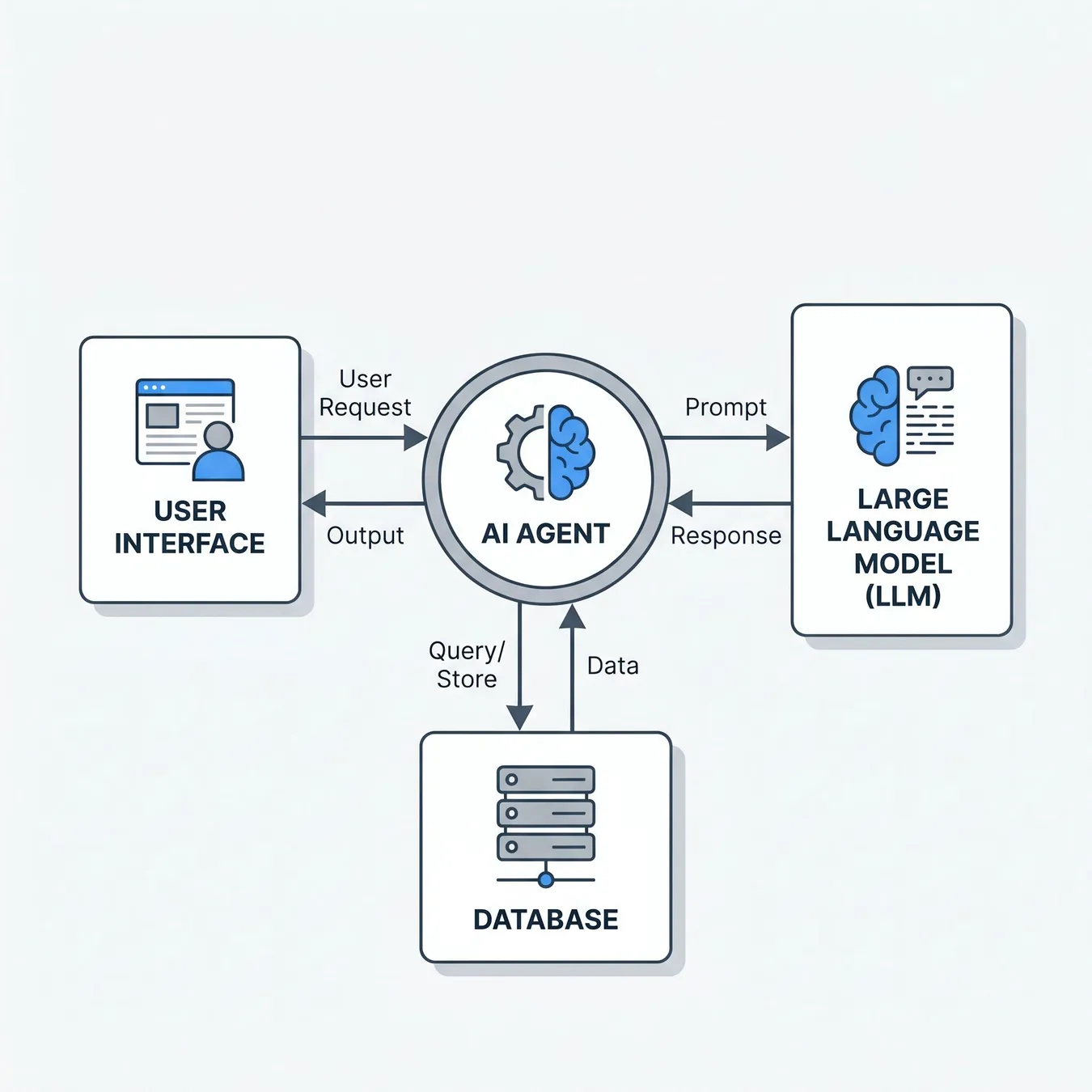
Modern AI architecture focuses on the flow between data, reasoning, and action.
Vertical SaaS: The AI-First Approach
Generic AI tools are being replaced by specialized software that understands the nuances of specific industries like healthcare, law, or logistics. These systems don't just generate text; they manage entire workflows.
Tip.
// Founder Tip
Operational Efficiency and Small Business Automation
There is a massive market for small business automation that replaces manual data entry and fragmented spreadsheets with intelligent, connected systems.
40%
Operational Drag Reduction
4-6 Weeks
Implementation Speed
Conversational AI and Intelligent Interfaces
The next generation of conversational ai saas moves beyond basic chatbots to full-service agents that can execute tasks, handle complex logic, and integrate with existing APIs.
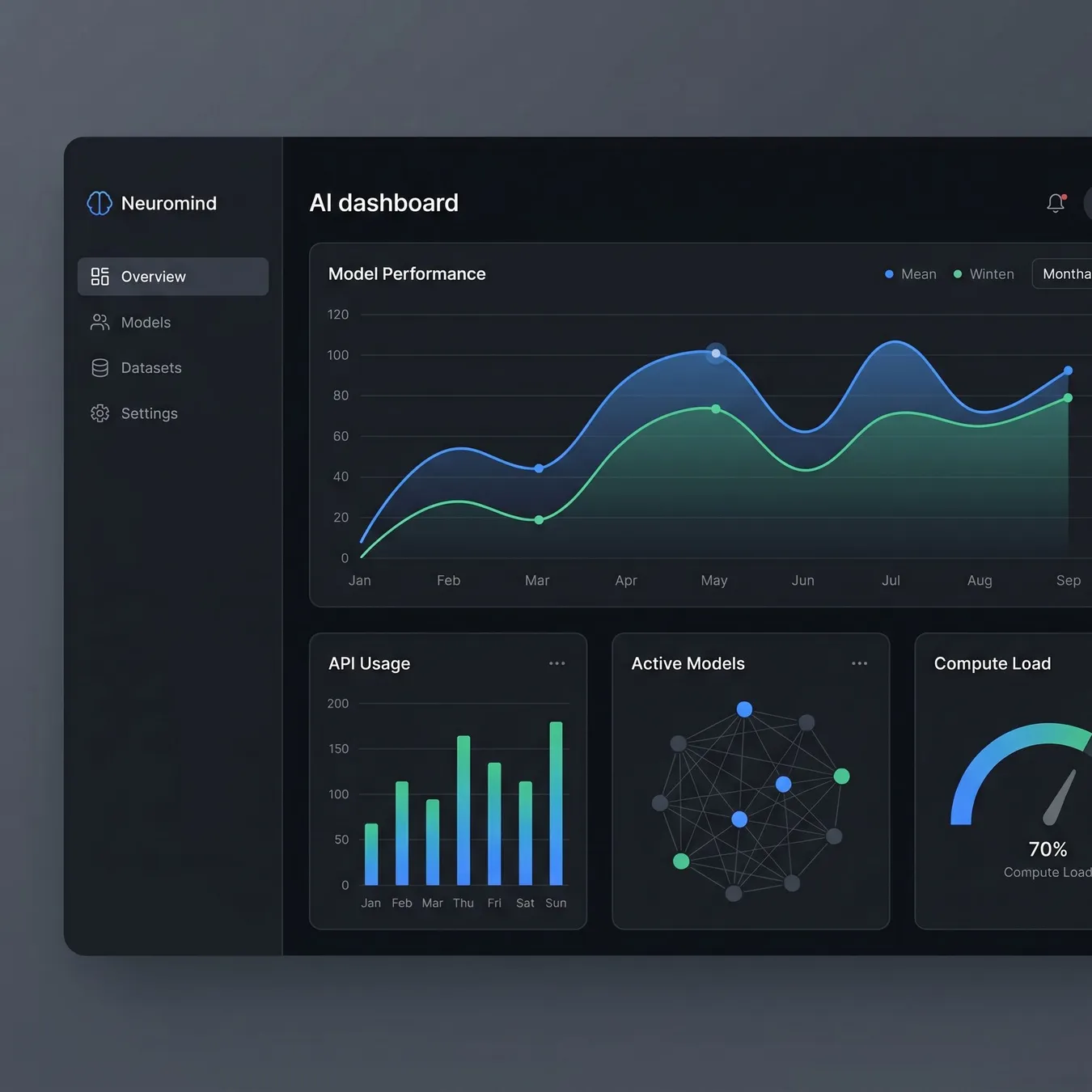
User-facing AI dashboard design.

Mobile-first conversational interface.
Technical Implementation: From Idea to Production
Building a durable AI product requires more than just an API key. You need a robust stack that handles data ingestion, embedding management, and prompt versioning.
- 01
Define the core reasoning loop and data requirements.
- 02
Select the appropriate LLM and embedding models.
- 03
Architect a secure, multi-tenant data layer.
- 04
Implement RAG (Retrieval-Augmented Generation) for context.
- 05
Build a production-ready API and frontend interface.
- 06
Establish monitoring for model performance and cost.
Choosing Your AI Tech Stack
| Component | Recommended for 2026 | Key Benefit |
|---|---|---|
| Language Models | Hybrid (GPT-4o / Claude 3.5) | Reasoning Depth |
| Vector Database | Pinecone or pgvector | Scalable Search |
| Orchestration | LangChain or Custom Agents | Workflow Control |
| Infrastructure | AWS or Vercel | Global Scale |
Common Pitfalls in AI Product Development
Focus on solving a specific business problem.
Prioritize data security and user privacy.
Build modular systems that can swap models.
Implement human-in-the-loop for critical tasks.
Don't build a product that is just a prompt wrapper.
Don't ignore the cost of token usage at scale.
Don't neglect the latency of AI responses.
Don't skip production hardening and testing.
The Importance of Data Strategy
Your AI is only as good as the data it accesses. A successful technical implementation focuses on clean data pipelines and efficient retrieval mechanisms.
Info.
// Market Insight
Scaling Your AI Infrastructure
As your user base grows, your infrastructure must handle increased load without sacrificing performance. This requires sophisticated caching and load balancing.

Scalable cloud foundations are essential for AI growth.
AI Founders and the Path to Production
Many ai founders start with a prototype that works in a demo but fails in the real world. The transition to production requires a rigorous engineering approach.
The difference between a toy and a tool is reliability. In AI, reliability is built in the infrastructure, not the prompt.
Alex Rivers · CTO & Founder
Evaluating Build vs. Buy for AI Components
Founders must decide which parts of their stack to build from scratch and which to outsource to specialized providers. This decision impacts both speed and long-term flexibility.
Trade-off
3 pros · 3 cons
Pros
Complete control over data and IP
No vendor lock-in or API dependency
Custom-tuned performance for specific needs
Cons
Higher initial development cost
Longer time to market
Requires specialized engineering talent
The Role of AI Agents in Modern Business
Agents are the next evolution of AI business ideas. These autonomous units can interact with other software, make decisions within bounds, and complete multi-step goals.
01 / 03
phase 01 / 03
Phase 1: Chat
phase 02 / 03
Phase 2: Context
phase 03 / 03
Phase 3: Action
Security and Compliance in AI Systems
Handling sensitive data within an AI context requires specialized security measures, including PII masking, secure prompt handling, and robust access controls.
Implement PII scrubbing for all model inputs.
Set up audit logs for all AI-generated actions.
Establish rate limits to prevent API abuse.
Conduct regular security audits of the data layer.
Future-Proofing Your AI Product
The AI field moves fast. Building a modular architecture allows you to upgrade your models and components as new technology becomes available without a full rebuild.
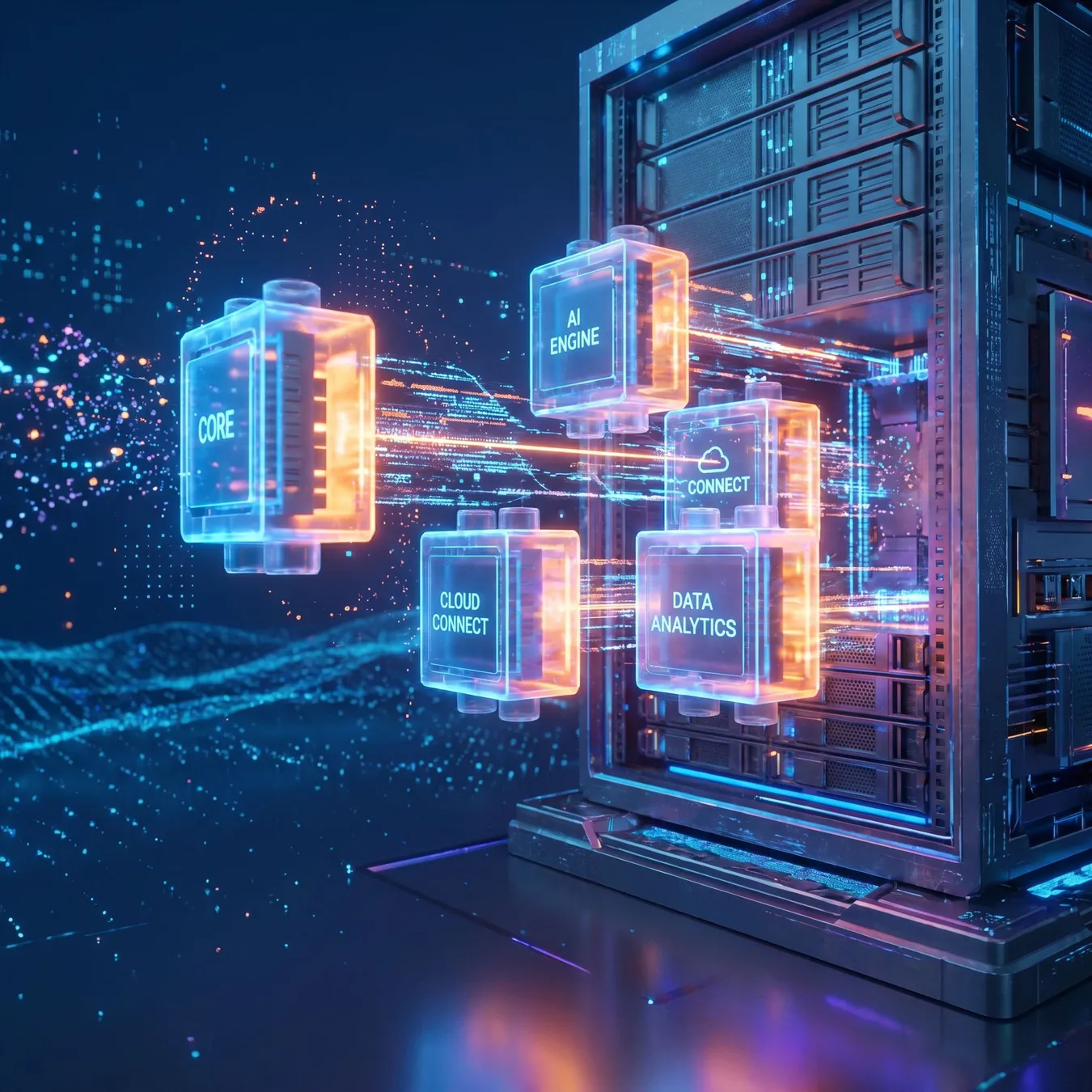
Modular design ensures your AI product stays current.
Bridging the Gap with Studio 402
If you have a high-potential AI business idea but lack the technical infrastructure to bring it to life, Studio 402 can help. We specialize in turning ambitious concepts into production-ready software.
From MVP development to scaling complex AI-native systems, our team provides the engineering depth needed to build foundations that grow with your business.
Trusted by founders to build scalable AI systems.
Production-ready outcomes for growth-stage startups.
Build Your AI Product with Studio 402
Ready to build your AI-powered product? Let's discuss your technical roadmap and how to ship a production-ready MVP.
Frequently Asked Questions
Keep reading