
Prioritization Frameworks for High-Impact Product Management
Effective prioritization framework product management is the difference between shipping features that move the needle and wasting engineering cycles on low-value tasks. For product managers, the challenge isn't just finding ideas—it's deciding which ones to kill.
64%
Features rarely or never used
2.5x
Higher ROI with structured ranking
100%
Alignment on roadmap goals
Using structured prioritization frameworks product management allows teams to justify roadmap decisions with data rather than intuition. This objective approach is essential for product management planning, ensuring every sprint contributes to long-term business strategy.
The RICE Framework: Scoring for Reach and Impact
The RICE model is a popular prioritization framework for product managers who need to quantify the potential of every feature. It balances the excitement of a new idea with the reality of the effort required to build it.
- 01
Reach: Estimate how many users this will impact in a given timeframe.
- 02
Impact: Score the contribution to your goal (e.g., 3 for massive, 0.5 for minimal).
- 03
Confidence: Percentage score of how sure you are about your estimates.
- 04
Effort: Total person-months required from product, design, and engineering.
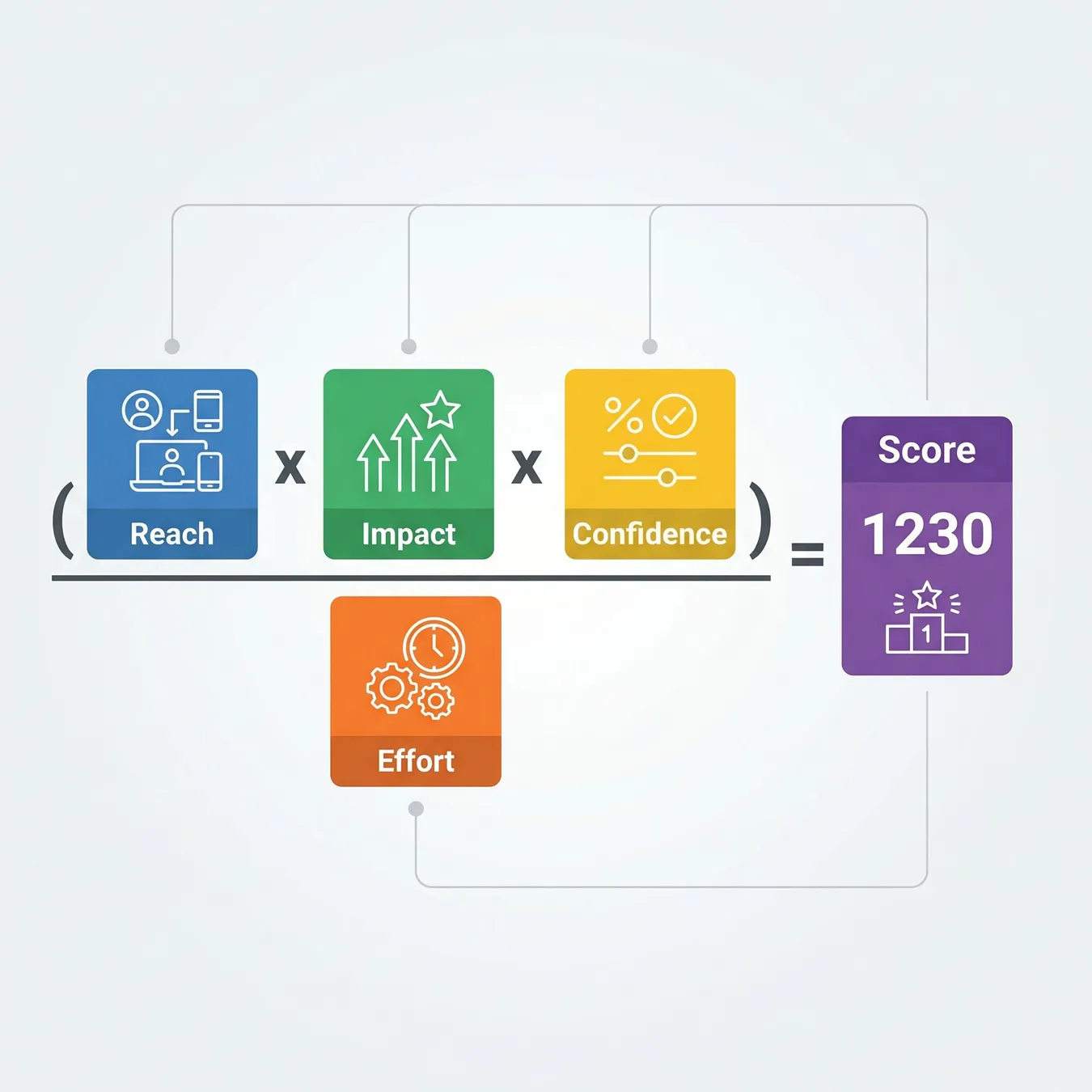
The RICE scoring formula helps remove bias from feature prioritization.
Kano Model: Categorizing Customer Satisfaction
The Kano model helps in feature prioritization product management by mapping features against customer satisfaction and investment. It distinguishes between 'must-haves' and 'delighters'.
- Basic Features: The minimum requirements for the product to function.
- Performance Features: Linear relationship between investment and satisfaction.
- Excitement Features: Unexpected additions that create high delight.
- Indifferent Features: Items that users simply do not care about.
MoSCoW Method: Essential for MVP Scoping
When deadlines are tight, the MoSCoW method is the go-to prioritization framework for product managers. It categorizes requirements into four buckets to ensure the most critical work is finished first.
| Category | Definition | Priority Level |
|---|---|---|
| Must Have | Non-negotiable product requirements | Critical |
| Should Have | Important but not vital for launch | High |
| Could Have | Desirable 'nice-to-have' features | Medium |
| Won't Have | Explicitly excluded from current scope | Low/None |
Weighted Shortest Job First (WSJF)
WSJF is a prioritization framework used in scaled agile environments. It calculates the 'Cost of Delay' to ensure that the most valuable, time-sensitive features are prioritized over larger, slower projects.
Tip.
// Pro Tip
Integrating these scores into your technical roadmap planning helps prevent engineering bottlenecks before they start.
Opportunity Scoring: Finding the Gaps
This technique uses customer research to identify features that users find important but are currently dissatisfied with. It is a powerful way to find high-impact opportunities in a crowded market.
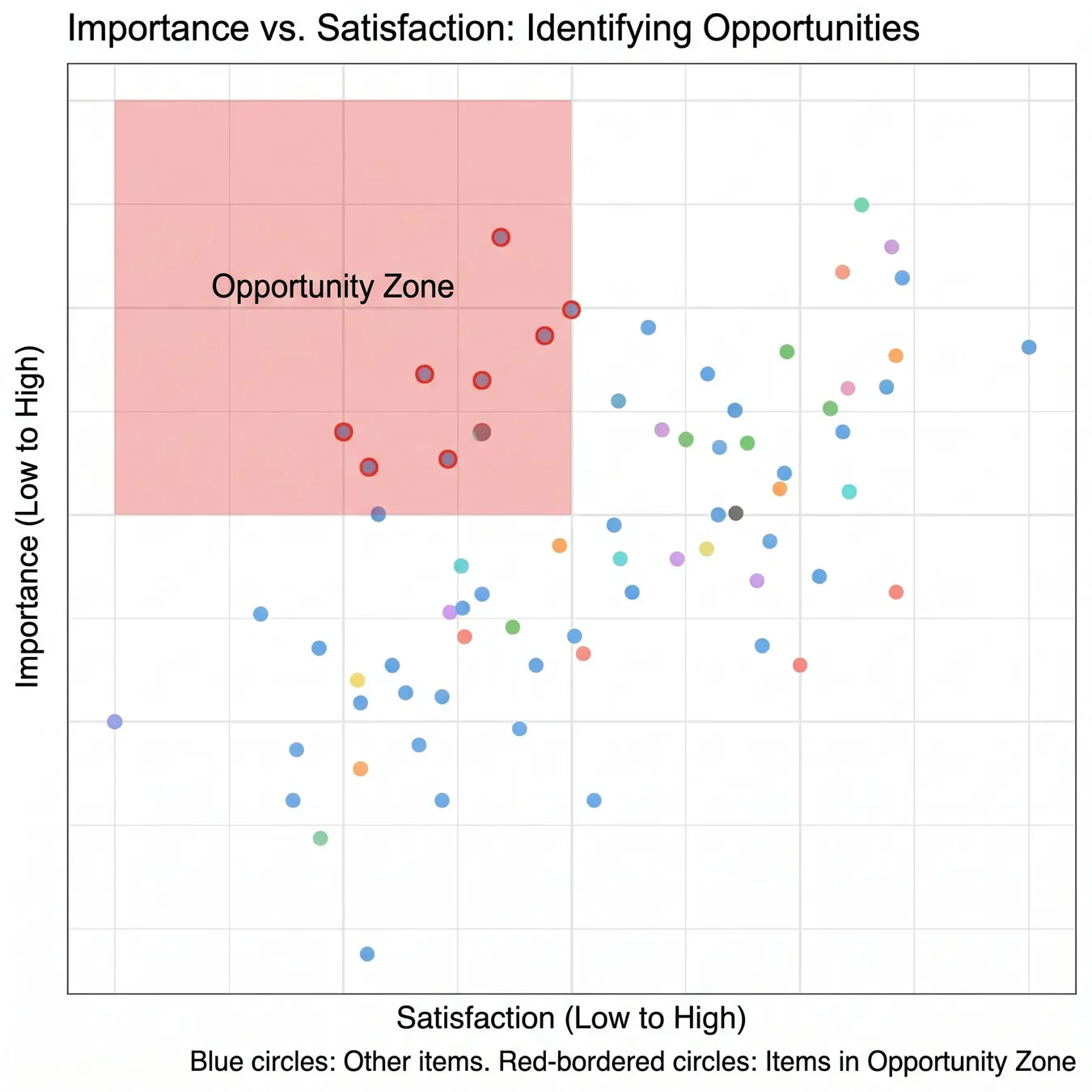
Opportunity scoring identifies where your product can provide the most unique value.
Comparing Top Prioritization Frameworks
Trade-off
3 pros · 3 cons
Pros
Reduces emotional bias in decision making
Provides clear justification to stakeholders
Optimizes engineering resource allocation
Cons
Can be overly complex for small teams
Requires significant data for accuracy
Risk of 'analysis paralysis'
How to Choose the Right Framework
No single prioritization framework for product managers works for every situation. Your choice depends on the stage of your product and the complexity of your engineering team.
01 / 03
phase 01 / 03
Early Stage / MVP
phase 02 / 03
Growth Stage
phase 03 / 03
Mature Product
Common Prioritization Pitfalls to Avoid
Involve engineering early in effort estimation
Re-evaluate priorities every quarter
Use data to back up your scoring
Let the loudest stakeholder dictate the roadmap
Prioritize features without a clear business goal
Ignore technical debt in favor of shiny new features
The Role of Software in Feature Prioritization
Managing these frameworks in spreadsheets is often a recipe for disaster. Modern product feature prioritization software helps automate the scoring process and keeps the entire team aligned.
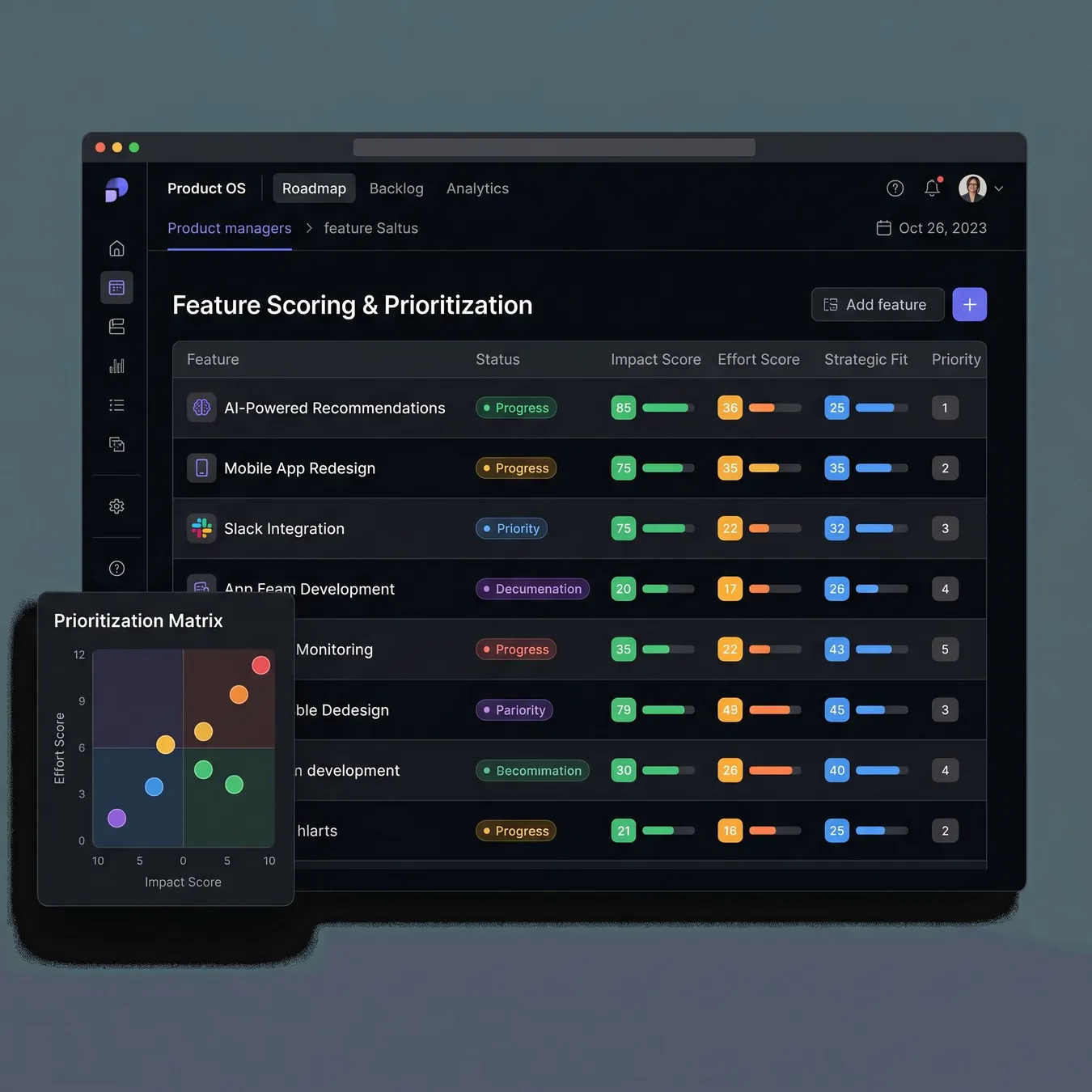
Automated scoring dashboards.
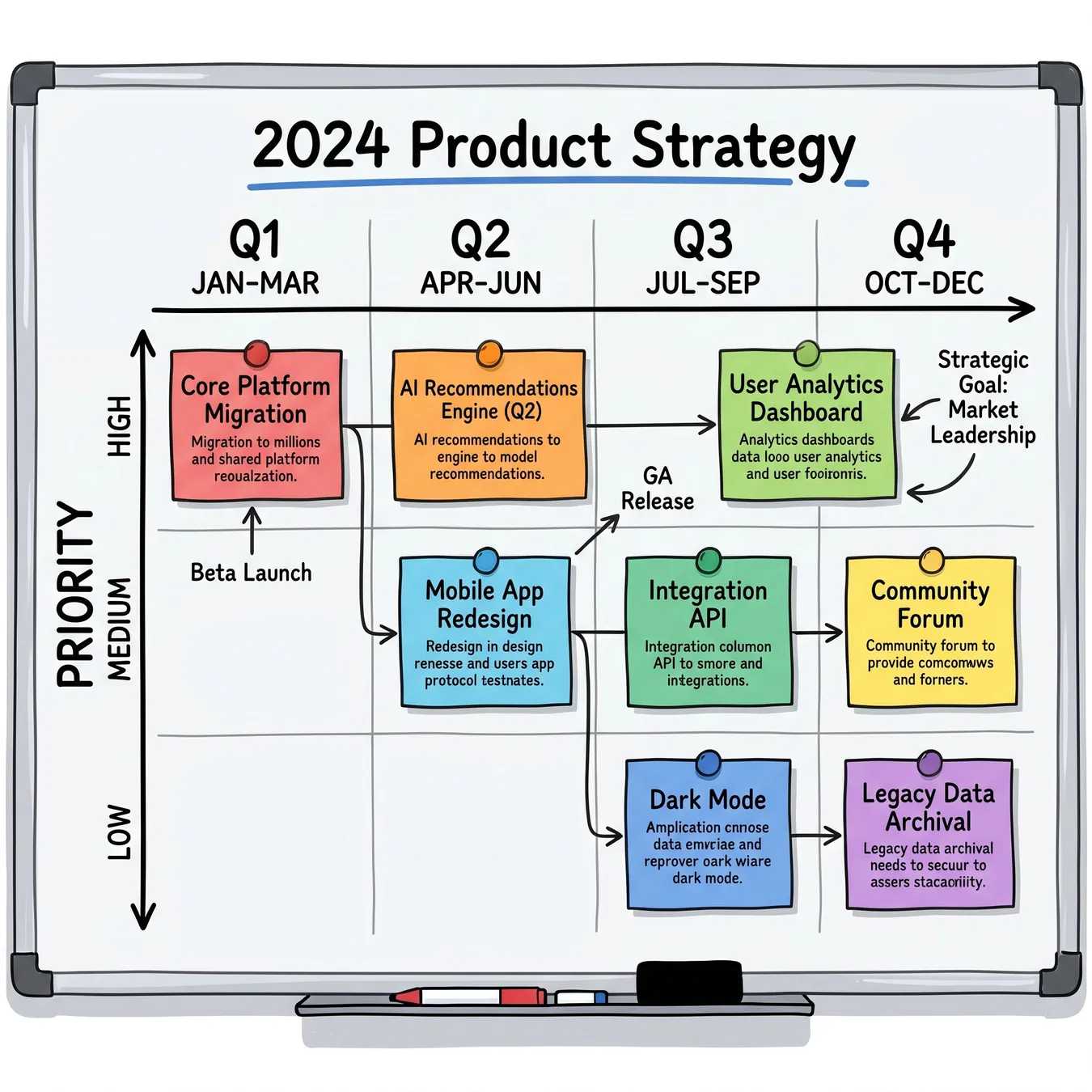
Visualizing the prioritized roadmap.
Aligning Prioritization with Agile Milestones
Once features are ranked, they must be translated into actionable agile project milestones. This ensures that the high-impact work identified in your framework actually makes it into production.
Stakeholder Management and Justification
One of the hardest parts of being a product manager in software development is saying 'no' to stakeholders. Frameworks provide the objective evidence needed to defend these decisions.
A framework isn't just a calculator; it's a communication tool that builds trust between product, engineering, and the C-suite.
Sarah Chen · Senior Product Leader
Feature Prioritization Techniques for Development
Applying feature prioritization techniques product development ensures that the engineering team is always working on the most valuable task. This reduces waste and accelerates time-to-market.
Define clear success metrics for each feature
Assign a confidence score to all estimates
Review the 'Won't Have' list with stakeholders
Map prioritized items to the next two sprints
The PM's Responsibility in the SDLC
The product manager in software development must act as the guardian of the roadmap. Without a consistent prioritization framework, the development lifecycle can quickly devolve into a feature factory.
Bridging Strategy and Execution
At Studio 402, we understand that great software starts with great prioritization. We don't just build what we're told; we partner with you to ensure your roadmap is architected for maximum impact and scalability.
Whether you are rescuing a prototype or building a new SaaS platform, our engineering-first approach ensures that your prioritized features are delivered with production-grade quality.
Frequently Asked Questions
Next Steps for Your Product Roadmap
Build Your High-Impact Product with Studio 402
Ready to turn your prioritized roadmap into a production-ready product? Let's build something that scales.
Explore More Resources
Keep reading
More in Product Management & Operations
- Product Management
- Agile
- Roadmapping
- Strategy
- Engineering
Helping 50+ companies ship production-ready software.
Updated July 2026
Effective prioritization is an ongoing process. By combining these frameworks with a strong engineering partner, you can ensure your product remains competitive and your team remains productive.
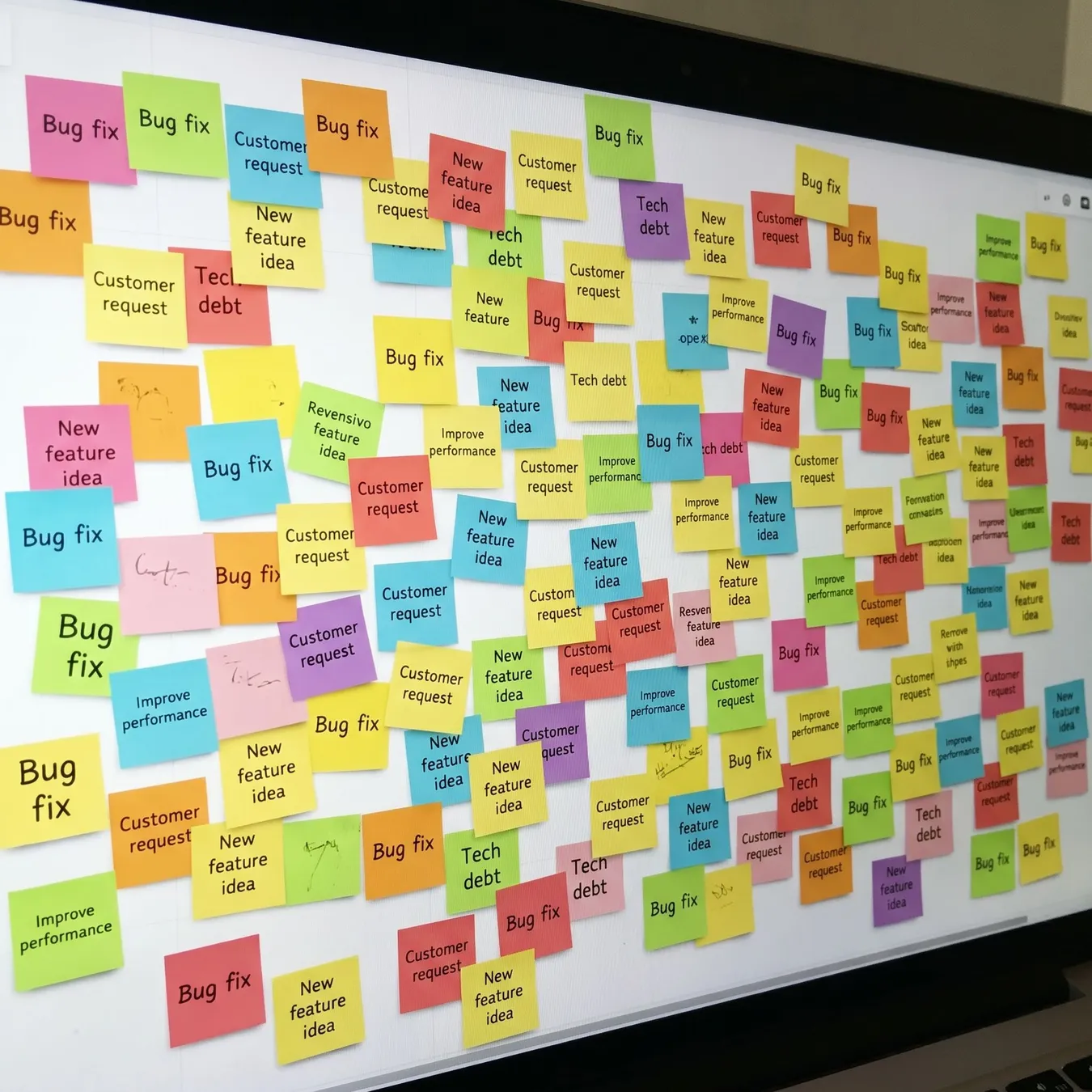
Watch: Mastering the Art of Prioritization.
Don't let your roadmap become a wish list. Use these tools to make the hard choices that lead to real-world success.