
Manage Outsourced Software Development Teams Successfully
To manage outsourced software development teams effectively, leaders must move beyond simple task tracking and focus on architectural alignment and delivery predictability. Success in external partnerships is rarely about the code alone; it is about the systems of communication and accountability you establish from day one.
60%
Reduction in rework with clear specs
2.5x
Velocity increase via workflow sync
100%
Code review coverage required
Defining the Foundation of External Management
Before you can manage outsourced software development teams, you must define the operational boundaries. This begins with a clear contract for custom software development that specifies not just the deliverables, but the standards for security, performance, and documentation.
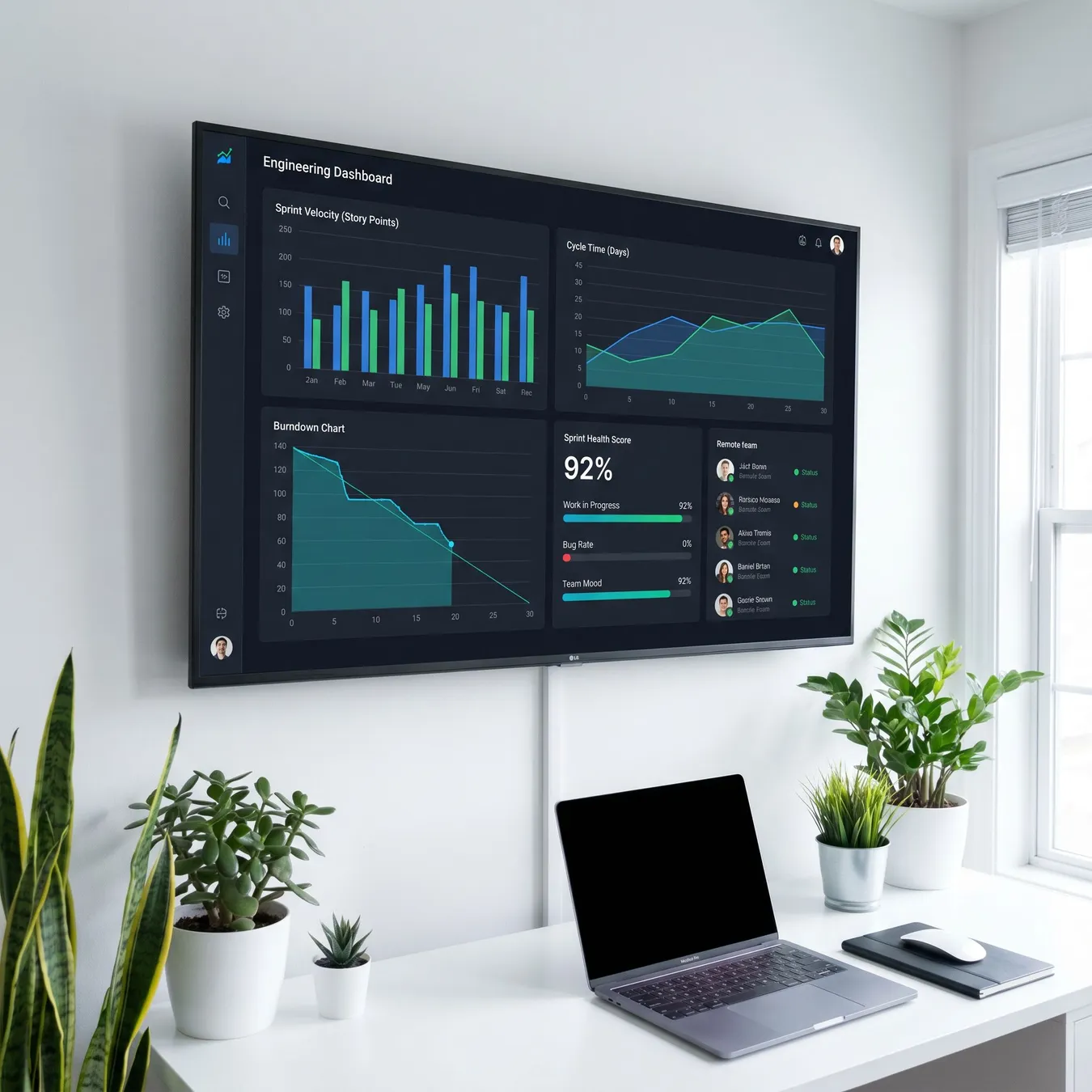
Visibility into delivery metrics is the first step toward effective management.
Establishing a High-Performance Software Engineering Workflow
A robust software engineering workflow is the backbone of any successful outsourcing engagement. Without a standardized process for PR reviews, staging deployments, and automated testing, external teams will inevitably drift from your internal standards.
- Mandatory CI/CD pipelines for all repositories
- Standardized branch naming and commit conventions
- Automated linting and security scanning
- Defined Definition of Done (DoD) for every ticket
Measuring Success: Lead Time and Velocity
To ensure your partner is delivering value, you must track lead time software development as a core KPI. This metric reveals how quickly an idea moves from a requirement to a production release, highlighting bottlenecks in the handoff process.
| Metric | Target | Why it Matters |
|---|---|---|
| Lead Time | < 5 Days | Indicates agility and clear specs |
| CFR | < 10% | Measures code quality and stability |
| Sprint Say/Do | > 90% | Shows predictability and planning accuracy |
Communication Rhythms for Remote Partners
Effective management requires a balance of synchronous and asynchronous communication. While daily standups are helpful, they should not replace high-quality written documentation in tools like Linear or Jira.
Use video for complex architectural reviews
Record Loom demos for bug reports
Maintain a single source of truth for requirements
Manage tasks via Slack or email
Skip weekly syncs during crunch periods
Assume the team understands unwritten context
Scaling Software Engineering Teams with External Partners
As your product grows, scaling software engineering teams requires a shift from managing individuals to managing systems. You must ensure that your external partner can integrate with your internal leadership without creating silos.
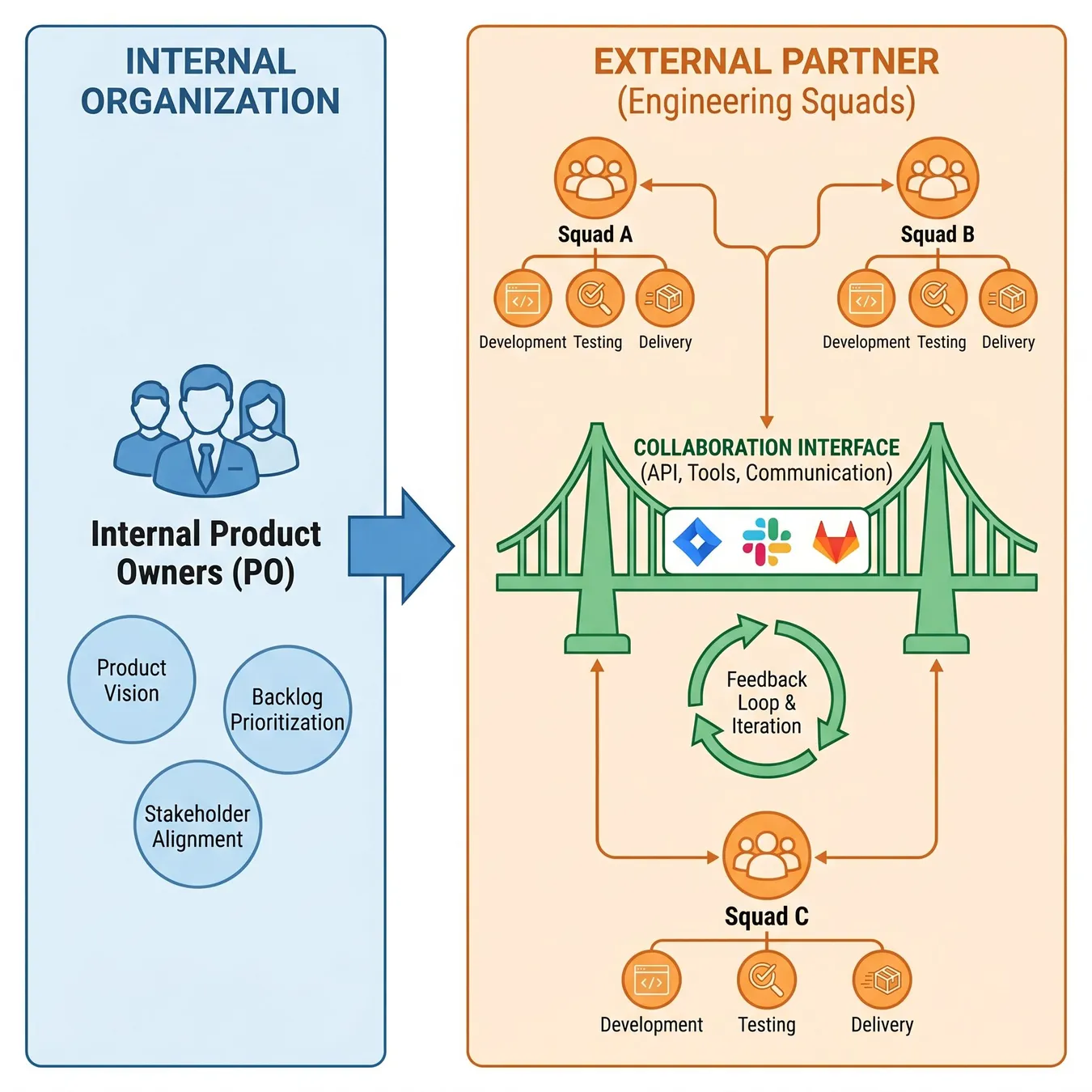
Integrated team structures reduce friction.
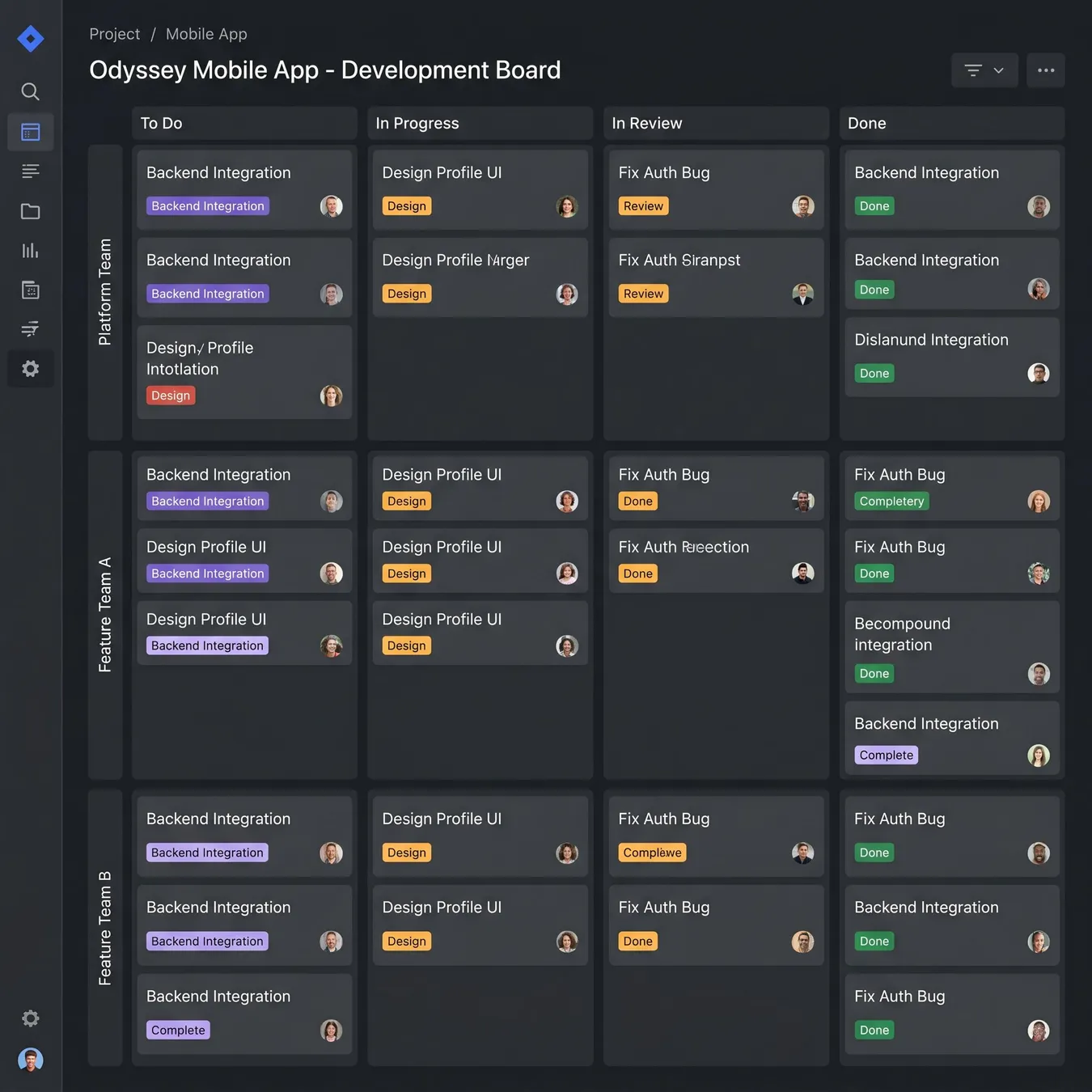
Visualizing work prevents hidden bottlenecks.
Maintaining Architectural Integrity
One of the greatest risks in outsourcing is the accumulation of technical debt. To prevent this, your internal technical lead must conduct regular audits of the external team's code and infrastructure choices.
Warning.
// The Debt Trap
The Role of Product Management in Outsourcing
Product managers act as the bridge between business intent and engineering execution. When working with an external partner, the PM's role in refining the backlog becomes the primary lever for delivery speed.
- 01
Define clear acceptance criteria for every user story
- 02
Prioritize the backlog at least two sprints ahead
- 03
Conduct thorough UAT before any production release
- 04
Facilitate direct access between devs and stakeholders when needed
Onboarding and Cultural Integration
Treat your outsourced team as an extension of your own company. The more they understand your customers and business goals, the better their technical decisions will be.
Provide access to product vision and roadmap docs
Include external leads in strategic planning sessions
Set up shared Slack channels for real-time collaboration
Schedule monthly 'state of the business' updates
Managing Technical Debt and Refactoring
Allocate a fixed percentage of every sprint (typically 20%) to maintenance and refactoring. This ensures the external team isn't just shipping new features on top of a crumbling foundation.
Management is not about controlling people; it is about controlling the environment so that people can do their best work.
Engineering Director · Studio 402 Partner
Handling Conflict and Performance Issues
When delivery slows or quality drops, address it immediately. Use data from your project management tools to have objective conversations with the partner's account manager.

Retrospectives are essential for continuous improvement.
Security and Compliance Oversight
Never outsource your security responsibility. Ensure the external team follows your IAM policies, data encryption standards, and compliance requirements (SOC2, HIPAA, etc.).
The Transition to Production
Managing a team during the build phase is different from managing them during a production launch. Ensure there is a clear runbook and on-call rotation established before the first user signs up.
01 / 03
phase 01 / 03
Pre-Launch Audit
phase 02 / 03
Deployment Sync
phase 03 / 03
Hyper-care Period
Common Pitfalls in External Management
Many leaders fail by being too hands-off or too micromanaging. The goal is to manage the 'What' and the 'Quality,' while letting the experts manage the 'How.'
Trade-off
3 pros · 3 cons
Pros
Clear accountability for results
Scalable engineering capacity
Access to specialized expertise
Cons
Higher coordination overhead
Potential for knowledge silos
Risk of architectural drift
Frequently Asked Questions
Bridging to a Long-Term Product Partnership
Managing an outsourced team is a significant operational lift. If you find yourself spending more time managing the partner than building the product, it may be time to switch to a studio model that handles the management layer for you.
At Studio 402, we don't just provide developers; we provide the engineering leadership and operational infrastructure needed to ship production-ready software. We bridge the gap between your product vision and a stable, scalable codebase.
Trusted by founders to rescue and scale complex software systems.
From seed-stage MVPs to Series B infrastructure.
Ready for Production-Ready Engineering?
Stop managing tickets and start shipping products. Let Studio 402 handle the architecture and delivery.
Discover More
Keep reading
More in Product Management & Operations
- Engineering Leadership
- Outsourcing
- Product Ops
- Scale
Effective management of external teams is a competitive advantage. By implementing these frameworks, you ensure that your engineering spend translates directly into business value and technical longevity.
Final Thoughts on External Delivery
The most successful founders treat their external partners as strategic assets, not commodity vendors. This shift in mindset, backed by the right technical workflows, is what separates production success from prototype failure.