
Custom Internal Ops Platforms & Admin Dashboards
As teams scale, fragmented tools and manual spreadsheets create operational drag that slows down growth. A centralized internal ops platform serves as the mission control for your business, consolidating disparate data into a single, reliable source of truth.
- Operational Efficiency
- Custom Dashboards
- Workflow Automation
- Data Integrity
What is an Internal Ops Platform?
An internal ops platform is company specific software designed to manage the unique back-office processes that off-the-shelf tools can't handle. These systems often include custom admin panels, approval engines, and data visualization tools.
- Centralized data management across departments
- Customized user roles and granular permissions
- Real-time reporting and operational visibility
- Automated handoffs between sales, ops, and finance
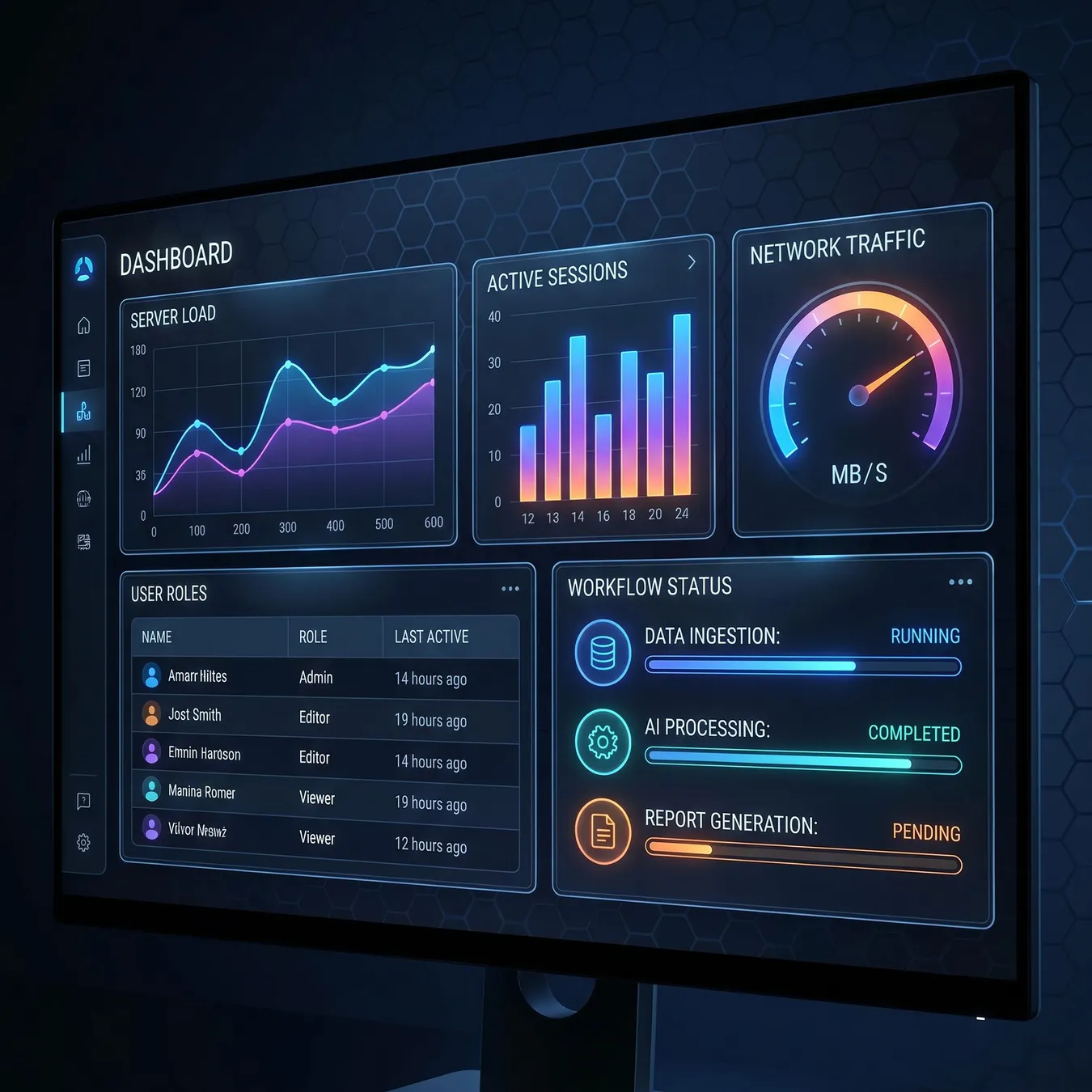
A custom internal ops platform provides a unified view of your business logic.
The Role of a Dashboard for Finance and Operations
A specialized dashboard finance and operations teams use allows for high-stakes decision-making without digging through CSVs. These platforms ensure that every transaction and approval is audited and visible.
40%
Reduction in manual data entry
2.5x
Faster approval cycles
100%
Audit trail accuracy
Core Components of a Modern Workflow Platform
A robust workflow platform is more than just a UI; it is the engine that drives business logic. It connects your existing APIs to a custom interface tailored to your team's specific mental model.
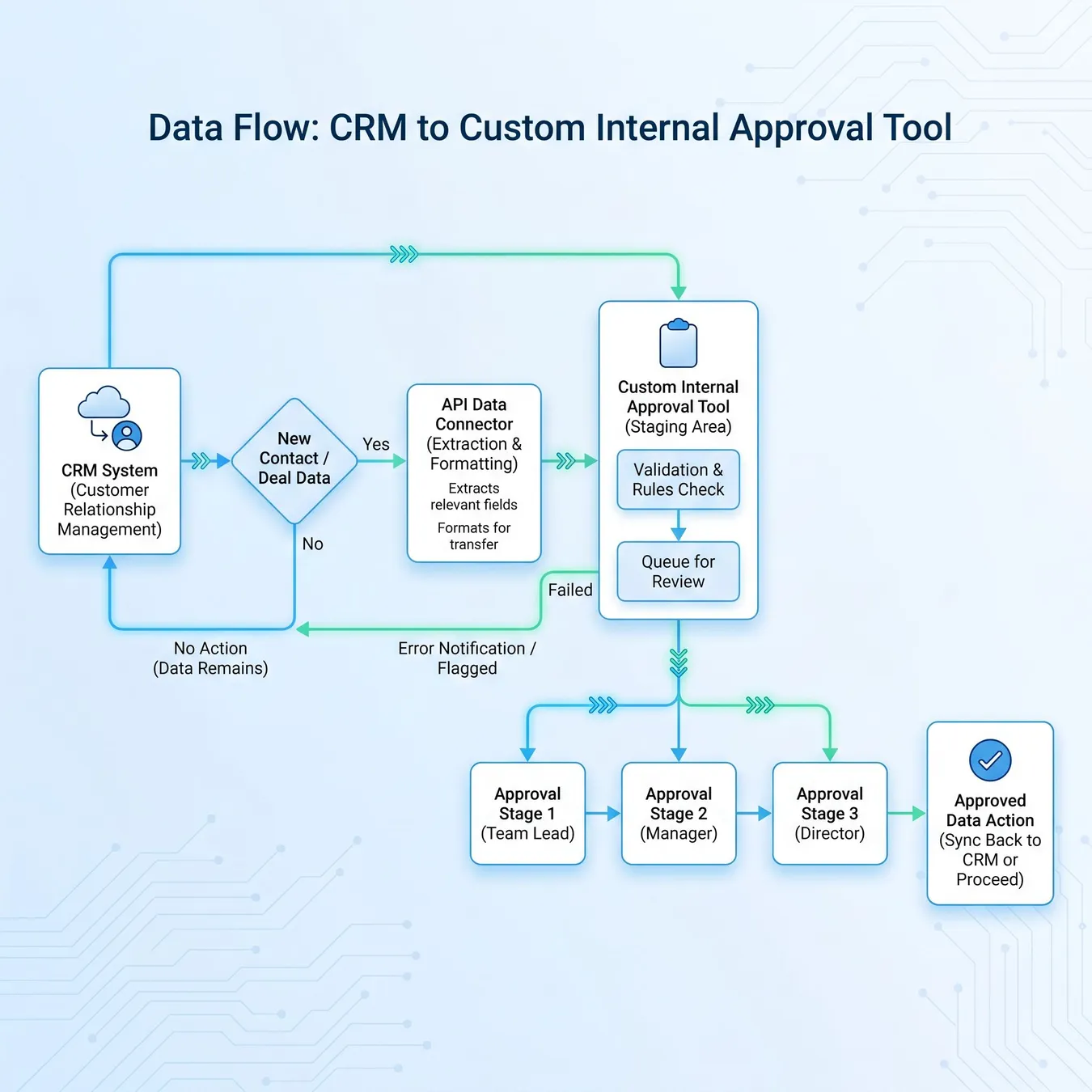
Automated data flow between systems.
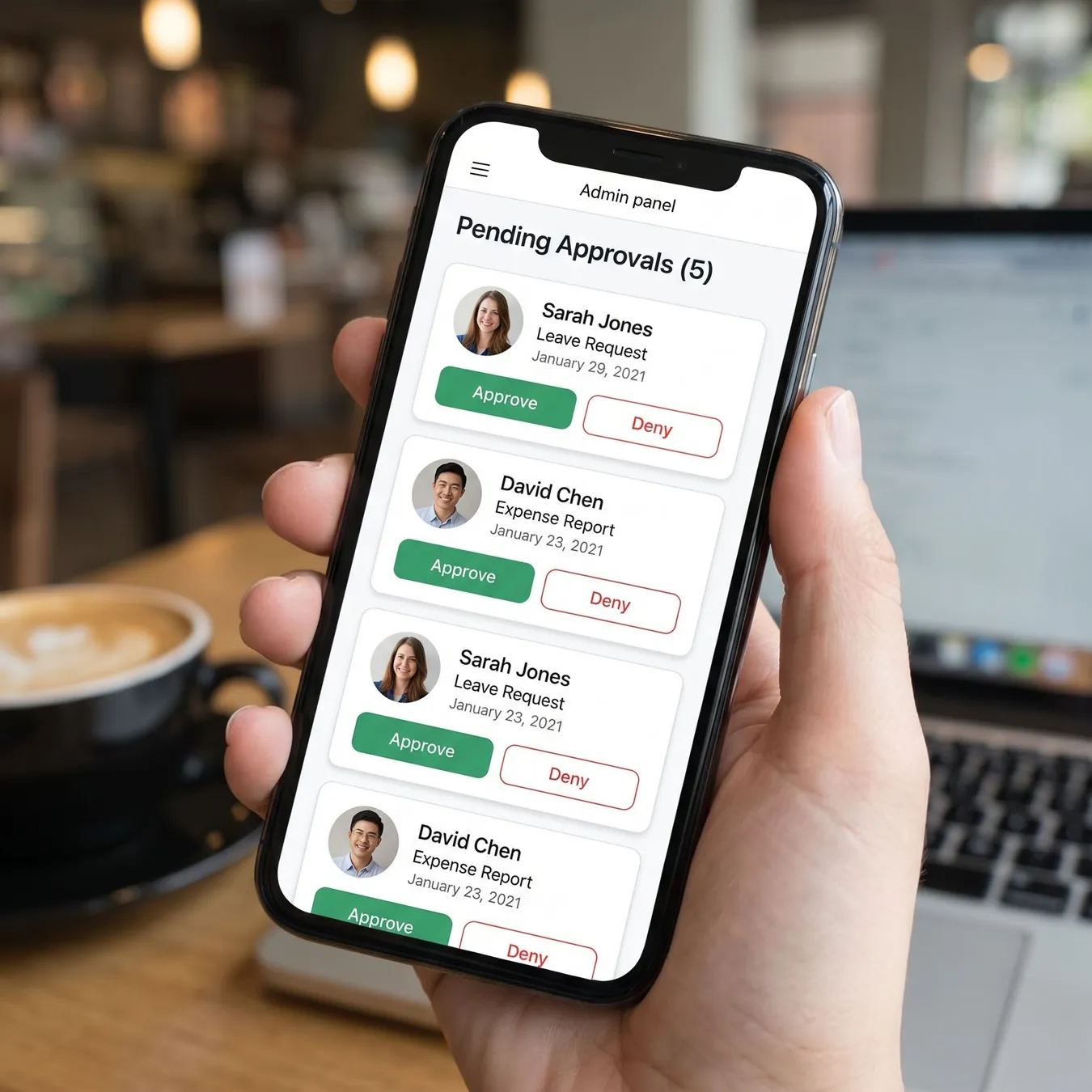
On-the-go operational management.
Custom Software vs. Off-the-Shelf Admin Tools
Trade-off
4 pros · 4 cons
Pros
Exact match for unique business logic
No per-user licensing fees
Deep integration with proprietary data
Full control over security and compliance
Cons
Higher initial development cost
Requires ongoing maintenance
Longer time to initial launch
Requires technical ownership
Common Use Cases for Internal Dashboards
Different teams require different views. While support needs user management, finance requires transaction ledgers and reconciliation tools.
| Team | Primary Tool | Key Outcome |
|---|---|---|
| Finance | Reconciliation Dashboard | Error-free closing |
| Operations | Fulfillment Tracker | Reduced lead times |
| Support | User Admin Portal | Faster ticket resolution |
Building for Scale: Technical Requirements
To ensure your internal systems don't become technical debt, they must be built with production-grade standards. This includes robust authentication, role-based access control (RBAC), and observable infrastructure.
Info.
// Security First
How to Transition from Spreadsheets to Software
- 01
Audit current manual workflows and data silos.
- 02
Define the core data model and user roles.
- 03
Build a functional MVP focusing on the highest-friction process.
- 04
Integrate with existing CRM, ERP, and payment providers.
- 05
Iterate based on internal team feedback.
Internal Ops FAQ
Engineering Your Operational Foundation
At Studio 402, we specialize in turning operational bottlenecks into durable systems. Whether you need to scale your fintech ops or build a custom workflow automation software, we provide the architectural depth to ensure your tools grow with you.
The best internal tools are the ones that disappear into the workflow, allowing the team to focus on the business rather than the software.
Studio 402 Engineering Lead
Our Approach to Internal Platforms
01 / 03
phase 01 / 03
Discovery
phase 02 / 03
Architecture
phase 03 / 03
Build & Launch
We don't just build dashboards; we build the execution infrastructure that allows your company to operate at a higher velocity without increasing headcount.
Ready to Centralize Your Operations?
Stop fighting fragmented tools. Let's build the custom internal platform your team needs to scale efficiently.
Keep reading