
Business Application Modernization: Refactoring for Scale
Overview
Modernize Your Legacy Software
Transform aging, brittle codebases into high-performance platforms that unlock product velocity and security.
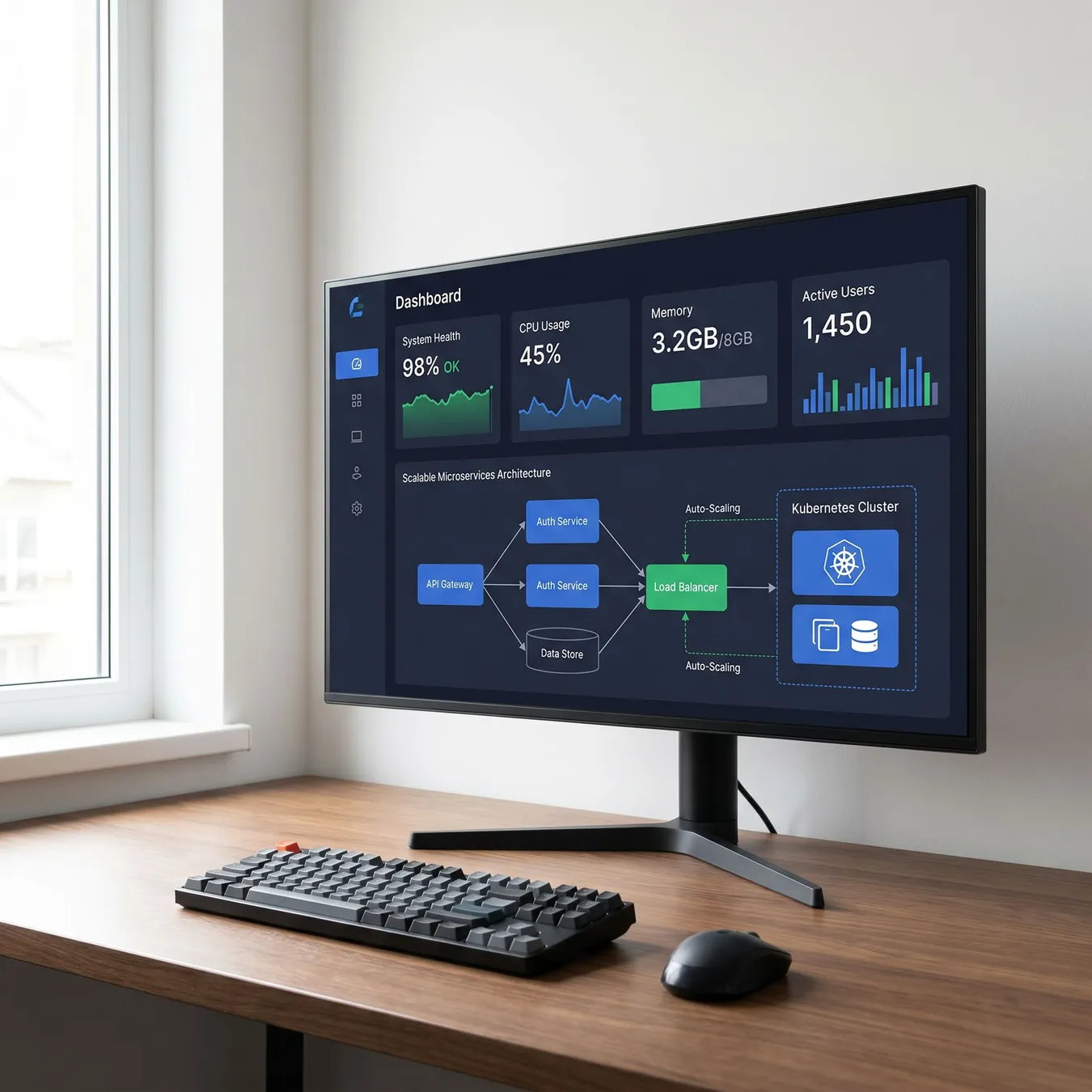
Business application modernization is the process of updating aging software systems to align with current technology standards and business needs. Rather than letting technical debt accumulate, refactoring legacy systems allows companies to improve maintainability without the risk of a total rewrite.
60%
Reduction in maintenance costs
3x
Faster feature deployment
99.9%
Improved system reliability
Why Modernize Your Business Applications Now?
Waiting to address technical debt often leads to critical failures during peak usage. By modernizing your business applications, you ensure that your software can handle increased traffic and integrate with modern AI and cloud tools.
- Eliminate security vulnerabilities in outdated libraries.
- Improve developer productivity by simplifying complex code.
- Reduce operational overhead and hosting costs.
- Enable seamless integration with third-party APIs.
The Core Strategies for Software Product Modernization
Software product modernization isn't just about changing the UI. It involves deep architectural shifts, such as moving from monoliths to microservices or optimizing database queries for better performance.
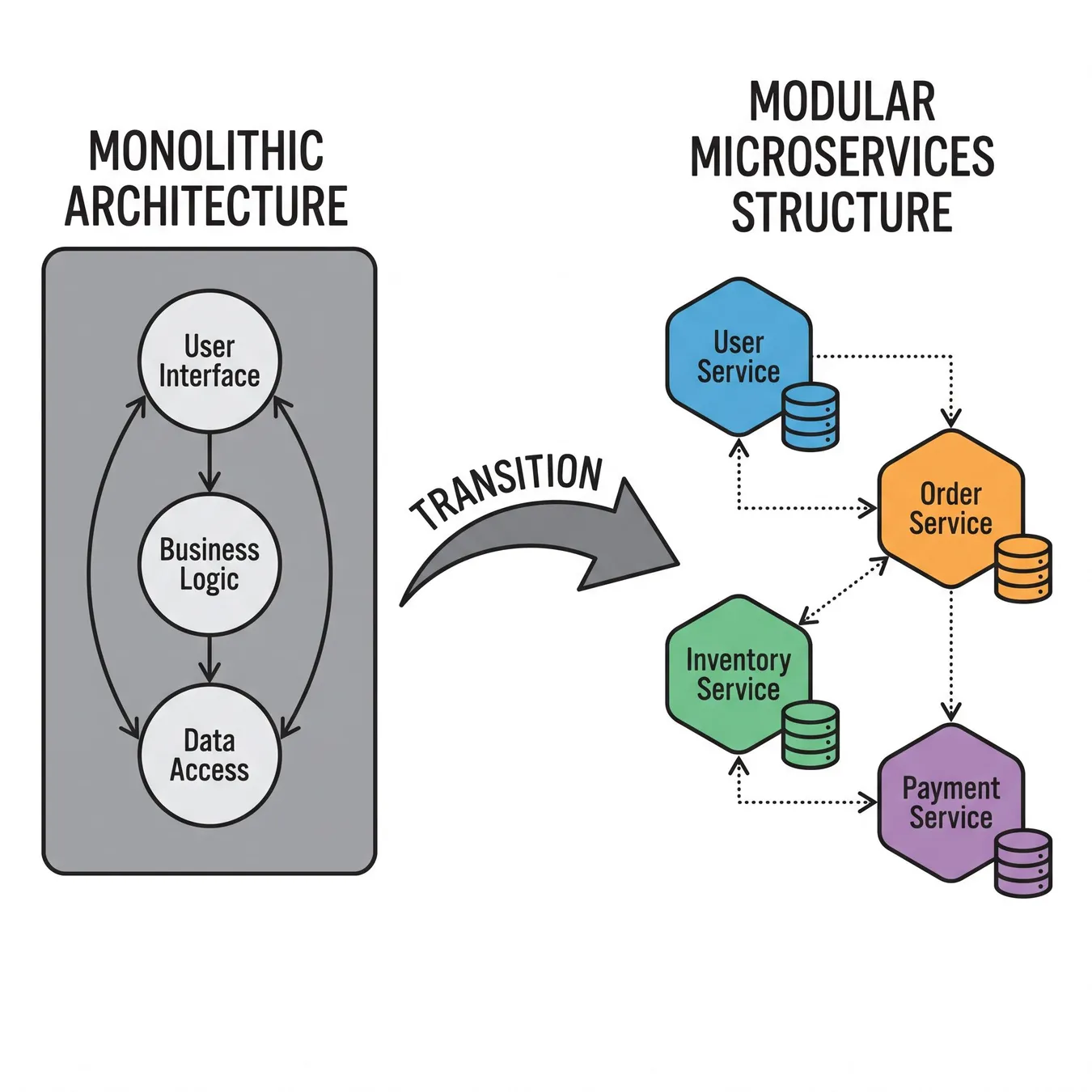
Visualizing the shift from monolithic to modular architecture.
Refactoring vs. Replatforming
Refactoring involves changing the internal structure of the code without changing its external behavior. This is often the safest path for refactoring legacy applications because it preserves existing business logic while improving performance.
Trade-off
3 pros · 3 cons
Pros
Lower risk than a full rewrite
Incremental improvements
Preserves proven business logic
Cons
Requires deep codebase knowledge
May not solve all architectural flaws
Time-intensive manual effort
Data Modernization: The Foundation of Scale
Modernizing the application layer is only half the battle. You must also address legacy data modernization to ensure your databases can support high-concurrency and real-time analytics.
Info.
// Data Integrity First
Moving to the Cloud: Legacy to Cloud Migration
A successful legacy to cloud migration requires more than just 'lift and shift.' It requires optimizing the application to take advantage of cloud-native features like auto-scaling and serverless functions.
- 01
Audit existing infrastructure and dependencies.
- 02
Refactor code for cloud-native compatibility.
- 03
Implement CI/CD pipelines for automated deployment.
- 04
Execute phased migration to minimize downtime.
Modernization Roadmap: A Step-by-Step Approach
01 / 04
phase 01 / 04
Assessment
phase 02 / 04
Stabilization
phase 03 / 04
Refactoring
phase 04 / 04
Deployment
Application Development and Modernization Best Practices
Effective application development and modernization requires a balance between shipping new features and maintaining the health of the existing codebase. We recommend a 'strangler pattern' to replace legacy components over time.
Write unit tests before refactoring.
Use feature flags to control rollouts.
Monitor performance in real-time.
Refactor without a clear goal.
Ignore the underlying data model.
Try to change everything at once.
Common Modernization Challenges
Modernizing for the AI Era
Legacy systems often lack the API structure needed to integrate LLMs or automated agents. Modernization prepares your stack for AI-native features, allowing you to automate workflows that were previously manual.

Precision refactoring for complex logic.
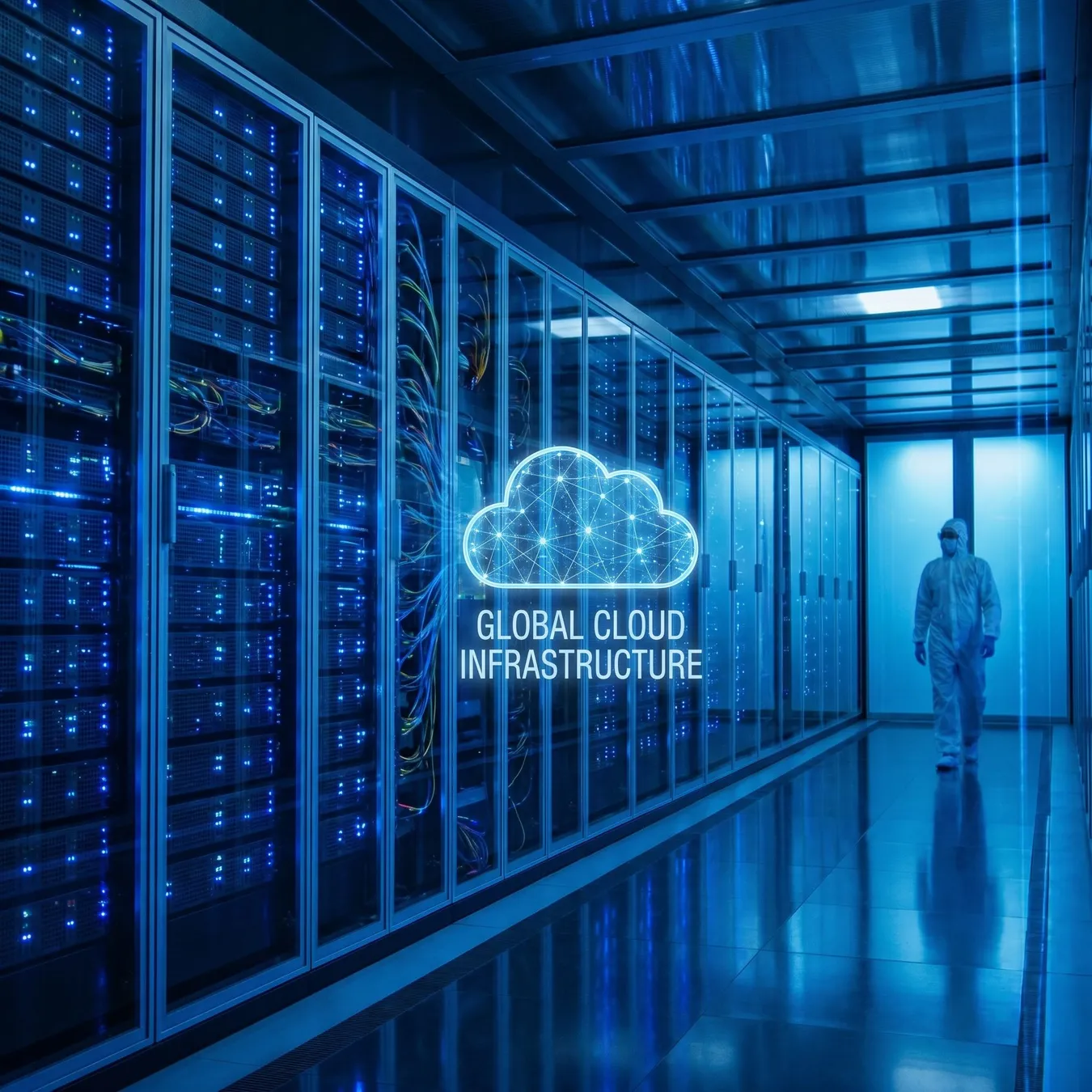
Scalable cloud foundations.
The Business Impact of Technical Debt
Unaddressed technical debt is a silent killer of innovation. It slows down your engineering team and makes every new feature twice as expensive to build and maintain.
Modernization is not a one-time event; it is a commitment to operational excellence and long-term scalability.
Studio 402 Engineering Team
Security and Compliance in Modernization
Older applications often rely on deprecated encryption standards. Modernizing your stack allows you to implement modern OAuth2, JWT, and role-based access controls (RBAC) to protect sensitive data.
Audit all third-party dependencies.
Update encryption protocols to TLS 1.3.
Implement centralized logging and monitoring.
How Studio 402 Approaches Modernization
At Studio 402, we don't just patch bugs. We partner with you to rebuild foundations. Whether you are dealing with a 'vibe-coded' prototype that won't scale or a decade-old monolith, we provide the senior engineering depth to fix it.
Our process starts with a deep audit of your current stack, followed by a prioritized roadmap that delivers value at every milestone. We focus on production-ready outcomes that survive real-world use.
Trusted by growth-stage companies to stabilize and scale mission-critical software.
Updated for 2026 standards.
Case Study: From Brittle Monolith to Scalable SaaS
We recently helped a logistics provider refactor their core dispatch system. By modernizing their API layer and migrating to a managed cloud database, they increased their throughput by 400% without adding server costs.
Studio 402 took our aging platform and turned it into a modern, fast, and secure system that our team actually enjoys working on.
Ready to Unlock Your Product Velocity?
Don't let legacy code hold your business back. If you are ready to transform your aging applications into scalable assets, let's talk about a modernization strategy that works for your timeline and budget.
Modernize Your Legacy Systems
Get a senior engineering audit and a clear path to a scalable, production-ready codebase.
Explore More Modernization Resources
Keep reading
More in Custom Software & SaaS Development
Maintaining a competitive edge in 2026 requires software that is as agile as your business. Legacy systems shouldn't be a roadblock to your next phase of growth.
Our team at Studio 402 specializes in the complex work of refactoring, ensuring that your business logic is preserved while your infrastructure is brought into the modern era.
From initial discovery to final deployment, we provide the transparency and technical expertise needed to navigate the risks of application modernization.
Contact us today at studio@402.studio to discuss your project and see how we can help you build a foundation for the future.
- Refactoring
- Cloud Migration
- SaaS Scale
- Legacy Rescue
Every line of code we refactor is a step toward a more resilient and profitable business operation.
We believe in building software that lasts, using modern patterns that make future iterations easier and faster.
Whether you need a full architectural overhaul or targeted refactoring of critical modules, Studio 402 is your partner for production-grade engineering.